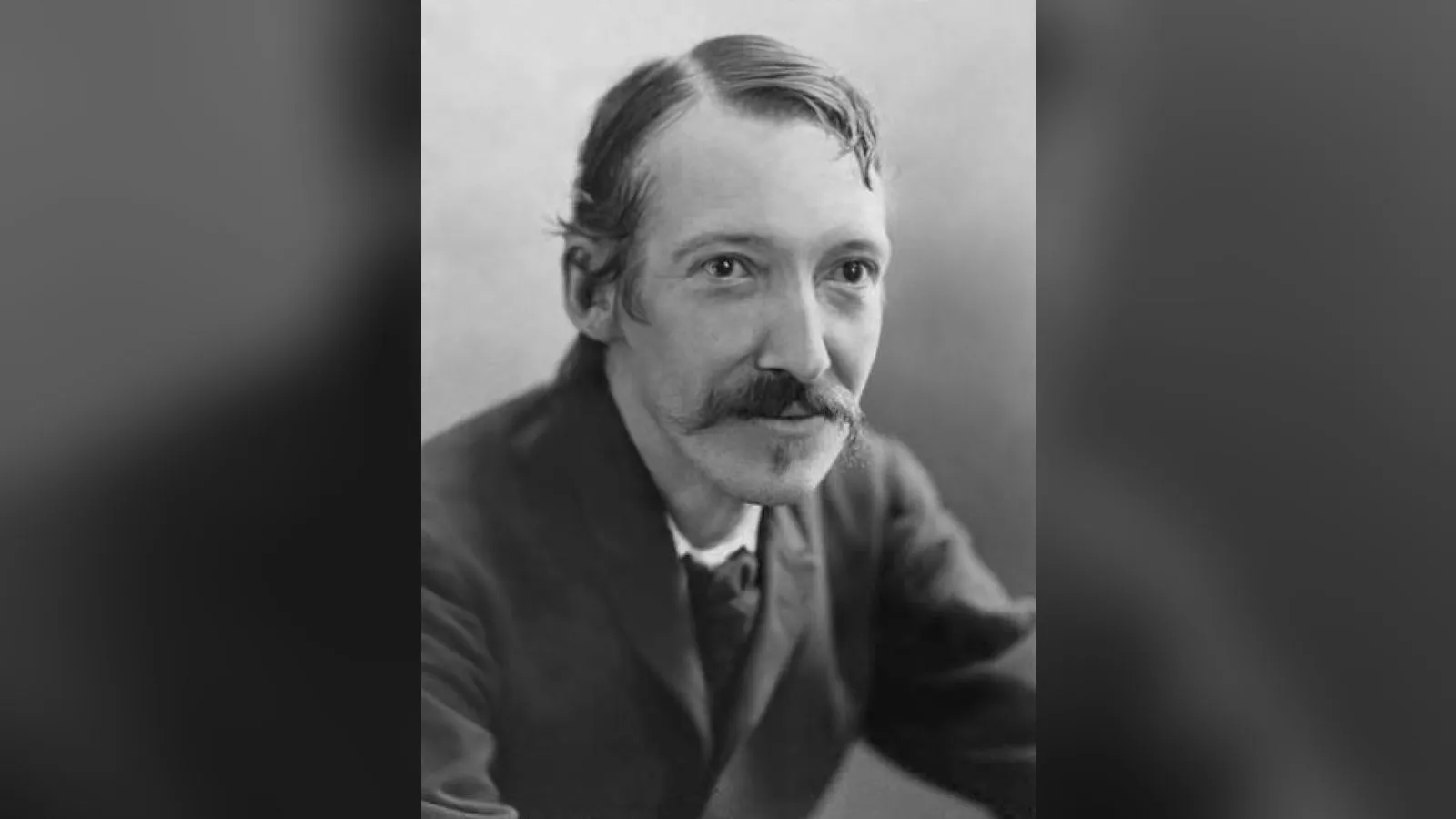

Robert Louis Stevenson (1850–1894): From Sickly Edinburgh Child to Samoan "Teller of Tales"
Contents
TL;DR
- Established (Documented): Stevenson, chronically ill for most of his life with a respiratory condition popularly but likely incorrectly diagnosed as tuberculosis, produced an extraordinary body of enduring work — Treasure Island, Strange Case of Dr Jekyll and Mr Hyde, Kidnapped — while frequently bedridden, describing his condition as living "like a weevil in a biscuit."
- Established (Documented): He broke decisively with his family's celebrated lighthouse-engineering profession and, later, with his father's religious faith — a rupture his father described as having rendered his "whole life a failure," though the two reconciled over time.
- Disputed (medically): The long-standing popular diagnosis of tuberculosis is increasingly questioned by modern medical scholarship, with researchers proposing alternative explanations including bronchiectasis, sarcoidosis, or hereditary haemorrhagic telangiectasia — a genuinely unresolved medical mystery, not settled fact.
- Established (Documented): In his final years in Samoa, Stevenson moved well beyond the role of romantic travel writer to become a genuine political agitator, publicly campaigning against the misconduct of British, German, and American colonial officials and openly allying with the Samoan chief Mata'afa against a colonially-backed rival — activity serious enough that it risked his own deportation.
- Shared/Traditional, now corrected: Long dismissed for much of the 20th century as a mere children's and adventure-fiction writer — excluded entirely from major literary anthologies including the 1973 Oxford Anthology of English Literature — Stevenson has since undergone serious critical rehabilitation as a major literary figure, essayist, and social critic.
Key Facts
- Born
- 13 November 1850, Edinburgh, as Robert Lewis Balfour Stevenson
- Died
- 3 December 1894, Vailima, Samoa, aged 44
- Parents
- Thomas Stevenson, lighthouse engineer; Margaret Isabella Balfour
- Family trade
- Renowned lighthouse-engineering dynasty (grandfather Robert Stevenson, uncles Alan and David)
- Education
- University of Edinburgh (engineering, then law); qualified for the Scottish bar, 1875, but never practised
- Wife
- Fanny Van de Grift Osbourne, married 1880
- Major works
- Treasure Island (1883), Strange Case of Dr Jekyll and Mr Hyde (1886), Kidnapped (1886), A Child's Garden of Verses (1885)
- Chronic health condition
- Lifelong respiratory illness, long assumed tuberculosis, now disputed among modern medical historians
- Samoan name
- Tusitala ("Teller of Tales")
- Key political act
- Public campaigning against colonial misconduct in Samoa; alliance with chief Mata'afa
- Burial
- Mount Vaea, Samoa, at his own request
Scottish Impact Index (SI Score)
- Global Influence
- 9/10
- Enduring Relevance
- 9/10
- Material Contribution
- 7/10
- Exceptional Achievement
- 9/10
- Lasting Legacy
- 8/10
- Recognition
- 9/10
51/60
Ranked =10th of 200 in Great Scots
A Note on Claim Status
This article follows ScottishInventions.co.uk's standard evidence tiers: Established/Documented (supported by primary sources or strong scholarly consensus), Shared/Traditional (widely repeated but resting on thinner evidence), disputed (credible sources disagree), and Legend/Myth (popular but unsupported or contradicted by the record). Two areas deserve particular care in Stevenson's case: the actual medical nature of his lifelong illness, long assumed rather than definitively established, and his genuinely significant but sometimes over-romanticised political role in late-colonial Samoa, which this article presents as real activism within real limits rather than either simple heroism or incidental local colour.
Timeline
Born in Edinburgh to lighthouse engineer Thomas Stevenson and Margaret Isabella Balfour.
Family moves to damp Inverleith Terrace; Stevenson's chronic respiratory illness worsens through childhood.
Enters the University of Edinburgh to study engineering, at his father's wish.
Announces his intention to pursue writing rather than engineering; father is "wonderfully resigned," and the two agree he will instead study law for financial security.
Father discovers Stevenson's involvement with a freethinking club and learns he no longer believes in God; a serious, painful family rupture follows.
Qualifies for the Scottish bar, aged 24, but never practises law.
Meets Fanny Van de Grift Osbourne, a married but separated American woman, at Grez-sur-Loing, France.
By February, writes reconciliatory letters to his parents on religion; the earlier estrangement substantially heals.
Sails for California to join Fanny, against friends' advice and without notifying his parents; the journey severely damages his health.
Marries Fanny Osbourne in San Francisco.
Publishes Treasure Island, his first major commercial success.
Settles at Skerryvore, Bournemouth; produces his most celebrated period of work while largely bedridden.
Publishes A Child's Garden of Verses.
Publishes Strange Case of Dr Jekyll and Mr Hyde and Kidnapped.
Father Thomas Stevenson dies; Stevenson, now free of the obligation to remain near him, seeks a complete change of climate for his health.
Charters the yacht Casco and sails from San Francisco into the Pacific with his family.
Arrives in Apia, Samoa, and decides to settle.
Purchases land at Vailima and builds Samoa's first two-storey house.
Adopts the Samoan name Tusitala; becomes politically engaged, campaigning publicly against colonial misconduct.
Publishes a Samoan translation of The Bottle Imp, the first work of literature in the Samoan language.
Publishes A Footnote to History: Eight Years of Trouble in Samoa, a direct political chronicle of colonial rivalry and the first Samoan Civil War.
Publishes The Beach of Falesá, a notably unromanticised depiction of a white South Seas trader.
Co-publishes The Ebb-Tide with stepson Lloyd Osbourne; addresses Samoan chiefs directly on economic self-determination.
Dies suddenly at Vailima, aged 44, likely of a brain haemorrhage.
At his own prior request, on Mount Vaea overlooking the sea, carried there by Samoans themselves.
Excluded entirely from the Oxford Anthology of English Literature, marking the low point of his 20th-century critical reputation.
Substantial critical rehabilitation as a major literary and social-critical figure.
Details
A sickly child in a family of engineers
Robert Louis Stevenson was born in Edinburgh in 1850 into one of Scotland's most celebrated engineering dynasties — his grandfather and uncles had built some of the era's most significant lighthouses. From infancy, however, Stevenson's life was dominated by serious, recurring respiratory illness, inherited in part from both his mother's and grandfather's "weak chests." A damp early childhood home worsened his condition, and the family's repeated relocations to sunnier accommodations and spa towns in search of relief became a defining feature of his upbringing. His devoted nurse, Alison Cunningham ("Cummy"), shaped him profoundly during these long periods of illness, combining tender care with fervent Calvinist teaching that produced genuine childhood nightmares alongside lasting affection — a complicated influence Stevenson later honoured directly in A Child's Garden of Verses.
Breaking with the family trade, and with the family faith
Sent to the University of Edinburgh in 1867 to study engineering at his father's wish, Stevenson showed no real enthusiasm for the coursework, preferring literary debate societies to lecture halls. When he announced in 1871 his intention to abandon engineering for writing, his father — to his considerable credit — accepted the decision with more grace than many contemporaries might have shown, on the condition that Stevenson pursue a legal qualification as a practical fallback. He duly qualified for the Scottish bar in 1875, aged 24, but never once practised law, directing all his energy instead into travel and writing.
A far more painful rupture followed in January 1873, when his father discovered Stevenson's involvement with a freethinking club and learned, on direct questioning, that his son no longer believed in God. Thomas Stevenson's reaction — "You have rendered my whole life a failure" — and his mother's equally severe response, left Stevenson himself writing bitterly of having "just damned the happiness of (probably) the only two people who care a damn about you in the world." This was not a minor disagreement quickly forgotten: it represented a genuine crisis in the family relationship. It is worth noting, in fairness to a fuller picture of Stevenson, that this atheism proved temporary rather than permanent — by 1878 he was writing reconciliatory letters describing Christianity as "a very wise, noble and strange doctrine of life," and he later taught Sunday school in Samoa, though he never resumed formal church attendance in Scotland itself.
Fanny Osbourne: marriage against the odds
Stevenson met Fanny Van de Grift Osbourne, an American woman eleven years his senior who was married but separated, in France in 1876. Their relationship developed against considerable practical obstacles, and when Fanny returned to San Francisco in 1878, Stevenson followed the next year — travelling in economy accommodation partly to save money and partly, by his own account, for the adventure and material it would provide — against the explicit advice of friends and without informing his own parents beforehand. The journey nearly killed him: he arrived in California in a severely weakened state, was nursed back to health by local ranchers and later by Fanny herself, once she had secured her own divorce. They married in San Francisco in May 1880, with Stevenson describing himself at the time, with characteristic dark wit, as "a mere complication of cough and bones, much fitter for an emblem of mortality than a bridegroom."
Earning a living by the pen
established Stevenson's first paid piece was the essay "Roads", published in The Portfolio in December 1873 under the name "L. S. Stoneven"; it earned him £3 8s. Sidney Colvin, whom he had just met, sent his work to London editors, and Leslie Stephen took nine pieces for the Cornhill Magazine between 1874 and 1878, though he turned down an essay on Raeburn because "cockneys" would not be interested in Edinburgh people. Jenni Calder notes that Stevenson seems never to have seriously tried to publish in Edinburgh; from the start he aimed at London.
established The money came slowly. His first book, An Inland Voyage (1878), sold only 485 copies in its first year, short of the thousand that would have earned him a royalty. Travels with a Donkey (1879) was the only one of his first three Kegan Paul books to pay its way. He received £30 for the serialisation of Treasure Island in Young Folks, and £100 from Cassell for the book, plus £20 for every thousand copies after the first 4,000; it sold 12,000 copies in three years. The breakthrough was Strange Case of Dr Jekyll and Mr Hyde (1886), a shilling book that sold 40,000 copies in six months, though at twopence a copy it did not make him rich until American sales followed. Friends such as Colvin, W. E. Henley and the Edinburgh lawyer Charles Baxter handled much of his business, which he managed carelessly.
The Bournemouth years: genius produced from a sickbed
Between 1884 and 1887, settled at a house he named Skerryvore in Bournemouth — after a lighthouse built by his uncle Alan — Stevenson produced the works on which his enduring fame substantially rests, almost all of it while seriously and often continuously ill, living, in his own description, "like a weevil in a biscuit." Treasure Island (1883, first titled "The Sea Cook") established his commercial reputation; Strange Case of Dr Jekyll and Mr Hyde (1886), a genuinely groundbreaking exploration of duality and the subconscious mind, secured his wider literary reputation; and Kidnapped (1886), a historical adventure set amid the aftermath of the Jacobite risings, demonstrated his serious engagement with Scottish history alongside his popular adventure fiction. It is a genuinely remarkable fact, not merely a poignant biographical detail, that this period of extraordinary sustained creative output coincided precisely with some of the worst years of his physical health.
A medical mystery, not a settled diagnosis
The popular understanding of Stevenson's illness as tuberculosis, repeated in countless biographical summaries, deserves real scrutiny rather than simple repetition. While tuberculosis was the contemporary medical assumption of his own era, modern scholarship has seriously questioned this diagnosis, proposing alternatives including bronchiectasis or sarcoidosis. A notable body of research published in 2000 has argued for hereditary haemorrhagic telangiectasia (Osler-Rendu-Weber Syndrome) as a better fit for his documented symptoms — chronic respiratory complaints combined with recurrent pulmonary haemorrhage episodes — a diagnosis that would also help explain his mother's own apparent stroke at the unusually young age of 38. This remains a genuinely unresolved medical question rather than settled history, and this article treats the tuberculosis diagnosis accordingly as the traditional, but not conclusively established, explanation.
Samoa: from romantic wanderer to political agitator
Following his father's death in 1887, which freed him from an obligation to remain near his family, Stevenson pursued medical advice calling for complete climate change, chartering a yacht in 1888 and sailing into the Pacific. He arrived in Samoa in December 1889 and, within weeks, decided to settle permanently, purchasing land at Vailima and building what became the islands' first two-storey house — a home that, by his sister-in-law's account, gave the word "home" real meaning for the Stevenson family for the first time in years of wandering.
What followed was a genuine transformation. Adopting the Samoan name Tusitala ("Teller of Tales") and immersing himself in local language and storytelling — his Samoan translation of The Bottle Imp (1891) was the first work of literature ever published in the Samoan language — Stevenson moved decisively beyond the role of interested outsider. Recognising patterns he understood directly from Scottish Highland history, he watched British, German, and American colonial interests deliberately exploit indigenous clan rivalries for their own advantage, and he responded not with detached literary observation but with sustained public political campaigning: writing pointed, legally sharp letters of protest to The Times, documenting colonial misconduct in his book A Footnote to History: Eight Years of Trouble in Samoa (1892), and eventually securing the formal recall of two European colonial officials — activity genuinely risky enough that it threatened his own deportation from the islands. Though he claimed to disdain politics ("I used to think meanly of the plumber, but how he shines beside the politician!"), he ultimately felt compelled to take an open, public side, allying himself directly with the Samoan chief Mata'afa against his German-backed rival.
This activism extended into his final published writing. Months before his death, addressing Samoan chiefs directly, Stevenson urged economic self-determination as the islands' genuine defence against colonial domination: "There is but one way to defend Samoa... to make roads, and gardens, and care for your trees, and sell their produce wisely... if you do not occupy and use your country, others will." His late fiction reflected the same shift away from romance toward harder realism — The Beach of Falesá (1892) presented, deliberately, an unheroic, prejudiced white trader protagonist rather than a sympathetic adventurer, which Stevenson himself considered the first genuinely realistic South Seas story; The Ebb-Tide (1894), co-written with stepson Lloyd Osbourne, opens by describing "scattered men of many European races... carry[ing] activity and disseminat[ing] disease" across the Pacific — hardly the voice of an uncomplicated colonial romantic.
Death, and a burial the Samoans insisted upon
On 3 December 1894, while at Vailima, Stevenson suddenly collapsed while speaking with his wife, asking "Does my face look strange?" before losing consciousness; he died within hours, aged 44, likely from a brain haemorrhage. What followed reflected the depth of the relationship he had built with the Samoan community: locals insisted on keeping a traditional night watch over his body and personally carried him to a burial site on Mount Vaea overlooking the sea, in accordance with his own wish expressed in his poem "Requiem" — "Under the wide and starry sky / Dig the grave and let me lie / Glad did I live and gladly die," the epitaph later translated into a Samoan song of grief.
A reputation that fell, then rose again
Celebrated in his own lifetime by figures including Henry James, Arthur Conan Doyle, and J.M. Barrie, Stevenson's critical standing fell sharply for much of the 20th century, dismissed by influential critics including Virginia and Leonard Woolf and effectively relegated to children's and adventure literature — excluded entirely, remarkably, from the 1973 Oxford Anthology of English Literature and absent from the Norton Anthology from 1968 until 2000. A substantial late-20th-century scholarly rehabilitation has since restored his standing as a genuinely significant literary figure — recognised not simply as an adventure novelist but as a serious essayist, literary theorist, and social critic whose engaged, politically active final years in Samoa deserve to be read as integral to his work rather than an eccentric footnote to it. He is now ranked among the most-translated authors in world literature.
Did You Know?
- Stevenson's covenanting ancestors shaped his writing from start to finish. His first publication was a pamphlet on the Pentland Rising of 1666, and his last, unfinished story, Heathercat, was set in the Killing Times (Edward J. Cowan, 2002).
- Stevenson came from a celebrated family of lighthouse engineers and deliberately broke with the family profession to become a writer — a decision his father accepted with unusual grace, on condition he first train for the law as backup, which he did but never practised.
- His break with his father over religious belief in 1873 was genuinely severe — his father told him he had rendered his "whole life a failure" — though the rift largely healed within a few years.
- The popular belief that Stevenson suffered from tuberculosis is increasingly questioned by modern medical scholarship, which has proposed alternative diagnoses including a genetic blood vessel disorder that better fits his specific symptoms.
- He wrote some of English literature's most enduring works — including Treasure Island and Dr Jekyll and Mr Hyde — largely while seriously ill and often bedridden, describing his life at the time as living "like a weevil in a biscuit."
- His Samoan translation of The Bottle Imp was the first work of literature ever published in the Samoan language.
- In his final years, Stevenson moved from writing romantic adventure fiction to active political agitation against colonial misconduct in Samoa, risking his own deportation by securing the recall of two European officials.
- When he died, Samoans carried his body themselves to its burial site on Mount Vaea and kept a traditional night watch over him — a mark of genuine local respect rarely extended to a European resident of the era.
- Stevenson was entirely excluded from the 1973 Oxford Anthology of English Literature — a striking measure of how far his critical reputation had fallen before its later rehabilitation.
Frequently Asked Questions
1Who was Robert Louis Stevenson?
A Scottish novelist, poet, and essayist (1850–1894), author of Treasure Island, Strange Case of Dr Jekyll and Mr Hyde, and Kidnapped, who spent his final years in Samoa as both a writer and an active political critic of colonial misconduct.
2Did Stevenson really have tuberculosis?
This has long been the popular assumption, but modern medical scholarship increasingly disputes it, proposing alternative diagnoses including bronchiectasis, sarcoidosis, or a hereditary blood vessel disorder — a genuinely unresolved medical question rather than settled fact.
3Why did Stevenson move to Samoa?
Primarily for his health, following medical advice for a complete change of climate after his father's death in 1887 freed him from family obligations in Britain. He sailed into the Pacific in 1888 and settled permanently in Samoa by the end of 1889.
4Was Stevenson politically active in Samoa?
Yes, substantially. He publicly campaigned against British, German, and American colonial misconduct, wrote pointed letters of protest to major newspapers, helped secure the recall of colonial officials, and openly allied himself with the Samoan chief Mata'afa — activity serious enough to risk his own deportation.
5What does "Tusitala" mean?
"Teller of Tales" — the Samoan name adopted by and for Stevenson during his years living among the Samoan community.
6How did Robert Louis Stevenson die?
He collapsed suddenly at his home in Vailima, Samoa, on 3 December 1894, likely from a brain haemorrhage, and died within hours, aged 44.
7Why was he buried on Mount Vaea?
At his own prior wish, expressed in his poem "Requiem." Samoans personally carried his body to the burial site and kept a traditional night watch over him, reflecting the genuine local respect he had earned.
8Was Stevenson always considered a major literary figure?
No. His reputation fell sharply for much of the 20th century, and he was dismissed by influential critics and excluded from major literary anthologies, before a substantial late-20th-century scholarly reassessment restored his standing as a serious literary and social-critical figure.
9What was Stevenson's family background?
He came from a celebrated Scottish lighthouse-engineering dynasty; his grandfather and uncles were noted engineers, a profession Stevenson deliberately declined to pursue in favour of writing.
10What are his most significant works?
Treasure Island (1883), Strange Case of Dr Jekyll and Mr Hyde (1886), Kidnapped (1886), A Child's Garden of Verses (1885), and his later Samoan-period works including A Footnote to History (1892) and The Beach of Falesá (1892).
Sources and Further Reading
Primary / Institutional
- Samoa Tourism Authority: Robert Louis Stevenson
- National Endowment for the Humanities: Treasure Island Author Robert Louis Stevenson Was a Sickly Man with a Robust Spirit
Scholarly
- Edward J. Cowan, "The Covenanting Tradition in Scottish History", in Edward J. Cowan and Richard J. Finlay (eds), Scottish History: The Power of the Past (Edinburgh University Press, 2002)
- Southerly Literary Magazine: Robert Louis Stevenson in Samoa
- Literary Review: Robert Louis Stevenson in Samoa by Joseph Farrell — review
- ANU Humanities Research Centre: Robert Louis and Fanny Stevenson in Revolutionary Samoa, 1888–1894
- Cairns Craig, "The Literary Tradition", in T. M. Devine and Jenny Wormald (eds), The Oxford Handbook of Modern Scottish History (Oxford University Press, 2012) — further reading on Stevenson and the Scottish novel
- Jenni Calder, "Robert Louis Stevenson and the Pursuit of Fame", in Bill Bell (ed.), The Edinburgh History of the Book in Scotland, Volume 3: Ambition and Industry 1800–1880 (Edinburgh University Press, 2007)
General
Caveats: Myths and Disputed Claims
- Stevenson died of tuberculosis. Disputed. This was the contemporary assumption, but modern medical scholarship has seriously questioned it, proposing alternatives including a hereditary blood vessel disorder that may better explain his specific pattern of symptoms; the matter remains genuinely unresolved.
- Stevenson was simply a writer of children's adventure fiction. A serious oversimplification that dominated his critical reputation for much of the 20th century before scholarly rehabilitation. His late Samoan-period work in particular shows a serious, socially engaged literary sensibility well beyond adventure fiction.
- His Samoan political activity was incidental local colour rather than genuine activism. Contradicted by the record. He wrote sustained, pointed public criticism of colonial officials, helped secure real diplomatic consequences (the recall of two officials), and took real personal risk, including potential deportation, in openly allying with a Samoan political faction.
- Stevenson's break with his father over religion was permanent and unresolved. An overstatement. While the 1873 rupture was genuinely severe, the relationship substantially healed within a few years, and Stevenson later engaged sympathetically with Christian teaching, including running Sunday school in Samoa.
Card 092 · Great Scots