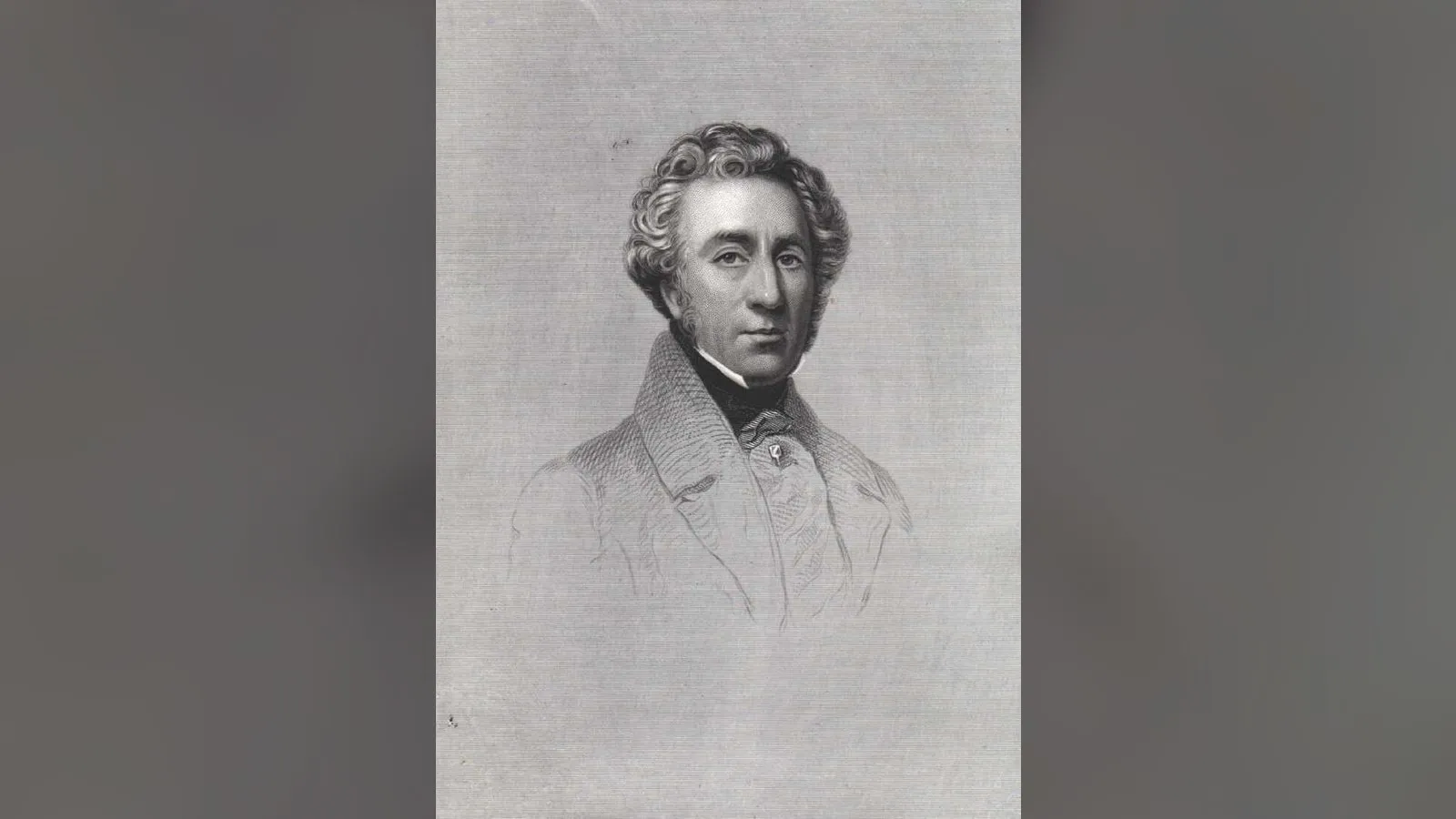

Robert Napier (1791–1876)
Contents
TL;DR
- Established/Documented: Napier is widely and accurately known as "the father of Clyde shipbuilding" — starting from a modest Glasgow blacksmith's shop in 1815 with only around £5 in working capital, he built an industrial empire that, by the 1850s, dominated marine engineering and shipbuilding on the River Clyde and employed over 3,000 workers at its peak.
- Established/Documented: Napier's most consequential single professional relationship was with shipping entrepreneur Samuel Cunard — Napier personally advised Cunard in 1839 that reliable steam crossings of the Atlantic were achievable, and persuaded him to build larger, more powerful ships than originally planned, directly shaping the founding specification of what became the Cunard Line, one of history's most significant transatlantic shipping companies.
- Established/Documented: Napier's shipyard functioned as a genuine training ground for the next generation of major Clyde shipbuilders — James and George Thomson, who trained under him before founding J. & G. Thomson (later John Brown & Company, builders of the Queen Mary and QE2), and John Elder, who trained under him before founding the Fairfield Shipbuilding and Engineering Company, both owe their origins directly to Napier's own works.
- Established/Documented: Early in his naval engineering career, Napier faced a documented setback with the Admiralty — after building engines for two paddle sloops in 1838, further orders inexplicably ceased, and it took a parliamentary inquiry to establish that his engines had in fact been cheaper and more reliable than those built in Thames shipyards, after which he became the Admiralty's primary marine engine supplier — a case worth noting directly as evidence that institutional favouritism, not merit, initially worked against a Scottish engineer in a London-dominated procurement system.
- Shared/Traditional: Napier briefly worked with lighthouse engineer Robert Stevenson (see our Great Scots card on Robert Stevenson) early in his career, before establishing his own independent business — a minor but genuine point of connection between two of this series' major nineteenth-century Scottish engineering figures.
Key Facts
- Born
- 21 June 1791, Dumbarton, Scotland
- Died
- 23 June 1876, Helensburgh (Shandon), Scotland (aged 85)
- Known for
- "Father of Clyde shipbuilding"; marine engine and ship builder; key partner in founding the Cunard Line
- Key ventures
- Vulcan Foundry, Glasgow (from 1828); Govan iron shipyard (from 1841); Robert Napier and Sons (from 1841); Parkhead Forge (from 1848)
- Key relationships
- Partnered with Samuel Cunard, Sir George Burns, and David MacIver in founding the British and North American Royal Mail Steam Packet Company (Cunard Line)
- Honours
- President, Institution of Mechanical Engineers (1863); Chevalier of the Légion d'honneur; Commander, Order of Dannebrog (Denmark, 1868)
- Family
- Married Isabella Napier (57 years); sons James and John Napier became business partners in Robert Napier and Sons
Scottish Impact Index (SI Score)
- Global Influence
- 6/10
- Enduring Relevance
- 8/10
- Material Contribution
- 7/10
- Exceptional Achievement
- 6/10
- Lasting Legacy
- 7/10
- Recognition
- 3/10
37/60
Ranked =48th of 200 in Great Scots
Claim-Status and Evidence Note
Claims below are evidence-tiered as Established/Documented (settled by primary business records, institutional history, or broad scholarly consensus), Shared/Traditional (widely told and broadly accurate), disputed, or Legend/Myth (unsupported and actively corrected here). Napier's career is unusually well documented through surviving Clyde shipbuilding industry records, and this card finds little requiring outright myth correction — the main editorial focus is giving proper, specific weight to his role as an industry-founding trainer of other major shipbuilders, a dimension of his legacy that can be underemphasised relative to his own individual commercial success.
Timeline
Born in Dumbarton to James and Jean Napier; his father and uncle were both blacksmiths and engineers.
Aged around sixteen, faces conscription into the Royal Navy during the Napoleonic Wars, but his father secures his exemption through formal indenture (apprenticeship).
Completes a five-year apprenticeship under his father.
Relocates to Edinburgh and works briefly with lighthouse engineer Robert Stevenson.
Establishes his own independent business in Glasgow, with reportedly only around £5 in working capital, and is admitted to the Incorporation of the Hammermen of Glasgow.
Takes over the Camlachie Foundry.
Wins a contract to build the steam engine for the paddle steamer Leven — his commercial breakthrough.
Achieves the distinction of having built the engines for both of the fastest competing steamers, Clarence and Helensburgh, at the Northern Yacht Club's regatta.
Establishes the Vulcan Foundry on Washington Street, Glasgow, to meet growing demand.
Adds the Lancefield Engine Works and associated dock facilities.
Builds engines for Royal Navy paddle sloops HMS Stromboli and HMS Vesuvius; further Admiralty orders unexpectedly cease afterward.
Advises Samuel Cunard that reliable steam-powered Atlantic crossings are achievable, and persuades him to commission larger, more powerful vessels than originally planned.
Co-founds the British and North American Royal Mail Steam Packet Company (the Cunard Line) with Samuel Cunard, Sir George Burns, David MacIver, and James Donaldson.
Takes sons James and John into partnership, forming Robert Napier and Sons; opens an iron shipbuilding yard at Govan.
Launches the company's first iron ship, the Vanguard.
Acquires the bankrupt Parkhead Forge for wrought iron production.
A parliamentary inquiry establishes that Napier's naval engines had been cheaper and more reliable than Thames-built alternatives; Napier becomes the Admiralty's primary marine engine builder, going on to build early Royal Navy iron vessels including HMS Jackal, HMS Lizard, and HMS Bloodhound.
Serves as a juror at the Crystal Palace Great Exhibition, London.
Elected President of the Institution of Mechanical Engineers.
Appointed Royal Commissioner of the Paris Exhibition by Napoleon III.
Made Commander of the Most Ancient Order of Dannebrog by King Christian IX of Denmark, in recognition of his construction of the Danish ironclad Rolf Krake.
His wife, Isabella, dies after 57 years of marriage.
Dies at his Shandon residence near Helensburgh, aged 85 (some sources give the death date as later in 1876); buried in Dumbarton's Parish Kirkyard.
Details
A blacksmith's son who nearly went to war instead of into industry
Robert Napier was born in 1791 in Dumbarton into a family already well established in the practical trades — his father and uncle were both accomplished blacksmiths and engineers, giving him direct, hands-on exposure to skilled metalwork from an early age. A genuinely striking near-miss occurred around age sixteen, during the Napoleonic Wars, when Napier faced conscription into the Royal Navy; it was only his father's formal indenture of him as an apprentice that secured his exemption, keeping him in Dumbarton rather than at sea during one of the most dangerous periods to be a serving sailor in British naval history. After completing his apprenticeship under his father, Napier relocated to Edinburgh, where he worked for a period with Robert Stevenson, the pioneering lighthouse engineer already profiled elsewhere in this series — a genuine, if brief, point of professional connection between two major figures of nineteenth-century Scottish engineering, before Napier struck out on his own.
From £5 of capital to a Clyde industrial empire
In 1815, Napier established his own independent business in Glasgow with reportedly only around £5 in working capital — a detail worth taking seriously as a measure of how genuinely modest his starting position was, rather than a rhetorical flourish. His early career built steadily: taking over the Camlachie Foundry in 1821, and then achieving his real commercial breakthrough in 1823, when he won the contract to build the steam engine for the paddle steamer Leven. The engine's success directly led to further orders, and by 1827 Napier had achieved the notable distinction of having built the engines for both of the fastest competing vessels at the Northern Yacht Club's annual regatta — a small but telling early marker of the reputation for engineering quality that would define his entire career. As demand grew, he established the Vulcan Foundry in 1828, added the Lancefield Engine Works and associated docks in 1835, opened an iron shipbuilding yard at Govan in 1841 (the same year he formally took his sons James and John into partnership as Robert Napier and Sons), and acquired the Parkhead Forge for wrought iron production in 1848. By the 1850s, this expanding network of works dominated marine engineering and shipbuilding on the Clyde, employing over 3,000 workers at its peak — a genuinely vast industrial operation built from that initial £5 stake within a single working lifetime.
The advice that shaped the Cunard Line
Napier's most historically significant individual professional relationship was with the shipping entrepreneur Samuel Cunard. In 1839, Napier gave Cunard direct, specific, and ultimately decisive engineering advice: that reliable, regular steam-powered crossings of the Atlantic were genuinely achievable, at a moment when this was still a matter of real technical and commercial uncertainty. More concretely, Napier persuaded Cunard to abandon his original, more modest plan — vessels of around 900 tons with 300 horsepower — in favour of considerably larger and more powerful ships, ultimately four vessels of 1,200 tons with 400 horsepower each. This was not incidental advice; it directly shaped the founding technical specification of what became the British and North American Royal Mail Steam Packet Company, the enterprise universally remembered today as the Cunard Line, which Napier co-founded alongside Cunard himself, Sir George Burns, David MacIver, and James Donaldson. Napier's own engineering reputation for what contemporaries specifically described as "sound advice" and "honest, careful, and substantial work" is widely credited as a direct contributing factor in the new company's early commercial success — and Napier's influence on the Cunard Line's identity extended even to matters of branding: the company's distinctive vermilion-and-black funnel livery had reportedly already appeared on earlier Napier-engined vessels before Cunard adopted it as the line's own signature.
A shipyard that trained an industry, not just built ships
One of the most significant and, in some popular accounts, under-emphasised dimensions of Napier's legacy is the extent to which his own works functioned as a direct training ground for the men who would go on to found several of the Clyde's other major shipbuilding dynasties. James and George Thomson both apprenticed under Napier before leaving to found their own firm, J. & G. Thomson — a company that went on to become John Brown & Company, the celebrated builder of, among many other famous vessels, the ocean liners Queen Mary and QE2 in the twentieth century. John Elder likewise trained under Napier before establishing the Fairfield Shipbuilding and Engineering Company, another major and long-lived Clyde shipbuilding name. This means Napier's influence on the Clyde shipbuilding industry cannot be measured only by his own firm's roughly 370 constructed vessels — it extends directly into the founding personnel of at least two further major shipbuilding enterprises that themselves went on to build some of the most famous ships in British maritime history, making "father of Clyde shipbuilding" a description that is accurate in a genuinely structural, industry-founding sense, not merely an honorific nod to individual commercial success.
The Admiralty setback, and what the resulting inquiry actually found
Napier's relationship with the Admiralty deserves specific attention because it documents a real institutional obstacle he faced, not simply an unbroken record of naval success. In 1838, Napier built engines — rated at 280 nominal horsepower — for two Royal Navy paddle sloops, HMS Stromboli and HMS Vesuvius. Further Admiralty orders then inexplicably ceased, despite the apparent success of the work. When Napier raised the matter formally in Parliament, the resulting inquiry established something genuinely significant: that Napier's engines had in fact been both cheaper and more reliable than equivalent engines built in Thames-based shipyards, meaning the initial loss of Admiralty business had not reflected any deficiency in his own work. Following this vindication, Napier became the Admiralty's primary marine engine builder, going on to construct early Royal Navy iron vessels including HMS Jackal, HMS Lizard, and HMS Bloodhound — among the first iron vessels in the Royal Navy's fleet — and he notably allowed naval officers in training to visit his shipyard directly to familiarise themselves with these genuinely novel iron-hulled ships. This episode is worth recording plainly as evidence that London-centred institutional procurement did not always recognise provincial Scottish engineering excellence on its own technical merits alone, at least not without direct parliamentary pressure forcing an honest accounting.
International recognition, and a collector's eye alongside an engineer's
Napier's achievements brought him substantial international, as well as domestic, recognition. He served as a juror at the 1851 Great Exhibition at the Crystal Palace in London, was made a Chevalier of the Légion d'honneur, served as President of the Institution of Mechanical Engineers from 1863, was appointed Royal Commissioner of the 1867 Paris Exhibition by Napoleon III, and in 1868 was made a Commander of Denmark's Order of Dannebrog by King Christian IX, specifically in recognition of his construction of the ironclad battleship Rolf Krake for the Danish Navy — evidence of Napier's shipbuilding reputation extending well beyond Britain's own naval and commercial interests. Alongside his industrial career, Napier maintained a genuine, lifelong interest in the fine arts, building his Shandon residence on the Gareloch specifically to house an impressive art collection that included works by Henry Raeburn, Horatio McCulloch, and various Dutch, French, and Italian masters — a dimension of his life that complicates any simple image of a purely industrial, commercially single-minded figure.
Death, and an industrial legacy that outlived his own firm
Napier's wife, Isabella, to whom he had been married for 57 years, died in 1875; Napier himself died the following year, on 23 June 1876, at Shandon, and was buried in Dumbarton's Parish Kirkyard — a fitting return to the town of his birth. His industrial legacy persisted institutionally well beyond his own lifetime and beyond his own family's direct ownership: the Parkhead Forge was acquired by William Beardmore and Company in 1886, and the Govan shipyard itself passed to Beardmore's in 1900, then to Harland & Wolff in 1912, before finally closing in 1962 — meaning the physical industrial site Napier had established continued in active shipbuilding use for well over a century after he first opened it. In 2014, Napier was formally inducted into the Scottish Engineering Hall of Fame, a modern institutional recognition matching the substantial contemporary honours he had already accumulated during his own long working life.
Did You Know
- Napier started his own business in 1815 with reportedly only around £5 in working capital, building it into an industrial operation employing over 3,000 workers by the 1850s.
- As a teenager, Napier nearly ended up conscripted into the Royal Navy during the Napoleonic Wars — his father secured his exemption by formally indenturing him as an apprentice instead.
- Napier briefly worked with lighthouse engineer Robert Stevenson early in his career, before establishing his own independent business in Glasgow.
- Napier personally persuaded Samuel Cunard to build larger, more powerful ships than originally planned — a decision that directly shaped the founding specification of what became the Cunard Line.
- The Cunard Line's famous vermilion-and-black funnel livery had reportedly already appeared on earlier Napier-engined vessels before Cunard adopted it as the company's own signature branding.
- Two of Scotland's other major shipbuilding dynasties — J. & G. Thomson (later John Brown & Company, builders of the Queen Mary and QE2) and the Fairfield Shipbuilding and Engineering Company — were both founded by men who trained directly under Napier in his own shipyard.
- The Admiralty initially and inexplicably stopped ordering engines from Napier after an apparently successful 1838 contract; a parliamentary inquiry later established that his engines had actually been cheaper and more reliable than equivalent Thames-built engines.
- Denmark's King Christian IX personally made Napier a Commander of the Order of Dannebrog in 1868 for building the Danish ironclad Rolf Krake.
- The Govan shipyard Napier established in 1841 remained in active shipbuilding use, under a succession of different owners, for well over a century, only finally closing in 1962.
FAQ
1Why is Robert Napier called "the father of Clyde shipbuilding"?
Because he built one of the first and largest marine engineering and shipbuilding operations on the Clyde from essentially nothing, and because his own shipyard directly trained the founders of at least two other major Clyde shipbuilding firms (J. & G. Thomson/John Brown & Company, and the Fairfield Shipbuilding and Engineering Company), making his influence genuinely structural to the entire subsequent industry, not just his own individual firm's output.
2What was Napier's connection to the Cunard Line?
He personally advised Samuel Cunard in 1839 that reliable steam-powered Atlantic crossings were achievable, persuaded him to build larger and more powerful ships than originally planned, and co-founded the company alongside Cunard and other partners — advice and involvement widely credited as central to the company's early success.
3Did Napier train other famous shipbuilders?
Yes, directly — James and George Thomson (founders of J. & G. Thomson, later John Brown & Company) and John Elder (founder of the Fairfield Shipbuilding and Engineering Company) all trained in Napier's own shipyard before establishing their own major firms.
4What happened with Napier and the Royal Navy?
After a successful 1838 engine contract, further Admiralty orders unexpectedly stopped. A parliamentary inquiry, prompted by Napier himself, established that his engines had actually been cheaper and more reliable than equivalent Thames-built alternatives, after which he became the Admiralty's primary marine engine supplier.
5Did Napier build ships for other countries besides Britain?
Yes — most notably the ironclad battleship Rolf Krake for the Danish Navy, for which King Christian IX of Denmark made him a Commander of the Order of Dannebrog in 1868.
6Was Napier only interested in industry and engineering?
No — he maintained a genuine lifelong interest in fine art, building his Shandon residence specifically to house a substantial art collection including works by Henry Raeburn and various European masters.
7How did Napier's business start?
From very modest beginnings — he established his own independent Glasgow business in 1815 with reportedly only around £5 in working capital, following an apprenticeship under his blacksmith father.
8What happened to Napier's shipyard after his death?
It passed through several subsequent owners — William Beardmore and Company (1900), then Harland & Wolff (1912) — remaining in active shipbuilding use until it finally closed in 1962, well over a century after Napier first established it.
9Was Napier connected to Robert Stevenson, the lighthouse engineer?
Yes, briefly — Napier worked with Stevenson in Edinburgh for a period early in his career, before establishing his own independent business in Glasgow.
10How is Napier recognised today?
He was inducted into the Scottish Engineering Hall of Fame in 2014, and his historical significance is well documented through surviving Clyde shipbuilding industry records and institutional histories.
Sources and Further Reading
Primary/Institutional
- Grace's Guide to British Industrial History, "Robert Napier"
- Scottish Engineering Hall of Fame, Robert Napier profile
- The Glasgow Story, "Robert Napier" (Glasgow City Archives / Mitchell Library)
Scholarly
- Engineering Institute of Canada, "Clydeside" (historical paper on Clyde shipbuilding industry)
- Wikipedia, "Robert Napier (engineer)" and "Robert Napier and Sons" — sourced business and industry history
General
- Undiscovered Scotland, biography of Robert Napier
- Wikidata, biographical record, Robert Napier
Caveats: Myths and Disputed Claims
Napier's career is unusually well documented through surviving Clyde shipbuilding business and institutional records, and this card found no significant popular myth requiring correction. The main editorial emphasis has been on precision and proportion: presenting his Admiralty setback plainly as a real, documented institutional failure (subsequently corrected by parliamentary inquiry) rather than omitting it in favour of an uninterrupted success narrative, and giving specific, substantial weight to his role training the founders of other major Clyde shipbuilding firms, which is sometimes mentioned only briefly in popular accounts despite being central to the full, structural significance of the "father of Clyde shipbuilding" title.
Card 064 · Great Scots