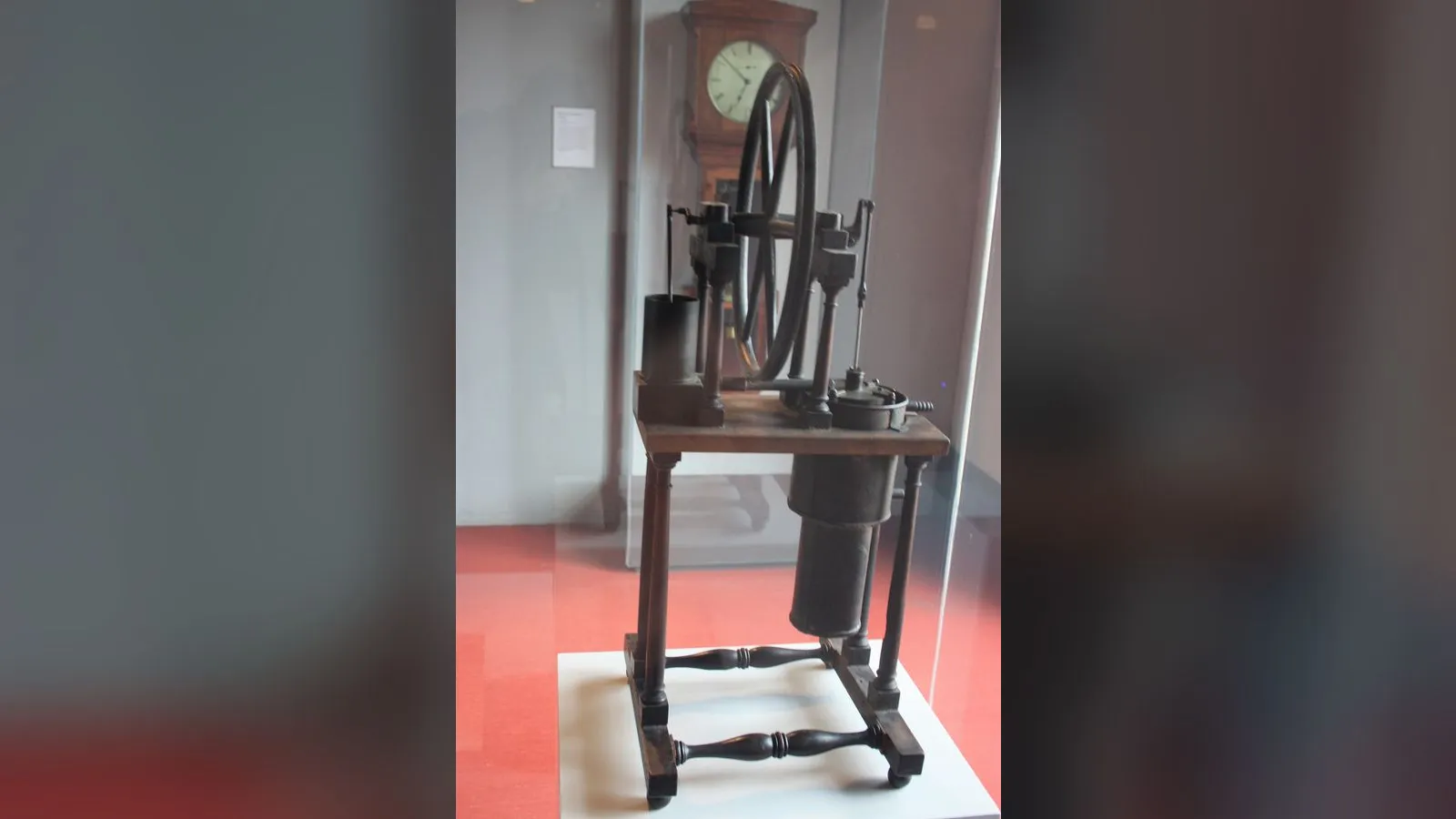

Robert Stirling (1790–1878): The Minister Who Invented the Hot Air Engine
Contents
TL;DR
- Established/Documented: Robert Stirling was a Church of Scotland minister for over 60 years who, alongside his engineer brother James, invented and patented in 1816 the closed-cycle hot air engine that bears his name — a genuine and historically significant piece of engineering achieved almost entirely outside any formal engineering career.
- Established/Documented: The engine's invention was explicitly motivated by safety: contemporary high-pressure steam boilers exploded with some regularity, killing and maiming workers, and Stirling's closed-cycle, low-pressure design was intended to deliver useful power without that catastrophic failure risk.
- Established/Documented: The engine's central technical innovation — the "economiser," later renamed the "regenerator," which stored and returned heat within the closed air cycle — was a genuinely elegant and efficient piece of thermodynamic engineering, achieved decades before the formal science of thermodynamics that would later explain why it worked so well.
- Established/Documented: Despite its efficiency and safety advantages, the Stirling engine was a commercial failure throughout the 19th century, undone by the metallurgical limits of the era (no material could reliably withstand sustained high-temperature operation) and by the greater power density and falling cost of rival steam and, later, internal combustion engines.
- Disputed/Shared: Robert Stirling's own grandfather, Michael Stirling, is separately credited in some sources with having built an early rotary threshing machine decades before Andrew Meikle's patented 1788 design — a claim that, as discussed in this series' Andrew Meikle article, rests only on a sworn statement from Michael Stirling's son rather than independent contemporary documentation, and should be treated with the same caution here.
Key Facts
- Born
- 25 October 1790, Cloag Farm, near Methven, Perthshire, Scotland
- Died
- 6 June 1878, Galston, East Ayrshire, Scotland (aged 87)
- Occupation
- Church of Scotland minister; inventor
- Known for
- Inventing the Stirling engine — a closed-cycle hot air engine using a regenerative heat exchanger
- Key achievement
- Patenting, in 1816, a genuinely safer and more thermally efficient alternative to the high-pressure steam engine, decades before the underlying thermodynamics were formally understood
- Notable relationships
- Brother and engineering collaborator James Stirling; grandfather Michael Stirling (claimed early threshing-machine builder); sons Patrick, William, Robert, and James Stirling all became notable railway/locomotive engineers
- Honours
- Doctor of Divinity, University of St Andrews (1840); inducted into the Scottish Engineering Hall of Fame (2014)
- Legacy
- The regenerator principle remains central to modern Stirling engine research, including solar-power and aerospace applications explored by NASA and national laboratories
Scottish Impact Index (SI Score)
- Global Influence
- 6/10
- Enduring Relevance
- 9/10
- Material Contribution
- 4/10
- Exceptional Achievement
- 9/10
- Lasting Legacy
- 6/10
- Recognition
- 3/10
37/60
Ranked =48th of 200 in Great Scots
A Note on Claims and Evidence
This article tiers claims by evidential strength. Established/Documented claims rest on multiple independent, well-corroborated sources. Shared/Traditional claims are widely repeated but less rigorously sourced. disputed claims involve genuine conflicts or unverifiable assertions. Robert Stirling's story requires little myth-correction of the "invented alone, unfairly forgotten" variety that recurs elsewhere in this series — his role as co-inventor alongside his brother James is well documented and openly credited in the historical record itself. The more interesting editorial task here is placing the engine's technical brilliance honestly alongside its near-total 19th-century commercial failure, and flagging the family's second, separate and more uncertain claim to inventive priority, inherited from Robert's own grandfather.
Timeline
Born 25 October at Cloag Farm, near Methven, Perthshire, one of eight children of Patrick Stirling and Agnes Stirling (née Small). Grandfather Michael Stirling is separately credited, in disputed sources, with an early rotary threshing machine.
At age fifteen, begins theological studies at the University of Edinburgh. Younger brother James begins his own studies at Edinburgh around the same period.
Continues theological education at the University of Glasgow, studying classics, philosophy, theology, and mathematics — with little formal scientific training.
Returns to Edinburgh for final divinity studies.
Licensed to preach by the Church of Scotland's Presbytery of Dumbarton; becomes second-charge minister at Laigh Kirk, Kilmarnock, in September. In the same year, patents the first version of his closed-cycle hot air engine, featuring the "economiser" heat-exchange device.
Builds a working 2-horsepower engine to pump water at an Ayrshire quarry, an early practical demonstration of the design.
Marries Jane Rankine in Kilmarnock; the couple go on to have seven children, several of whom (Patrick, William, Robert, and James) become notable railway and locomotive engineers in their own right.
Patents an improved design using thin metal plates to improve airflow and heat exchange; the approach does not significantly improve efficiency. Relocates to Galston Parish Church in February, where he remains minister for the rest of his life.
Patents a further improved design with his brother James, inverting the displacer configuration and adding a compressed air pump to raise internal working pressure to roughly 20 atmospheres; renames the "economiser" the "regenerator."
Patents further refinements, including cooling passages and improved piston seals using cupped leather collars; awarded a Doctor of Divinity by the University of St Andrews (11 January).
The first of two Stirling engines built to Robert's refined 1840 design begins operation at a Dundee iron foundry he managed; it runs until failing in December 1845 due to metal fatigue in the air vessel under sustained heat.
A larger, second Dundee engine achieves around 45 horsepower with efficiency comparable to the best contemporary steam engines. James Stirling presents the engine to the Institution of Civil Engineers.
The Dundee engines are dismantled after Robert Stirling leaves the foundry; the technology does not achieve wider industrial adoption.
In correspondence, Stirling acknowledges Henry Bessemer's steel-making process, expressing hope that improved materials might finally allow air engines to reach their full potential — a prescient observation about a problem that would not be properly solved in his own lifetime.
Dies in Galston, East Ayrshire, aged 87, having served as a parish minister for over six decades alongside his engineering work.
Inducted into the Scottish Engineering Hall of Fame; a new gravestone is erected at Galston Cemetery by public subscription, rededicated in May 2015.
The regenerator principle Stirling devised becomes central to renewed research interest in Stirling-cycle engines for applications including solar power generation and aerospace power systems, studied by institutions including NASA and national research laboratories.
Details
A Minister First, an Engineer by Circumstance
Robert Stirling's path to one of the more quietly important engineering achievements of the 19th century did not run through any engineering school or apprenticeship. Born in 1790 at Cloag Farm near Methven, Perthshire, into a family that already had a documented (if partly disputed) engineering tradition — his grandfather, Michael Stirling, is separately claimed to have built an early rotary threshing machine, a claim discussed with appropriate caution elsewhere in this series — Robert was directed instead towards the ministry. He studied theology, classics, philosophy, and mathematics at the Universities of Edinburgh and Glasgow, by his own biographers' account receiving "probably very little science" in the process, and was licensed to preach by the Church of Scotland in 1816, becoming second-charge minister at Laigh Kirk in Kilmarnock. He would go on to serve as minister of Galston Parish Church, in East Ayrshire, from 1824 until his death in 1878 — a single, unbroken parish ministry spanning more than half a century, conducted in parallel with his engineering work rather than as a prelude to it.
The Family Connection to the Threshing Machine Dispute
It is worth pausing on a detail that connects Robert Stirling's family directly to another figure already covered in this series. Robert's grandfather, Michael Stirling, is credited in some sources with having built a working rotary threshing machine on his Gateside farm as early as 1758 — decades before Andrew Meikle's celebrated, patented 1788 design. As this series' article on Andrew Meikle sets out, that claim rests solely on a sworn statement given by Michael Stirling's own son to a minister, with no independent contemporary documentation surviving to corroborate it. It is neither dismissed nor accepted outright here; it is treated, consistently with the Meikle article, as an unverified family claim rather than an established historical fact. Whatever its merits, the coincidence is a reminder that Scottish agricultural and mechanical invention in this period often ran through the same small number of interconnected families and communities.
Why a Minister Built an Engine: Safety as the Motivating Problem
Stirling's invention of the hot air engine was not an abstract intellectual exercise but a direct, practical response to a real and lethal problem of the early industrial age. High-pressure steam boilers of the period were genuinely dangerous, and catastrophic explosions — killing and maiming workers, sometimes in significant numbers — were a documented and recurring hazard of early steam power. Stirling's design addressed this directly: rather than using high-pressure steam that could catastrophically fail if a boiler wall gave way, his engine operated on a closed cycle of air, heated and cooled at comparatively low pressure, driving a piston without the same explosive failure mode. This safety motivation is well documented and central to understanding why a parish minister, rather than an industrial engineer, took up the problem: it reads as much as a piece of practical Christian concern for the safety of working men as it does a purely technical pursuit.
The Economiser, Later the Regenerator
The technical heart of Stirling's invention, patented in 1816, was a device he initially called the "economiser": a heat-exchange element positioned within the closed air circuit that captured and stored heat from the air as it moved from the hot side of the engine to the cold side, then returned that stored heat to the air on its way back — dramatically improving the engine's thermal efficiency compared to a simple, non-regenerative hot air engine. In 1827, working with his brother James on a further improved patent, Stirling renamed this device the "regenerator," the term that has stuck in engineering literature ever since. What makes this achievement genuinely remarkable is its timing: Stirling arrived at an elegantly effective solution to a real thermodynamic efficiency problem roughly three decades before Sadi Carnot's and later Rudolf Clausius's formal theoretical work established the underlying science of thermodynamics that would explain precisely why the regenerator worked so well. He built an efficient heat engine before the theory existed to properly describe one.
James Stirling's Essential Contribution
Robert Stirling's younger brother James, also formally educated at Edinburgh, was not a peripheral assistant but a genuine engineering collaborator, and the historical record treats this co-invention relationship with unusual clarity compared to some of the more contested credit disputes covered elsewhere in this series. The key 1827 patent, which introduced the compressed air pump raising the engine's internal working pressure to roughly 20 atmospheres and inverted the displacer arrangement, was a joint effort, and James went on to present the refined Dundee engine to the Institution of Civil Engineers in 1845, representing the brothers' work to Britain's foremost professional engineering body. This is a rare case in this series where the popular account and the documented historical record are already substantially aligned: Robert is properly remembered as the primary inventor and patent-holder, but James's engineering contribution is neither obscure nor seriously contested.
The Dundee Engines and the Limits of 19th-Century Materials
The most substantial practical test of the mature Stirling engine design came at a Dundee iron foundry that Robert Stirling managed from the early 1840s, incorporating refinements from his 1840 patent, including improved cooling passages and cupped leather piston seals to reduce air leakage. The first Dundee engine began operating in March 1843 and ran successfully — by some accounts lifting the equivalent of roughly 700,000 pounds one foot per minute, or about 21 horsepower, at a fuel efficiency rivalling the best contemporary steam engines — until December 1845, when the air vessel failed under the sustained stress of high-temperature operation, a direct consequence of the metallurgical limitations of the period. A larger second engine achieved around 45 horsepower with similarly strong efficiency. But the fundamental problem the failure exposed could not be engineered around with the materials available: no metal of the era could reliably withstand prolonged exposure to the high temperatures the engine's efficient operation required, without eventually cracking or deforming. Both Dundee engines were dismantled in 1847 when Stirling left the foundry, and the technology never achieved meaningful wider industrial adoption in his lifetime.
A Technology Ahead of Its Materials
The Stirling engine's 19th-century commercial failure should not be read, and is not read here, as evidence of a flawed design. Its fundamental efficiency and safety advantages over contemporary steam engines were real and were demonstrated in practice at Dundee. What defeated it was a straightforward materials-science problem combined with unfavourable economics: low working pressures kept the engine relatively weak for heavy industrial applications, the high temperatures needed for good efficiency exceeded what available metals could sustain for long, and the rapidly improving power density and falling manufacturing costs of steam engines, and later internal combustion engines, left the Stirling design commercially uncompetitive despite its genuine technical merits. Stirling himself appears to have understood this clearly: in 1876, two years before his death, he wrote acknowledging Henry Bessemer's new steel-making process, expressing hope that better materials might finally let air engines realise their full potential — a remarkably clear-sighted diagnosis of his own invention's central limitation, offered by a man who would not live to see it resolved.
Death and a Quiet, Durable Legacy
Robert Stirling died in Galston, East Ayrshire, on 6 June 1878, at the age of 87, having spent more than sixty years as a parish minister while also producing one of the more technically elegant engineering inventions of the industrial era. His formal recognition within engineering circles came slowly and mostly posthumously: he was inducted into the Scottish Engineering Hall of Fame only in 2014, and a new gravestone was erected at Galston Cemetery by public subscription that same year, replacing an original that had fallen into disrepair. The Stirling engine's genuine second life has come in the 20th and 21st centuries, as the regenerator principle he devised has become a serious subject of renewed research for applications where the engine's quiet operation, fuel flexibility, and thermal efficiency offer real advantages — including solar-power generation and aerospace power systems studied by organisations including NASA and national research laboratories, a level of technical vindication that arrived roughly a century and a half after Stirling's own death.
Did You Know?
- Robert Stirling was a serving Church of Scotland minister for more than sixty years, and his engineering work was conducted entirely alongside, never instead of, his parish duties.
- His invention was explicitly motivated by the real danger of steam boiler explosions — his closed-cycle, low-pressure design was intended as a genuinely safer alternative to contemporary high-pressure steam engines.
- Stirling's "regenerator" heat-exchange device achieved real, measurable efficiency gains roughly three decades before the formal science of thermodynamics existed to fully explain why it worked.
- Four of Robert Stirling's own sons — Patrick, William, Robert, and James — went on to become notable engineers in their own right, several in railway locomotive engineering.
- Robert Stirling's grandfather, Michael Stirling, is separately claimed in some sources to have built a working threshing machine decades before Andrew Meikle's patented 1788 design — a claim this series treats as unverified, resting only on a secondhand sworn statement.
- The 1843 Dundee foundry engine ran successfully for nearly three years before ultimately failing due to the limits of 19th-century metallurgy, not any flaw in the underlying design.
- Stirling received an honorary Doctor of Divinity from the University of St Andrews in 1840 — a reminder that his primary public identity throughout his life was as a clergyman, not an inventor.
- The Stirling engine has found a genuine second life in modern research into solar power generation and aerospace applications, more than a century after its 19th-century commercial failure.
Frequently Asked Questions
1Was Robert Stirling a trained engineer?
No. He trained and worked as a Church of Scotland minister, studying theology, classics, philosophy, and mathematics at Edinburgh and Glasgow, with little formal scientific education. His engineering achievement was pursued alongside his ministry rather than through any formal engineering training.
2What problem was the Stirling engine designed to solve?
Primarily safety. Contemporary high-pressure steam boilers were prone to dangerous, sometimes fatal explosions. Stirling's closed-cycle hot air engine operated at much lower pressure, aiming to deliver useful mechanical power without that catastrophic failure risk, while also achieving genuinely strong thermal efficiency.
3What was the "regenerator," and why does it matter?
Originally called the "economiser" in Stirling's 1816 patent and renamed the "regenerator" in the improved 1827 patent, it was a heat-exchange device that captured and stored heat from air passing through the engine's closed cycle, then returned that heat on the air's return pass, substantially improving efficiency. It remains the defining technical feature of Stirling-cycle engines today.
4Did Robert Stirling invent the engine alone?
No, and this is not seriously disputed in the historical record. His brother James Stirling was a genuine engineering collaborator, particularly on the important 1827 patent, and later presented their refined engine design to the Institution of Civil Engineers in 1845.
5Why did the Stirling engine fail commercially in the 19th century, despite its advantages?
Mainly materials science. No metal available at the time could reliably withstand the sustained high temperatures needed for efficient operation without eventually failing, as demonstrated by the 1845 air vessel failure at Dundee. Combined with the Stirling engine's relatively low working pressure and the falling cost and rising power density of competing steam and internal combustion engines, this made it commercially uncompetitive.
6Is Robert Stirling related to Michael Stirling, the disputed early threshing-machine inventor?
Yes — Michael Stirling was Robert Stirling's grandfather. Michael's claim to an early rotary thresher, built decades before Andrew Meikle's patented 1788 design, rests only on a sworn statement from his son and is treated in this series as an unverified family claim rather than established fact.
7Is the Stirling engine used for anything today?
Yes, in specialised contexts. Modern research has explored Stirling-cycle engines for applications including solar-thermal power generation and aerospace power systems, valued for quiet operation, fuel flexibility, and thermal efficiency, with interest from organisations including NASA and national research laboratories. It is not in widespread everyday industrial or automotive use.
8Where is Robert Stirling buried, and how is he commemorated?
He is buried at Galston Cemetery in East Ayrshire, where he served as parish minister for the last decades of his life. A new gravestone was erected by public subscription in 2014 and rededicated in 2015, and he was inducted into the Scottish Engineering Hall of Fame the same year.
9What happened to the Dundee engines that tested Stirling's design?
Two engines were built to Robert Stirling's refined 1840 design and operated at a Dundee iron foundry he managed from 1843. The first ran successfully until a metal fatigue failure in December 1845; a larger second engine achieved comparable efficiency to top contemporary steam engines. Both were dismantled in 1847 when Stirling left the foundry.
10Did Robert Stirling's children continue his engineering legacy?
In a sense, yes, though in a different branch of engineering. Several of his sons — Patrick, William, Robert, and James — became notable engineers, particularly in railway and locomotive engineering, rather than continuing work on the Stirling engine itself.
Sources and Further Reading
Primary / Institutional
- UK Patents of Robert Stirling (1816, 1824, 1827 with James Stirling, 1840)
- Institution of Civil Engineers, 1845 presentation record of the Dundee Stirling engine
- Scottish Engineering Hall of Fame: Robert Stirling
Scholarly / Reference
- Wikipedia: "Robert Stirling"
- Wikipedia: "Stirling engine"
- Wikipedia: "James Stirling (engineer, born 1799)"
- Britannica: "Robert Stirling"
- Graces Guide: "Robert Stirling"
- Linda Hall Library: "Robert Stirling" (Scientist of the Day)
- EBSCO Research Starters: "Robert Stirling"
General / Popular
Caveats: Myths and Disputed Claims
- "Robert Stirling invented the engine entirely alone." Not accurate, though also not a contested or suppressed fact — his brother James Stirling was a genuine co-inventor, particularly credited on the important 1827 patent, and the two brothers' shared contribution is openly acknowledged throughout the historical record rather than being a matter of dispute.
- The Michael Stirling threshing-machine claim. Robert Stirling's grandfather, Michael Stirling, is separately claimed in some sources to have built a working rotary thresher as early as 1758, decades before Andrew Meikle's patented 1788 design. As discussed in this series' Andrew Meikle article, this rests solely on a sworn statement from Michael Stirling's son, with no independent contemporary documentation, and should be treated as an unverified family claim rather than established fact.
- "The Stirling engine failed because the design was flawed." Untrue. The engine's core efficiency and safety principles were sound and were demonstrated in practice, including at the Dundee foundry. Its 19th-century commercial failure stemmed from the metallurgical limits of the era and unfavourable competitive economics, not a defect in Stirling's underlying engineering.
- Overstating Stirling's contemporary recognition. Popular retellings can give the impression that Stirling was a celebrated inventor in his own lifetime. In fact, his formal engineering recognition — the Scottish Engineering Hall of Fame induction, a public-subscription gravestone — arrived only in 2014–2015, more than 130 years after his death; during his own lifetime he was known locally primarily as a parish minister.
Card 071 · Great Scots