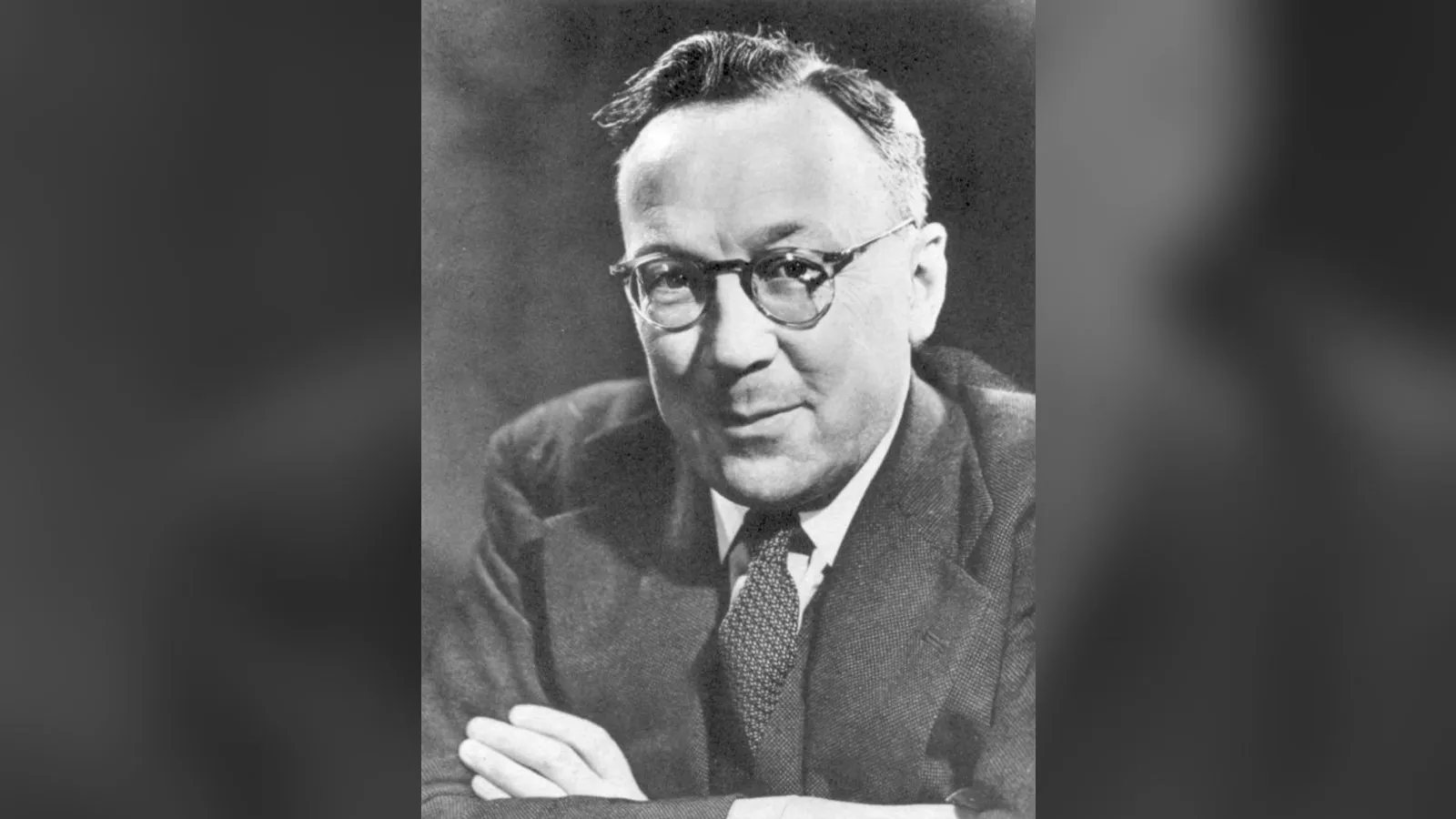

Sir Robert Watson-Watt
Contents
Robert Watson-Watt, a joiner's son from Brechin, led the British team that turned radio detection of aircraft into Chain Home, the network of radar stations that warned the RAF of incoming German raids in the Battle of Britain. He is often called the father, or even the inventor, of radar. This card tests what he actually did, who worked with him, and two famous stories: that he was descended from James Watt, and that he was caught by a radar speed trap.
TL;DR
- established Robert Watson-Watt was born in Brechin, Angus, on 13 April 1892 and studied engineering at University College, Dundee, then part of the University of St Andrews.
- established In January 1935 the Air Ministry asked whether a radio "death ray" was possible. Watson-Watt and his assistant Arnold Wilkins concluded it was not, but proposed detecting aircraft by radio instead.
- established On 26 February 1935, near Daventry, they showed that a Handley Page Heyford bomber could be detected by reflected signals from a BBC shortwave transmitter.
- established This led to Chain Home, the chain of coastal radar stations that gave the RAF early warning in the Battle of Britain in 1940. Watson-Watt was knighted in 1942.
- shared Watson-Watt claimed descent from James Watt, but no family link has been found.
Key Facts
- Born
- 13 April 1892, Brechin, Angus
- Education
- University College, Dundee; BSc engineering, 1912
- Meteorological Office
- Joined 1915 or 1916
- Radio Research Station, Slough
- From 1924
- Memo on detecting aircraft
- 12 February 1935
- Daventry Experiment
- 26 February 1935
- Bawdsey Research Station
- Superintendent from 1 September 1936
- Chain Home
- About 20 stations by 1939; over 50 by 1945
- Fellow of the Royal Society
- 1941
- Knighted
- 1942
- Government award
- £50,000, 1952
- Died
- 5 December 1973, Inverness; buried at Pitlochry
Scottish Impact Index (SI Score)
- Global Influence
- 9/10
- Enduring Relevance
- 9/10
- Material Contribution
- 7/10
- Exceptional Achievement
- 9/10
- Lasting Legacy
- 9/10
- Recognition
- 6/10
49/60
Ranked =15th of 200 in Great Scots
A Note on Claims and Evidence
Each major claim carries one of three labels. established means supported by primary records, official bodies or several independent reliable sources. shared means the core fact is sound but sources disagree on details, dates or interpretation. traditional means widely repeated but not traceable to a primary or independent source.
Watson-Watt's work is documented by the National Physical Laboratory, government records and his own memoirs. Popular accounts tend to overstate his role as a lone inventor, and repeat his claimed descent from James Watt without evidence. Sources differ slightly on some figures, such as the number of Chain Home stations at the start of the war.
Timeline
Robert Watson Watt is born in Brechin.
He graduates in engineering from University College, Dundee.
He joins the Meteorological Office to work on detecting thunderstorms by their radio signals.
He moves to the Radio Research Station at Slough.
The Air Ministry asks whether a radio "death ray" is possible.
Watson-Watt sends his memo on detecting aircraft by radio.
The Daventry Experiment detects a bomber by reflected radio waves.
Research moves to Orford Ness.
Watson-Watt becomes superintendent of the Bawdsey Research Station.
The first Chain Home stations begin round-the-clock watch.
Chain Home gives early warning in the Battle of Britain.
Watson-Watt is knighted.
He is stopped for speeding by a radar speed trap in Canada.
He dies in Inverness.
The Princess Royal unveils his statue in Brechin.
Details
From Brechin to the weather service
established Robert Watson Watt, as his name was then written, was born in Brechin on 13 April 1892. He went to Brechin High School and then University College, Dundee, graduating in engineering in 1912. He joined the Meteorological Office during the First World War and worked on detecting the radio signals given off by lightning, so that pilots could be warned of thunderstorms. In 1924 he moved to the Radio Research Station at Slough, which became part of the National Physical Laboratory.
shared Sources give 1915 or 1916 for his move to the Meteorological Office.
From death ray to detection
established In January 1935 Harry Wimperis of the Air Ministry asked Watson-Watt whether a radio "death ray" could destroy aircraft. Watson-Watt and his assistant Arnold Wilkins worked out that it could not, but that aircraft would reflect radio waves strongly enough to be detected. Watson-Watt set this out in a secret memo dated 12 February 1935.
The Daventry Experiment
established On 26 February 1935, in a field near Daventry, Watson-Watt and Wilkins set up a receiver about six miles from the BBC's shortwave transmitter. A Handley Page Heyford bomber flew along the beam, and the echo showed clearly on their screen. Only three people saw it: Watson-Watt, Wilkins and A. P. Rowe of the Air Ministry. A plaque now marks the site.
Chain Home
established Research moved to Orford Ness in 1935 and then to Bawdsey Manor in Suffolk, where Watson-Watt became superintendent in 1936. The first Chain Home stations began round-the-clock watch in 1938, and a chain of stations along England's east and south coasts was in place before the war began. In the Battle of Britain in 1940, Chain Home gave the RAF early warning of German raids, allowing it to send its limited fighter force where it was needed. More than 50 stations were built by the end of the war.
shared Sources give between 19 and 20 Chain Home stations operating at the start of the war.
Father of radar?
shared Watson-Watt is often called the father of radar. The title reflects his leadership of the team that turned radio detection into a working national warning system. It does not mean he worked alone: Wilkins made the key calculations, and many engineers built Chain Home.
Honours and later life
established Watson-Watt was elected a Fellow of the Royal Society in 1941 and knighted in 1942. In 1952 the government awarded him £50,000 for his work. He published his memoir, Three Steps to Victory, in the 1950s. He later worked in Canada and the United States, and married for the third time in 1966, to Dame Katherine Trefusis Forbes. He died in Inverness on 5 December 1973 and is buried at Pitlochry. A statue of him was unveiled in Brechin in 2014.
The speed trap
established In 1956 Watson-Watt was stopped for speeding in Canada by a police officer using a radar gun. He later wrote a comic poem, "A Rough Justice", about being caught by his own invention.
traditional He is said to have exclaimed that if he had known what they would do with it, he would never have invented it. The remark is widely quoted, but its exact wording is not well documented.
James Watt?
shared Watson-Watt claimed descent from James Watt, the steam engineer, and some popular accounts repeat this as fact. No evidence of a family relationship has been found.
Did You Know?
- Watson-Watt began by trying to detect thunderstorms by their radio signals.
- Radar grew out of a question about whether a "death ray" was possible.
- Only three people witnessed the Daventry Experiment in 1935.
- The test aircraft was a Handley Page Heyford bomber.
- A statue of him stands in his home town of Brechin.
- He was awarded £50,000 by the government in 1952.
- He was caught by a radar speed trap in Canada in 1956.
- He wrote a comic poem about it called "A Rough Justice".
FAQ
1Who was Robert Watson-Watt?
A Scottish engineer from Brechin who led the development of Britain's Chain Home radar.
2Did he invent radar?
He led the team that made radio detection of aircraft into a working warning system. He did not work alone.
3What was the Daventry Experiment?
A test on 26 February 1935 that detected a bomber by reflected radio waves from a BBC transmitter.
4Who was Arnold Wilkins?
Watson-Watt's assistant, who made the key calculations.
5What was Chain Home?
A chain of coastal radar stations that warned the RAF of incoming aircraft.
6Did radar win the Battle of Britain?
It gave the RAF vital early warning, but was one part of the defence system.
7Was he descended from James Watt?
He claimed so, but no family link has been found.
8Is the speeding story true?
Yes. He was caught by a radar speed trap in Canada in 1956.
9When was he knighted?
In 1942.
10Where is he buried?
At Pitlochry.
Sources and Further Reading
Primary/Institutional
- National Physical Laboratory, "Sir Robert Watson-Watt" (npl.co.uk)
General
- Historic UK, "Robert Watson-Watt" (historic-uk.com)
- Wikipedia, "Robert Watson-Watt" (en.wikipedia.org)
Further reading (books, not consulted online)
- Robert Watson-Watt, Three Steps to Victory (Odhams, 1957)
Caveats: Myths and Disputed Claims
- Do not call Watson-Watt the sole inventor of radar.
- Do not say he was descended from James Watt; no link has been found.
- Do not leave out Arnold Wilkins.
- Do not say radar alone won the Battle of Britain.
Card 043 · Great Scots