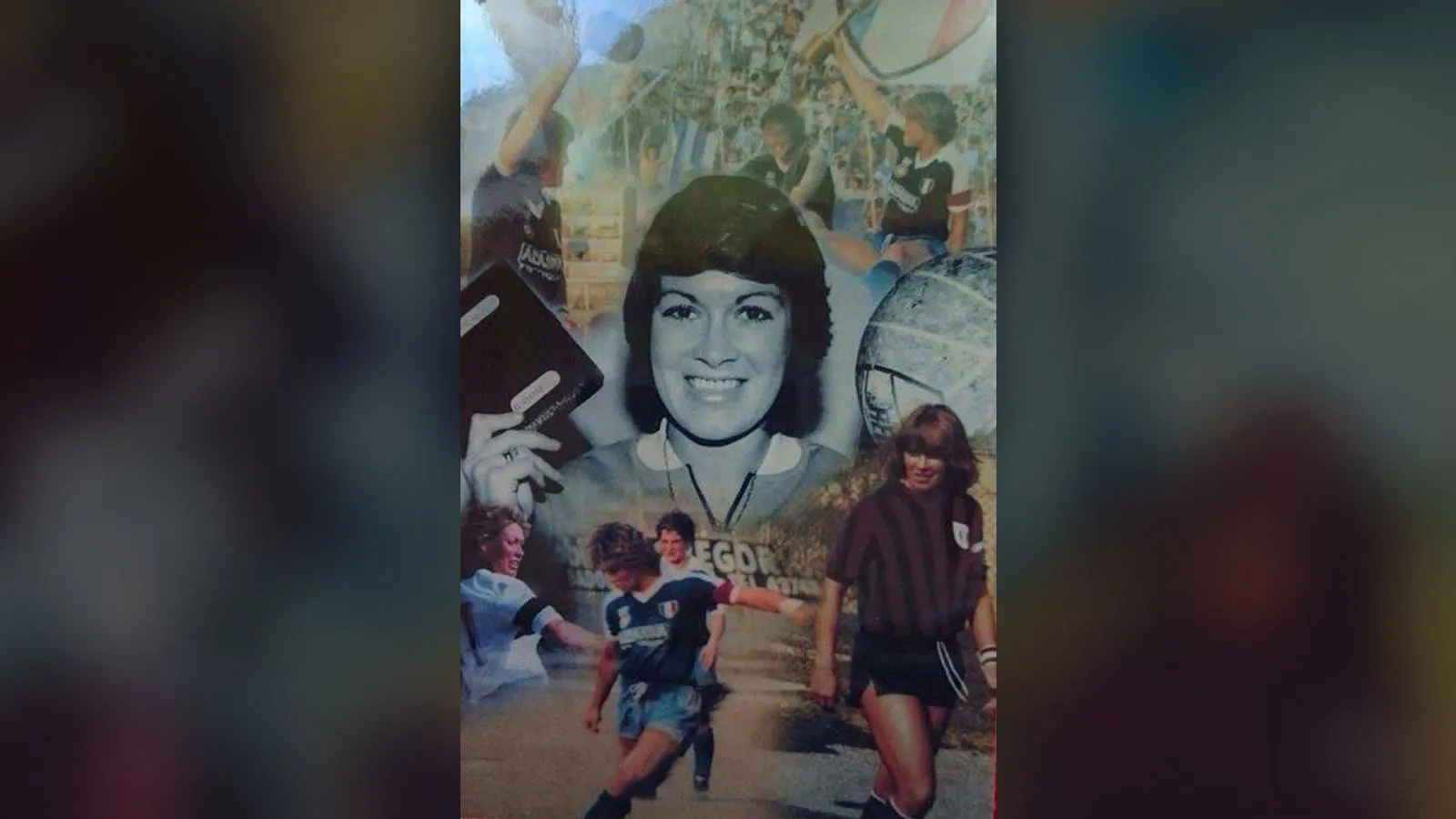

Rose Reilly (b. 1955)
Contents
TL;DR
- established Born in Kilmarnock and raised in Stewarton, East Ayrshire, Reilly faced direct and blatant sexism from the start of her football career — Celtic F.C. reportedly expressed interest in signing her only on condition that she cut her hair short and called herself "Ross" to pass as a boy, a demand this article records plainly as the kind of overt gender discrimination women footballers of her era routinely faced.
- established Reilly and two teammates, Edna Neillis and Elsie Cook, were banned "sine die" (indefinitely) from Scottish women's football in the early 1970s after criticising the Scottish Women's Football Association — a serious disciplinary action that effectively ended Reilly's career on home soil and directly forced her relocation abroad to continue playing professionally.
- established Unable to pursue a professional career in Scotland, Reilly moved first to France and then to Italy, building an extraordinarily successful career across Serie A, winning eight Italian league titles, four Italian Cups, and twice topping Serie A's goalscoring charts — becoming, by 1986, reportedly the highest-paid woman footballer in Europe.
- established Having represented Scotland at international level early in her career, Reilly went on to earn selection for Italy's national team in the 1980s, taking Italian citizenship to do so, and was voted the best player on the Italian squad that won the 1984 Mundialito, an unofficial precursor to the Women's World Cup, scoring in the final itself — a genuinely remarkable international trajectory this article presents as a direct consequence of the barriers she faced at home.
- established Reilly's achievements went formally unrecognised in Scotland for decades before a substantial wave of later honours, including induction into the Scottish Sports and Scottish Football Halls of Fame, an honorary doctorate, an MBE in 2020, and a 2023 portrait acquisition by the Scottish National Portrait Gallery — a genuinely significant posthumous-to-her-career reassessment of a player Scottish football had once actively excluded.
Key Facts
- Born
- 2 January 1955, Kilmarnock, Scotland
- Known for
- Scottish footballer who became a star of Italian Serie A and Italy's national team
- Scotland caps
- 5 caps, 2 goals (1972–1974)
- Italy caps
- 14 caps, 6 goals (1984–1985)
- Major honour
- Won the 1984 Mundialito (unofficial Women's World Cup) with Italy
- Later honours
- MBE (2020); Scottish Sports and Football Halls of Fame (2007)
Scottish Impact Index (SI Score)
- Global Influence
- 3/10
- Enduring Relevance
- 5/10
- Material Contribution
- 2/10
- Exceptional Achievement
- 4/10
- Lasting Legacy
- 3/10
- Recognition
- 2/10
19/60
Ranked =179th of 200 in Great Scots
A Note on Claims and Evidence
Reilly's biography, her Scottish football ban, and her subsequent career in France and Italy are extensively documented in Scottish football historical and institutional records and treated as Established. The specific demand that she disguise herself as a boy to be considered by Celtic is documented in multiple biographical accounts of her early career and reported here directly, as is the ban imposed on her and her teammates by the Scottish Women's Football Association.
Timeline
Born in Kilmarnock, Scotland; raised in Stewarton, East Ayrshire.
Begins playing football with local boys' club Stewarton United.
Makes her senior debut for Stewarton Thistle Ladies.
Helps Stewarton Thistle win the inaugural Scottish Cup and reach the first WFA Cup final.
Joins Westthorn United, winning a domestic treble (Scottish Cup, League Cup, and League championship); earns her first Scotland caps.
Represents Scotland at international level, earning 5 caps and scoring 2 goals.
Banned "sine die" from Scottish women's football alongside teammates Edna Neillis and Elsie Cook, following criticism of the Scottish Women's FA.
Moves to France to join Reims.
Transfers to A.C. Milan in Italy after six months with Reims.
Builds an extensive, highly successful career across multiple Italian Serie A clubs, including Catania and Lecce, winning eight Serie A titles and four Italian Cups.
Plays for both Lecce (Italy) and Reims (France) in the same season, travelling between the two.
Earns selection for Italy's national team, having taken Italian citizenship; voted best player as Italy wins the Mundialito, an unofficial Women's World Cup, scoring in the 3–1 final win over West Germany.
Appears for Italy in a further Mundialito tournament, including a victory over the United States.
Reportedly becomes the highest-paid woman footballer in Europe.
At age 40, after two decades of professional competition.
Inducted into the Scottish Sports Hall of Fame (March) and Scottish Football Hall of Fame (November).
Becomes the first female recipient of the PFA Scotland Merit Award.
Receives an honorary doctorate from Glasgow Caledonian University.
Appointed MBE for services to women's football.
A portrait of Reilly is acquired by the National Galleries of Scotland, displayed at the Scottish National Portrait Gallery; a Glasgow pub is renamed "The Rose Reilly" in her honour.
Details
Blatant discrimination from the very start
Reilly began playing football at just seven years old with the local boys' club Stewarton United in Ayrshire, already demonstrating exceptional talent in a sport that offered essentially no formal structure for girls at the time. This article records directly, rather than softening, the specific and blatant sexism she encountered even as her ability drew professional interest: Celtic F.C. reportedly expressed interest in signing her but only on the condition that she cut her hair short and present herself as a boy called "Ross" — a demand that captures, in a single vivid detail, the scale of institutional gender discrimination facing talented female footballers in 1960s and 1970s Scotland.
A rapid rise, and an indefinite ban
Reilly made her senior debut for Stewarton Thistle Ladies in 1965 and helped the club win the inaugural Scottish Cup in 1971, before joining Westthorn United in 1972 and winning a full domestic treble. She also earned early international recognition, representing Scotland between 1972 and 1974. But her Scottish career was abruptly and seriously curtailed when she, alongside teammates Edna Neillis and Elsie Cook, was banned "sine die" — indefinitely — by the Scottish Women's Football Association following criticism the three players had made of the governing body. This article treats this ban as a genuinely serious and career-altering disciplinary action, not a minor administrative footnote, since it directly and immediately forced Reilly to leave Scotland in order to continue playing the sport professionally at all.
Rebuilding a career abroad, and genuine stardom in Italy
Unable to pursue a professional career at home, Reilly moved to France in 1974 to join Reims, before transferring to A.C. Milan in Italy after just six months — the beginning of an extraordinarily successful career in Italian women's football that lasted over a decade. She went on to play for multiple Serie A clubs, including Catania and Lecce, winning eight Serie A league titles, four Italian Cups, and twice topping the Serie A goalscoring charts, in 1978 and 1981, with 43 and 45 goals respectively. In a detail reflecting both her remarkable talent and competitive drive, during the 1978–79 season she played for Lecce in Italy on Saturday nights before flying to France to play for Reims on Sunday afternoons — an extraordinary competitive schedule this article preserves as a genuinely striking illustration of her dedication. By 1986, she had reportedly become the highest-paid woman footballer in Europe, a remarkable outcome for a player Scottish football had formally excluded little more than a decade earlier.
An international career built on exile
Having already represented Scotland at international level early in her career, Reilly went on to take Italian citizenship and earn selection for Italy's national team in 1984 — a genuinely unusual international trajectory directly shaped by the barriers that had originally forced her out of Scottish football. She was voted the best player on the Italian squad that won the 1984 Mundialito, then functioning as an unofficial precursor to the Women's World Cup, scoring in Italy's 3–1 final victory over West Germany in Caorle, and went on to represent Italy again at the 1985 tournament, including in a victory over the United States women's national team.
A long-delayed reckoning and recognition
Reilly retired at 40 after two decades of elite competition and eventually settled back in Stewarton with her Argentine husband, Norberto Peralta, and their daughter. Her achievements went formally unrecognised by Scottish football institutions for a striking length of time following her retirement, before a substantial wave of later honours arrived: induction into both the Scottish Sports Hall of Fame and the Scottish Football Hall of Fame in 2007, the first PFA Scotland Merit Award given to a woman in 2011, an honorary doctorate from Glasgow Caledonian University in 2019, and an MBE in 2020 specifically for services to women's football. In 2023, a portrait of Reilly was acquired by the National Galleries of Scotland for display in the Scottish National Portrait Gallery, and a Glasgow pub was renamed in her honour — a genuinely significant cultural and institutional reassessment of a player Scottish football had once actively driven out.
Did You Know?
- Celtic F.C. reportedly offered to sign Reilly only if she disguised herself as a boy named "Ross."
- She was banned "sine die" — indefinitely — from Scottish women's football after criticising the sport's governing body.
- During the 1978–79 season, she played competitively for clubs in both Italy and France in the same weekend.
- She took Italian citizenship to represent Italy's national team, having already played for Scotland earlier in her career.
- She was voted best player as Italy won the 1984 Mundialito, scoring in the final.
- She was reportedly the highest-paid woman footballer in Europe by 1986.
- She did not receive an MBE until 2020, decades after her playing career had ended.
- A Glasgow pub was renamed "The Rose Reilly" in her honour in 2023.
FAQ
1What is Rose Reilly best known for?
Being forced out of Scottish football by discrimination and an indefinite ban, before building an extraordinarily successful career in Italian Serie A and winning the 1984 Mundialito with Italy's national team.
2Why was she banned from Scottish football?
She and two teammates were banned indefinitely by the Scottish Women's Football Association after criticising the governing body in the early 1970s.
3Did she really play for both Scotland and Italy internationally?
Yes — she earned caps for Scotland from 1972–74, then took Italian citizenship and represented Italy from 1984–85, winning the Mundialito with the Italian team.
4What discrimination did she face early in her career?
Celtic F.C. reportedly offered to sign her only if she disguised herself as a boy, cutting her hair and using the name "Ross."
5How successful was her career in Italy?
Extremely — she won eight Serie A titles, four Italian Cups, and twice topped the Serie A goalscoring charts.
6When was she finally recognised in Scotland?
Significant formal recognition did not arrive until 2007 (Hall of Fame inductions) and continued through her 2020 MBE and 2023 National Portrait Gallery acquisition — decades after her playing career.
7Where was she born?
Kilmarnock, Scotland, in 1955, raised in nearby Stewarton.
8Is there a public tribute to her in Scotland today?
Yes — a Glasgow pub was renamed "The Rose Reilly" in her honour in 2023, and her portrait hangs in the Scottish National Portrait Gallery.
Sources and Further Reading
Caveats: Myths and Disputed Claims
- Clarification: Reilly's international career is sometimes presented as a simple defection from Scotland to Italy. This article is explicit that her move to Italian citizenship and the national team followed directly from the Scottish ban that had already ended her prospects for a domestic career, rather than reflecting any lack of loyalty to Scotland.
- Note: The 1984 Mundialito is reported here as an unofficial precursor to the Women's World Cup, consistent with its historical status, rather than as a FIFA-sanctioned World Cup, since official FIFA Women's World Cup competition did not begin until 1991.
Card 164 · Great Scots