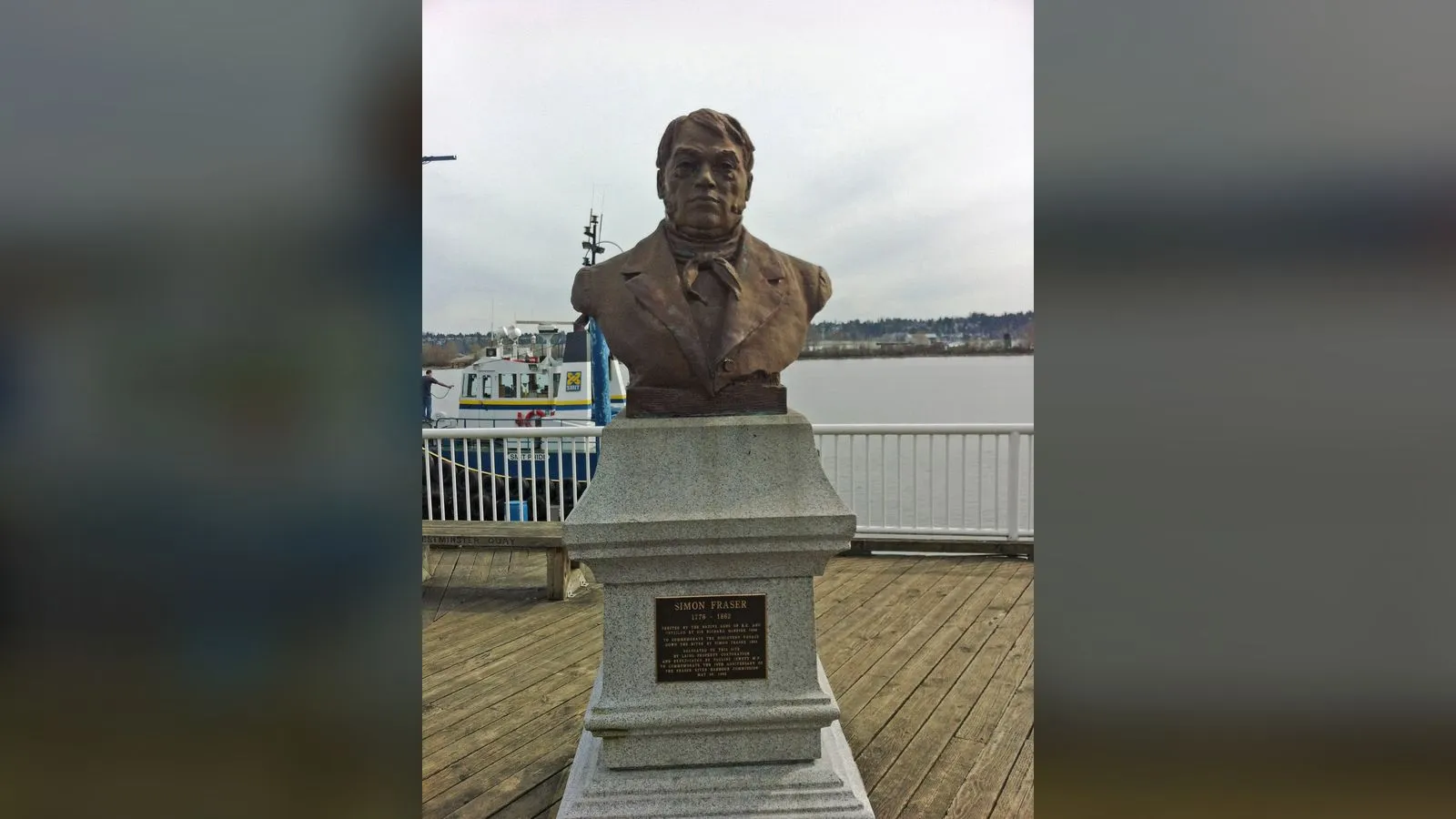

Simon Fraser (1776–1862)
Contents
TL;DR
- established Born to a Scottish Highland family in what is now New York State, Fraser became one of the North West Company's leading fur traders and explorers, establishing the first European settlements west of the Rocky Mountains in a territory he named "New Caledonia" in honour of his Scottish heritage.
- established His defining achievement was the perilous 1808 expedition down the river that now bears his name, the Fraser River, undertaken in the hope it would prove to be the Columbia River and provide a viable Pacific trade route — a hope dashed only once the expedition reached the river's mouth and Fraser calculated its latitude did not match the Columbia's.
- established The expedition was genuinely dangerous, involving treacherous canyon rapids, forced overland portages carrying roughly 80 pounds of cargo per man along near-vertical cliffs, and a tense, nearly mutinous return journey after hostile encounters with the Musqueam and Kwantlen peoples near the river's mouth. This article reports these dangers and the near-mutiny honestly, rather than smoothing the expedition into an uncomplicated triumph.
- established Fraser generally relied on diplomacy and advance envoys to maintain peaceful relations with most Indigenous nations he encountered and traded with, but the expedition's final approach to the coast was marked by genuine hostility and the serious threat of violence, a complexity in his record of Indigenous relations this article does not flatten into either pure cooperation or pure conflict.
- established In 1816, Fraser was arrested in connection with the Battle of Seven Oaks at the Red River Colony, in which the colony's governor, Robert Semple, and some twenty of his men were killed; though not directly involved in the violence, he was held and later acquitted in 1817 — a serious legal episode this article includes as part of an honest account of his later career.
Key Facts
- Born
- 20 May 1776, Hoosick, New York (then British America)
- Died
- 18 August 1862, near Cornwall, Ontario, Canada, aged 86
- Known for
- 1808 exploration of the Fraser River; founding New Caledonia's first European settlements
- Employer
- North West Company
- Father
- Captain Simon Fraser, 84th Highland Regiment, died a prisoner of war in 1779
- Spouse
- Catherine McDonnell (m. 1820)
Scottish Impact Index (SI Score)
- Global Influence
- 3/10
- Enduring Relevance
- 7/10
- Material Contribution
- 2/10
- Exceptional Achievement
- 4/10
- Lasting Legacy
- 4/10
- Recognition
- 2/10
22/60
Ranked =156th of 200 in Great Scots
A Note on Claims and Evidence
Fraser's biography, his career with the North West Company, and the documented course of the 1808 Fraser River expedition are extensively recorded in his own expedition journal and in Hudson's Bay Company and North West Company historical records, and are treated as Established. His documented hostile encounters with the Musqueam and Kwantlen peoples near the river's mouth, and his earlier generally diplomatic relations with other Indigenous nations he traded with, are both Established from the same primary sources and are reported together here as an honest, complete picture rather than a simplified account in either direction.
Timeline
Born in Hoosick, New York, to a Scottish Highland family.
His father, Captain Simon Fraser, dies as a prisoner of war after capture at the Battle of Bennington during the American Revolutionary War.
Moves to Montreal at age 14.
Apprenticed to the North West Company.
Rises to manage all North West Company operations west of the Rocky Mountains; establishes Rocky Mountain Portage House and Fort McLeod.
Builds Fort St. James on Stuart Lake, a key fur-trading post among the Dakelh people; names the surrounding territory "New Caledonia."
Departs Fort George with 24 men in four canoes to explore the river later named for him, hoping it is the Columbia River.
Reaches the river's mouth; determines, by latitude, that it is not the Columbia.
Completes a dangerous return journey, including hostile encounters near the coast, back to Fort George.
Arrested in connection with the Battle of Seven Oaks at the Red River Colony, in which the colony's governor, Robert Semple, and some twenty of his men are killed.
Acquitted of involvement in the Seven Oaks violence.
Marries Catherine McDonnell and settles near Cornwall, Ontario.
Serves as captain of the 1st Stormont Militia during the Rebellions of 1837.
Dies near Cornwall, Ontario, aged 86; his wife Catherine dies the following day, and the couple are buried together.
Details
An orphaned son of a Highland soldier
Fraser was born in 1776 in what is now New York State to a Scottish Highland family; his father, Captain Simon Fraser of the 84th Highland Regiment, was captured at the Battle of Bennington during the American Revolutionary War and died as a prisoner in 1779, leaving the family in difficult circumstances. The younger Fraser moved to Montreal at fourteen and was apprenticed to the North West Company the following year, beginning a fur-trading career that would eventually take him deep into territory no European had yet mapped.
established The family's flight to Canada was part of a wider Scottish loyalist exodus. The historian T. M. Devine, in To the Ends of the Earth (2011), notes that more loyalists were born in Scotland than in any other country outside America, and that Scots made nearly 37 per cent of the loyalist compensation claims lodged by people born outside America. Recent Highland emigrants in New York and North Carolina, led by their own gentry and dependent on Crown land grants, were especially loyal, and many fled from upper New York to Canada as the war turned against Britain. In Montreal the young Fraser joined a company dominated by men of the same background: Devine counts Fraser and Alexander Mackenzie as the North West Company's two great explorers, both from the Gaelic world of its leaders Simon McTavish and William McGillivray.
Building New Caledonia
By 1805, Fraser had risen to manage all of the North West Company's operations west of the Rocky Mountains, and he personally established the region's first European settlements, including Rocky Mountain Portage House (now Hudson's Hope) and Fort McLeod. In 1806 he built Fort St. James on Stuart Lake, which became a significant and successful trading post among the Dakelh people, and named the surrounding territory "New Caledonia" — a deliberate nod to his own Scottish heritage, using the Latin name for Scotland.
A genuinely perilous expedition
Fraser's most consequential achievement came in 1808, when he led an expedition of 24 men in four canoes down the river that now bears his name, hoping it would prove to be the Columbia River and provide the North West Company with a viable route to the Pacific. The journey was genuinely dangerous from the outset — local Indigenous inhabitants had warned the party that the river's lower reaches were "nearly impassable," a warning that proved largely accurate. The expedition encountered ferocious rapids, including the notorious Cottonwood Canyon, and was forced into repeated overland portages along cliffs so steep that each man had to carry roughly 80 pounds of cargo by hand across treacherous terrain — this article preserves these specific, concrete dangers rather than reducing the journey to a simple adventure narrative. When the party finally reached the river's mouth on 2 July 1808, Fraser calculated the latitude and realised, to his evident disappointment, that this was not the Columbia River after all — the Columbia's mouth lay at 46° latitude, while his own position was close to 49°, meaning the arduous expedition had not achieved its primary commercial objective.
Hostility, diplomacy, and a near-mutiny
Fraser's relations with the Indigenous nations he encountered during his career were genuinely mixed, and this article does not resolve that complexity into a single simple narrative. Through much of his career and for substantial portions of the 1808 expedition, he relied successfully on diplomacy, often sending advance envoys ahead of the main party to signal peaceful intent, and maintained productive, largely cooperative trading relationships with nations including the Dakelh near Fort St. James. However, as the expedition approached the coast near present-day Vancouver, Fraser's party met genuine and serious hostility from the Musqueam and Kwantlen peoples, who pursued the explorers aggressively enough that the party only briefly glimpsed the Strait of Georgia before being forced to retreat — a confrontation serious enough that it nearly provoked mutiny among Fraser's own exhausted and frightened men during the dangerous return journey upriver. This article includes this episode of genuine conflict directly, alongside the more diplomatic pattern of his broader career, as part of an honest account rather than letting one characterisation stand in for the whole.
shared Devine cautions against explaining Scots' frontier diplomacy by an imagined kinship between clan society and Indigenous peoples, a claim made by some popular writers. Quoting the historian Colin G. Calloway, he argues that Highland traders were as likely as any other Europeans to exploit and cheat Indians, and that the fur trade's epidemics, over-hunting and rum did lasting harm to many of the peoples it reached. Fraser's posts in New Caledonia were part of that commercial system.
A serious later-life legal entanglement
Fraser continued working in the fur trade for over a decade after his famous expedition, eventually managing the Mackenzie River District. In 1816, he was arrested by Lord Selkirk in connection with the Battle of Seven Oaks, a violent confrontation at the Red River Colony in which the colony's governor, Robert Semple, and nineteen others were killed. Though Fraser was not directly involved in the violence itself, he was held in custody and stood trial, before being acquitted the following year, in 1817 — a serious episode in his later career this article records plainly rather than omitting in favour of a purely celebratory account of his exploration years.
A quiet retirement and a declined knighthood
Fraser married Catherine McDonnell in 1820 and settled near Cornwall, Ontario, where he pursued various business enterprises that, by most accounts, met with little sustained financial success, and served as a militia captain during the Rebellions of 1837. According to the historian Alexander Begg, Fraser was later offered a knighthood but declined the honour, reportedly owing to his own limited personal wealth and an unwillingness to accept a title he felt he could not properly support. He died in 1862 at 86, with his wife Catherine dying the very next day; the couple were buried together.
A lasting geographic and institutional legacy
The Fraser River — actually named in his honour by fellow explorer David Thompson rather than by Fraser himself — remains his most enduring memorial, and his 1808 expedition played a genuine role in establishing British territorial claims in the Pacific Northwest, contributing to the eventual settlement of the Canada–United States border along the 49th parallel following the War of 1812. He is commemorated today across numerous geographic features and institutions, including Simon Fraser University in Burnaby, British Columbia, Fraser Lake, and Fort Fraser.
Did You Know?
- The Fraser River was not named by Fraser himself, but by fellow explorer David Thompson in his honour.
- Fraser's 1808 expedition was undertaken hoping the river was the Columbia — a hope dashed only once his own latitude calculations proved otherwise at the river's mouth.
- His party had to carry roughly 80 pounds of cargo per man along steep cliffs during forced overland portages.
- He named the surrounding fur-trading territory "New Caledonia," using the Latin name for Scotland.
- He was arrested, tried, and acquitted in connection with the deadly 1816 Battle of Seven Oaks at the Red River Colony.
- He reportedly declined an offered knighthood later in life, citing his limited personal wealth.
- His father died as a prisoner of war during the American Revolutionary War when Fraser was just three years old.
- More American loyalists were born in Scotland than in any other country outside America, according to a study cited by T. M. Devine.
- He and his wife Catherine died one day apart in 1862 and were buried together.
FAQ
1What is Simon Fraser best known for?
His 1808 expedition down the river that now bears his name, undertaken in the hope — ultimately disproven — that it was the Columbia River.
2Did Fraser discover the Fraser River?
He was the first European to travel its full length in 1808, though the river itself was later named in his honour by fellow explorer David Thompson, not by Fraser himself.
3Were his relations with Indigenous peoples always peaceful?
No — while he generally relied on successful diplomacy with many nations he traded with, his expedition's final approach to the coast involved genuine hostility from the Musqueam and Kwantlen peoples that nearly provoked mutiny among his own men.
4Was Fraser involved in the Battle of Seven Oaks?
He was arrested in connection with the 1816 violence at the Red River Colony, though not directly involved in the killings; he was acquitted in 1817.
5Did he accept a knighthood?
No — he reportedly declined an offered knighthood later in life, citing his limited personal wealth.
6Where was he born?
Hoosick, New York, in 1776, to a Scottish Highland family; his father died a prisoner of war when Fraser was three.
7What territory did he name "New Caledonia"?
The fur-trading territory west of the Rocky Mountains that he helped establish and administer for the North West Company, named using the Latin term for Scotland.
8Why did his family move to Canada?
They were Highland loyalists. His father died in American captivity, and like many Scottish loyalist families from upper New York they looked to British Canada; Fraser himself went to Montreal at fourteen.
9How did he die?
He died near Cornwall, Ontario, in 1862, aged 86; his wife died the following day, and they were buried together.
Sources and Further Reading
Primary/Institutional
Scholarly/Critical
- T. M. Devine, To the Ends of the Earth: Scotland's Global Diaspora, 1750–2010 (Allen Lane, 2011)
- Simon Fraser "The Explorer" and the Problem of Contact History — Scots in British Columbia
- Assessing Simon Fraser's Legacy — The Critical Thinking Consortium
General
Caveats: Myths and Disputed Claims
- Clarification: Fraser is sometimes imagined to have deliberately named the river after himself; it was in fact named in his honour by fellow explorer David Thompson.
- Note: Fraser's relations with Indigenous peoples are sometimes presented in simplified terms, either as uniformly cooperative or, in more critical modern accounts, as uniformly exploitative. This article presents both his generally successful diplomatic relations with most nations he traded with and the genuine hostility encountered near the coast in 1808, as the documented record supports both.
- Clarification: Fraser's arrest following the Battle of Seven Oaks reflected his position within the fur trade's institutional conflicts of the period rather than direct personal involvement in the violence, and he was acquitted; this article reports both the arrest and the acquittal plainly.
Card 149 · Great Scots