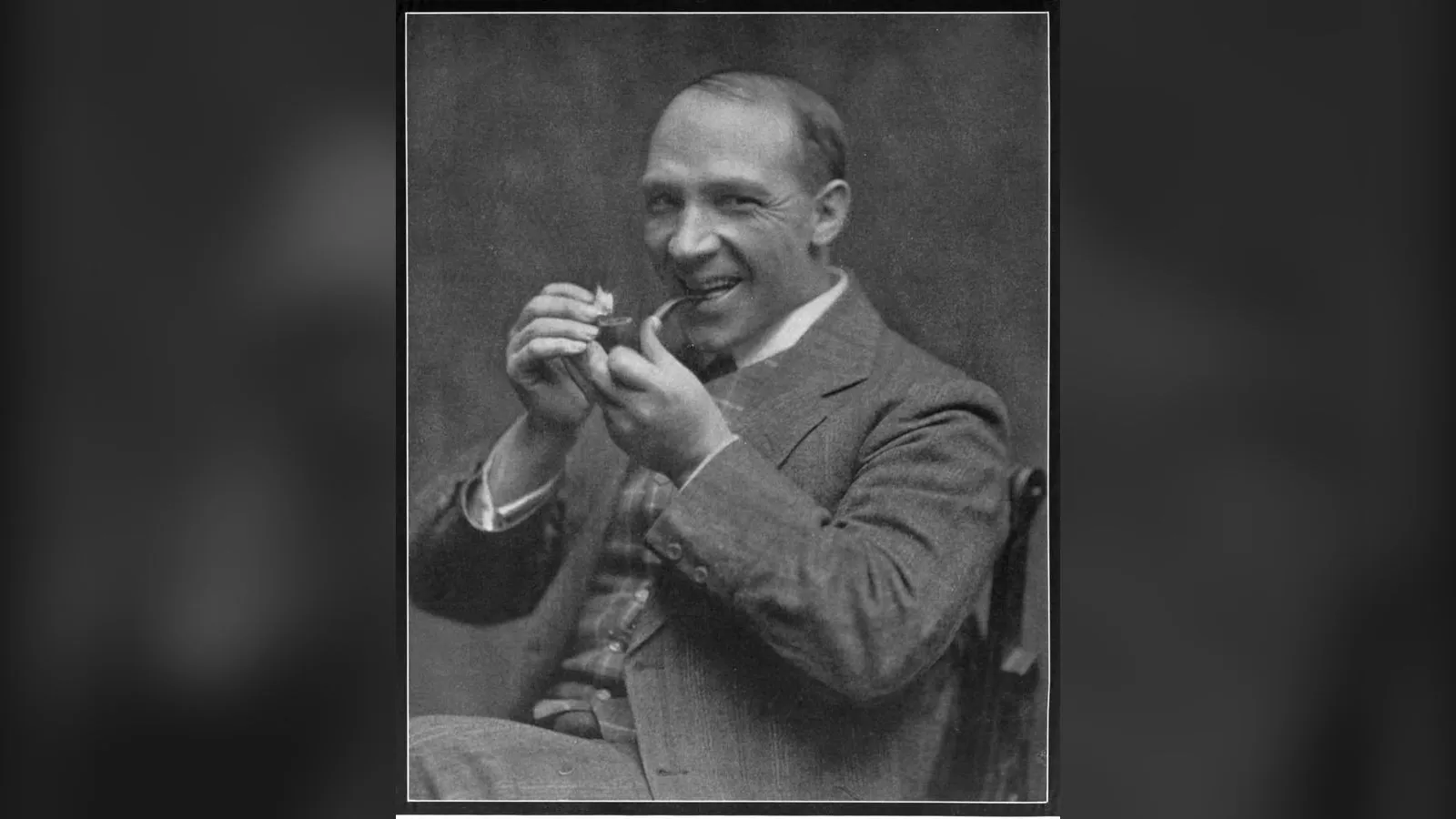

Sir Harry Lauder (1870–1950)
Contents
TL;DR
- established Harry Lauder was the first British recording artist to sell a million records (by 1911) and, by the early 1910s, the world's highest-paid entertainer, commanding roughly $1,000 a night on American tours and once earning the modern equivalent of over £12,000 for a single performance.
- established His only child, Captain John Currie Lauder, was killed by a sniper near Courcelette on the Somme on 28 December 1916; Lauder learned of the death four days later and returned to the stage within days on his wife's urging, later writing the elegy "Keep Right on to the End of the Road" as a memorial to him.
- established He was knighted in 1919, primarily for wartime fundraising — his effort for disabled and wounded Scottish servicemen raised over £1 million.
- Documented/Shared. His kilted "little man with the walking stick" persona made him arguably the world's first international music-hall superstar, but is also widely discussed by historians as a Victorian-sentimentalised, commercially calculated version of Scottishness rather than a realistic one.
- established He began working life at ten years old in a flax mill and spent a decade as a coal miner at Eddlewood Colliery before turning professional — a working-class origin he retained as part of his public identity even at the height of his wealth.
Key Facts
- Born
- 4 August 1870, Portobello, Edinburgh
- Died
- 26 February 1950 (aged 79), Strathaven, Lanarkshire
- Occupation
- Music hall and variety entertainer, singer, songwriter
- Known for
- Kilted comic persona; songs including "Roamin' in the Gloamin'," "I Love a Lassie," "A Wee Deoch-an-Doris," "Keep Right on to the End of the Road"
- Honours
- Knighted 1919 (for war charity work)
- Spouse
- Ann Vallance (m. 1891; d. 1927)
- Child
- Captain John Currie Lauder (1891–1916), killed in action
Scottish Impact Index (SI Score)
- Global Influence
- 5/10
- Enduring Relevance
- 6/10
- Material Contribution
- 4/10
- Exceptional Achievement
- 5/10
- Lasting Legacy
- 4/10
- Recognition
- 4/10
28/60
Ranked =114th of 200 in Great Scots
A Note on Claims and Evidence
Much of Lauder's career is extensively documented through contemporary press coverage, recording and box-office records, and his own memoirs — so dates, earnings figures and chart milestones below are treated as Established. Where this article discusses the cultural meaning of his stage persona — whether it represented authentic Scottish identity or a commodified, Americanised caricature of it — that is a matter of ongoing scholarly interpretation, flagged here as Documented/Shared rather than settled.
Timeline
Born in Portobello, Edinburgh, eldest of seven children.
Father dies; family moves to Arbroath. Harry works part-time in a flax mill.
Family relocates to Hamilton; Lauder begins work at Eddlewood Colliery.
Turns professional entertainer after a decade in the pits.
Moves to London; moderates his dialect for English audiences; rapid rise to prominence.
Breakthrough Glasgow Theatre Royal pantomime season.
First of 22 American tours.
Performs privately for Edward VII at Sandringham.
Becomes the first British/Scottish artist to sell a million records; commands roughly $1,000 a night in the US.
Tops the bill at the first-ever Royal Command Performance.
Son Captain John Lauder killed in action on the Somme.
Learns of his son's death; returns to performing within days; organises a front-line concert tour partly to locate his son's grave.
Knighted for his wartime fundraising, which exceeded £1 million for wounded Scottish servicemen.
Publishes "Keep Right on to the End of the Road," written in memory of his son.
Record-breaking tours of South Africa and Australia.
Wife Ann dies following surgery.
Announces full retirement.
Comes out of retirement to entertain troops and broadcast for the BBC during the Second World War.
Dies at Lauder Ha', Strathaven, aged 79.
Details
From the pit to the stage
Lauder's path to stardom began underground. After his father's early death left the family needing income, he worked in a flax mill as a boy, then spent roughly ten years as a coal miner at Eddlewood Colliery near Hamilton, earning ten shillings a week. He later described being trapped underground for six hours and pulling a fellow miner clear of a roof fall. Encouraged by workmates, he began performing in local halls — his first paid appearance, in Larkhall, earned him five shillings. He did not turn fully professional until 1894, by which point he was in his mid-twenties. The mining years were not a brief detour before fame; they were the greater part of his working life up to that point, and he referred to himself proudly as an "old coal-miner" even decades later, including in testimony to Winston Churchill in 1911 on behalf of pit ponies' welfare.
Building an international persona
After relocating to London in 1900, Lauder moderated his thick Scots dialect for wider audiences and rose quickly through the music-hall circuit, breaking through nationally with a Glasgow Theatre Royal pantomime in 1905. His stage character — kilt, sporran, tam o'shanter, and a distinctively twisted walking stick (later commemorated in the common name for a corkscrew hazel cultivar, "Harry Lauder's Walking Stick") — became one of the most recognisable performing personas in the English-speaking world. From his first American tour in 1907, he returned 22 times, and by the early 1910s was commanding roughly $1,000 a night, making him arguably the best-paid entertainer alive. He became the first British and Scottish recording artist to sell a million records by 1911, doubling that figure by 1928, and Victor Records placed him — alone among comic performers — on its premium Red Seal label, normally reserved for opera and classical artists.
A persona built, not just born
Lauder's Highland-dressed, sentimental "little man" act drew enormous audiences worldwide, but it has also long been recognised — by historians and by some of his own contemporaries — as a deliberately commercial construction rather than a straightforward reflection of Scottish life. Scholars have described his stage character as largely a product of Victorian sentimentalisation of the Highlander, with the kilt and walking stick functioning as internationally legible "icons of Scottishness" that Lauder and his management consciously deployed, especially in America. This is not a case of hidden hypocrisy — Lauder was open about crafting a stage act for audiences — but it is worth noting plainly: the "authentic wee Scotsman" beloved by millions of theatregoers was, in large part, a carefully engineered export product, and its lasting cultural footprint (reinforcing a tartan-and-couthy-sentiment image of Scotland abroad) is viewed by some critics as a mixed legacy rather than a purely celebratory one.
The death of his son and "Keep Right on to the End of the Road"
Lauder's only child, Captain John Currie Lauder, was educated at the City of London School and Jesus College, Cambridge, before serving with the 8th (later 1/8th) Argyll and Sutherland Highlanders. He was killed by a sniper near Courcelette on the Somme on 28 December 1916, aged 25, having already survived earlier combat and wounds before returning to the front that September. Harry Lauder did not learn of his son's death until 1 January 1917 — four days later — while on tour. He later wrote that "I felt that for me everything had come to an end," describing his grief as "black despair." At his wife Ann's urging, he returned to performing within days of receiving the news. Rather than retreating from public life, he organised a concert tour close to the front lines in 1917, partly to help locate his son's grave (he was buried at Ovillers Military Cemetery), and threw himself into fundraising for disabled and wounded Scottish servicemen — ultimately raising more than £1 million, for which he was knighted in 1919. In 1924 he published "Keep Right on to the End of the Road," a song of resolve and bereavement written in his son's memory; it went on to resonate widely with other families coping with wartime loss, and it remains one of his most enduring compositions, still associated with public commemoration and, separately, adopted as a football-crowd anthem.
Wealth, later years, and death
By 1913, Lauder was paid £1,125 for a single engagement at the Glasgow Pavilion — extraordinary money for the period. He toured extensively into the 1930s, including triumphant visits to South Africa (1925) and repeated tours of Australia, where his brother had emigrated. He announced full retirement in 1935 but came out of it during the Second World War to entertain troops and broadcast for the BBC. He died at Lauder Ha' in Strathaven on 26 February 1950, aged 79; his funeral drew a large public turnout, with wreaths sent by Winston Churchill and Queen Elizabeth. His estate was valued at £358,971, with £207,581 owed in death duties — reflecting both his enormous earnings and the tax environment of the period; in 1932 he had already transferred property to his niece Margaret, who had become his secretary and companion after Ann's death, partly to reduce the eventual death-duty burden.
Did You Know?
- Lauder worked as a coal miner for roughly a decade before turning professional as an entertainer — he did not become a full-time performer until his mid-twenties.
- He was the first British or Scottish recording artist to sell a million records, achieving the milestone by 1911.
- Winston Churchill called him "Scotland's greatest ever ambassador."
- The "Harry Lauder's Walking Stick" corkscrew hazel plant is named after his signature cane.
- He topped the bill at the very first Royal Command Performance in 1912.
- He performed privately for King Edward VII at Sandringham in 1908.
- His wartime charitable fund for wounded Scottish servicemen raised more than £1 million — an enormous sum for the 1910s.
- He made 22 separate tours of the United States over his career.
FAQ
1Was Harry Lauder a real coal miner, or was that part of his stage act?
Real. He worked at Eddlewood Colliery near Hamilton for roughly ten years before becoming a professional entertainer, and he referred to his mining background throughout his life, including in testimony on pit ponies' welfare.
2What happened to his son?
Captain John Currie Lauder was killed by a sniper on the Somme on 28 December 1916, aged 25. Lauder learned of the death four days later while on tour.
3Why was he knighted?
Primarily for his wartime fundraising — his charitable campaign for wounded and disabled Scottish servicemen raised over £1 million — rather than for his entertainment career alone.
4What is "Keep Right on to the End of the Road" about?
Lauder wrote it, published in 1924, as a memorial to his son and as a message of resolve for those coping with grief and loss; it became one of his best-known and most emotionally significant compositions.
5Was his kilted stage persona historically accurate?
It was a deliberately crafted commercial image rather than a documentary portrait of contemporary Highland life. Historians generally describe it as a Victorian-sentimentalised version of Scottishness that Lauder and his management used effectively to build an international brand — genuinely beloved by audiences, but also, in retrospect, a somewhat exported stereotype.
6How wealthy did he become?
Extremely. By the early 1910s he was reportedly the highest-paid entertainer in the world, and by 1913 was paid £1,125 for a single Glasgow performance. His estate at death was valued at £358,971.
7Did he perform in films as well as music halls?
Yes — he appeared in three feature films: Huntingtower (1927), Auld Lang Syne (1929), and The End of the Road (1936).
8Is there a street or landmark named after him?
Yes — the A199 Portobello bypass in Edinburgh is named Sir Harry Lauder Road, and a memorial garden was opened at Portobello Town Hall in 2001.
9When did he retire?
He announced full retirement in 1935, though he returned briefly to entertain troops and broadcast for the BBC during the Second World War.
10Where was he buried?
At Bent Cemetery in Hamilton, with his brother George and mother.
Sources and Further Reading
Primary/Institutional
- Sir Harry Lauder — Britannica
- Captain John Currie Lauder — Lives of the First World War, Imperial War Museum
Scholarly/Critical
- Harry Lauder: The World's First Musical Superstar and Broken Parent of the First World War — Western Front Association
- Sir Harry Lauder — The Gazetteer for Scotland
General
Caveats: Myths and Disputed Claims
- Myth: Lauder's kilted "wee Scotsman" persona is sometimes assumed to be a faithful, organic expression of ordinary Highland life. Correction: it is widely characterised by historians as a Victorian-sentimentalised, commercially engineered stage image, consciously built for mass international appeal (especially in the United States) — genuine in Lauder's own Scottish roots, but stylised rather than documentary in its presentation.
- Clarification: Some retellings imply Lauder abandoned the stage after his son's death. In fact he returned to performing within days, at his wife's urging, and subsequently intensified his public activity through war-charity fundraising rather than withdrawing from it.
- Clarification: His record-breaking sales figures (a million records by 1911) refer to his status as the first British/Scottish artist to reach that milestone, not the first recording artist in the world to do so.
Card 119 · Great Scots