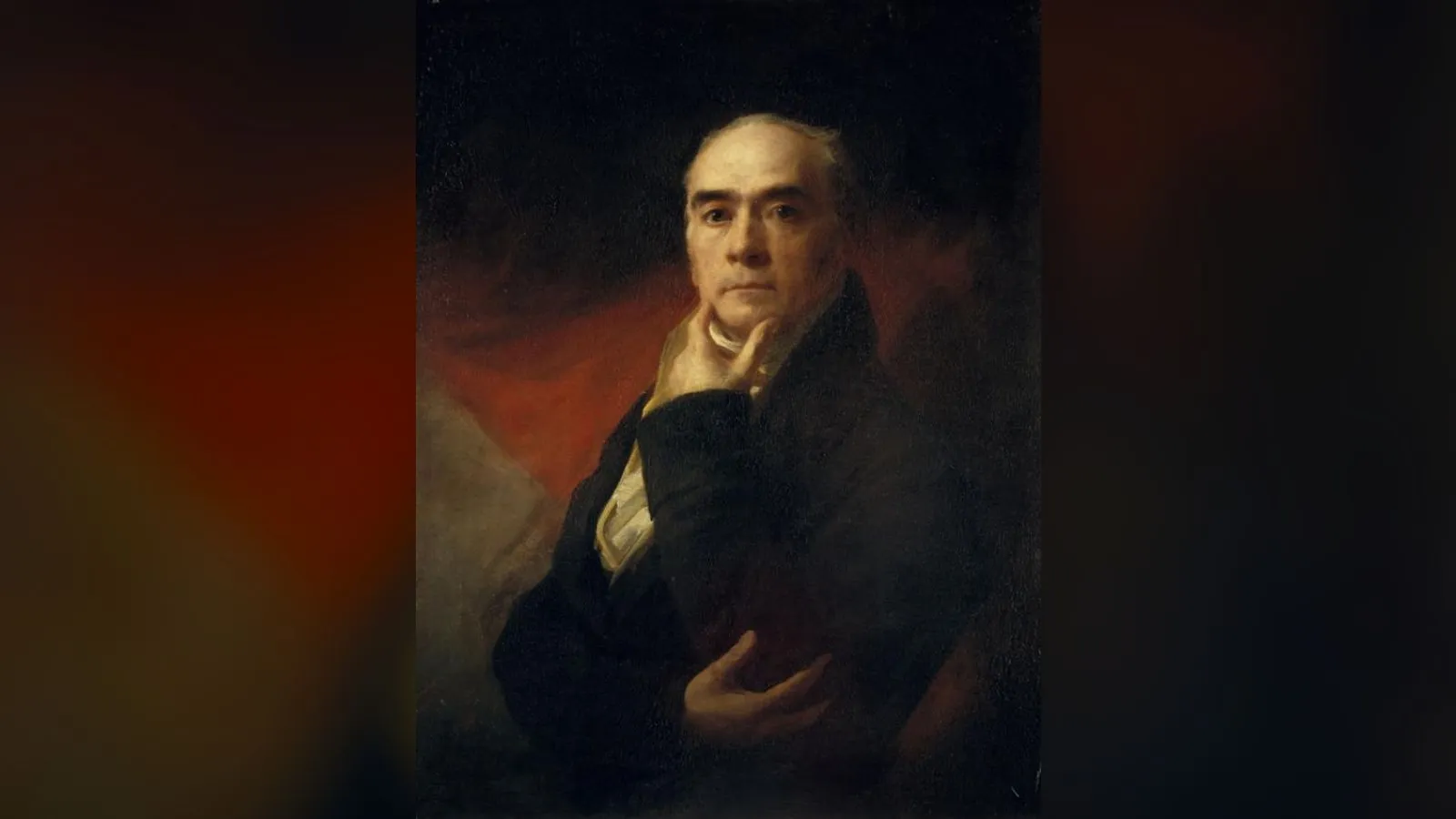

Sir Henry Raeburn (1756–1823)
Contents
TL;DR
- established Sir Henry Raeburn was Scotland's leading portrait painter of the late 18th and early 19th centuries, the defining visual chronicler of the Scottish Enlightenment, painting figures including Sir Walter Scott, Dugald Stewart, William Robertson, and Henry Mackenzie with a distinctive, confident "square touch" brushwork technique.
- established He was orphaned young and apprenticed to a goldsmith rather than trained formally as a painter, making his rise to become Scotland's pre-eminent portraitist a genuinely self-made achievement rather than the product of conventional artistic education.
- established In 1807 he was ruined financially when a shipping venture he had personally guaranteed, Henry Raeburn and Company, collapsed owing more than £36,000, leaving him bankrupt and forcing him to spend much of his remaining career painting and developing property specifically to satisfy creditors.
- disputed His most popularly recognised image, "The Skating Minister" (Reverend Robert Walker skating on Duddingston Loch), has a genuinely contested attribution among art historians, with some scholars questioning whether Raeburn painted it at all.
- established He was knighted by King George IV in 1822 during the king's state visit to Scotland and appointed His Majesty's Limner for Scotland, a rare formal royal recognition, but died less than a year later in 1823.
Key Facts
- Born
- 4 March 1756, Stockbridge, Edinburgh
- Died
- 8 July 1823 (aged 67), Edinburgh
- Category
- Culture / Art
- Known for
- Portraiture of Scottish Enlightenment figures; "The Skating Minister" (attribution disputed)
- Training
- Self-taught, via apprenticeship as a goldsmith and informal mentorship
- Honours
- Knighted 1822; His Majesty's Limner for Scotland; President, Society of Artists in Edinburgh (1812)
- Output
- Over 1,000 paintings across roughly 50 years
Scottish Impact Index (SI Score)
- Global Influence
- 5/10
- Enduring Relevance
- 8/10
- Material Contribution
- 3/10
- Exceptional Achievement
- 6/10
- Lasting Legacy
- 5/10
- Recognition
- 4/10
31/60
Ranked =84th of 200 in Great Scots
A Note on Claims and Evidence
Raeburn's biography, career, major sitters, and 1807 bankruptcy are documented through institutional and art-historical records and are treated here as established. The attribution of "The Skating Minister" to Raeburn is a genuine, ongoing scholarly dispute rather than settled fact, and is presented here as disputed, with the painting's fame and its uncertain authorship both reported honestly.
Timeline
Born in Stockbridge, Edinburgh; orphaned young and placed in Heriot's Hospital by his older brother William.
Apprenticed at fifteen to goldsmith James Gilliland, producing miniature ivory drawings and jewellery, including memorial lockets.
Paints his earliest known portrait, of George Chalmers, having progressed from miniatures to oil painting largely through self-instruction, aided by informal mentorship from Edinburgh portraitist David Martin.
Marries Ann Edgar Leslie, a wealthy widow, whose fortune enables him to travel and study.
Travels to London, where Sir Joshua Reynolds advises him to study the Italian masters; travels on to Rome, where fellow Scot Gavin Hamilton and dealer James Byres encourage him to paint directly from observation rather than from memory or formula.
Returns to Edinburgh and establishes himself as the city's leading portrait painter.
(disputed date) — "The Skating Minister," depicting Reverend Robert Walker, is traditionally dated to this period, though its attribution to Raeburn is contested.
His shipping venture, Henry Raeburn and Company, collapses owing over £36,000; as guarantor, Raeburn is left bankrupt.
Elected President of the Society of Artists in Edinburgh.
Knighted by King George IV during the king's state visit to Scotland; appointed His Majesty's Limner for Scotland.
Dies in Edinburgh, aged 67; buried in St Cuthbert's churchyard.
Details
An orphan apprenticed to a goldsmith
Henry Raeburn's beginnings gave little indication of the career that would follow. Born in 1756 in Stockbridge, then a village on the edge of Edinburgh, he was orphaned at a young age and placed by his older brother William in George Heriot's Hospital, a charitable school for fatherless boys. At fifteen he was apprenticed not to a painter but to a goldsmith, James Gilliland, producing miniature ivory drawings and jewellery, including mourning lockets — a trade that gave him technical dexterity and an eye for fine detail rather than any formal grounding in portrait painting. His progression from these small-scale decorative miniatures to oil portraiture happened largely through self-instruction, with Gilliland introducing him to the established Edinburgh portrait painter David Martin, who lent Raeburn works to copy as informal training. His earliest known finished portrait, of George Chalmers, dates to 1776 — remarkably assured work for a young man with no conventional academic art training behind him.
A fortunate marriage, and formative study in London and Rome
In his early twenties, Raeburn married Ann Edgar Leslie, a wealthy widow and daughter of Peter Edgar of Bridgelands, whose considerable fortune gave him financial freedom to pursue serious artistic development rather than relying on commissions to fund his training. He travelled to London, where the leading English portraitist Sir Joshua Reynolds personally advised him to study the Italian masters, and from there to Rome, where fellow Scot Gavin Hamilton and the art dealer James Byres provided guidance that proved decisive to his mature style: both encouraged him to paint directly from observation of his sitters rather than relying on memory, formula, or preparatory drawing — a working method he retained for the rest of his career and that became central to the immediacy and confidence of his finished portraits.
Scotland's chronicler of the Enlightenment
Raeburn returned to Edinburgh in 1787 and swiftly established himself as the city's — and effectively Scotland's — pre-eminent portrait painter, at precisely the moment the Scottish Enlightenment's great intellectual and literary figures needed their likenesses recorded. Over a career spanning roughly fifty years and producing more than a thousand paintings, he painted an extraordinary roll-call of Scottish Enlightenment and civic life, including the novelist and poet Sir Walter Scott, the philosopher Dugald Stewart, the historian William Robertson, the essayist Henry Mackenzie, the preacher Hugh Blair, the playwright John Home, and the poet Robert Fergusson, alongside Edinburgh's intellectuals, Glasgow merchants who had profited from trade with the West Indies, and East India Company figures returning from service abroad. His mature style was defined by forceful characterisation, dramatic use of light, and a distinctive, confident "square touch" brushwork — broad, direct strokes applied with striking assurance — that impressed critics even in comparison with admirers of Diego Velázquez, and that reflected his unusual working method of painting directly from life without extensive preliminary sketching, a technique that was genuinely unusual among his contemporaries.
"The Skating Minister": fame built on an uncertain attribution
Raeburn's single most widely recognised image today is almost certainly "The Skating Minister," the striking, deceptively simple portrait traditionally said to depict the Reverend Robert Walker skating on Duddingston Loch, now among the most reproduced images in Scottish art. What is less widely known outside art-historical circles is that the painting's attribution to Raeburn is genuinely disputed rather than settled: scholars have raised real questions about whether Raeburn in fact painted it, pointing to stylistic and technical inconsistencies with his documented body of work, and at least one specialist has argued in detail for Raeburn's authorship against these doubts. This article does not resolve that dispute, since the evidence remains genuinely contested among experts; what can be said with confidence is that the painting has become an enduring and much-loved symbol of Scottish portraiture regardless of the final word on who actually painted it.
A genuine financial catastrophe
In 1807, Raeburn's career and personal finances were struck by a real and severe setback: a shipping venture, Henry Raeburn and Company, for whose debts he had personally stood as guarantor, collapsed owing more than £36,000 — an immense sum for the period — leaving Raeburn bankrupt. This was not a minor business setback absorbed quietly; it forced him to spend much of the remainder of his working life painting portraits specifically to generate income for his creditors, and engaging in property development on the side as a further means of settling the debt. That Raeburn continued to paint at a consistently high level, and went on to receive a knighthood and royal appointment in the years following this disaster, speaks to real professional resilience in the face of genuine financial ruin, rather than a career proceeding on an unbroken upward trajectory.
Royal recognition, and a death soon after
Raeburn's professional standing was formally confirmed late in his life. He was elected President of the Society of Artists in Edinburgh in 1812, and in 1822, during King George IV's celebrated state visit to Scotland — the first visit by a reigning British monarch to Scotland in nearly two centuries, and a major event in the country's cultural life — Raeburn was knighted and appointed His Majesty's Limner for Scotland, the official royal painter for the country. This recognition came late and proved short-lived: Raeburn died in Edinburgh less than a year later, on 8 July 1823, at the age of 67, and was buried in St Cuthbert's churchyard.
Did You Know?
- Henry Raeburn was orphaned young and apprenticed to a goldsmith, not a painter — he was almost entirely self-taught in his art.
- His marriage to a wealthy widow gave him the financial freedom to travel to Rome and study, something he likely could not otherwise have afforded.
- He typically painted directly from his sitters without preliminary sketches, an unusual working method for his time.
- In 1807 he was made bankrupt when a shipping company he had personally guaranteed collapsed owing over £36,000.
- His most famous image, "The Skating Minister," has a genuinely disputed attribution among art historians — some question whether he painted it at all.
- He was knighted by King George IV during the king's historic 1822 state visit to Scotland, the first by a reigning monarch in nearly 200 years.
- He died less than a year after receiving his knighthood.
- He produced more than a thousand paintings over roughly fifty years.
FAQ
1What is Henry Raeburn best known for?
His portraits of major Scottish Enlightenment figures, including Sir Walter Scott and Dugald Stewart, and the iconic image traditionally attributed to him, "The Skating Minister."
2Did Henry Raeburn really paint "The Skating Minister"?
This is genuinely disputed among art historians. While it remains traditionally and popularly attributed to him, some scholars have questioned the attribution on stylistic grounds.
3Was Henry Raeburn formally trained as a painter?
No — he was orphaned young and apprenticed to a goldsmith as a teenager, becoming a painter largely through self-instruction and informal mentorship.
4Did Henry Raeburn face financial difficulties?
Yes, severely — in 1807 he was made bankrupt after guaranteeing the debts of a shipping company that collapsed owing more than £36,000.
5Was Henry Raeburn knighted?
Yes, in 1822, by King George IV during the king's state visit to Scotland, when Raeburn was also appointed His Majesty's Limner for Scotland.
6How many paintings did Henry Raeburn produce?
Over a thousand, across a career of roughly fifty years.
7What is distinctive about Henry Raeburn's painting style?
A confident, direct "square touch" brushwork technique and dramatic use of light, achieved by painting directly from his sitters rather than from preliminary sketches.
8Who did Henry Raeburn paint?
A broad cross-section of Scottish society, including major Enlightenment intellectuals and writers, Edinburgh professionals, Glasgow merchants, and figures returned from service with the East India Company.
9When did Henry Raeburn die?
8 July 1823, in Edinburgh, at the age of 67, less than a year after being knighted.
Sources and Further Reading
Institutional
- National Galleries of Scotland, collection records and exhibition materials on Henry Raeburn
- National Library of Scotland, "Sir Henry Raeburn (1756–1823)," Scottish Enlightenment digital gallery
- Art UK, "Henry Raeburn: portraitist of the Scottish Enlightenment"
Scholarly / Critical
- Scholarly and critical debate on the attribution of "The Skating Minister"
- The Scotsman, coverage of attribution debate ("I can prove skating minister was painted by Raeburn, says expert")
General
- Wikipedia, "Henry Raeburn" (overview, cross-checked against institutional sources above)
- Britannica, "Sir Henry Raeburn"
- Wikipedia, "The Skating Minister" (attribution history)
Caveats: Myths and Disputed Claims
- disputed The attribution of "The Skating Minister" to Henry Raeburn is not settled art-historical fact; it remains a genuine subject of scholarly debate, and this article does not present it as confirmed.
- Myth: Raeburn's career proceeded smoothly from early success to royal recognition. Reality: His 1807 bankruptcy, triggered by a collapsed shipping venture he had personally guaranteed, was a genuine financial catastrophe that shaped much of the remainder of his working life.
- Clarify: Raeburn's largely self-taught path into painting, via a goldsmith's apprenticeship rather than formal art academy training, was unusual for a painter who would go on to become Scotland's most celebrated portraitist of his era.
Card 109 · Great Scots