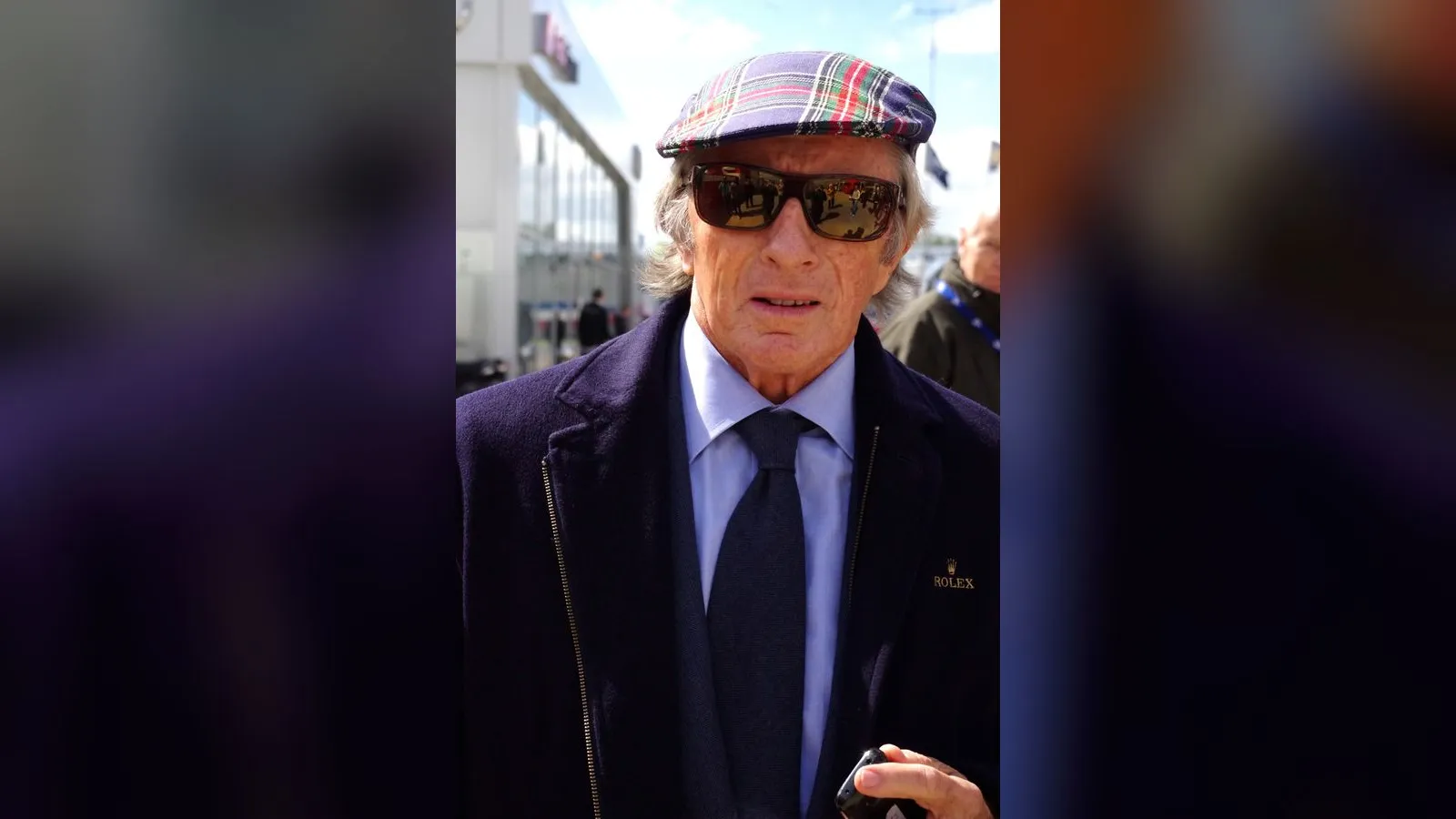

Sir Jackie Stewart (b. 1939)
Contents
TL;DR
- established A three-time Formula 1 World Champion (1969, 1971, 1973), Stewart held the records for most Grand Prix wins (27) and podium finishes (43) at his retirement, and remained the only British driver with three titles until Lewis Hamilton equalled the feat in 2015.
- established He struggled severely in school due to undiagnosed dyslexia — facing regular humiliation and being called "dumb" and "thick" by teachers and peers — and was not formally diagnosed until 1980, aged 41, after his son Mark was identified with the same condition.
- established A near-fatal 1966 crash at Spa-Francorchamps, compounded by the deaths of numerous fellow drivers and friends during his career — his wife Helen reportedly counted 57 people who died while holidaying, travelling, or racing with the family — made him motorsport's leading safety advocate, campaigning for seatbelts, better barriers, and proper medical facilities at circuits.
- established In 2014, his wife Helen was diagnosed with frontotemporal dementia; Stewart built a specially adapted apartment next to his own home to care for her personally rather than placing her in residential care, and founded the Race Against Dementia charity in 2016, funding research including an early-detection blood test. By 2025, her condition had progressed to the point of no longer recognising her husband — a serious, difficult personal reality reported here plainly rather than minimised.
- established He retired from racing immediately after his teammate François Cevert was killed during practice for the 1973 United States Grand Prix, choosing not to compete in what would have been his 100th Grand Prix despite having already clinched that year's championship.
Key Facts
- Born
- John Young "Jackie" Stewart, 11 June 1939, Milton, West Dunbartonshire
- Known for
- Three-time Formula 1 World Champion (1969, 1971, 1973); motorsport safety reform
- Pre-racing career
- Competitive clay pigeon and skeet shooting; 1960 Olympic trap shooting trials
- Honours
- OBE (1971); Knighted (2001); International Motorsports Hall of Fame (1990)
- Spouse
- Helen McGregor (m. 1962)
- Sons
- Paul (former racing driver) and Mark (film/TV producer)
Scottish Impact Index (SI Score)
- Global Influence
- 7/10
- Enduring Relevance
- 7/10
- Material Contribution
- 5/10
- Exceptional Achievement
- 5/10
- Lasting Legacy
- 6/10
- Recognition
- 7/10
37/60
Ranked =48th of 200 in Great Scots
A Note on Claims and Evidence
Stewart's racing record, safety advocacy, and honours are extensively documented and treated as Established. His dyslexia and its effect on his schooling are drawn from his own detailed public accounts. His wife's dementia diagnosis and its progression are reported here as his own and his family's public statements, given with the gravity such a serious and ongoing personal circumstance deserves, rather than treated as incidental biographical colour.
Timeline
Born in Milton, West Dunbartonshire, into a family of car dealers.
Struggles significantly in school due to undiagnosed dyslexia; excels instead at competitive clay pigeon and skeet shooting.
Competes in British Olympic trap-shooting trials, finishing third.
Marries Helen McGregor.
Formula 1 debut at the South African Grand Prix; wins his first Grand Prix at Monza.
Survives a near-fatal crash at Spa-Francorchamps, a turning point in his views on motorsport safety.
Wins his first World Championship, driving for Matra; organises a driver boycott of Spa over safety concerns.
Organises a further boycott of the Nürburgring, joined by friend and fellow driver Jochen Rindt.
Wins his second World Championship, driving for Tyrrell; awarded the OBE.
Organises a boycott of Zandvoort over safety concerns.
Wins his third World Championship; teammate François Cevert is killed in practice for the US Grand Prix; Stewart retires immediately rather than compete in what would have been his 100th race.
Formally diagnosed with dyslexia, aged 41, after his son Mark receives the same diagnosis.
Co-founds Stewart Grand Prix with son Paul; the team is later sold to Ford.
Knighted for services to motorsport.
Wife Helen is diagnosed with frontotemporal dementia.
Founds the Race Against Dementia charity with son Mark.
Helen's dementia has progressed to the point where she no longer recognises her husband.
Details
A childhood shaped by undiagnosed dyslexia
Stewart's school years were marked by genuine suffering rather than minor difficulty: undiagnosed dyslexia led to him being routinely labelled "dumb" and "thick" by teachers and classmates, a humiliation that continued throughout his formal education. He was not diagnosed until 1980, at 41 — by which point he was already a three-time world champion — after his son Mark was separately identified with the same condition. Stewart has spoken candidly and insightfully about how this shaped his approach to the areas where he did succeed: "When you've got dyslexia and you find something you're good at, you put more into it than anyone else; you can't think the way of the clever folk, so you're always thinking out of the box." Before racing, this drive found its outlet in competitive shooting: he won a clay pigeon competition at thirteen, became a prize-winning member of Scotland's shooting team, won British, Irish, Welsh, and Scottish skeet shooting championships, and competed in British Olympic trap-shooting trials in 1960, finishing third — a serious athletic career in its own right before he ever sat in a racing car.
A dominant but era-appropriate dangerous Formula 1 career
Stewart's Formula 1 career, from his 1965 debut to his 1973 retirement, produced three World Championships (1969, 1971, 1973) and, at the time of his retirement, the records for most Grand Prix wins (27) and podium finishes (43) in the sport's history — a dominance unmatched by any British driver until Lewis Hamilton equalled his championship tally in 2015.
Confronting an era of routine death, and becoming motorsport's safety conscience
Stewart's era of Formula 1 was extraordinarily dangerous by modern standards, and this is central to understanding his legacy rather than incidental to it. A near-fatal crash at Spa-Francorchamps in 1966 — in which his car, travelling at around 165 mph in heavy rain, struck a telephone pole and ended up lodged in a farmer's outbuilding, with fellow drivers Graham Hill and Bob Bondurant pulling him free in the absence of any proper trackside medical response — fundamentally changed his view of the sport. Over the following years, Stewart witnessed the deaths of numerous friends and colleagues in racing and related accidents; his wife Helen is reported to have counted 57 people who died while holidaying, travelling, or racing alongside the family during this period — a genuinely staggering, documented toll that this article states plainly rather than glossing over. Stewart became the sport's leading advocate for safety reform, campaigning for mandatory seatbelts, full-face helmets, improved barriers, and proper medical and fire facilities at circuits, and organised driver boycotts of dangerous venues including Spa-Francorchamps (1969), the Nürburgring (1970, joined by his friend Jochen Rindt), and Zandvoort (1972) until safety improvements were made. He has said plainly: "If I have any legacy to leave the sport I hope it will be seen to be an area of safety because when I arrived in Grand Prix racing so-called precautions and safety measures were diabolical."
A retirement forced by one more death
Stewart had already clinched his third World Championship when his young Tyrrell teammate, François Cevert, was killed during practice for the 1973 United States Grand Prix at Watkins Glen. Rather than compete in what would have been his landmark 100th Grand Prix, Stewart withdrew from the race entirely and retired from competitive driving immediately — a decision that reflects the accumulated weight of loss described above rather than a simple, planned exit at the top of his game.
A long post-racing career
Stewart went on to a substantial broadcasting career, working as a colour commentator for ABC's Wide World of Sports (1971–1986) and later for NBC and other networks, becoming known for his incisive analysis delivered in a pronounced Scottish accent — famously prompting a colleague to remark that Stewart spoke nearly as fast as he drove. He also built a long business relationship with Ford, and co-founded Stewart Grand Prix with his son Paul in the late 1990s, a team later sold to Ford and eventually evolving into what is now Red Bull Racing.
Helen's dementia and a personal second mission
In 2014, Stewart's wife of over five decades, Helen, was diagnosed with frontotemporal dementia. Rather than placing her in a care home, Stewart built a specially adapted apartment adjacent to his own home so he could care for her personally, explaining simply, "I'm fortunate I could afford that — I didn't want her going into a home." In 2016, he and son Mark founded the Race Against Dementia charity, which has funded significant research, including a blood test aimed at detecting frontotemporal dementia years before conventional diagnosis would be possible. Stewart has spoken with evident emotion about the toll of Helen's decline, describing being moved to tears visiting care facilities during the charity's early research, and by 2025 her condition had progressed to the point where she no longer recognised him — a genuinely difficult and ongoing personal reality that this article reports with the seriousness it deserves, as a significant and current part of Stewart's life rather than a historical footnote.
Did You Know?
- He competed in British Olympic trap-shooting trials in 1960, before ever becoming a racing driver.
- He was not diagnosed with dyslexia until age 41 — after already becoming a three-time Formula 1 World Champion.
- His wife reportedly counted 57 friends and acquaintances who died in racing-related circumstances during his career.
- He organised driver boycotts of three major circuits to force safety improvements.
- He retired immediately after his teammate's death, forgoing what would have been his 100th Grand Prix.
- He built a specially adapted home extension to personally care for his wife, who has dementia, rather than placing her in residential care.
- He performed all the driving sequences for actor Brian Bedford in the 1966 film Grand Prix.
- George Harrison released a 1979 single titled "Faster" as a tribute to Stewart and other Formula 1 drivers of his era.
FAQ
1How many Formula 1 World Championships did Jackie Stewart win?
Three — in 1969, 1971, and 1973.
2Did he really have undiagnosed dyslexia throughout his racing career?
Yes — he was not formally diagnosed until 1980, aged 41, years after retiring from Formula 1, following his son's diagnosis with the same condition.
3Why is he considered important to motorsport safety?
Because Formula 1 in his era was extraordinarily dangerous, and Stewart personally led a sustained campaign — including organising driver boycotts — for seatbelts, better barriers, and proper medical facilities at circuits, after witnessing the deaths of numerous friends and colleagues.
4Why did he retire from racing when he did?
His teammate François Cevert was killed in practice for the final race of the 1973 season; Stewart, who had already secured that year's title, chose to withdraw and retire immediately rather than compete.
5What happened to his wife?
Helen Stewart was diagnosed with frontotemporal dementia in 2014. Stewart has cared for her personally, building an adapted home for that purpose, and founded the Race Against Dementia charity in response.
6Did he have a career before racing?
Yes — a serious competitive shooting career, including British, Irish, Welsh, and Scottish skeet shooting titles and 1960 Olympic trap-shooting trials.
7What did he do after retiring from driving?
A substantial broadcasting career with ABC and other networks, a long consulting relationship with Ford, and co-founding Stewart Grand Prix, which later became Red Bull Racing.
8Is his dementia charity still active?
Yes — Race Against Dementia, founded in 2016, continues to fund research including early-detection testing.
Sources and Further Reading
Primary/Institutional
Scholarly/Critical
General
Caveats: Myths and Disputed Claims
- Clarification: Stewart's retirement is sometimes framed simply as a planned exit at the peak of a title-winning season. The fuller, documented account is that it was precipitated specifically by his teammate's death during practice for what would have been his 100th race — a distinction that matters to understanding his later safety advocacy.
- Note: His wife's dementia diagnosis and its severe progression are reported here plainly and with full weight, as an ongoing, serious part of his life, not as incidental personal detail softened for a celebratory sporting profile.
- Clarification: The figure of 57 deaths among friends and acquaintances, as reported by his wife, reflects the extraordinary danger of the era in which Stewart raced broadly (travel, holidays, and racing accidents together) rather than being a count of deaths in Formula 1 competition alone.
Card 132 · Great Scots