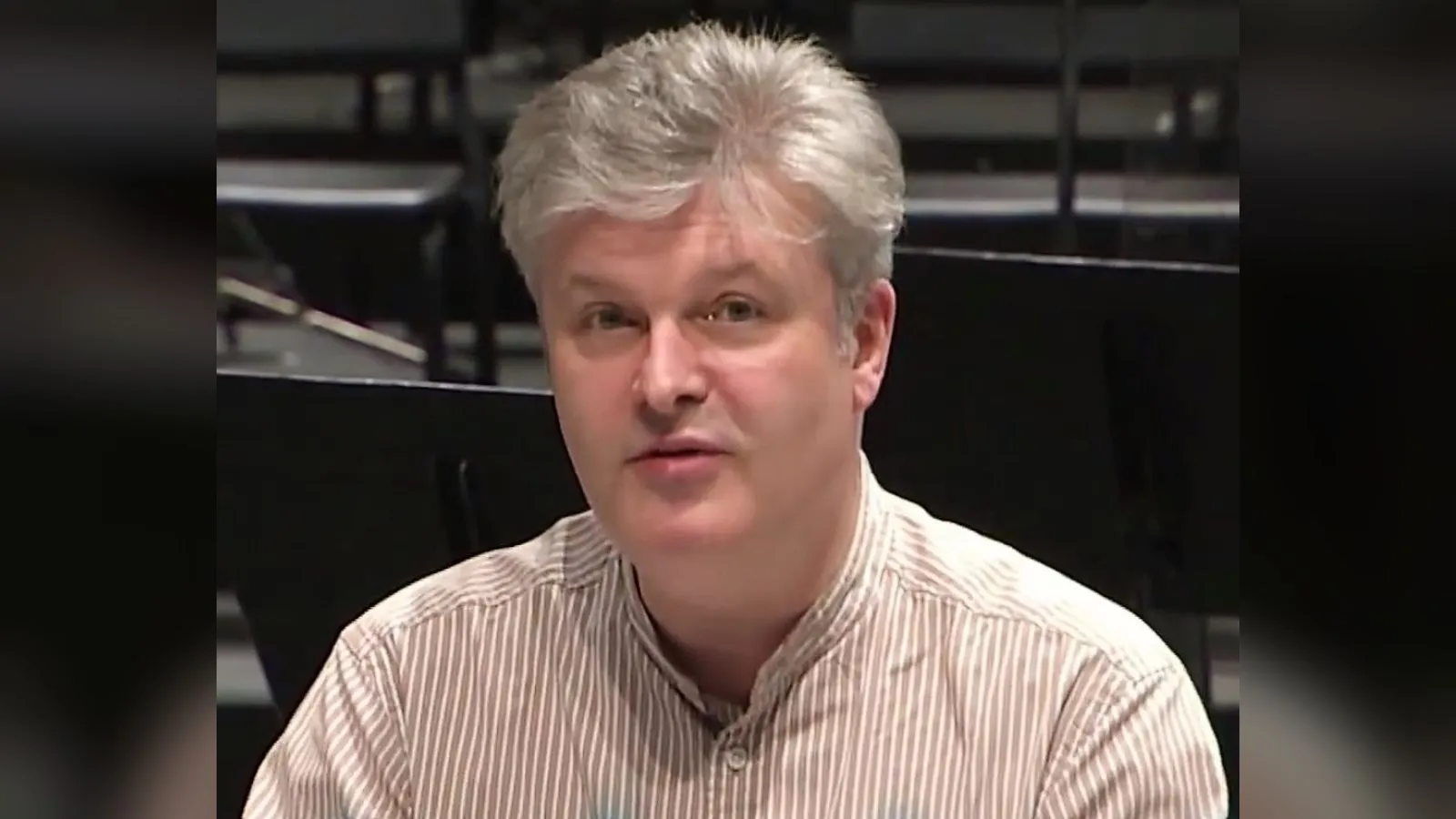

Sir James MacMillan (b. 1959)
Contents
TL;DR
- established Born and raised in the East Ayrshire mining town of Cumnock, MacMillan is one of the most significant and widely performed composers of his generation, known for a body of work that fuses Scottish folk material, political conscience, and an explicitly, deeply held Catholic faith.
- established His 1990 breakthrough work, The Confession of Isobel Gowdie, memorialises a woman executed for witchcraft in 17th-century Scotland, framed by MacMillan himself as an act of posthumous absolution for a historical injustice — establishing early the moral seriousness that runs through his subsequent output.
- established At the 1999 Edinburgh Festival, MacMillan delivered a widely reported lecture, commonly referred to as "Scotland's Shame," directly accusing Scottish society of "sleepwalking bigotry" and "visceral anti-Catholicism" — a public intervention that generated sustained national debate, an edited scholarly volume examining his claims, and a reversal of the new Scottish Parliament's decision not to include a religion question in the national census.
- established MacMillan founded and continues to direct The Cumnock Tryst, an annual autumn classical music festival in his home town, bringing internationally significant musicians to perform in local churches and halls — a deliberate act of cultural reinvestment in the community that shaped him.
- established He has been knighted twice over in substance if not in form: made a Knight Bachelor in 2015 and appointed a Knight of the Order of the Thistle, Scotland's highest order of chivalry, in June 2026 — recognition reflecting sustained, decades-long distinction rather than a single acclaimed work.
Key Facts
- Born
- 16 July 1959, Kilwinning, North Ayrshire
- Raised
- Cumnock, East Ayrshire, until 1977
- Known for
- Composition fusing Scottish, political, and Catholic liturgical themes
- Breakthrough work
- The Confession of Isobel Gowdie (1990)
- Most-performed work
- Veni, Veni, Emmanuel (1992), percussion concerto for Evelyn Glennie
- Education
- University of Edinburgh (BMus, 1981); Durham University (PhD, 1987)
- Honours
- CBE (2004); Knight Bachelor (2015); Knight of the Order of the Thistle (2026)
Scottish Impact Index (SI Score)
- Global Influence
- 4/10
- Enduring Relevance
- 5/10
- Material Contribution
- 2/10
- Exceptional Achievement
- 6/10
- Lasting Legacy
- 4/10
- Recognition
- 3/10
24/60
Ranked =143rd of 200 in Great Scots
A Note on Claims and Evidence
MacMillan's biography, compositions, honours, and public statements — including the 1999 "Scotland's Shame" lecture and its documented political and academic aftermath — are extensively covered in contemporary press reporting, academic literature, and his own public record, and are treated as Established throughout this article.
Timeline
Born in Kilwinning, North Ayrshire; grows up in Cumnock, East Ayrshire.
Leaves Cumnock for university study.
Completes a BMus at the University of Edinburgh, studying under Rita McAllister and Kenneth Leighton.
Marries Lynne Frew.
Lectures in music at Victoria University of Manchester.
Completes a PhD in Composition at Durham University under John Casken.
The Confession of Isobel Gowdie premieres at the BBC Proms, bringing him to wide public attention; also composes Cantos Sagrados, setting Latin American liberation-theology poetry.
Veni, Veni, Emmanuel, his percussion concerto for Evelyn Glennie, premieres and becomes his most-performed work.
Seven Last Words from the Cross is composed.
Composes a fanfare for the reconvening of the Scottish Parliament; weeks later, delivers the "Scotland's Shame" lecture at the Edinburgh Festival, generating sustained national controversy.
Serves as composer and conductor with the BBC Philharmonic.
Appointed CBE.
Elected Fellow of the Royal Society of Edinburgh; wins the Royal Philharmonic Society Award for his opera The Sacrifice.
Wins the British Composer Award for Liturgical Music.
Composes music for Masses during Pope Benedict XVI's state visit to Britain, including for the beatification of John Henry Newman.
Founds The Cumnock Tryst festival in his home town.
Knighted as a Knight Bachelor.
Stabat Mater is composed; later ranked by The Guardian among the greatest art music works of the 21st century.
Elected Fellow of The Ivors Academy.
Appointed a Knight of the Order of the Thistle by King Charles III.
Details
An Ayrshire upbringing he never left behind
MacMillan was born in Kilwinning and raised in Cumnock, an East Ayrshire mining town, until leaving for university in 1977. This article notes directly that his subsequent international career did not translate into creative or personal distance from that upbringing: his music returns repeatedly to Scottish historical and folk material, and decades later he founded a festival in the same town that shaped him — a continuity this article treats as a defining, deliberate feature of his career rather than incidental biography.
A breakthrough built on moral seriousness
MacMillan's 1990 work The Confession of Isobel Gowdie, which brought him to national attention at the BBC Proms, addresses the real historical execution of a Scottish woman for witchcraft in the 17th century. MacMillan has himself described the piece as seeking to offer Isobel Gowdie "the mercy and humanity that was denied her in the last days of her life" — this article presents this framing directly, since it establishes early a pattern that recurs across his subsequent output: music engaged with real historical injustice and suffering, not abstract formal composition detached from moral content.
Faith as a structural, not decorative, element
MacMillan's Catholic faith is treated by this article as a genuinely structural element of his work, not a biographical footnote. He and his wife are lay members of the Third Order of Saint Dominic, and his catalogue includes a substantial body of liturgical and sacred music, including settings designed specifically for congregational participation, alongside major concert works such as Seven Last Words from the Cross and Stabat Mater. In 2010 he composed music for Masses held during Pope Benedict XVI's state visit to Britain, including for the beatification of John Henry Newman — commissions reflecting his standing as a composer whose religious conviction operates at the centre, not the margin, of his professional reputation.
"Scotland's Shame": a deliberately provocative public intervention
In 1999, weeks after composing a fanfare for the reconvened Scottish Parliament, MacMillan delivered a lecture at the Edinburgh Festival — widely known by the title "Scotland's Shame" — in which he directly accused Scottish society of "sleepwalking bigotry" and "visceral anti-Catholicism." This article presents the speech and its consequences with their full documented weight rather than treating it as a minor aside: the intervention generated sustained national debate across Scottish, British, and international media; prompted the newly devolved Scottish Parliament to reverse an earlier decision and include a religious-affiliation question in the national census, specifically to measure whether anti-Catholic prejudice carried measurable effects on education, employment, and health outcomes; and led historian Sir Tom Devine to edit a dedicated scholarly volume, Scotland's Shame? Bigotry and Sectarianism in Modern Scotland, examining MacMillan's claims and the debate they provoked. This article notes that MacMillan himself, even while making this pointed public accusation, specifically identified the arts as one sphere of Scottish life where he had personally encountered no anti-Catholic prejudice — a nuance this article keeps rather than flattening the speech into a blanket condemnation.
A later pattern of outspoken public comment
MacMillan has continued, in the decades since, to make pointed public interventions on matters of Scottish cultural and political life, including public criticism of the SNP's approach to the arts, reported in the Scottish press as provoking strong reaction from supporters of Scottish independence. This article notes this later pattern as consistent with the willingness to speak bluntly on contested public matters that first became widely known through the 1999 lecture, without characterising the specific substance of every subsequent comment as equally documented or as resolved public fact.
Giving back: founding The Cumnock Tryst
Around 2015, MacMillan founded The Cumnock Tryst, an annual autumn classical music festival held in his home town of Cumnock, bringing internationally significant musicians to perform in local churches and halls. This article credits the festival as a genuine, sustained act of cultural reinvestment rather than a one-off honorary gesture: MacMillan has continued as its Artistic Director for over a decade, and has spoken of it as an effort to "bring something back" to the community whose amateur musical life — choirs, visiting performers, local productions — shaped his own early development. The festival's name is drawn from MacMillan's own composition "The Tryst," itself a setting of a William Soutar poem.
Did You Know?
- MacMillan composed a fanfare for the reconvened Scottish Parliament in 1999, weeks before delivering his controversial "Scotland's Shame" lecture.
- His percussion concerto Veni, Veni, Emmanuel, written for Evelyn Glennie, is his most-performed work.
- His 1999 lecture prompted the Scottish Parliament to reverse course and add a religious-affiliation question to the national census.
- Historian Sir Tom Devine edited an entire scholarly volume responding to the debate MacMillan's speech provoked.
- MacMillan composed music for Pope Benedict XVI's 2010 state visit to Britain, including for John Henry Newman's beatification.
- He founded The Cumnock Tryst festival in his home town around 2015 and still serves as its Artistic Director.
- He briefly belonged to the Young Communist League as a young man, before his career took the markedly different political and religious direction for which he later became known.
- He was appointed a Knight of the Order of the Thistle, Scotland's highest order of chivalry, in June 2026.
FAQ
1What is James MacMillan best known for?
Being one of the leading composers of his generation, known for music combining Scottish folk and historical material, political engagement, and his Catholic faith.
2What was the "Scotland's Shame" speech?
A 1999 Edinburgh Festival lecture in which MacMillan accused Scottish society of pervasive anti-Catholic bigotry, prompting major national debate and a change in the national census.
3Is his music religious?
Much of it is explicitly so — he has composed extensively for liturgical use, alongside large-scale concert works engaging directly with Christian themes.
4What is The Cumnock Tryst?
An annual classical music festival he founded in his home town of Cumnock around 2015, which he continues to direct.
5Has he received honours?
Yes — CBE in 2004, a knighthood in 2015, and appointment to the Order of the Thistle, Scotland's highest chivalric order, in 2026.
6What is his most popular piece?
His 1992 percussion concerto Veni, Veni, Emmanuel, written for Evelyn Glennie.
7Where did he grow up?
Cumnock, East Ayrshire, until leaving for university in 1977.
8Has he been politically controversial since 1999?
Yes — he has continued to make outspoken public comments on Scottish cultural and political matters, including criticism of SNP arts policy.
Sources and Further Reading
Primary/Institutional
- James MacMillan — Wikipedia
- About Us — The Cumnock Tryst
- MacMillan, Sir James (b1959) — Hyperion Records
Scholarly/Critical
- The Case of Scotland's Shame — Crisis Magazine
- Why we need to get serious about sectarianism in modern Scotland — Gerry Hassan
- Scotland's Shame: Bigotry and Sectarianism in Modern Scotland, ed. T.M. Devine — Goodreads
General
Caveats: Myths and Disputed Claims
- Clarification: The 1999 "Scotland's Shame" lecture is sometimes remembered only as a provocative soundbite. This article notes directly that MacMillan himself, within the same speech, specifically praised the arts as a sphere free of the anti-Catholic prejudice he was describing elsewhere — a qualification worth preserving rather than flattening into blanket condemnation.
- Note: This article does not attempt to adjudicate the substance of MacMillan's later public political disagreements (for instance, with the SNP over arts policy), presenting them only as a documented pattern of outspoken public comment consistent with his earlier intervention.
Card 187 · Great Scots