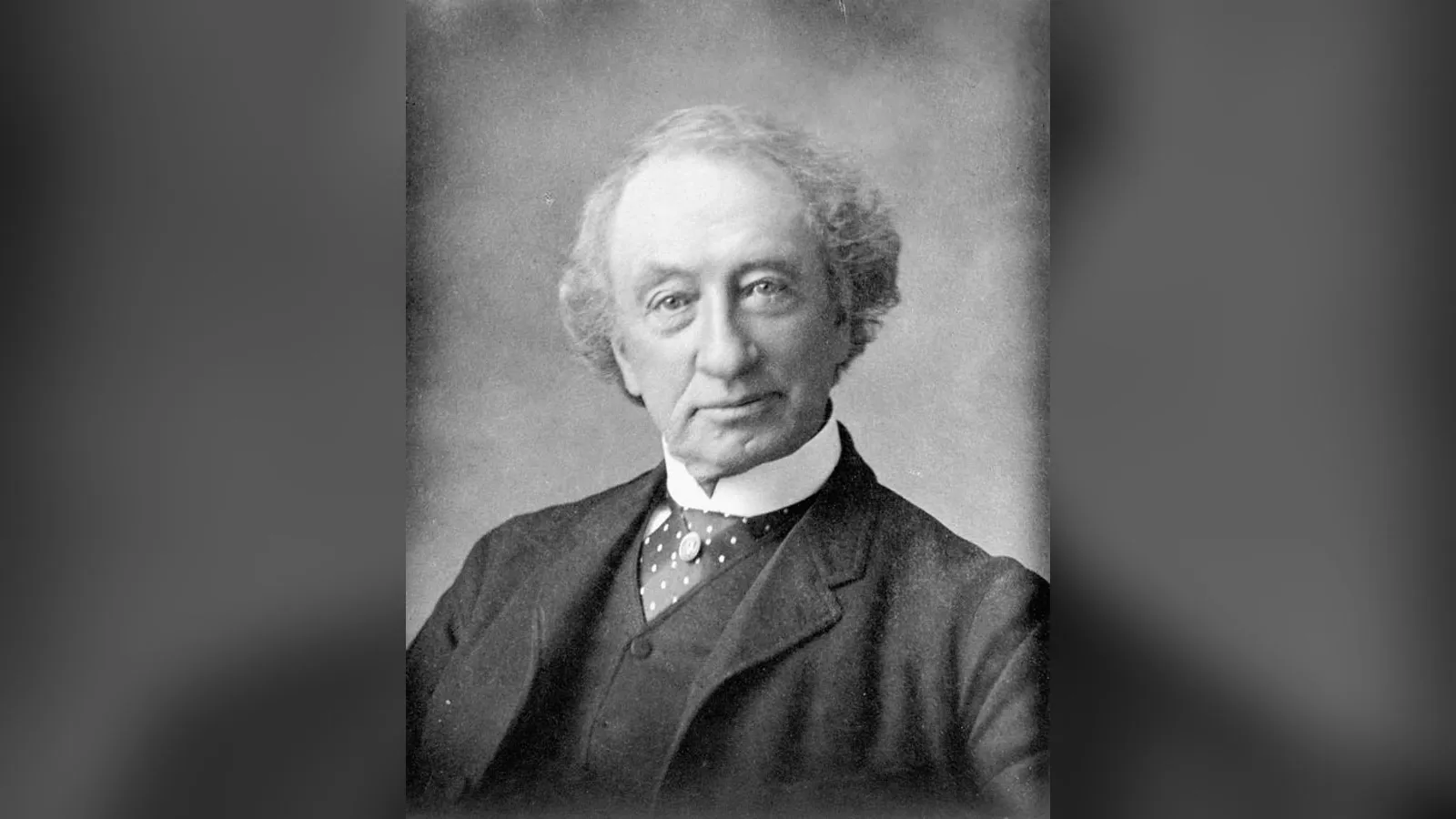

Sir John A. Macdonald (1815–1891)
Contents
TL;DR
- established Born in Glasgow and raised in Kingston, Upper Canada, Macdonald became the chief architect of Canadian Confederation and served as Canada's first prime minister in 1867, going on to serve nearly 19 years in office across two terms — second only to William Lyon Mackenzie King in total tenure.
- established His government drove the construction of the transcontinental Canadian Pacific Railway, a defining nation-building achievement, while his first ministry also collapsed in 1873 over the Pacific Scandal, in which Macdonald personally accepted substantial campaign contributions from a businessman later awarded the original CPR charter.
- established Macdonald's government commissioned the 1879 Davin Report that provided the direct blueprint for Canada's residential school system, explicitly designed around his own stated assimilationist goals for Indigenous children; Canada's Truth and Reconciliation Commission concluded in 2015 that this system amounted to "cultural genocide." This article gives this record full, direct weight rather than treating it as a minor footnote to Confederation.
- established Following the 1885 North-West Rebellion, Macdonald's government administered a food-supply policy toward Plains Indigenous peoples that historical records show was deliberately used to enforce dependency and compliance, contributing to documented starvation and deaths — a policy this article does not soften or omit.
- established Macdonald refused clemency for Métis leader Louis Riel, executed for treason in 1885 despite serious contemporary concerns about Riel's mental health, a decision that permanently alienated French-Canadian Catholic support for his party; his government also enacted the 1885 Chinese Immigration Act and head tax, with Macdonald telling Parliament the measure was needed to prevent "the Aryan character of the future of British America" from being "destroyed" — a statement reported here as his own recorded words.
Key Facts
- Born
- 10 or 11 January 1815, Glasgow, Scotland
- Died
- 6 June 1891, Ottawa, Canada, aged 76
- Known for
- First Prime Minister of Canada; chief architect of Canadian Confederation (1867)
- Terms as PM
- 1867–1873; 1878–1891
- Signature achievement
- Canadian Pacific Railway (completed 1885)
- Major controversies
- Residential school system's origins; 1885 Plains famine policy; execution of Louis Riel; Chinese Immigration Act
Scottish Impact Index (SI Score)
- Global Influence
- 7/10
- Enduring Relevance
- 8/10
- Material Contribution
- 4/10
- Exceptional Achievement
- 5/10
- Lasting Legacy
- 7/10
- Recognition
- 5/10
36/60
Ranked =52nd of 200 in Great Scots
A Note on Claims and Evidence
Macdonald's biography, his role in Confederation, the Pacific Scandal, and the Canadian Pacific Railway are extensively documented in Canadian historical and parliamentary records and treated as Established. His government's role in originating the residential school system is likewise Established, drawing on the 1879 Davin Report he commissioned and the findings of Canada's Truth and Reconciliation Commission. His government's food-policy conduct toward Plains Indigenous peoples following 1885, and his refusal of clemency for Louis Riel, are documented in Canadian historical scholarship and parliamentary record and are reported here directly, consistent with house style's commitment to giving morally serious material full weight rather than treating it as secondary to his nation-building reputation.
Timeline
Born in Glasgow, Scotland.
Emigrates with his family to Kingston, Upper Canada.
Called to the bar as a lawyer in Kingston.
Elected to the Legislative Assembly of the Province of Canada.
Becomes premier (joint leader) of the Province of Canada.
Plays a leading role in the Charlottetown and Quebec Conferences toward Confederation.
Becomes Canada's first prime minister upon Confederation.
His government falls amid the Pacific Scandal, after revelations he personally accepted $45,000 in campaign contributions connected to the original Canadian Pacific Railway charter.
Returns to power on the protectionist "National Policy" platform.
Commissions the Davin Report, which provides the blueprint for Canada's residential school system.
The first Canadian residential school opens.
The North-West Rebellion, led by Louis Riel, is suppressed; Riel is tried, convicted, and executed for treason despite concerns about his mental health; the government implements the "pass system" restricting Indigenous movement off reserves and a food-supply policy later documented as contributing to deliberate starvation; the Chinese Immigration Act and head tax are enacted; the Canadian Pacific Railway's final spike is driven on 7 November at Craigellachie, British Columbia.
Wins further federal elections despite declining health.
Suffers a severe stroke, leaving him partially paralysed and unable to speak.
Dies in Ottawa, aged 76; buried in Cataraqui Cemetery, Kingston.
Details
From Glasgow to the Canadian bar
Macdonald was born in Glasgow in January 1815 and emigrated with his family to Kingston, Upper Canada, in 1820, seeking better economic prospects. His formal schooling ended at fifteen, and he apprenticed under a local lawyer before being called to the bar in 1836, quickly building a reputation through prominent criminal cases in Kingston. He entered elected politics in the early 1840s and rose steadily through conservative ranks over the following two decades, becoming premier of the Province of Canada by 1857 amid a period of persistent constitutional deadlock.
Architect of Confederation
By the 1860s, political dysfunction in the Province of Canada had created real pressure for a new constitutional arrangement, and Macdonald emerged as the leading figure in negotiating what became Canadian Confederation, playing a central role at both the Charlottetown and Quebec Conferences. When the British North America Act took effect on 1 July 1867, Macdonald became Canada's first prime minister, a role he held, across two terms, for nearly 19 years — a tenure exceeded in Canadian history only by William Lyon Mackenzie King.
The Pacific Scandal and the railway that followed
Macdonald's first ministry expanded Canadian territory substantially, acquiring Rupert's Land, the North-Western Territory, British Columbia, and Prince Edward Island, and established the North-West Mounted Police. This first government collapsed in 1873, however, after revelations that railway financier Hugh Allan and his associates had secretly funnelled roughly $179,000 into Conservative election funds shortly before Allan's syndicate received the original Canadian Pacific Railway charter — funds that included $45,000 Macdonald personally accepted. The scandal forced his resignation despite a lengthy personal defence in the House of Commons. Macdonald returned to power in 1878 on a protectionist platform and went on to oversee the completion of the transcontinental Canadian Pacific Railway in 1885 — his signature nation-building achievement, driven through enormous public expenditure and repeated near-bankruptcies that required direct government intervention to resolve.
A Scot among Scots: the Canadian context
shared The historian T. M. Devine, in To the Ends of the Earth (2011), counts Macdonald among the Scots whose prominence in imperial government fed Victorian Scotland's pride in empire; he notes that a third of colonial governors-general between 1850 and 1939 were Scots. Scottish influence in Canada was old and contested. In early nineteenth-century Upper Canada the ruling group was labelled "the clan" or "the Scotch faction", and in 1885 and 1910 men with Scottish-born fathers made up about 30 per cent of Canada's industrial elite, when only 16 per cent of Canadians were of Scottish origin. Devine also cautions, drawing on Douglas McCalla's research, that Scots were not a majority even in Montreal's business circles, and that most Scottish Canadians were never part of these small elites.
shared Population figures differ slightly. The historian Michael Vance, in his chapter on organised Scottishness in Canada in Celeste Ray (ed.), Transatlantic Scots (2005), follows J. M. Bumsted: Scots were only 14 per cent of immigrants from the British Isles between 1815 and 1870, and Canadians of Scottish origin never exceeded 15 per cent of the population after 1871, standing at 14.8 per cent in 1903. Devine's 16 per cent is a little higher; either way, Scots held influence far beyond their numbers. Vance argues that Scottish societies helped turn that influence into power, and that in Macdonald's era they were mobilised mainly for conservative and imperial ends. When troops under General Middleton returned to Winnipeg from the North-West in July 1885, the city's St Andrew's Society built a Scottish arch on Main Street in honour of the Scottish company of the 90th Battalion. The sports historian Grant Jarvie, in the same book, notes that Macdonald's railway was itself a Scottish enterprise: with George Stephen and Donald Smith, later Lord Strathcona, he was instrumental in building the Canadian Pacific.
established Macdonald's railway was also an emigration business. Devine notes that in 1880 the Dominion government allotted the Canadian Pacific Railway 25 million acres between Winnipeg and the Rocky Mountains. To make the land pay, the company launched a marketing campaign in Britain aimed especially at Scotland: its agents toured rural districts giving lectures, and it later sold ready-made farms in southern Alberta, complete with houses, barns and fences.
shared Devine is clear that Scots in the settler colonies were "prime instruments" of British expansion rather than its victims, and that their record with Indigenous peoples was no better than that of other colonists. Macdonald's Indigenous policy, described below, belongs to that wider history.
The origins of the residential school system
In January 1879, Macdonald's government commissioned Nicholas Flood Davin to study American industrial boarding schools for Indigenous children, and the resulting Davin Report became the direct policy blueprint for Canada's residential school system, which Macdonald built around his own explicitly stated assimilationist goals for Indigenous children. The first school opened in 1883, and the system expanded to 61 schools by 1900. Canada's Truth and Reconciliation Commission, reporting in 2015, concluded that this system of forced family separation and cultural suppression amounted to "cultural genocide" — a formal historical finding this article states directly, as it is central to an honest account of Macdonald's legacy rather than a peripheral detail.
The 1885 famine policy and the execution of Louis Riel
Following the suppression of the 1885 North-West Rebellion led by Métis leader Louis Riel, Macdonald's government implemented the "pass system," restricting Indigenous peoples' movement off reserves, alongside a food-supply policy that historical records show deliberately kept Plains Indigenous populations "ill-fed and dependent on government food supplies" as a tool of political control — a policy documented by historians as contributing to real, deliberate starvation and death among Indigenous communities during this period. This article states that record plainly rather than allowing it to be eclipsed by the railway narrative of the same year. Riel himself, captured after the rebellion, was tried for treason, convicted, and executed; Macdonald refused to grant clemency despite serious contemporary concerns raised about Riel's mental health, a decision that permanently alienated French-Canadian Catholic support from his Conservative Party, with many in Quebec regarding Riel thereafter as a political and cultural martyr.
Chinese immigration restriction
In the same pivotal year, 1885, Macdonald's government enacted the Chinese Immigration Act, imposing a head tax specifically on Chinese immigrants to Canada. Macdonald told Parliament directly that, without such restriction, "the Aryan character of the future of British America should be destroyed" — a statement of explicit racial ideology this article reports as his own recorded words, not as a later historian's characterisation, because it speaks plainly to the thinking behind the policy.
Personal life and final years
Macdonald was widely known to struggle with heavy drinking throughout much of his political career, a pattern of alcohol use that was a matter of public comment and occasional political controversy during his lifetime, though it did not prevent him from sustaining one of the longest premierships in Canadian history. He continued to win federal elections despite visibly declining health in his final years, suffering a severe stroke in May 1891 that left him partially paralysed and unable to speak; he died weeks later, in June 1891, at age 76, and was buried in Kingston near his first wife, Isabella.
A legacy under active, genuine reassessment
Macdonald is consistently ranked among Canada's most consequential prime ministers for his role in Confederation and the completion of the transcontinental railway, and historical rankings have long reflected that significance. At the same time, his record on Indigenous policy, the residential school system's origins, the 1885 famine policy, Riel's execution, and racially explicit immigration restriction has become the subject of substantial and growing historical reassessment in recent years, including the removal of statues bearing his name and the renaming of schools and public institutions. This article presents both halves of that record together, consistent with its editorial commitment to accuracy over a purely celebratory national narrative.
Did You Know?
- Macdonald was born in Glasgow and emigrated to Canada as a child of five.
- His first government fell in 1873 after he personally accepted $45,000 connected to the original Canadian Pacific Railway charter — the Pacific Scandal.
- He commissioned the 1879 report that became the direct blueprint for Canada's residential school system, which the Truth and Reconciliation Commission later found amounted to "cultural genocide."
- His government's 1885 food-supply policy toward Plains Indigenous peoples is documented by historians as having deliberately enforced starvation and dependency.
- He refused clemency for Louis Riel despite concerns about Riel's mental health, a decision that permanently alienated French-Canadian Catholic political support.
- He told Parliament in 1885 that Chinese immigration restriction was necessary to preserve "the Aryan character" of Canada's future.
- He served nearly 19 years as prime minister, the second-longest tenure in Canadian history.
- The Canadian Pacific Railway, granted 25 million acres of prairie in 1880, sent agents round rural Scotland to recruit settlers.
- Canadians of Scottish origin never made up more than about 15 or 16 per cent of the population after 1871, yet held influence in politics and business far beyond their numbers.
- He suffered a severe, ultimately fatal stroke just weeks after winning re-election in 1891.
FAQ
1What is John A. Macdonald best known for?
Being Canada's first prime minister and the chief architect of Canadian Confederation in 1867, and for overseeing completion of the transcontinental Canadian Pacific Railway.
2Was he involved in any major scandal?
Yes — the 1873 Pacific Scandal, in which his government fell after revelations he had personally accepted substantial campaign funds connected to the original Canadian Pacific Railway charter.
3What was his role in Canada's residential school system?
His government commissioned the 1879 report that directly shaped the system's design around his own stated assimilationist goals; Canada's Truth and Reconciliation Commission later found the resulting system amounted to "cultural genocide."
4What happened to Louis Riel?
Riel, a Métis leader who led the 1885 North-West Rebellion, was tried, convicted of treason, and executed; Macdonald refused clemency despite concerns about Riel's mental health.
5Did his government restrict Chinese immigration?
Yes — the 1885 Chinese Immigration Act imposed a head tax on Chinese immigrants, a policy Macdonald explicitly defended to Parliament in racial terms.
6Where was he born?
Glasgow, Scotland, in 1815; his family emigrated to Kingston, Upper Canada, when he was five.
7How long did he serve as prime minister?
Nearly 19 years across two terms (1867–1873 and 1878–1891) — the second-longest tenure of any Canadian prime minister.
8How did he die?
He suffered a severe stroke in May 1891 and died weeks later, in June 1891, aged 76.
9Were Scots unusually powerful in Victorian Canada?
In some circles. T. M. Devine notes that about 30 per cent of Canada's industrial elite in 1885 and 1910 had Scottish-born fathers, against 16 per cent of the population of Scottish origin, but that Scots were not a majority even in Montreal's business community and most Scottish Canadians were not part of any elite.
10Did the Canadian Pacific Railway recruit in Scotland?
Yes. To sell the land it had been granted on the prairies, the company sent agents to lecture in rural Scotland and later sold ready-made farms in southern Alberta.
Sources and Further Reading
Primary/Institutional
Scholarly/Critical
- T. M. Devine, To the Ends of the Earth: Scotland's Global Diaspora, 1750–2010 (Allen Lane, 2011)
- Michael Vance, 'A Brief History of Organized Scottishness in Canada', in Celeste Ray (ed.), Transatlantic Scots (University of Alabama Press, 2005)
- Grant Jarvie, 'The North American Émigré, Highland Games, and Social Capital in International Communities', in Celeste Ray (ed.), Transatlantic Scots (University of Alabama Press, 2005)
- The Dark Legacy of John A. Macdonald — The Link Newspaper
- John A. Macdonald: Canada's first prime minister and the architect of "Indian residential schools" — Peoples Dispatch
General
Caveats: Myths and Disputed Claims
- Clarification: Macdonald's legacy is sometimes presented solely through the lens of Confederation and the transcontinental railway. This article gives equal, direct weight to his government's documented record on residential schools, the 1885 Plains famine policy, Riel's execution, and Chinese immigration restriction, consistent with house style's commitment to accuracy over a purely celebratory account.
- Note: Some commentary, including from sources defending Macdonald's record, has argued his Indigenous policies should be read more sympathetically within the context of his era's limited famine-relief resources. This article reports the documented historical record — including the Truth and Reconciliation Commission's formal "cultural genocide" finding and historians' documentation of deliberate starvation policy — as the weight of current scholarly consensus, while noting that debate over interpretation continues.
Card 143 · Great Scots