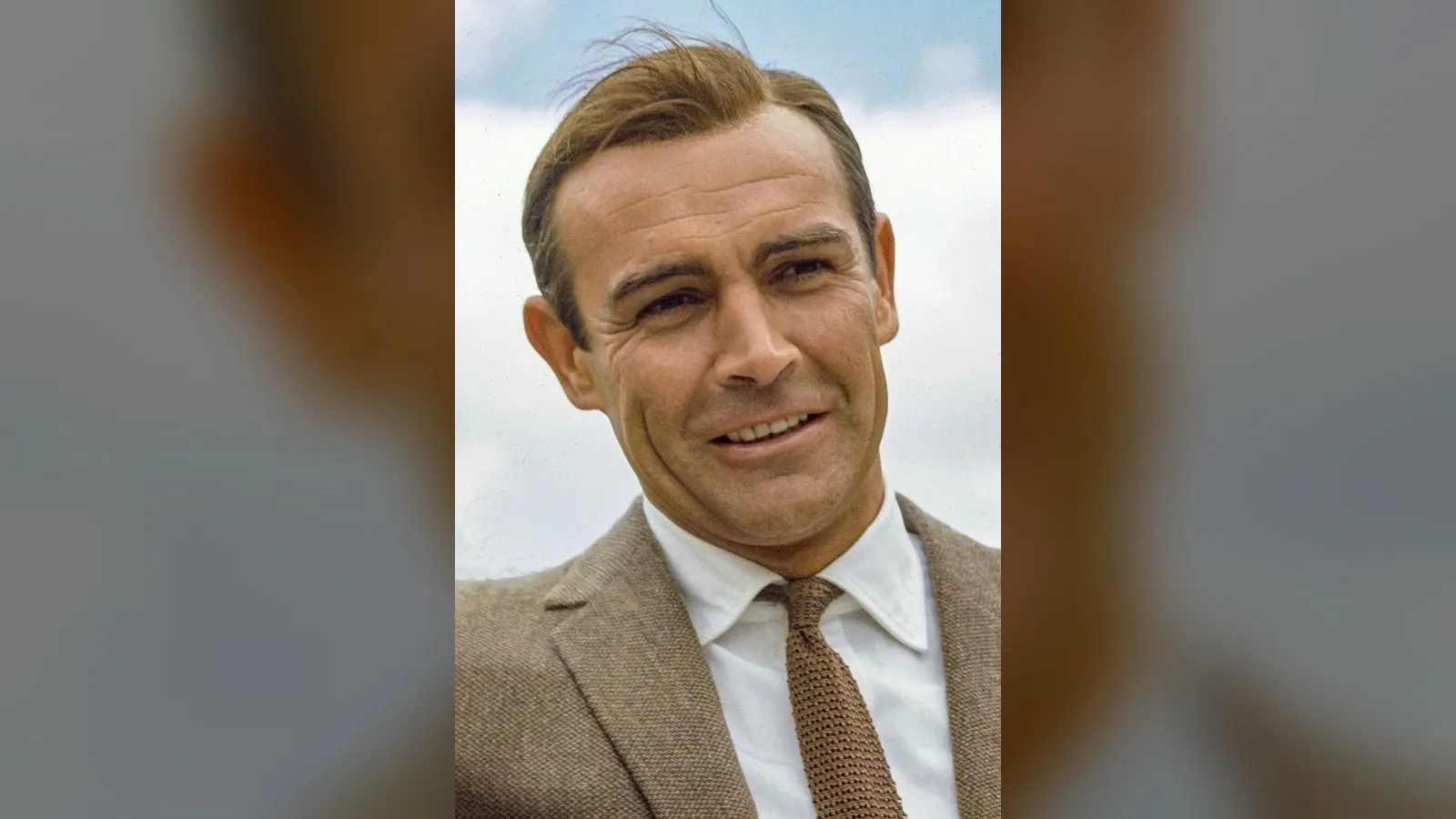

Sir Sean Connery (1930–2020)
Contents
TL;DR
- established Sir Sean Connery was an Edinburgh-born actor who rose from genuine poverty to become the first actor to play James Bond on screen, in Dr. No (1962), and went on to a major film career spanning six decades, winning an Academy Award for The Untouchables (1987) and becoming the first Scottish actor to win a major Oscar.
- established He was a committed, longstanding supporter of Scottish independence and the Scottish National Party, financially backing the party until UK legislation in 2001 barred overseas funding of political activity, and his knighthood was reportedly delayed for years due to his political views before he was finally knighted in 2000.
- Disputed/Established. Connery's record on violence against women is genuinely serious and well documented rather than a minor footnote: he stated repeatedly across decades, including in a notorious 1987 interview with Barbara Walters, that slapping a woman could be justified "if all other alternatives fail," and his first wife, actress Diane Cilento, alleged in her 2006 memoir that he had physically and mentally abused her during their marriage — allegations he denied, while his own public statements on the broader subject are a matter of direct documented record, not disputed interpretation.
- established He married twice: to Diane Cilento (1962–1973), with whom he had his only child, actor Jason Connery, and to French-Moroccan painter Micheline Roquebrune in 1975, a marriage that lasted until his death.
- established He died in 2020 at his home in the Bahamas, aged 90, having suffered from dementia in his final years; his ashes were later scattered in Scotland.
Key Facts
- Born
- 25 August 1930, Edinburgh, Scotland
- Died
- 31 October 2020 (aged 90), Lyford Cay, Bahamas
- Category
- Culture / Film
- Known for
- First actor to play James Bond; Academy Award for The Untouchables (1987)
- Honours
- Academy Award (1988); BAFTA Fellowship (1998); Knighted (2000)
- Political activity
- Longtime SNP supporter and donor
- Marriages
- Diane Cilento (1962–1973); Micheline Roquebrune (1975–2020)
Scottish Impact Index (SI Score)
- Global Influence
- 10/10
- Enduring Relevance
- 8/10
- Material Contribution
- 8/10
- Exceptional Achievement
- 6/10
- Lasting Legacy
- 7/10
- Recognition
- 10/10
49/60
Ranked =15th of 200 in Great Scots
A Note on Claims and Evidence
Connery's career, major films, honours, political activity, and death are extensively documented through institutional and press records and are treated here as established. His own public statements on slapping women are directly quoted and documented across multiple interviews over decades (1965, 1987, 1993) and are reported here as established fact, not disputed interpretation, since they are his own recorded words. Diane Cilento's specific allegations of physical and psychological abuse during their marriage are reported as her account, made publicly in her own memoir; Connery denied hitting her. This article reports both the undisputed public record of his statements and the genuinely contested specific allegations honestly and without minimising either.
Timeline
Born in Edinburgh to a factory worker father and cleaner mother, growing up in genuine poverty at Fountainbridge.
Serves in the Royal Navy, discharged early due to a duodenal ulcer.
Works as a milkman, lorry driver, lifeguard, labourer, artist's model, and coffin polisher; takes up competitive bodybuilding.
Discovers an audition for South Pacific while competing in a London bodybuilding contest, leading to his first stage role.
Marries Diane Cilento; stars as James Bond in Dr. No, launching his global fame.
Stars in five Bond films: Dr. No, From Russia with Love, Goldfinger, Thunderball, and You Only Live Twice.
Stars in Alfred Hitchcock's Marnie.
Tells Playboy magazine he does not think there is "anything particularly wrong in hitting a woman."
Stars in Sidney Lumet's The Hill.
Separates from Diane Cilento; returns for the Bond film Diamonds Are Forever.
Divorces Diane Cilento.
Marries Micheline Roquebrune; stars in The Man Who Would Be King.
Stars in his final Bond film, Never Say Never Again.
Tells Barbara Walters in a televised interview that he still believes slapping a woman can be justified; wins the Academy Award for Best Supporting Actor for The Untouchables and the BAFTA Award for Best Actor for The Name of the Rose (1986).
Stars opposite Harrison Ford in Indiana Jones and the Last Crusade.
Makes further controversial remarks on the subject in Vanity Fair.
Receives the BAFTA Fellowship and a Tony Award as producer of the play Art.
Knighted by Queen Elizabeth II at Holyrood Palace, Edinburgh, after reportedly delayed nominations.
Stars in The League of Extraordinary Gentlemen, a troubled production that leads him to decide to retire.
Diane Cilento publishes a memoir alleging physical and mental abuse during their marriage; Connery publicly disavows his earlier remarks, stating "I don't believe that any level of abuse of women is ever justified under any circumstances. Full stop."
Formally announces his retirement from acting while receiving the American Film Institute's Lifetime Achievement Award.
Dies at his home in the Bahamas, aged 90, having suffered from dementia in his final years.
His ashes are scattered in Scotland at undisclosed locations.
The Edinburgh International Film Festival establishes the Sean Connery Prize for Feature Filmmaking Excellence in his honour.
Details
Genuine poverty in Edinburgh, and an unlikely path to acting
Thomas Sean Connery was born in 1930 at Edinburgh's Royal Maternity Hospital, to a factory worker and lorry driver father and a mother who worked as a cleaner, growing up in modest, genuinely difficult circumstances at Fountainbridge in Edinburgh, a block since demolished. He left school young and worked a remarkable succession of manual jobs before acting became a serious prospect: milkman, Royal Navy sailor (discharged at nineteen due to a duodenal ulcer), lorry driver, lifeguard at Portobello swimming baths, labourer, artist's model at Edinburgh College of Art, and even coffin polisher. He took up competitive bodybuilding from the age of eighteen, and it was at a 1953 bodybuilding competition in London that he learned auditions were being held for a production of South Pacific — a chance encounter that led to his first small theatrical role and, eventually, a film career few could have predicted from his origins.
Becoming James Bond, against the odds
Connery's breakthrough role, James Bond in Dr. No (1962), was not an obvious casting choice: Bond's creator, Ian Fleming, reportedly doubted the selection initially, saying Connery was "not what I envisioned of James Bond looks." Fleming changed his mind after the film's successful premiere, going so far as to later give the literary Bond character Scottish heritage in subsequent novels, a notable retroactive acknowledgment of how completely Connery had come to define the role. Director Terence Young played a significant part in shaping Connery's screen persona, according to co-star Lois Maxwell, personally coaching him on manner and style. Connery went on to play Bond in seven films between 1962 and 1983 (Dr. No, From Russia with Love, Goldfinger, Thunderball, You Only Live Twice, Diamonds Are Forever, and Never Say Never Again), establishing the character's screen iconography — including the famous "Bond. James Bond" introduction — so thoroughly that it remains the benchmark against which later Bond actors are measured. Despite this success, Connery grew to resent the role's dominance over his career, later saying bluntly, "I have always hated that damned James Bond. I'd like to kill him."
A substantial career beyond Bond
Connery deliberately worked to escape typecasting even at the height of Bond's success, notably requesting to see the script for Hitchcock's Marnie (1964) — a request so unusual for the period that Hitchcock's agent pointed out even Cary Grant never asked, to which Connery reportedly replied, "I'm not Cary Grant." He took the non-Bond role in Sidney Lumet's The Hill (1965) specifically to demonstrate range, and starred alongside Michael Caine in John Huston's The Man Who Would Be King (1975), a film both actors later named as their personal favourite. His performance as Irish-American police officer Jim Malone in Brian De Palma's The Untouchables (1987) brought him his greatest critical and institutional recognition, winning him the Academy Award for Best Supporting Actor and making him the first Scottish actor to win a major Oscar; the same year he won the BAFTA Award for Best Actor for The Name of the Rose (1986). He went on to major commercial successes including Indiana Jones and the Last Crusade (1989), The Hunt for Red October (1990), The Rock (1996), and Entrapment (1999). A troubled production, The League of Extraordinary Gentlemen (2003), left him sufficiently disillusioned with the filmmaking process that he chose to retire from acting rather than continue enduring similar experiences, formally announcing his retirement while accepting the American Film Institute's Lifetime Achievement Award in 2006.
A committed, costly Scottish nationalist
Connery's Scottish identity was not incidental celebrity colour but a genuine, sustained political commitment. He became a member of the Scottish National Party and financially supported it for decades, writing to an SNP candidate in 1967 that he was "convinced that with our resources and skills we are more than capable of building a prosperous, vigorous and modern self-governing Scotland in which we can all take pride." He continued funding the party until 2001, when UK legislation specifically prohibited overseas funding of political activity within Britain — legislation that directly affected Connery given his long-term tax residency outside the UK. His political commitment reportedly had a real, documented professional cost: his knighthood was nominated in both 1997 and 1998 but, according to reports, vetoed on both occasions by the Scottish Labour politician Donald Dewar specifically because of Connery's SNP support, before he was finally knighted by Queen Elizabeth II in 2000, fittingly at a ceremony held at Holyrood Palace in Edinburgh.
A documented, serious record on violence against women
This is a part of Connery's record this article does not minimise. Across several decades and multiple separate interviews, Connery made direct, repeated public statements defending the acceptability of slapping women under certain circumstances. In a 1965 Playboy interview he said, "I don't think there is anything particularly wrong in hitting a woman, though I don't recommend you do it in the same way you hit a man," specifically citing women he considered "a bitch, or hysterical, or bloody-minded continually" as deserving of "an openhanded slap… if all other alternatives fail." When directly confronted with these remarks by Barbara Walters in a televised 1987 interview, Connery did not walk them back — he explicitly confirmed, "I haven't changed my opinion," and stated it was "absolutely right" to slap a woman "if you have tried everything else." He made further comments along similar lines in a 1993 Vanity Fair interview, at that time attempting to characterise his earlier remarks as taken out of context and arguing that physical slapping was "not the crudest thing" compared to psychological harm — a defence that does not substantially alter the documented fact that he had, on camera, explicitly reaffirmed his 1965 position some twenty-two years after first making it.
Separately, but relatedly, his first wife, the Australian actress Diane Cilento, alleged in her 2006 autobiography that Connery had both physically and mentally abused her during their 1962–1973 marriage, attributing his behaviour in part to jealous rages connected to her own professional success and his own difficulty coping with Bond-driven fame. Cilento stated carefully, "There was physical contact, but it is important to see it in context. You have got to remember he was probably twice my weight," and her book's editor, Robert Sessions, characterised Connery in blunt terms as "a bully." Connery consistently and directly denied ever hitting his former wife. In the same year Cilento's book was published, Connery publicly disavowed his earlier comments on slapping women generally, stating, "I don't believe that any level of abuse of women is ever justified under any circumstances. Full stop." This article reports the documented public record of Connery's own repeated statements as established fact, since they are his own recorded words across multiple independent interviews; it reports Cilento's specific allegations about their marriage as her account, which Connery denied, and does not resolve that particular dispute, while noting that his broader public comments on the subject are not themselves in question.
Two marriages, one lasting
Connery married Diane Cilento in 1962; the couple had one son, the actor Jason Connery, before separating in 1971 and divorcing in 1973. In the early 1970s he dated a number of other actresses, including Dyan Cannon, Jill St John, Lana Wood, and Carole Mallory. He married the French-Moroccan painter Micheline Roquebrune in 1975, a marriage that lasted until his death in 2020 despite a well-documented affair with the singer-songwriter Lynsey de Paul in the late 1980s, which de Paul later said she came to regret specifically in light of Connery's publicly stated views on domestic violence.
Death and legacy
Sean Connery died on 31 October 2020 at his home in the Lyford Cay community of Nassau, Bahamas, at the age of 90. His death certificate, later obtained by the press, listed pneumonia and respiratory failure as the cause of death, and his widow subsequently revealed he had suffered from dementia in his final years. Tributes followed from figures including his frequent collaborator Michael Caine, and the James Bond franchise's own producers credited him with having "revolutionized the world" through his portrayal of Bond and being "undoubtedly largely responsible for the success of the film series." His ashes were scattered in Scotland at undisclosed locations in 2022, and in 2024 the Edinburgh International Film Festival established the Sean Connery Prize for Feature Filmmaking Excellence, offering £50,000 to filmmakers, in his memory.
Did You Know?
- Sean Connery worked as a coffin polisher and an artist's model before becoming an actor.
- Ian Fleming initially doubted Connery's casting as James Bond, then later gave the literary character Scottish heritage in tribute.
- He asked to see the script for Hitchcock's Marnie — an unusual request for the era that even Cary Grant reportedly never made.
- He won an Academy Award for The Untouchables (1987), becoming the first Scottish actor to win a major Oscar.
- His knighthood was reportedly delayed for years due to political opposition to his Scottish National Party support.
- He made repeated public statements across decades defending the acceptability of slapping women, reaffirming the position directly in a 1987 televised interview.
- His first wife, Diane Cilento, alleged in her 2006 memoir that he had physically and mentally abused her during their marriage, which he denied.
- He suffered from dementia in his final years before his death in 2020.
FAQ
1What is Sean Connery best known for?
Being the first actor to play James Bond on screen, starting with Dr. No (1962), and his Academy Award-winning performance in The Untouchables (1987).
2Was Sean Connery the first choice to play James Bond?
No — Ian Fleming reportedly had doubts about the casting initially, though he changed his mind after the film's success.
3Did Sean Connery support Scottish independence?
Yes, consistently and financially — he was a longtime Scottish National Party member and donor, supporting the party until 2001 legislation barred overseas political funding.
4Was Sean Connery's knighthood controversial?
Reports indicate his knighthood nominations in 1997 and 1998 were vetoed due to his political views before he was finally knighted in 2000.
5Did Sean Connery make controversial comments about women?
Yes — he made repeated, documented public statements across several decades defending slapping women under certain circumstances, most notably reaffirming the view directly in a 1987 televised interview with Barbara Walters.
6Did Sean Connery's first wife make allegations against him?
Yes — Diane Cilento alleged in her 2006 memoir that he had physically and mentally abused her during their marriage, which Connery denied.
7How many times was Sean Connery married?
Twice — to Diane Cilento (1962–1973) and to Micheline Roquebrune (1975 until his death in 2020).
8How did Sean Connery die?
He died on 31 October 2020 at his home in the Bahamas, aged 90, from pneumonia and respiratory failure, having suffered from dementia in his final years.
9Did Sean Connery win other major awards besides the Oscar?
Yes — a BAFTA Award for Best Actor, the BAFTA Fellowship, a Tony Award as a producer, the Cecil B. DeMille Award, and Kennedy Center Honors, among others.
Sources and Further Reading
Institutional
- Academy of Motion Picture Arts and Sciences, Academy Award records
- BAFTA, awards and Fellowship records
- UK Honours lists, 2000
Press / Documented Statements
- Playboy magazine, 1965 interview
- Barbara Walters, televised 1987 interview
- Vanity Fair, 1993 interview
- Diane Cilento, autobiography (2006)
General
- Wikipedia, "Sean Connery" (overview, cross-checked against institutional and press sources above)
- Snopes, fact-check on Sean Connery's statements about slapping women
- The Scotsman, "Jealous Connery beat me, says ex-wife"
Caveats: Myths and Disputed Claims
- Not disputed: Connery's own statements defending slapping women are directly documented across multiple independent interviews spanning decades (1965, 1987, 1993) and should not be characterised as a single remark taken out of context, given his explicit 1987 reaffirmation of the position.
- disputed The specific allegations made by Diane Cilento regarding physical abuse during their marriage are her account, made publicly in her own memoir; Connery denied hitting her, and this article does not resolve that specific, contested claim.
- Myth: Connery's later 2006 statement disavowing abuse fully resolved the matter. Reality: While his 2006 statement was unambiguous, it came only after decades of repeated, consistent public comments defending the opposite position, and readers should weigh the full documented record rather than only his final, late disavowal.
Card 117 · Great Scots