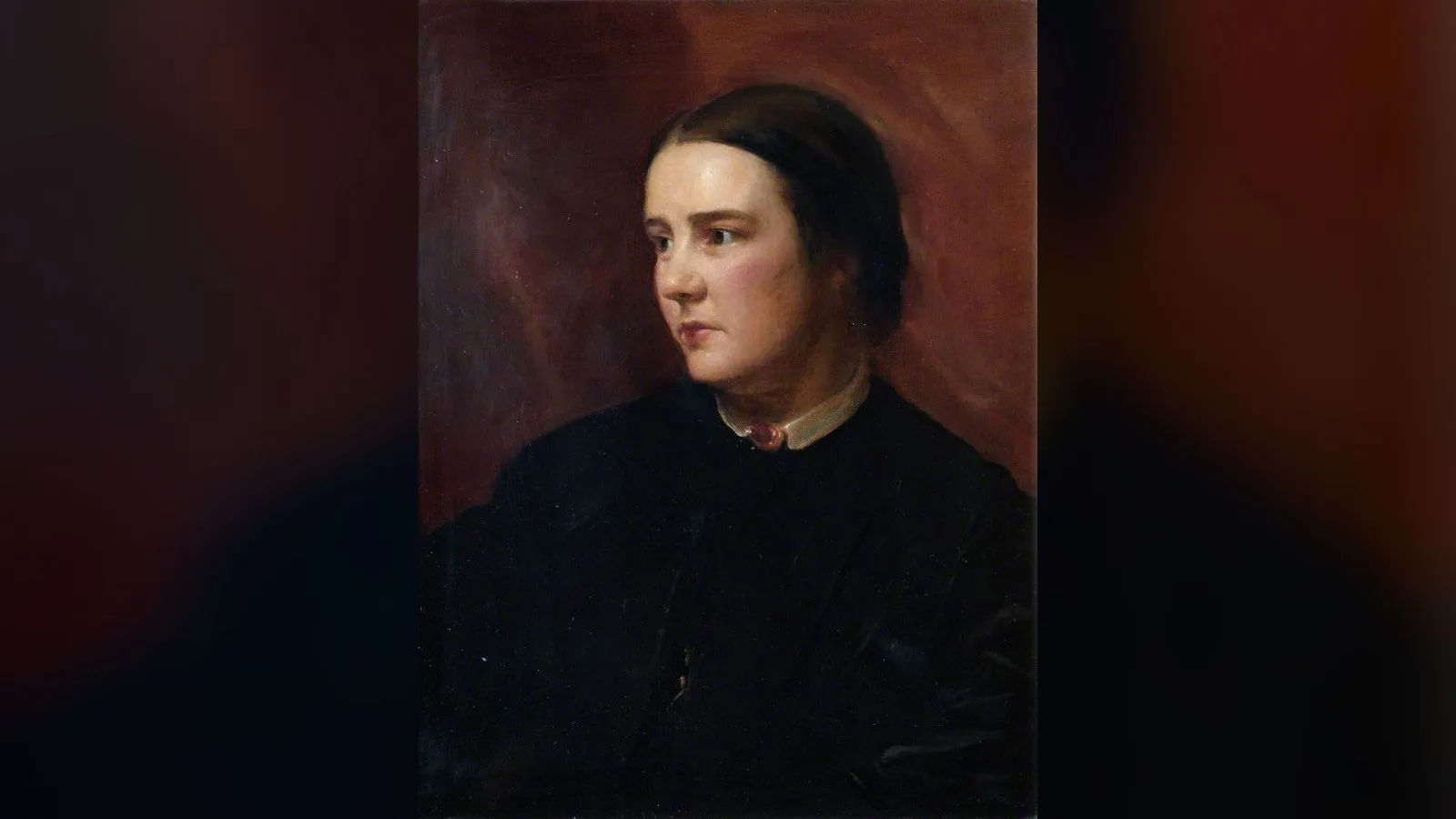

Sophia Jex-Blake (1840–1912)
Contents
TL;DR
- established Born in Sussex and initially opposed by her own father in her educational ambitions, Jex-Blake led the "Edinburgh Seven," the first group of women to matriculate at a British university medical school, after her 1869 application to the University of Edinburgh and subsequent public recruitment of six fellow women candidates.
- established The women faced sustained, serious harassment throughout their studies — obscene letters, being followed home, fireworks attached to their door, and mud thrown at them — culminating in the infamous November 1870 Surgeons' Hall riot, in which over 200 hostile men gathered to hurl abuse and mud at the women as they arrived for an anatomy examination; this article reports the severity of this harassment directly rather than treating it as a minor historical footnote to an otherwise straightforward success story.
- established Despite surviving this harassment and the resulting public sympathy, the Edinburgh campaign ultimately failed: legal rulings determined the women should never have been permitted to matriculate in the first place, and none were allowed to graduate from Edinburgh, forcing Jex-Blake to qualify as a doctor abroad, at the University of Berne, in 1877.
- established Jex-Blake went on to found both the London School of Medicine for Women (1874) and the Edinburgh School of Medicine for Women (1886), and Edinburgh's first hospital for women staffed entirely by women — substantial, lasting institutional achievements this article presents in full alongside a genuinely documented, more difficult side of her character.
- disputed Jex-Blake's own combative temperament generated serious, lasting conflicts with colleagues and students in her later institutional roles, culminating in a damaging 1889 court case in which she was successfully sued for damages by her own students — a complication this article presents directly, consistent with house style's commitment to a full, evidence-based portrait rather than an uncomplicated heroic narrative.
Key Facts
- Born
- Sophia Louisa Jex-Blake, 21 January 1840, Hastings, Sussex
- Died
- 7 January 1912, Rotherfield, Sussex, aged 71
- Known for
- Leader, the Edinburgh Seven; founder, Edinburgh School of Medicine for Women
- Medical qualification
- MD, University of Berne, 1877; Licentiate, King and Queen's College of Physicians of Ireland
- Key institutions founded
- London School of Medicine for Women (1874); Edinburgh School of Medicine for Women (1886)
- UK standing
- Third registered female doctor in the United Kingdom
- Posthumous recognition
- 2019: posthumous honorary MBChB degrees awarded to the Edinburgh Seven
Scottish Impact Index (SI Score)
- Global Influence
- 5/10
- Enduring Relevance
- 7/10
- Material Contribution
- 2/10
- Exceptional Achievement
- 6/10
- Lasting Legacy
- 5/10
- Recognition
- 3/10
28/60
Ranked =114th of 200 in Great Scots
A Note on Claims and Evidence
Jex-Blake's biography, the Edinburgh Seven campaign, the Surgeons' Hall riot, her later institution-building, and the 1889 court case are extensively documented in university and medical historical records, contemporary press accounts, and biographical scholarship (including a biography written by her own partner, Margaret Todd), and are treated as Established throughout this article. Her personal relationship with Margaret Todd is described in biographical sources as assumed to have been romantic, and this article presents it on that basis.
Timeline
Born in Hastings, Sussex.
Enrolls at Queen's College, London, despite parental opposition.
Travels to the United States; meets Dr Lucy Ellen Sewall at the New England Hospital for Women and Children, Boston, and resolves to become a doctor.
Applies to Harvard Medical School with Susan Dimock; rejected outright.
Her father dies; she redirects her efforts to Britain.
Applies individually to the University of Edinburgh's medical programme; rejected by the university court.
Advertises in The Scotsman for fellow women candidates; a second, joint application with six other women succeeds, forming the Edinburgh Seven.
The women study medicine at Edinburgh amid escalating, serious harassment.
The Surgeons' Hall riot: over 200 hostile men confront the women with mud, rubbish, and insults.
Legal appeals rule the women should never have been permitted to matriculate; the Edinburgh campaign fails, and none are allowed to graduate.
Co-founds the London School of Medicine for Women.
Qualifies with an MD from the University of Berne.
Qualifies as Licentiate of the King and Queen's College of Physicians of Ireland, becoming the third registered woman doctor in the UK.
Returns to Edinburgh and establishes her own medical practice, becoming the city's first woman doctor.
Opens a clinic for poor women, which grows into the Edinburgh Hospital and Dispensary for Women.
Founds the Edinburgh School of Medicine for Women.
A damaging, acrimonious court case sees Jex-Blake successfully sued for damages by two students she had expelled, the Cadell sisters; their supporters, including the student Elsie Inglis, back a rival Medical College for Women.
Jex-Blake's school closes; she retires.
Retires with Dr Margaret Todd to Windydene, Rotherfield, Sussex.
Dies at Rotherfield, aged 71.
Margaret Todd publishes The Life of Dr Sophia Jex-Blake.
The Edinburgh Seven are posthumously awarded honorary MBChB degrees by the University of Edinburgh.
Details
A fight for education against her own family
Jex-Blake was born in 1840 into a comfortable Sussex family, yet her educational ambitions were initially opposed by her own father — a dynamic this article presents as genuinely significant, not an incidental family tension, since it set the pattern for the sustained institutional resistance she would spend her career confronting. She enrolled at Queen's College, London, in 1858 despite this parental opposition, and a pivotal 1865 visit to the United States, where she met pioneering physician Dr Lucy Ellen Sewall at the New England Hospital for Women and Children in Boston, convinced her that medicine was her genuine vocation. An initial 1867 application to Harvard Medical School was flatly rejected with the response that there was "no provision for the education of women in any department of this university," redirecting her efforts back to Britain following her father's death in 1868.
Leading the Edinburgh Seven, and surviving genuine harassment
Jex-Blake's individual 1869 application to study medicine at the University of Edinburgh was rejected by the university court, which claimed it could not make special arrangements "in the interest of one lady." Rather than accept this, she advertised publicly in The Scotsman for other women candidates, and a renewed joint application succeeded — Edinburgh became the first British university to admit women to degree study, with Jex-Blake and six others, later known as the Edinburgh Seven, beginning their studies. This article reports directly and without euphemism the severity of what followed: as the women demonstrated genuine academic capability, opposition escalated into sustained, serious harassment, including obscene letters, being followed home, fireworks attached to their front door, and mud thrown at them in the street. This culminated on 18 November 1870 in the Surgeons' Hall riot, when over 200 hostile men gathered outside the hall as the women arrived for an anatomy examination, hurling mud, rubbish, and abuse at them — an episode this article treats as a genuinely serious act of organised intimidation, not an unruly but harmless student prank, and one that drew national press attention and real public sympathy for the women's cause.
A campaign that ultimately failed at Edinburgh
Despite that public sympathy, this article states plainly that the Edinburgh campaign ultimately failed on its own specific terms: influential medical faculty members successfully persuaded the university court to block the women's graduation, and subsequent legal appeals determined that the women should never have been permitted to matriculate at all, a ruling finalised in 1873. None of the Edinburgh Seven were allowed to graduate from Edinburgh as a direct result of their pioneering enrollment there — a genuinely bitter irony this article presents clearly, rather than allowing the admission itself to stand in for the degree the women were ultimately denied. Jex-Blake was consequently forced to seek medical qualification abroad, finally earning her MD from the University of Berne in January 1877 and becoming the third registered woman doctor in the United Kingdom later that year.
Building lasting institutions
Returning to Edinburgh in 1878 as the city's first woman doctor, Jex-Blake built substantial and lasting institutions: a clinic for poor women that grew into the Edinburgh Hospital and Dispensary for Women, Scotland's first hospital staffed entirely by women, and, having already co-founded the London School of Medicine for Women in 1874, the Edinburgh School of Medicine for Women in 1886 — an institution this article credits as training early students who went on to significant achievements of their own, including Elsie Inglis.
A combative temperament, and a genuine institutional rupture
This article presents directly a less flattering but well-documented dimension of Jex-Blake's later career: her own combative, difficult temperament generated real and lasting conflicts with colleagues and students, a pattern that culminated in a seriously damaging 1889 court case in which she was successfully sued for damages by her own students — a dispute so significant it fractured Edinburgh's nascent women's medical education landscape, prompting rivals to establish a competing institution, the Medical College for Women (sometimes called the Edinburgh College of Medicine for Women). This article treats this conflict as a genuine complication to Jex-Blake's legacy worth stating plainly, consistent with an accurate, evidence-based portrait rather than a simplified narrative of uncomplicated heroism; her own pioneering courage in the 1869–1873 Edinburgh campaign and her later difficulties as an institutional leader are both real and documented, and this article presents them as coexisting facts rather than resolving the tension between them.
The 1889 split, as Elsie Inglis's biographer told it
established Lady Frances Balfour, in her memoir Dr. Elsie Inglis (1918), records that Inglis received her first medical teaching at Jex-Blake's Edinburgh School of Medicine for Women, studying from her widowed father's house in Melville Street. Balfour writes that two students "failed to observe the discipline" Jex-Blake imposed and were expelled, that a lawsuit was brought against Jex-Blake, and that it succeeded. Balfour does not name the students; later accounts identify them as the sisters Grace and Georgina Cadell. Inglis took the students' side. The rival school, the Medical College for Women, was in Balfour's words "promoted by Elsie Inglis and other women students"; other accounts credit the Scottish Association for the Medical Education of Women, in which her father John Inglis was prominent. Inglis was more closely tied to the College than to Jex-Blake's school, and later lectured there in gynaecology.
shared Balfour wrote as Inglis's friend and admirer, and her verdict favours the students. She says the case proved that their treatment had been "without justification". She explains Jex-Blake's manner as the cost of a hard fight: pioneers treated with "intolerably unjust" hostility became "embittered", and success made some of them "autocratic". She adds that Inglis "would always have been the first to render homage" to Jex-Blake's pioneer work. Jex-Blake's side is set out in Margaret Todd's Life of Sophia Jex-Blake (1918), which this article has not compared line by line.
established Inglis's own letters show a real but not lasting division. From London in 1892–93 she reported that students of both schools were now attending Dr Littlejohn's class together at Surgeons' Hall, and wrote: "We have a lot to be grateful to J.B. for." From Dublin in February 1894, weighing a partnership with Dr Jessie MacGregor, she described MacGregor as "one of the J.-B. lot" with whom she had had "awful rows over that question", but judged that it "was not a personal question". The two women went into practice together in Edinburgh that year.
Later life and death
Jex-Blake's school closed in 1898 and she retired the following year to Windydene in Rotherfield, Sussex, with Dr Margaret Todd, with whom biographical sources describe her as having had a romantic relationship. Todd went on to write Jex-Blake's biography, published in 1918. Jex-Blake died in 1912, aged 71. Her legacy has seen substantial later formal recognition, including the 2019 posthumous award of honorary medical degrees to the entire Edinburgh Seven by the University of Edinburgh.
How the scholarship, the wards and the courts closed the door
established The decisive obstacles were practical as well as legal. Edith Pechey came top of the chemistry class in 1870, which should have earned her a Hope Scholarship. The professor ruled that the women had not been part of the same class as the men and gave the award to the next man on the list. The Royal Infirmary's medical staff then voted to keep the women off the wards, and without clinical teaching no student could complete the course. In June and July 1873 the Court of Session ruled that the University had never had the power to admit women at all.
shared The historian Helen Dingwall stresses how slowly the door opened even after Jex-Blake's defeat. Women could graduate from Scottish universities from 1892, but Edinburgh's Infirmary did not admit women students to its wards until that year, and Edinburgh avoided mixed medical classes until the First World War. Glasgow taught its women separately at Queen Margaret College, where they made up about 10 to 11 per cent of medical students between 1892 and 1914. Dingwall also warns against reading the campaign only as men against women: the would-be medical women themselves disagreed about whether women should be taught separately or alongside men.
Did You Know?
- Edith Pechey came top of the 1870 chemistry class but was refused the Hope Scholarship on the grounds that the women had not been in the same class as the men.
- Jex-Blake's own father initially opposed her educational ambitions.
- Her first application to a British university medical school was for herself alone; she only recruited the rest of the Edinburgh Seven after that initial application was rejected.
- Over 200 men gathered to hurl mud and abuse at the women during the 1870 Surgeons' Hall riot.
- Despite surviving this harassment, legal rulings ultimately determined the Edinburgh Seven should never have been allowed to matriculate, and none graduated from Edinburgh.
- She was forced to earn her medical degree abroad, at the University of Berne, in 1877.
- She founded Scotland's first hospital for women staffed entirely by women.
- Her own students successfully sued her for damages in a damaging 1889 court case.
- In 1916 the jubilee service of the New Hospital for Women in London gave thanks by name for "Elizabeth Blackwell, and Sophia Jex Blake", as Lady Frances Balfour records.
- Elsie Inglis, who sided against Jex-Blake in 1889, later went into practice with Jessie MacGregor, who had sided with Jex-Blake.
- The Edinburgh Seven received posthumous honorary medical degrees only in 2019, 146 years after they were denied graduation.
FAQ
1What is Sophia Jex-Blake best known for?
Leading the Edinburgh Seven, the first women to matriculate at a British university medical school, and later founding medical schools for women in London and Edinburgh.
2Did she graduate from Edinburgh?
No — legal rulings determined the Edinburgh Seven should never have been permitted to matriculate, and none were allowed to graduate from the university.
3What was the Surgeons' Hall riot?
A November 1870 incident in which over 200 hostile men gathered outside Surgeons' Hall to throw mud and hurl abuse at the women as they arrived for an exam.
4Where did she eventually qualify as a doctor?
At the University of Berne, Switzerland, in 1877, after being denied the chance to graduate in Britain.
5Was she an uncomplicated hero of women's medical education?
Her pioneering 1869–1873 campaign was genuinely courageous, but her later career also involved serious, documented conflicts with colleagues and students, including a 1889 court case in which her own students successfully sued her.
6What institutions did she found?
The London School of Medicine for Women (1874), the Edinburgh School of Medicine for Women (1886), and Edinburgh's first hospital for women staffed entirely by women.
7Who was Margaret Todd?
Her companion in later life, assumed by biographers to have been her romantic partner, who went on to write Jex-Blake's biography.
8What was the 1889 court case about?
Jex-Blake expelled two students, the sisters Grace and Georgina Cadell, for breaches of discipline. They sued and won. Lady Frances Balfour, writing in 1918, judged that the case showed the expulsions to have been unjustified.
9How did Elsie Inglis regard Jex-Blake?
Inglis sided with the expelled students and backed the rival Medical College for Women, but her letters credit Jex-Blake's pioneering work, and her biographer says Inglis would always have honoured it.
10When did she die?
7 January 1912, aged 71, at Rotherfield, Sussex.
Sources and Further Reading
Primary/Institutional
- Lady Frances Balfour, Dr. Elsie Inglis (Hodder and Stoughton, 1918)
- Sophia Jex-Blake — Wikipedia
- Sophia Jex-Blake, pioneer of women's medicine — The National Archives
- Edinburgh Seven — Wikipedia
Scholarly/Critical
- Helen M. Dingwall, A History of Scottish Medicine: Themes and Influences (Edinburgh University Press, 2003), chapter 8
- Surgeons' Hall riot — Wikipedia
- Untold LGBTQ+ Histories in Medicine and Dr Sophia Jex-Blake — Royal College of Physicians of Edinburgh
General
Further reading
- Margaret Todd, The Life of Sophia Jex-Blake (Macmillan, 1918)
Caveats: Myths and Disputed Claims
-
Do not describe Robert Christison as the University's principal, as one history of Scottish medicine does. He was the influential professor of materia medica who led opposition to the women; the principal was Sir Alexander Grant.
-
Do not treat Lady Frances Balfour's account of the 1889 dispute as neutral. She was Elsie Inglis's friend and wrote to honour her; Margaret Todd, Jex-Blake's partner, wrote the opposing side the same year.
-
Clarification: Jex-Blake is sometimes presented as having successfully graduated from Edinburgh as part of the Edinburgh Seven's victory. This article states directly that the campaign ultimately failed in its specific goal: none of the seven were permitted to graduate from Edinburgh, and Jex-Blake was forced to qualify abroad.
-
disputed Jex-Blake's reputation is sometimes presented as uncomplicated heroism. This article presents directly the separately documented fact of her combative temperament and the serious, damaging conflicts it generated with colleagues and students in her later career, including the 1889 court case, alongside her genuine pioneering achievements.
Card 176 · Great Scots