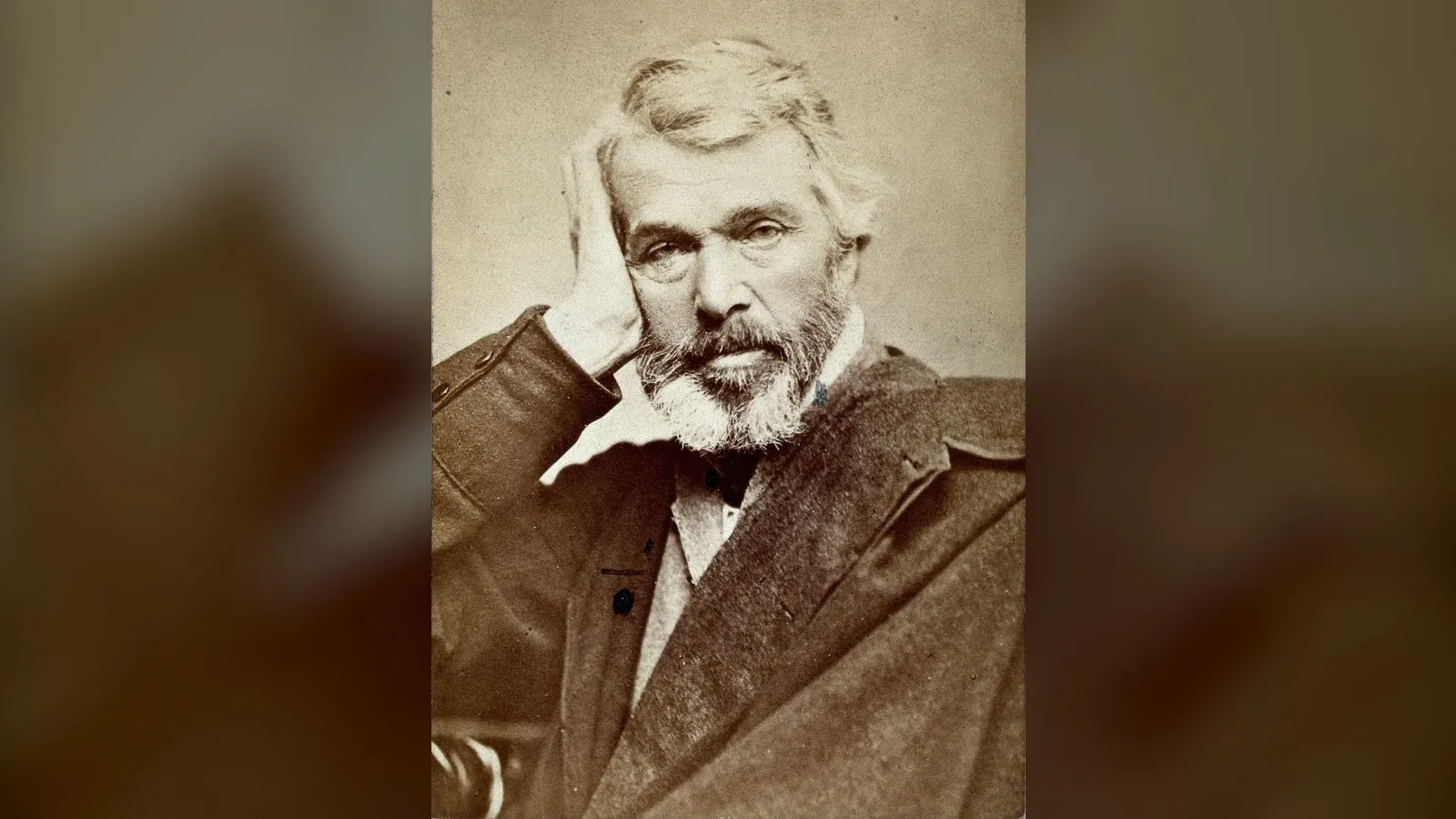

Thomas Carlyle (1795–1881)
Contents
The Sage of Chelsea — Brilliant Prose Stylist, and a Man Whose Politics Curdled Into Something Genuinely Ugly
TL;DR
- established Thomas Carlyle was one of the most influential Victorian writers and historians, whose The French Revolution: A History (1837) and On Heroes, Hero-Worship, and the Heroic in History (1841) shaped 19th-century historical writing and popularised the "great man theory" of history — the view that history is driven primarily by the actions of exceptional, powerful individuals.
- established He coined the phrase "the dismal science," now permanently attached to economics — but the coinage's actual original context is frequently misunderstood: it appears in an essay defending coerced labour and racial hierarchy against economists who argued free markets and emancipation, not (as popularly assumed) as a general complaint about economics being boring or depressing.
- Established, and not to be minimised: In 1849, Carlyle published "Occasional Discourse on the Negro Question" (later reissued under a more openly racist title), a viciously racist essay arguing for the re-imposition of coerced labour on formerly enslaved people in the Caribbean. Roughly fifteen years later, he was a leading public defender of Governor Edward Eyre's brutal suppression of the 1865 Morant Bay rebellion in Jamaica, standing in direct, high-profile opposition to John Stuart Mill and other liberal contemporaries who campaigned for Eyre's prosecution. This is a serious and defining part of his legacy, not a footnote.
- established His marriage to Jane Welsh Carlyle, herself a formidably talented writer whose letters are now valued as major literary works in their own right, was by most documented accounts genuinely difficult and unhappy — a fact that became a significant public scandal after both their deaths, when Carlyle's own guilt-ridden private notes and Jane's letters were published by his chosen biographer.
- Shared/Traditional, though the core episode is real: The famous story of the sole manuscript of the first volume of The French Revolution being accidentally burned by John Stuart Mill's housemaid, and Carlyle rewriting the entire volume from memory, is a genuine, well-documented episode — but should be treated as a remarkable and largely accurate anecdote rather than assumed to be embellished, distinct from other "too good to be true" stories in this series.
- established The stonemason's son became a favourite author of self-educated working people. In a 1906 survey of Labour MPs' favourite authors, 13 of the 45 who replied named Carlyle, and Keir Hardie called his discovery of Sartor Resartus a "real turning point" in his life. Readers took very different lessons from him, from socialism and feminism to Conservatism.
Key Facts
- Born
- 4 December 1795, Ecclefechan, Dumfriesshire
- Died
- 5 February 1881, Chelsea, London, aged 85
- Family background
- Son of a stonemason and strict Calvinist Presbyterian household
- Education
- University of Edinburgh
- Married
- Jane Welsh, 1826; no children
- Major works
- Sartor Resartus (1833–34); The French Revolution: A History (1837); On Heroes, Hero-Worship, and the Heroic in History (1841); Occasional Discourse on the Negro Question (1849)
- Notorious position
- Public defender of Governor Eyre following the 1865 Morant Bay rebellion suppression, Jamaica
- Coined phrase
- "The dismal science" (for economics)
- Home
- Cheyne Row, Chelsea, London (now the Carlyle's House museum, National Trust)
Scottish Impact Index (SI Score)
- Global Influence
- 6/10
- Enduring Relevance
- 8/10
- Material Contribution
- 2/10
- Exceptional Achievement
- 7/10
- Lasting Legacy
- 6/10
- Recognition
- 4/10
33/60
Ranked =74th of 200 in Great Scots
Claim-Status Note
Carlyle presents one of the starkest tests of this site's "accuracy over patriotism" standard in the entire Great Scots series. His prose style and historical influence are genuinely major and not seriously disputed by scholars; his racial views and public political activism in defence of colonial violence are equally well documented and were genuinely shocking even to many of his own contemporaries, not merely by modern standards. This article gives both halves full, unminimised weight, in the same way this site's Hume article treats Hume's racial views — Carlyle's case is, if anything, more serious, since it moved from private prejudice into sustained public advocacy for coercion and violence.
Timeline
Born, 4 December, Ecclefechan, Dumfriesshire, son of a stonemason
Studies at the University of Edinburgh
Marries Jane Welsh, herself a noted intellectual and later celebrated letter-writer
Publishes Sartor Resartus (initially serialised)
Publishes The French Revolution: A History, after rewriting the first volume from memory when the only manuscript was accidentally destroyed
Publishes On Heroes, Hero-Worship, and the Heroic in History
Publishes "Occasional Discourse on the Negro Question," coining "the dismal science" in a defence of coerced labour
The Morant Bay rebellion in Jamaica is violently suppressed by Governor Edward Eyre
Carlyle leads/prominently supports the Eyre Defence Committee, publicly opposing John Stuart Mill's Jamaica Committee, which sought Eyre's prosecution
Jane Welsh Carlyle dies suddenly
Thomas Carlyle dies, 5 February, in Chelsea, London
Posthumous publication of Carlyle's private reminiscences and Jane's letters, edited by his chosen biographer James Anthony Froude, reveals the genuinely troubled nature of the marriage and causes considerable public controversy
Asked by the Review of Reviews to name the authors who most influenced them, 13 of 45 responding Labour MPs cite Carlyle, more than cite Scott, Burns or Shakespeare
The Details
From a Stonemason's Cottage to the University of Edinburgh
Carlyle was born in 1795 in Ecclefechan, Dumfriesshire, into a strict Calvinist Presbyterian household; his father was a stonemason. He studied at the University of Edinburgh, initially with a view to entering the ministry, before moving away from formal religious belief toward a more idiosyncratic, intensely moralistic personal philosophy that nonetheless retained the structure and seriousness of his Calvinist upbringing throughout his later writing — a continuity worth noting, since much of his later moral intensity and his belief in providence-like historical forces working through exceptional individuals draws recognisably on this religious formation even after he abandoned orthodox belief. established
Sartor Resartus and The French Revolution: Establishing a Reputation
Carlyle's early major work, Sartor Resartus (serialised 1833–34), a strange, genre-blending philosophical and semi-autobiographical work presented through an invented German professor's writings on clothing and philosophy, established his distinctive, dense, highly idiosyncratic prose style — a style that would remain his trademark and, for many readers then and since, a genuine obstacle to easy reading.
established Getting it published was a struggle. Carlyle took the manuscript to London in the winter of 1831–32, in the middle of the Reform crisis, and even with Francis Jeffrey's backing publishers including John Murray and James Fraser would not risk it; others in London and William Tait in Edinburgh also turned it down. It appeared first as a serial in Fraser's Magazine, and the first book edition came out in America in 1836 thanks to Ralph Waldo Emerson. Harriet Martineau imported American copies "by the fifty, by the five-and-twenty", and the book's American sales finally persuaded Fraser to offer to publish Carlyle's collected work. Readers at home were not all baffled: one Annandale friend reported that his sister "kent it was Thomas Carlyle's, for it just gangs on like a 'mill shillin'", the stream of grain from a threshing mill.
His reputation was made more decisively with The French Revolution: A History (1837), a vivid, dramatic, morally charged account of the Revolution that became hugely influential in shaping how the English-speaking world understood and imagined the period — its prose style, more than its historical methodology in the modern sense, is what secured its lasting reputation. The book's composition includes one of the most famous and genuinely well-documented anecdotes in the history of English literature: the manuscript of the completed first volume was lent to the philosopher John Stuart Mill for comment, and was accidentally destroyed — almost all accounts agree it was burned, apparently mistaken for waste paper by a housemaid in Mill's household. Carlyle, devastated, rewrote the volume. He did not, however, claim to reproduce it from memory: he wrote at the time that the first volume "cannot be written anew, for the spirit that animated it is past: but another first volume I will try", and ordered a Biographie Universelle and "a better sort of paper" to start again. This story, unlike several other "too remarkable to be true" anecdotes elsewhere in this series, is genuinely well documented from close to the time and should be treated as established, not folklore.
established Carlyle was a trying author for any printer. His manuscripts were heavily overwritten, with corrections pasted on, and his proofs came back covered in changes, often restoring what he had first written. He kept a lifelong distrust of booksellers, complaining that they charged "above 40 per cent… for the mere function of selling a book".
On Heroes, Hero-Worship: The "Great Man Theory"
In On Heroes, Hero-Worship, and the Heroic in History (1841), Carlyle set out his most historically influential and, in retrospect, most troubling philosophical position: the argument that history is driven fundamentally by the actions of a relatively small number of exceptional, powerful individuals — heroes, in his framing — rather than by broader social, economic or structural forces. This became known as the "great man theory" of history, and exerted very substantial influence over 19th-century historical writing more broadly, even as it drew significant later criticism (notably from Herbert Spencer and other thinkers who emphasised broader social forces over individual agency) and, more seriously, has been identified by later scholars as part of a wider current of 19th-century thought that fed into 20th-century authoritarian and fascist ideas about strong, exceptional leadership overriding ordinary constitutional or democratic constraint — a genealogical connection worth stating carefully as an identified intellectual current rather than claiming Carlyle himself directly anticipated or endorsed 20th-century fascism, which he did not live to see. established as to the theory and its historical influence; the fascism-genealogy point should be presented as a documented later intellectual-historical connection, not a claim about Carlyle's own explicit politics.
"The Dismal Science" — Not What Most People Assume
This is one of the more important and frequently misunderstood corrections this article can make. Carlyle's now-famous phrase "the dismal science," permanently and almost universally attached to economics in popular usage today (usually as a wry, mild complaint about the discipline's dry or pessimistic character), did not originate in that spirit at all. It comes from his 1849 essay "Occasional Discourse on the Negro Question" (see below), where Carlyle used the phrase specifically and pointedly to attack classical political economists — including figures who argued, on free-market economic grounds, against the reimposition of coerced or slave labour in Britain's Caribbean colonies following the abolition of slavery. Carlyle's actual complaint was that economics, applied consistently, treated formerly enslaved people as free economic agents entitled to negotiate their own labour, rather than as a workforce that could be compelled — a position Carlyle regarded with contempt. The phrase's popular modern meaning, then, sits in a genuinely uncomfortable and rarely acknowledged relationship with its actual, racially charged original context. established — a significant and necessary correction.
"Occasional Discourse on the Negro Question" (1849): A Genuinely Racist Text
This requires direct, unminimised treatment. In 1849, Carlyle published this essay (later reissued under an even more explicitly racist title), arguing openly for a racial hierarchy in which Black people in the Caribbean should be compelled back into forms of coerced labour under white supervision, on the grounds — stated essentially in these terms — that Black people were naturally suited to labour under direction rather than to full economic and civic freedom. The essay was a direct provocation aimed specifically at classical liberal economists, including John Stuart Mill, who had argued on free-market grounds against such coercion and in favour of genuine post-emancipation economic freedom; Mill wrote a direct rebuttal. This was not a minor, obscure, or easily overlooked piece of Carlyle's output — it engaged directly and polemically with one of the major public policy debates of the period regarding the aftermath of Caribbean slave emancipation, and it should be read as a serious, deliberate, sustained argument for racial hierarchy and coercion, not an isolated intemperate remark. established
The Eyre Controversy: From Private Prejudice to Public Political Campaign
This episode represents the point at which Carlyle's racial views moved decisively from written opinion into active, high-profile political mobilisation, and deserves equal weight with his more purely literary achievements. In October 1865, the Morant Bay rebellion — an uprising by Black Jamaicans against ongoing economic injustice and political exclusion in the British colony — was suppressed by Governor Edward Eyre with extreme and, by most later assessments (including a contemporary Royal Commission), disproportionate violence: several hundred people were killed, flogged, or executed, including after courts-martial widely regarded even at the time as summary and unjust.
This provoked a major, bitterly divisive public controversy in Britain. John Stuart Mill led the Jamaica Committee, campaigning for Eyre's prosecution for the killings. Carlyle, in direct and prominent opposition, was a leading figure in the rival Eyre Defence and Aid Fund, alongside other notable cultural figures of the period including John Ruskin and Alfred, Lord Tennyson, defending Eyre's actions as necessary and justified. This was not a peripheral episode in Carlyle's life; it placed him in direct, publicly visible opposition to one of the leading liberal intellectuals of the age, on a question of colonial racial violence, and it should be understood as continuous with, not separate from, the racial views expressed in his 1849 essay. established, and treated here with the seriousness the episode warrants rather than as a minor footnote to his literary career.
Jane Welsh Carlyle: A Formidable Mind, and a Genuinely Difficult Marriage
Jane Welsh, whom Carlyle married in 1826, was herself an accomplished and intellectually formidable figure, and modern scholarship increasingly treats her voluminous surviving letters as significant literary achievements in their own right, independent of her role as "Carlyle's wife" — a reframing this article endorses rather than treating her as merely background to his story. The marriage itself, however, is documented by most biographical accounts as genuinely difficult: childless, marked by Carlyle's considerable self-absorption and demanding personality, and by real personal unhappiness on Jane's part, much of which she recorded candidly in her own letters and journals. After both their deaths, Carlyle's chosen biographer, James Anthony Froude, published Carlyle's own private reminiscences — including expressions of guilt and self-reproach over how he had treated Jane — alongside her letters, in a decision that caused considerable public controversy at the time and permanently complicated Carlyle's posthumous reputation, revealing a private domestic life considerably less admirable than his public standing as a sage and moral authority might have suggested. established
Death and Immediate Legacy
Carlyle died in Chelsea, London, in 1881, having spent much of his career as one of the most publicly influential literary and historical figures in Britain — a status sometimes summarised by his popular nickname, "the Sage of Chelsea." His home on Cheyne Row is preserved today as a museum. established
A Prophet for Working-Class Readers
A mass following among the self-taught. established The historian Jonathan Rose, in The Intellectual Life of the British Working Classes (2001), shows that Carlyle had a huge following among self-educated working people. When the Review of Reviews asked the Labour MPs elected in 1906 which authors had most influenced them, 13 of the 45 who replied named Carlyle. Only Ruskin (17), Dickens (16) and the Bible (14) were named more often; Walter Scott had 11 mentions and Burns 8.
Scottish readers. established Keir Hardie remembered his discovery of Sartor Resartus, at about sixteen or seventeen, as a "real turning point". He had to read it three times before he understood it: "I felt I was in the presence of some great power" (as quoted by Rose). Helen Crawfurd, a baker's daughter from the Glasgow slums who became a militant suffragette and later sat on the executive of the Communist Party of Great Britain, traced her political awakening to Sartor, Heroes, Past and Present and The French Revolution, and said she found in Carlyle first what she later read in Marx. Elizabeth Bryson, daughter of a poor Dundee bookkeeper, read Sartor at fourteen and went on to become a physician in New Zealand. Before 1914 the Glasgow socialist Patrick Dollan found that elderly Lanarkshire miners, the "fourpenny professors" schooled at 4d. a week, liked Byron, Carlyle and Ruskin, among others, but had never heard of Shaw or Wells. In Orkney the young Edwin Muir could not afford a biography of Carlyle on sale in Kirkwall for 1s. 3d.
Many Carlyles. established Readers took opposite lessons from the same books. George Lansbury drew "good strong doses of individualistic teaching" from Carlyle and Emerson, and the Labour MP F. W. Jowett admired Heroes but was repelled by its glorification of supermen. The socialist journalist Robert Blatchford turned against hero-worship altogether, while a Welsh miner, Sam Shaw, was driven into the Conservative Party by The French Revolution. Some working-class radicals condemned the side of Carlyle covered above: the Chartist W. J. Linton attacked his support for Governor Eyre, and the secularist G. J. Holyoake denounced him as a racist while still admiring his gospel of work.
shared Rose reads this as evidence that readers made their own use of authors, so that an authoritarian could become a teacher of radicals. It is an interpretation drawn from autobiographies, which over-represent the bookish, and it does not soften the record of Carlyle's own politics set out in this article.
Carlyle and America
shared The literary historian Andrew Hook, who wrote a short study of "Carlyle and America" for the Carlyle Society (1970), returns to the subject at the end of Scotland and America: A Study of Cultural Relations, 1750–1835 (1975). He calls Carlyle a key figure in the later Scottish influence on the United States: partly through his close friendship with Ralph Waldo Emerson, who arranged the first book edition of Sartor Resartus in Boston, Carlyle made a major contribution to American Transcendentalism, which Hook sees as setting the tone of American intellectual life up to the Civil War. Hook argues that Carlyle's thought and Transcendentalism were both reactions against the values of the Enlightenment, and that the connection between them owed much to a shared intellectual background; the thrust of his book is that this background was Scottish, since Carlyle was educated at Edinburgh and Scottish Common Sense philosophy dominated American college teaching in the early nineteenth century. That link is Hook's interpretation; historians of Transcendentalism give at least as much weight to German idealism and Coleridge, routes by which Carlyle himself reached the same ideas.
Modern Reassessment
Carlyle's modern scholarly standing reflects the genuine tension at the heart of his legacy: he remains a major, seriously studied figure in the history of English prose style, historical writing, and 19th-century intellectual history, while his racial views and political activism around the Eyre controversy are treated by contemporary scholars as a substantial, disqualifying stain on that legacy rather than an excusable product of "views of his time" — his positions were genuinely controversial and actively opposed by prominent contemporaries such as Mill even in the 1840s and 1860s, which undercuts any simple "everyone thought that way then" defence. This article treats both halves of his legacy — his real literary and historical influence, and his serious, sustained racial politics — as equally necessary to an honest account of the man. established
Did You Know?
- The now-universal nickname for economics, "the dismal science," was coined by Carlyle specifically to attack economists who opposed reimposing coerced labour on formerly enslaved Caribbean workers — not as a general complaint about the subject being boring.
- The sole manuscript of the first volume of Carlyle's The French Revolution was accidentally burned in John Stuart Mill's household, reportedly mistaken for waste paper by a housemaid — and Carlyle wrote the volume again, saying himself that the lost version could not be reproduced and that he would try "another first volume".
- Carlyle's "great man theory" of history — that history is driven by exceptional individuals rather than broader social forces — has been identified by later scholars as part of a wider 19th-century intellectual current that fed into 20th-century authoritarian thinking.
- In 1865–66, Carlyle publicly led opposition to prosecuting Governor Edward Eyre over the brutal suppression of the Morant Bay rebellion in Jamaica, standing directly against John Stuart Mill's campaign for Eyre's prosecution.
- Carlyle's wife, Jane Welsh Carlyle, is increasingly recognised by modern scholars as a major literary figure in her own right through her surviving letters, independent of her marriage.
- The genuinely troubled nature of the Carlyles' marriage became a significant public scandal only after both their deaths, when Carlyle's own private guilt-ridden reminiscences were published by his biographer.
- Carlyle studied at Edinburgh initially intending to enter the ministry before moving away from orthodox religious belief, though his later moral seriousness clearly retained the imprint of his strict Calvinist upbringing.
- His Chelsea home is preserved today as a National Trust museum.
- In 1906, 13 of the 45 Labour MPs who answered a survey of their favourite authors named Carlyle, more than named Walter Scott or Robert Burns.
- The Glasgow suffragette and Communist Helen Crawfurd said that everything she later read in Marx she had first found in Carlyle.
Frequently Asked Questions
1
- What is Thomas Carlyle most famous for?
His distinctive, highly stylised prose and his influence on Victorian historical and philosophical writing, particularly The French Revolution: A History (1837) and his "great man theory" of history in On Heroes, Hero-Worship, and the Heroic in History (1841).
2
- Did Carlyle really coin "the dismal science"?
Yes — but its origin is widely misunderstood. He coined it in a racist 1849 essay attacking economists who opposed forcing formerly enslaved Caribbean people back into coerced labour, not as a general complaint that economics is boring.
3
- Was Thomas Carlyle racist?
Yes, documentedly and seriously. His 1849 "Occasional Discourse on the Negro Question" argued explicitly for racial hierarchy and coerced labour, and in 1865–66 he was a leading public defender of Governor Eyre's brutal, disproportionate suppression of the Morant Bay rebellion in Jamaica, standing in direct opposition to John Stuart Mill's campaign for Eyre's prosecution.
4
- What was the Eyre controversy?
Following the violent 1865 suppression of a Jamaican uprising by Governor Edward Eyre — which killed several hundred people, many after summary courts-martial — a major British public controversy erupted over whether Eyre should be prosecuted. Carlyle led public opposition to prosecution; John Stuart Mill led the campaign for it.
5
- Is it true the manuscript of The French Revolution was burned?
Yes — this is a well-documented, genuine episode, not embellished legend. The completed first-volume manuscript, lent to John Stuart Mill for comment, was accidentally destroyed in his household, and Carlyle rewrote the volume. He did not claim to reproduce it from memory; he wrote that he would try "another first volume".
6
- What is the "great man theory" of history?
Carlyle's argument, set out in On Heroes, Hero-Worship, and the Heroic in History (1841), that history is driven primarily by the actions of a small number of exceptional, powerful individuals, rather than by broader social, economic or structural forces.
7
- Did Carlyle's ideas influence later authoritarian or fascist thinking?
Historians have identified his "great man theory" as part of a broader 19th-century intellectual current that later fed into 20th-century authoritarian ideas about strong individual leadership overriding democratic or constitutional constraint. This is a documented intellectual-historical connection rather than a claim that Carlyle himself anticipated or endorsed 20th-century fascism, which postdates his life.
8
- What was Carlyle's marriage to Jane Welsh Carlyle like?
By most documented accounts, genuinely difficult — childless, and marked by real unhappiness on Jane's part connected to Carlyle's demanding, self-absorbed personality. This became a significant posthumous public controversy when private material was published after both their deaths.
9
- Was Jane Welsh Carlyle just "Carlyle's wife," or significant in her own right?
Modern scholarship increasingly treats her as a significant literary figure independently, based on her extensive and highly regarded surviving letters — a reassessment this article endorses.
10
- Can Carlyle's racial views be excused as "typical for his time"?
Not convincingly — his positions were actively and prominently opposed by contemporaries, including John Stuart Mill, at the time he expressed them, both in 1849 and again in the 1865–66 Eyre controversy. This undercuts any simple defence that his views were unremarkable for the period.
11
- Did Carlyle influence America?
Yes. His friend Ralph Waldo Emerson arranged the first book edition of Sartor Resartus in Boston in 1836, and the literary historian Andrew Hook counts Carlyle a major contributor to American Transcendentalism. How far that link rested on a shared Scottish philosophical background is Hook's argument rather than settled fact.
12
- Where can I visit sites connected to Carlyle today?
His birthplace in Ecclefechan, Dumfriesshire, and his London home on Cheyne Row, Chelsea (preserved as a National Trust museum, "Carlyle's House"), are the two most significant surviving heritage sites connected to him.
13
- Why did working-class radicals read an anti-democratic writer like Carlyle?
Because his attacks on shams, idleness and the "cash nexus", and his gospel of work, spoke to people who felt exploited. Working-class autobiographies studied by the historian Jonathan Rose show Keir Hardie, the Glasgow Communist Helen Crawfurd and many others drawing socialist or feminist lessons from him, while others rejected his hero-worship or his support for Governor Eyre.
14
- How do modern scholars balance Carlyle's literary influence against his racial politics?
Most contemporary scholarship treats both as genuinely significant and inseparable parts of an honest assessment of his legacy — his prose style and historical influence are real, but his racial views and political activism (especially around the Eyre controversy) are treated as a serious, substantial part of his story, not a minor footnote to be set aside.
Sources and Further Reading
Primary/Institutional
- Thomas Carlyle, Sartor Resartus (1833–34); The French Revolution: A History (1837); On Heroes, Hero-Worship, and the Heroic in History (1841); Occasional Discourse on the Negro Question (1849)
- Carlyle's House, Chelsea (National Trust) — heritage and biographical materials
Scholarly
- James Anthony Froude, Carlyle's chosen biographer, whose posthumous publication of private material caused significant controversy over the Carlyles' marriage
- Scholarly analyses of the "Occasional Discourse on the Negro Question" and its reception, including its direct rebuttal by John Stuart Mill
- Historical accounts of the Morant Bay rebellion, the Eyre controversy, and the rival Eyre Defence Committee and Jamaica Committee
- Oxford Dictionary of National Biography, "Thomas Carlyle"
- Jonathan Rose, The Intellectual Life of the British Working Classes (Yale University Press, 2001), including Table 1.1, "Favorite Authors of Early Labour MPs, 1906"
- Andrew Hook, Scotland and America: A Study of Cultural Relations, 1750–1835 (Blackie, 1975), Conclusion; Hook's "Carlyle and America", Carlyle Society Occasional Papers no. 3 (Edinburgh, 1970), is cited there but was not consulted for this article
- Ian Campbell, "Thomas Carlyle and the Lure of London", in Bill Bell (ed.), The Edinburgh History of the Book in Scotland, Volume 3: Ambition and Industry 1800–1880 (Edinburgh University Press, 2007)
General
- Encyclopaedia Britannica, "Thomas Carlyle"
- BRANCH (Britain, Representation and Nineteenth-Century History) collective essay on "Carlyle's 'Negro Question'"
Caveats: Myths and Disputed Claims
- "The dismal science" is popularly assumed to be a mild, general complaint about economics being boring. Its actual origin is a racist 1849 essay defending coerced labour. established correction.
- Carlyle's racial views are sometimes minimised as "typical for the time." They were actively and prominently opposed by contemporaries including John Stuart Mill at the time, undercutting this defence. established correction.
- The burned-manuscript story for The French Revolution is sometimes assumed to be exaggerated legend, given how dramatic it sounds. It is, in fact, well documented and should be treated as broadly accurate. established, not myth.
- Carlyle's "great man theory" is sometimes presented as a purely neutral historiographical position. Its later identified connections to 19th- and 20th-century authoritarian thought are a documented, serious part of its intellectual-historical legacy and worth including. established as a documented connection, carefully distinguished from any claim about Carlyle's own direct politics.
- Jane Welsh Carlyle is sometimes treated purely as a supporting figure in her husband's biography. Modern scholarship increasingly credits her independent literary significance. established correction.
- Carlyle rewrote the burned first volume of The French Revolution from memory. He wrote it again, but said at the time that the lost version could not be reproduced. established correction.
- Do not treat Carlyle's popularity with Labour pioneers as proof that he was a man of the left. Working-class readers drew socialist, feminist, individualist and Conservative lessons from him, and some condemned his racism and his defence of Governor Eyre.
Card 026 · Great Scots