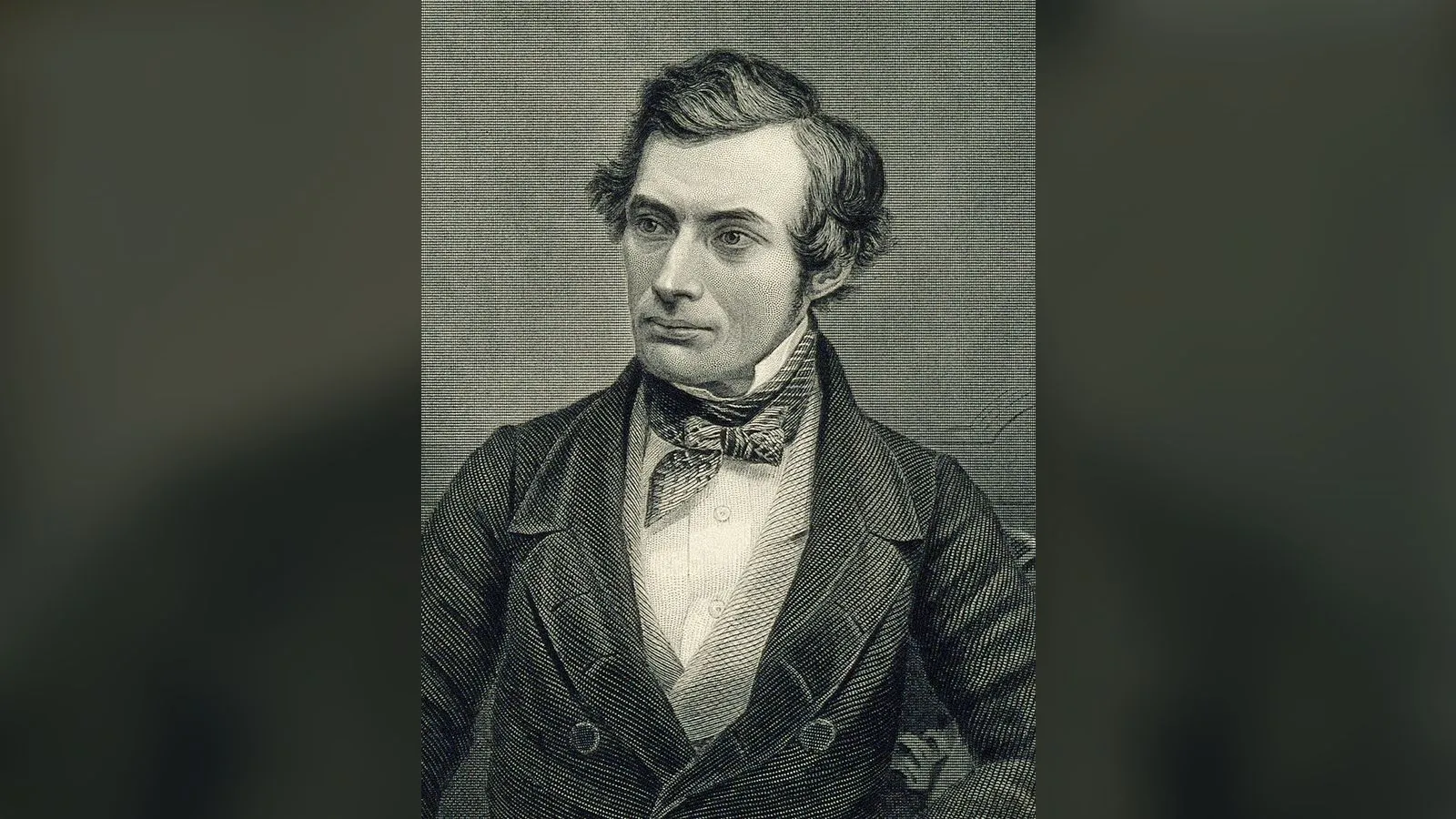

Thomas Graham (1805–1869)
Contents
TL;DR
- Established/Documented. Graham formulated what's now known as Graham's Law — that the rate at which a gas diffuses is inversely proportional to the square root of its density — a foundational result in physical chemistry still taught today.
- Established/Documented, and his most significant overall legacy. Graham essentially founded the field of colloid chemistry, drawing the fundamental distinction between colloids and crystalloids and inventing dialysis as a laboratory separation technique — the direct scientific ancestor of the kidney dialysis machines that keep people alive today.
- Established/Documented. Graham's father, a successful textile manufacturer, actively opposed his son's scientific ambitions and wanted him to enter the Church of Scotland ministry instead — Graham pursued chemistry against his father's wishes, a real and documented family conflict, not a smoothed-over footnote.
- Established/Documented. Graham became Master of the Mint in 1855, a historic office once held by Isaac Newton, and was the final person to hold the position in its traditional independent form before it was absorbed into the Chancellor of the Exchequer's responsibilities — a genuinely notable institutional endpoint this article states directly.
Key Facts
- Born
- 20 December 1805, Glasgow
- Died
- 16 September 1869, London (aged 63)
- Education
- University of Glasgow (MA, 1824); further study at Edinburgh
- Key posts
- Professor of Chemistry, Anderson's Institution, Glasgow (from 1830); Professor of Chemistry, University College London; Master of the Mint (1855–1869)
- Major discoveries
- Graham's Law of gas diffusion (1833); founding work on colloid chemistry and dialysis (from the 1850s–1861)
- Key institutional role
- Founding President, Chemical Society of London (1841)
- Honours
- Royal Medal (twice, 1837 and 1863); Copley Medal (1862)
- Personal life
- Never married
Scottish Impact Index (SI Score)
- Global Influence
- 6/10
- Enduring Relevance
- 8/10
- Material Contribution
- 4/10
- Exceptional Achievement
- 8/10
- Lasting Legacy
- 6/10
- Recognition
- 2/10
34/60
Ranked =67th of 200 in Great Scots
How This Article Handles the Evidence
Graham's career divides cleanly into a scientific phase — where his two major contributions (gas diffusion, and colloid chemistry/dialysis) each stand as genuinely significant, independently documented achievements — and a later institutional phase as Master of the Mint, a role with real historical weight of its own given its Newton connection and its position as the final chapter of that particular office. This article treats both phases with equal seriousness rather than letting the later administrative role read as a quiet coda to the "real" scientific career.
Timeline
Born in Glasgow, son of a successful textile manufacturer.
Enrols at the University of Glasgow at age 13/14, against his father's wishes, who wanted him to enter the Church of Scotland ministry; comes under the influence of chemistry professor Thomas Thomson.
Earns his MA at Glasgow; pursues further medical studies at Edinburgh.
Teaches chemistry briefly at Glasgow's Portland Street Medical School.
Elected a Fellow of the Royal Society of Edinburgh.
Appointed Professor of Chemistry at Anderson's Institution, Glasgow (now the University of Strathclyde), at age 25.
Awarded the Keith Medal by the Royal Society of Edinburgh.
Publishes "On the Law of the Diffusion of Gases," establishing what becomes known as Graham's Law.
Publishes around 29 research papers during his time at Anderson's Institution, building an international scientific reputation.
Moves to London to take up the Professorship of Chemistry at University College London.
Founds the Chemical Society of London and becomes its first President.
Recognised as the leading chemist in England.
Develops his foundational work on colloid chemistry, distinguishing colloids from crystalloids and inventing the dialyzer, an early laboratory forerunner of the modern dialysis machine.
Appointed Master of the Mint, succeeding to a historic office once held by Isaac Newton.
Awarded the Royal Society's Copley Medal.
Awarded the Royal Medal for the second time.
Dies in London on 16 September, aged 63, still serving as Master of the Mint; buried in Glasgow.
Details
Chemistry against his father's wishes
Thomas Graham was born in Glasgow in 1805, the son of a successful textile manufacturer who had clear, different plans for his son's future. Established/Documented, and worth stating without softening: Graham's father actively opposed his scientific ambitions, wanting him instead to enter the ministry of the Church of Scotland — a respectable, expected path for a bright son of a prosperous merchant family. Graham enrolled at the University of Glasgow anyway, in 1819, where chemistry professor Thomas Thomson recognised and encouraged his clear scientific talent. This early, documented family conflict over his choice of career is a genuine part of Graham's biography, not a romanticised later addition — he pursued chemistry in the face of real parental disapproval, earning his MA in 1824 before further medical studies at Edinburgh and a brief spell teaching chemistry at Glasgow's Portland Street Medical School.
Graham's Law: a foundational result in physical chemistry
Established/Documented, and the first of Graham's two major independent scientific legacies: appointed Professor of Chemistry at Glasgow's Anderson's Institution in 1830 at just 25, Graham published his landmark 1833 paper "On the Law of the Diffusion of Gases," establishing what is now universally known as Graham's Law — the principle that the rate at which a gas diffuses through another medium is inversely proportional to the square root of its density (and, closely related, that a gas's rate of effusion through a small opening follows a similarly precise mathematical relationship to its molar mass). This is a genuinely foundational quantitative result in physical chemistry, still taught in chemistry courses today, and it emerged from a remarkably productive early period: Graham published around 29 research papers during his years at Anderson's Institution, work that established his international scientific reputation well before he left Glasgow for London.
Founding colloid chemistry
Established/Documented, and arguably Graham's single most significant overall scientific legacy: in the 1850s, by then established as the leading chemist in England and working from his professorship at University College London, Graham turned his attention to a category of substances that behaved quite differently from ordinary crystalline chemical compounds — substances like starch, gelatin, and various gums that diffused through liquids extremely slowly and did not form crystals. Graham gave this category of substance its lasting name: "colloids" (from the Greek for glue), drawing a fundamental distinction from what he termed "crystalloids" — ordinary, rapidly diffusing, crystal-forming substances like common salts.
To study and separate these two categories, Graham developed dialysis as a laboratory technique, inventing an apparatus — the dialyzer — that used a semi-permeable membrane to allow small, fast-diffusing crystalloid molecules to pass through while retaining the larger, slower colloid particles. This work, culminating around 1861, effectively founded colloid chemistry as a distinct field of study. Established/Documented, and a genuinely remarkable direct line of descent worth stating plainly: the basic separation principle Graham established in his 19th-century laboratory apparatus is the direct scientific ancestor of modern kidney dialysis machines, which use essentially the same semi-permeable-membrane principle, at vastly larger scale and refined engineering, to filter waste products from human blood in patients with kidney failure — meaning Graham's laboratory chemistry research has a direct, documented, ongoing life-saving medical application used by millions of patients worldwide today.
Building institutions for British chemistry
Beyond his own individual research, Graham played a significant institution-building role in British science. In 1841 he founded the Chemical Society of London — a body intended to give British chemists a dedicated professional and scholarly home — and served as its first President, a role reflecting his standing as the recognised leader of English chemistry by the mid-1840s. This institutional contribution, giving the discipline a formal collective structure in Britain, sits alongside his own research discoveries as a substantial and lasting part of his legacy.
Master of the Mint: the final holder of a historic office
Established/Documented, and a genuinely notable historical endpoint this article states directly rather than treating as incidental: in 1855, Graham was appointed Master of the Mint, a position of real historical weight — the same office once held, over a century earlier, by Isaac Newton himself, who had used the role to pursue serious practical work investigating and combating coinage counterfeiting and debasement. Graham held the Mastership until his own death in 1869, applying his scientific expertise to matters of currency and coinage quality in the same institutional tradition Newton had established.
What makes Graham's tenure particularly notable in retrospect is that he was the last person to hold the office of Master of the Mint in its traditional, historically independent form — after his death, the role's responsibilities were absorbed into those of the Chancellor of the Exchequer, bringing to an end a distinct government office that had existed, with figures like Newton and Graham among its holders, for centuries. Graham's scientific career and his final institutional role are thus connected by more than simple career sequencing: both Newton and Graham brought serious scientific rigor to the practical, technical problems of currency production and verification, a real and substantive use of chemical expertise in service of state administration.
Personal life and death
Graham never married, devoting himself throughout his career to his scientific work and, in his final years, to his duties as Master of the Mint. He died in London in September 1869, aged 63, while still actively serving in that role, and was buried in his native Glasgow — a detail reflecting his continued identification with the city where his scientific career began, even after decades of work in London.
Legacy
Graham's modern reputation rests on a genuinely substantial dual foundation: Graham's Law remains a standard, permanently established result in physical chemistry, while his founding work in colloid chemistry and his invention of dialysis represent both a major 19th-century scientific achievement and — through the modern kidney dialysis machine — an ongoing, direct, life-saving medical legacy used around the world today. His name is commemorated in the Thomas Graham Building at the University of Strathclyde (the institutional descendant of the Anderson's Institution where he began his professorship), Thomas Graham House (headquarters of the Royal Society of Chemistry in Cambridge), and a statue in Glasgow's George Square — honours reflecting a career that moved from a scientifically gifted son defying his father's wishes for the ministry, through foundational contributions to two distinct branches of chemistry, to the historic and ultimately final chapter of one of the British state's oldest scientific administrative offices.
Did You Know
- Thomas Graham's father wanted him to become a Church of Scotland minister; Graham pursued chemistry instead, against his father's active opposition.
- His 1833 gas diffusion law is still a standard, permanently established result taught in chemistry courses today.
- He gave colloids their name, and his invention of dialysis as a laboratory technique is the direct scientific ancestor of modern kidney dialysis machines used by millions of patients worldwide.
- He founded the Chemical Society of London in 1841 and served as its first president.
- He was appointed Master of the Mint in 1855 — the same historic office once held by Isaac Newton.
- He was the final person ever to hold the office of Master of the Mint in its traditional, independent form.
- He never married, and died in 1869 while still actively serving as Master of the Mint.
- He's commemorated today with a statue in Glasgow's George Square and buildings named after him at the University of Strathclyde and the Royal Society of Chemistry.
Frequently Asked Questions
1What is Graham's Law?
The principle, published by Graham in 1833, that the rate at which a gas diffuses is inversely proportional to the square root of its density — a foundational, still-taught result in physical chemistry.
2What is Thomas Graham's connection to modern kidney dialysis?
A direct one. Graham invented dialysis as a laboratory technique in the 1850s–1861, using a semi-permeable membrane to separate large "colloid" particles from smaller "crystalloid" molecules. Modern kidney dialysis machines use essentially the same basic separation principle, at much larger scale, to filter human blood.
3Did Graham's family support his scientific career?
Not initially, and this is a documented part of his biography, not embellishment — his father, a textile manufacturer, actively wanted him to enter the ministry, and Graham pursued chemistry at Glasgow against his father's wishes.
4What was the Master of the Mint, and why is Graham's tenure historically significant?
A senior government office overseeing Britain's currency production, once held by Isaac Newton. Graham held the position from 1855 until his death in 1869 — and was the last person to hold the role in its traditional, independent form, after which its duties were absorbed into the Chancellor of the Exchequer's office.
5Was Thomas Graham more important as a scientist or as an institution-builder?
Both, genuinely — his own research (Graham's Law, colloid chemistry and dialysis) stands as major, independently significant science, while his founding of the Chemical Society of London in 1841 gave British chemistry a lasting professional institutional home.
6Did Graham ever marry or have children?
No — he remained unmarried throughout his life, devoting his career to his scientific work and later to his duties as Master of the Mint.
Sources and Further Reading
Primary/Institutional
- Thomas Graham, "On the Law of the Diffusion of Gases" (1833)
- Thomas Graham — Formulated the Law of Diffusion of Gases — University of Strathclyde
- 150th Anniversary: Death of Thomas Graham — ChemistryViews
Scholarly
General
Caveats: Myths and Disputed Claims
- Graham's early family conflict over his choice of career is stated as documented biographical fact — not every popular account of Graham includes this detail, but it appears consistently in biographical sources and is included here rather than smoothed over.
- The precise connection between Graham's 19th-century dialysis apparatus and modern medical dialysis machines is presented here as a direct conceptual and technical lineage (the same semi-permeable membrane separation principle), not a claim that Graham personally invented medical dialysis treatment, which developed later through the work of other researchers building on his foundational chemistry.
- Minor date discrepancies exist between sources regarding exactly when Graham moved to London and the precise years of some of his honours; this article uses the most consistently cited dates.
Card 046 · Great Scots