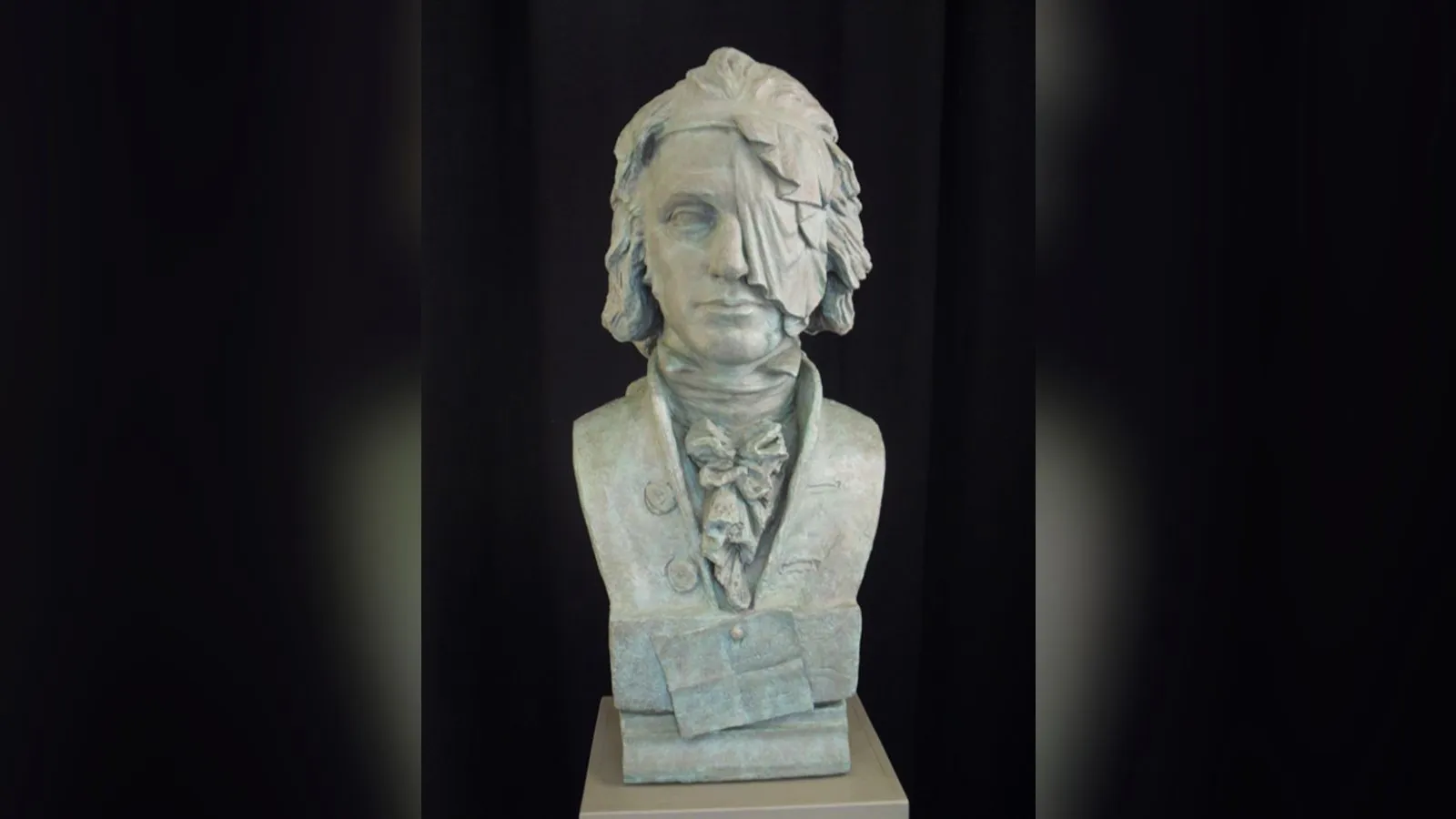

Thomas Muir of Huntershill (1765–1799)
Contents
TL;DR
- established Born in Glasgow and trained as an advocate, Muir became the leading figure of the Scottish Friends of the People movement, campaigning for parliamentary reform and wider voting rights in the early 1790s, inspired in part by the French Revolution.
- established In August 1793, Muir was tried for sedition before Lord Justice-Clerk Braxfield, a judge whose conduct of political trials in this period is widely regarded by historians as a travesty of due process rather than impartial justice; Muir was convicted and sentenced to fourteen years' transportation to Botany Bay — a sentence this article presents as a political punishment for peaceful reform advocacy, not ordinary criminal justice.
- established Muir escaped from the penal colony at Sydney in February 1796 aboard an American trading ship, beginning an extraordinary two-year journey across the Pacific, through Spanish Mexico and Cuba, during which he was severely wounded and disfigured in a naval battle at Cádiz between British and Spanish ships before finally reaching France in late 1797.
- established France received Muir as a celebrated "Martyr of Liberty," but he spent his final year lobbying, largely unsuccessfully, for French military support for Scottish and Irish republican uprisings, before dying in France in January 1799, aged 33, his health broken by his wounds and his ordeal.
- established Muir is commemorated today as one of the "Scottish Political Martyrs" on monuments in Edinburgh and London, and is widely regarded by historians as a significant, if still comparatively under-recognised, figure in the history of Scottish democratic and parliamentary reform.
Key Facts
- Born
- 24 August 1765, Glasgow, Scotland
- Died
- 25 January 1799, Chantilly, France, aged 33
- Known for
- Leader, Scottish Friends of the People; 1793 sedition trial; escape from Botany Bay
- Trial judge
- Lord Braxfield, High Court of Justiciary, August 1793
- Sentence
- 14 years' transportation to Botany Bay (New South Wales)
- Escape
- February 1796, aboard the American ship Otter
- Commemoration
- Political Martyrs' Monument, Old Calton Burial Ground, Edinburgh (1844)
Scottish Impact Index (SI Score)
- Global Influence
- 4/10
- Enduring Relevance
- 7/10
- Material Contribution
- 1/10
- Exceptional Achievement
- 4/10
- Lasting Legacy
- 5/10
- Recognition
- 2/10
23/60
Ranked =151st of 200 in Great Scots
A Note on Claims and Evidence
Muir's biography, his trial, his transportation, and his remarkable escape and journey to France are extensively documented in Scottish legal records, trial transcripts, and historical scholarship, and are treated as Established throughout this article. The conduct of Lord Braxfield and the broader political character of the 1793 sedition trials is a matter of long-standing historical consensus among legal historians rather than a disputed claim.
Timeline
Born in Glasgow, above his father's grocery shop on the High Street.
Enters Glasgow University's "gowned classes" at age ten.
Earns his M.A. from Glasgow University.
Expelled from Glasgow University after a student dispute involving Professor John Anderson; transfers to Edinburgh University.
Admitted to the Faculty of Advocates, aged 22.
Co-founds the Scottish Association of the Friends of the People with William Skirving.
Travels to France, meeting Girondist leaders in an attempt to persuade them to spare King Louis XVI.
Presents an address from the United Irishmen at the Scottish Convention, inflaming the authorities.
Arrested on charges of sedition.
Arrested again at Portpatrick after returning to Scotland.
Tried for sedition before Lord Braxfield at the High Court of Justiciary, Edinburgh.
Sentenced to fourteen years' transportation.
Sails for New South Wales aboard the Surprize.
Arrives at Sydney.
Escapes Sydney aboard the American ship Otter.
Reaches Nootka Sound, Vancouver Island.
Detained by Spanish authorities in Mexico City as a suspected spy; shipped toward Spain via Veracruz and Havana.
Severely wounded and disfigured in a naval battle at Cádiz between British and Spanish ships.
Released by Spain.
Arrives in Bordeaux, France, celebrated as a "Martyr of Liberty."
Lobbies the French Directory for military support of Scottish and Irish republican uprisings.
Dies in Chantilly, France, aged 33.
Details
A Glasgow upbringing and a legal career built on principle
Muir was born in Glasgow in 1765 to a prosperous hop-merchant father, and received a strict Presbyterian upbringing before entering Glasgow University at the unusually young age of ten. Though he initially pursued divinity in keeping with his parents' faith, the influence of law professor John Millar redirected his ambitions toward legal practice, and after a dispute that saw him expelled from Glasgow University in 1784, he completed his studies at Edinburgh University and was admitted to the Faculty of Advocates in 1787. He earned a genuine reputation for principled, reform-minded advocacy — colleagues nicknamed him "the Chancellor" — particularly for his conviction that Scotland's laws disadvantaged the poor, a conviction this article presents as the authentic intellectual foundation for his subsequent political activism rather than a later rationalisation of it.
Founding the Friends of the People
Energised by the French Revolution and by growing demands for parliamentary reform across Britain, Muir co-founded the Scottish Association of the Friends of the People with Fife farmer William Skirving in June 1792, deliberately organising the movement to be socially inclusive rather than restricted to the propertied classes, in contrast to its London counterpart. His activities extended to direct engagement with the revolution itself: he travelled to France in 1792 in an unsuccessful attempt to persuade Girondist leaders to spare King Louis XVI's life, and later presented an address from the United Irishmen to a Scottish reform convention — a document whose "intemperate and dangerous" nationalistic language was ultimately rejected by delegates, but whose public reading by Muir drew the direct attention of the authorities and set in motion his prosecution.
A trial widely regarded as a political show trial
Muir was arrested on sedition charges in January 1793, fled briefly to France, then imprudently returned to Scotland, where he was re-arrested at Portpatrick in August 1793. He was tried before Lord Justice-Clerk Braxfield at the High Court of Justiciary on 30–31 August 1793, charged with delivering seditious speeches, circulating Thomas Paine's Rights of Man, and publicly reading the United Irishmen's address. This article states directly, consistent with the long-standing consensus of legal historians, that Braxfield's conduct of this and related political trials of the period is regarded not as impartial judicial process but as a politically motivated exercise aimed at suppressing peaceful reform advocacy — Braxfield exploited Muir's associations with Irish republican figures to secure a severe outcome, and on 1 September 1793 sentenced Muir to fourteen years' transportation to Botany Bay, a punishment this article presents plainly as disproportionate to any genuine criminal conduct and reflective of the authorities' fear of organised reform politics in the shadow of the French Revolution.
Transportation, and an extraordinary escape
Muir was transported to the New South Wales penal colony, arriving at Sydney in October 1794 aboard the Surprize, alongside fellow convicted reformers Thomas Fyshe Palmer, William Skirving, and Maurice Margarot. As educated political prisoners, the group received comparatively greater freedom than ordinary convicts, sustained by subscriptions raised by sympathetic London Whigs. In February 1796, with the assistance of a French sailor, Muir orchestrated a daring escape, rowing past the harbour blockade at dawn and boarding the American trading ship Otter, leaving behind companions too ill or too distant to join him — Skirving dying of yellow fever, Gerrald of tuberculosis. What followed was a journey of remarkable scope and danger: across the Pacific to Vancouver Island, south through Spanish territory to Mexico, overland to Mexico City where he was detained as a suspected spy, then onward via Veracruz and Havana toward Spain. This article preserves the full, striking improbability of this journey rather than compressing it into a brief footnote, since it represents one of the more extraordinary personal odysseys of any figure in this series.
Wounded, disfigured, and finally free
In April 1797, while a prisoner aboard a Spanish ship approaching Cádiz, Muir was caught in a naval battle between British and Spanish vessels and struck by shrapnel that destroyed his left cheekbone and damaged both eyes — an injury so severe that Spanish officers initially believed him dead, and which left him permanently disfigured, his final portraits showing a black eye patch and a drooping facial injury. This article reports the brutality and permanence of this wound directly rather than treating it as an incidental travel hazard; Muir's physical health never fully recovered, and the injury is widely understood to have contributed to his early death less than two years later. Released by Spain in September 1797, he finally reached France in November, received as a celebrated "Hero of the French Republic" and "Martyr of Liberty."
A final year of unsuccessful lobbying, and an early death
Rather than settling into celebrated retirement in France, Muir spent his final year actively petitioning the French Directory for military support of Scottish and Irish republican uprisings, working closely with figures including Thomas Paine and United Irishmen leader James Napper Tandy — lobbying efforts that this article notes did not succeed in securing the intervention he sought. Concerned about British surveillance, Muir withdrew to the village of Chantilly in late 1798, where he died in January 1799 at just 33 years old, his death attributed by contemporary French reporting to the recurrence of his old wounds — a conclusion consistent with the severity of his Cádiz injury and the physical toll of his journey.
Did You Know?
- Radicals of the 1790s, including Muir and William Skirving, drew on covenanting analogies. The seceder minister Archibald Bruce argued that the mantle of the Covenanters had passed to the political reformers (Edward J. Cowan, 2002).
- Muir entered Glasgow University's classes at the unusually young age of ten.
- He travelled to revolutionary France in 1792 in an unsuccessful attempt to help save King Louis XVI's life.
- He was sentenced to fourteen years' transportation for political speech and circulating Thomas Paine's Rights of Man.
- His 1796 escape from Sydney took him across the Pacific, through Spanish Mexico, and eventually to Cuba.
- He was severely wounded and disfigured by shrapnel during a naval battle off Cádiz in 1797.
- He was briefly imprisoned in a Cuban fortress after an escape attempt during his detention.
- Robert Burns is believed to have written "Scots Wha Hae" on the day Muir's trial began.
- He died in France in January 1799, aged just 33, his health broken by his ordeal.
FAQ
1What is Thomas Muir best known for?
Leading the Scottish Friends of the People reform movement, his 1793 sedition trial and transportation sentence, and his extraordinary escape and journey from Botany Bay to France.
2Why was he put on trial?
For delivering reform-minded political speeches, circulating Thomas Paine's Rights of Man, and publicly reading an address from the United Irishmen.
3Was his trial fair?
No — historians widely regard the conduct of Lord Braxfield's political trials of this period, including Muir's, as politically motivated rather than impartial justice.
4How did he escape Botany Bay?
In February 1796, he rowed past the harbour blockade at Sydney and boarded an American trading ship, the Otter.
5How was he injured?
He was struck by shrapnel during a naval battle between British and Spanish ships near Cádiz in April 1797, severely disfiguring his face.
6Did he succeed in his later political efforts in France?
No — his lobbying of the French Directory for military support of Scottish and Irish uprisings was ultimately unsuccessful.
7How did he die?
In France in January 1799, aged 33; contemporary reports attributed his death to the recurrence of his Cádiz wounds.
8How is he commemorated today?
On the Political Martyrs' Monument in Edinburgh's Old Calton Burial Ground and a related monument in Nunhead Cemetery, London, among other memorials.
Sources and Further Reading
Primary/Institutional
- Thomas Muir of Huntershill — Wikipedia
- 1793 - Thomas Muir arrested for sedition — National Library of Scotland
- Thomas Muir, 1765–1799, Parliamentary reformer — National Galleries of Scotland
Scholarly/Critical
- Edward J. Cowan, "The Covenanting Tradition in Scottish History", in Edward J. Cowan and Richard J. Finlay (eds), Scottish History: The Power of the Past (Edinburgh University Press, 2002)
- Notes On Thomas Muir, 1765–1799 — Thomas Paine Society UK
- Thomas Muir — Spartacus Educational
General
Caveats: Myths and Disputed Claims
- Clarification: Muir's death is sometimes presented without context as simply occurring "in exile in France." This article preserves the fuller, more specific account: his death is attributed by contemporary French reporting to the recurrence of the severe facial and eye wounds he sustained at Cádiz in 1797, a direct physical consequence of his escape and journey rather than an unrelated or unexplained decline.
- Note: Muir's final year of political lobbying in France, seeking military support for Scottish and Irish uprisings, is reported here as ultimately unsuccessful; this article does not overstate his direct influence on French strategic decision-making during this period.
Card 165 · Great Scots