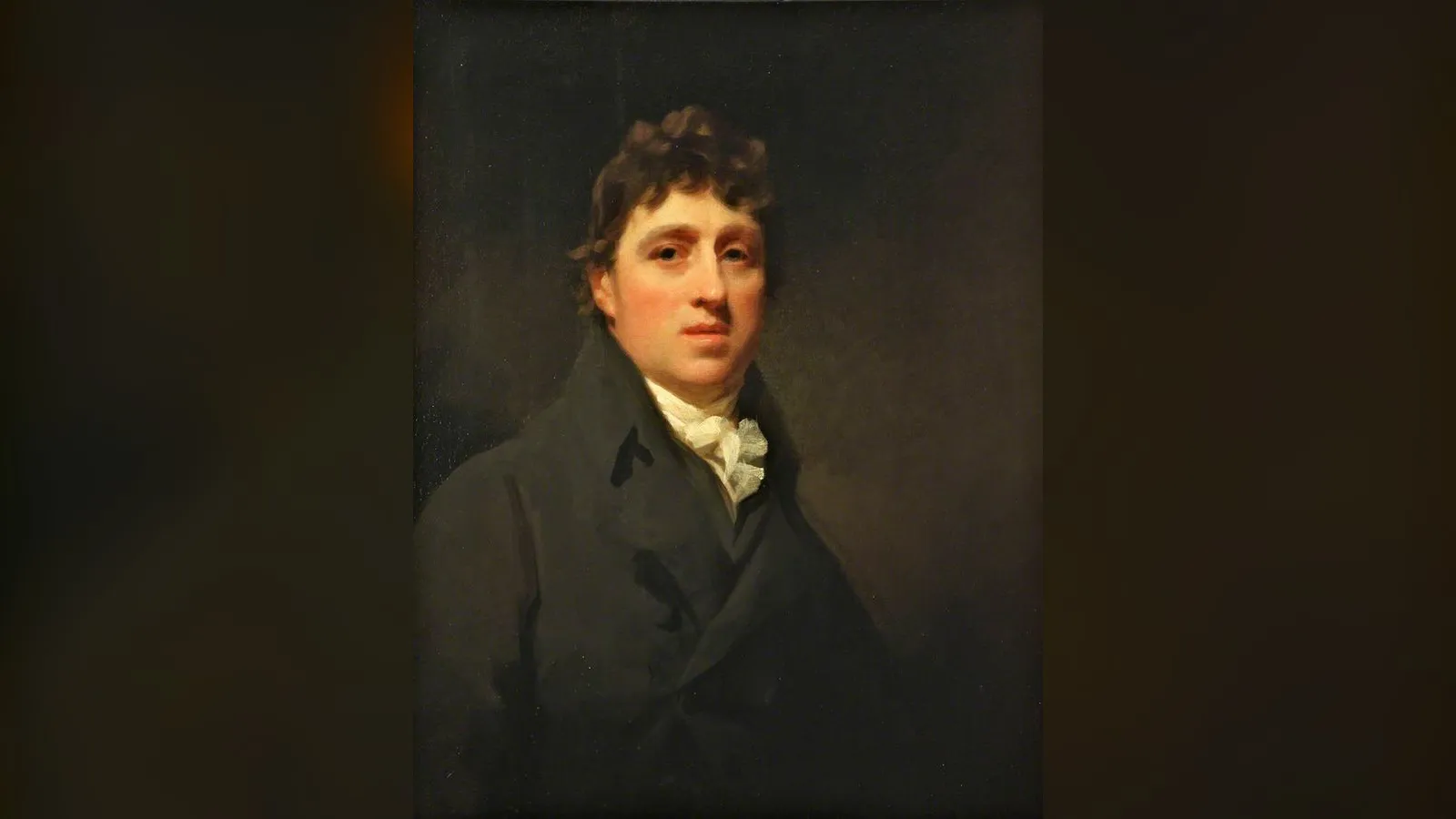

Thomas Telford
Contents
Thomas Telford, a shepherd's son from Eskdale in Dumfriesshire, trained as a stonemason and became the leading civil engineer of his age. He built roads, bridges, canals, harbours and churches across Britain, including the Pontcysyllte Aqueduct, the Menai Suspension Bridge and the Caledonian Canal. For three decades he was the engineer behind the government's programme of Highland roads, bridges, harbours and churches. The poet Robert Southey called him the "Colossus of Roads". This card tests his achievements, how the numbers credited to him are counted, and how much of the credit belongs to the men who worked with him.
TL;DR
- established Telford was born at Glendinning, Westerkirk, in Eskdale on 9 August 1757. His father, a shepherd, died on 12 November 1757. He trained as a mason in Langholm, worked in Edinburgh, London and Portsmouth, and in 1787 became county surveyor of Shropshire through the Eskdale-born MP William Pulteney.
- established As general agent and engineer of the Ellesmere Canal from 1793, he built the Chirk and Pontcysyllte aqueducts, the latter opened in 1805. William Jessop was the canal's senior engineer, and Telford's own account left him out.
- established His Highland work began in 1790 with the British Fisheries Society. His surveys of 1801–1803 led Parliament to set up the Commission for Highland Roads and Bridges and the Caledonian Canal Commission in 1803, with Telford as engineer to both. They produced roads, more than a thousand bridges, harbours including Wick, and later 32 churches.
- shared The Caledonian Canal took from 1803 to 1822, cost far more than planned and never found the traffic it was built for. His biographer Julian Glover treats it as the great regret of Telford's career.
- established He rebuilt the London to Holyhead road, including the Menai Suspension Bridge, opened on 30 January 1826. He was the first President of the Institution of Civil Engineers from 1820, a Fellow of the Royal Society of Edinburgh from 1803 and of the Royal Society from 1827. He died on 2 September 1834 and is buried in Westminster Abbey.
Key Facts
- Born
- 9 August 1757, Glendinning, Westerkirk, Eskdale, Dumfriesshire
- Parents
- John Telford (registered as Telfer), shepherd, died 12 November 1757; Janet Jackson, died 1794
- Trade
- Stonemason, trained with Andrew Thomson in Langholm
- Early career
- Edinburgh 1780; London (Somerset House) 1782; Portsmouth Dockyard 1784–1786
- County Surveyor of Shropshire
- From 1787
- Ellesmere Canal
- General agent and engineer from 1793, under William Jessop
- Pontcysyllte Aqueduct
- 1795–1805; just over 1,000 ft long, 126 ft high
- Highland surveys
- 1801–1803, for the Treasury
- Highland roads and bridges
- About 920 miles of new road (other counts up to 1,200); more than 1,000 bridges
- Caledonian Canal
- 1803–1822; about 60 miles; 29 locks
- Highland churches
- 32 "parliamentary" churches and 41 manses, under an Act of 1823
- Göta Canal, Sweden
- Surveyed 1808; completed 1832
- Menai Suspension Bridge
- 1818–1826; main span about 580 ft
- Institution of Civil Engineers
- First President, 1820–1834
- Learned societies
- FRSE 1803; FRS 1827
- Died
- 2 September 1834, 24 Abingdon Street, Westminster; buried in Westminster Abbey
Scottish Impact Index (SI Score)
- Global Influence
- 8/10
- Enduring Relevance
- 10/10
- Material Contribution
- 8/10
- Exceptional Achievement
- 8/10
- Lasting Legacy
- 9/10
- Recognition
- 6/10
49/60
Ranked =15th of 200 in Great Scots
A Note on Claims and Evidence
Each major claim carries one of three labels. established means supported by primary records, official bodies or several independent reliable sources. shared means the core fact is sound but sources disagree on details, dates or interpretation. traditional means widely repeated but not traceable to a primary or independent source.
Telford's works are well documented in commission reports, the records of the Institution of Civil Engineers and the structures themselves, many of which still stand. The fullest modern account is Julian Glover's biography Man of Iron (2017), built from Telford's letters to his Eskdale friend Andrew Little, the Highland commissions' papers and the engineering record. Glover's facts and dates are used here where he attributes them; his judgements on Telford's character, his treatment of colleagues and the failure of the Caledonian Canal are his view and are labelled as such.
Three cautions apply. First, Telford's own Life (1838) was finished after his death by his friend John Rickman, and both Glover and the canal historian Charles Hadfield show that it played down the part of others, above all William Jessop. Second, totals for his Highland roads and bridges depend on what is counted. Third, some early details, such as his age at apprenticeship and what he did in Edinburgh, rest on later and partly anecdotal sources, notably Samuel Smiles. Many structures attributed to him were designed or built by assistants and contractors under his direction.
Timeline
Thomas Telford is born at Glendinning, Westerkirk; the parish register records the baptism of a son of "John Telfer in Glendinning".
His father dies; at Whitsun 1758 his mother moves with him to The Crooks, a cousin's cottage down the valley.
His schooling at Westerkirk ends and he is apprenticed to a mason, first at Lochmaben and then, after running home, to Andrew Thomson in Langholm.
He works as a mason on Langholm Bridge.
His first published poem appears in Walter Ruddiman's Weekly Magazine in Edinburgh, signed "Eskdale Tam".
He walks to Edinburgh; he returns to Eskdale in 1781.
He goes to London and works as a mason on Somerset House.
He designs alterations to Westerhall, the Johnstone family house in Eskdale, and comes to know William Pulteney.
He oversees new buildings at Portsmouth Dockyard.
Having arrived in Shrewsbury in late 1786 to work on the castle for Pulteney, he becomes county surveyor of Shropshire.
For the British Fisheries Society he inspects its settlements at Lochbay on Skye and at Ullapool.
Montford Bridge, the first of his 42 Shropshire bridges, is built.
He is appointed general agent and engineer of the Ellesmere Canal, under William Jessop.
He builds the iron aqueduct at Longdon-on-Tern and Buildwas Bridge, his first iron bridge; the foundation stone of Pontcysyllte is laid on 25 July 1795.
Chirk Aqueduct opens; on 27 July Nicholas Vansittart at the Treasury asks him to survey Highland communications.
His second Highland report is completed and he is elected a Fellow of the Royal Society of Edinburgh; Acts of 4 July and 27 July create the Highland Roads and Bridges and Caledonian Canal commissions.
The Pontcysyllte Aqueduct opens.
He draws up plans for Pulteneytown, the British Fisheries Society's new fishing town at Wick.
He surveys the route of the Göta Canal in Sweden.
Dunkeld Bridge over the Tay is completed; Sweden names him a knight of the Order of Vasa.
He surveys the road from London to Holyhead.
Bonar Bridge, his first iron bridge in Scotland, is completed.
Craigellachie Bridge over the Spey opens.
Parliament sets up the Holyhead Road commission and work on the road begins.
Matthew Davidson, his boyhood friend and resident engineer at Clachnaharry, dies at Inverness.
He tours his Highland works with Robert Southey and John Rickman.
He becomes the first President of the Institution of Civil Engineers.
He buys 24 Abingdon Street, Westminster, his only home of his own.
The Caledonian Canal opens from sea to sea; Telford does not attend.
An Act provides for new churches in the Highlands and Islands, built to his standard design.
The Menai Suspension Bridge opens; the Conwy Suspension Bridge opens later that year.
He is elected a Fellow of the Royal Society.
The Institution of Civil Engineers receives its Royal Charter; St Katharine Docks in London open.
He makes his last visit to the Highlands.
The Dean Bridge in Edinburgh is built.
His design for a bridge at Clifton, Bristol, loses to Isambard Kingdom Brunel's.
Telford dies at 24 Abingdon Street, Westminster.
He is buried in Westminster Abbey.
His Life, completed by John Rickman, is published.
Details
Eskdale beginnings
established Thomas Telford was born on 9 August 1757 at Glendinning, a hill farm in the parish of Westerkirk in Eskdale, Dumfriesshire, a few miles from Langholm. The parish register records his baptism as the son of "John Telfer", the simpler spelling of the family name, and as a boy he was known as Tam or Tammy Telfer. His father's gravestone in Westerkirk churchyard records that John Telford died at Glendinning on 12 November 1757 "after living thirty-three Years as an Unblamable Shepherd"; it also names an elder brother, also Thomas, who died in infancy. With the cottage tied to his father's work, his mother, Janet Jackson, had to leave, and at Whitsun 1758 she moved with her son to The Crooks, a cousin's cottage down the valley. She lived, supported by him, until 1794.
shared His friend the military engineer Charles Pasley recorded that Telford cut the inscription on his father's stone himself as a young man. Glover accepts this but notes that Pasley is the only contemporary source for it.
established Telford went to the parish school at Westerkirk. Glover, in his biography Man of Iron (2017), stresses how much that school and its pupils mattered: Andrew and William Little, to whom he wrote his most revealing letters; Pasley; and the Malcolm brothers of Burnfoot, four of whom were knighted for military and imperial service. Above them stood the Johnstones of Westerhall, the local landowners, whose younger son William, later William Pulteney, became Telford's patron.
Mason and poet
shared Sources disagree on when and where his apprenticeship began. Samuel Smiles and later writers say he was apprenticed at 14. Glover says his schooling ended at twelve, that he was first apprenticed to a mason at Lochmaben and ran home after being, or saying he was, ill-treated, and that his mother and her cousin Thomas Jackson then placed him with Andrew Thomson, a mason in Langholm.
established In Langholm he built farmhouses and small bridges and worked on Langholm Bridge across the Esk, the bridge linking the Duke of Buccleuch's planned New Langholm with the old town. There he began a lifelong partnership with Matthew Davidson, a Langholm-born mason two years older than him. traditional A mason's mark under the western arch is said to be his, and Smiles tells a local story of a builder's wife running through the town crying for "Tammy Telfer" when she thought the new bridge was shaking.
established Telford was also a poet. His first published piece, an "Epistle to Mr Walter Ruddiman", appeared in Ruddiman's Edinburgh Weekly Magazine in May 1779, signed "Eskdale Tam". His long poem Eskdale, written in 1784, celebrates the valley and Britain after the Union. In 1792 he sent Robert Burns a verse epistle urging him to write on serious subjects; extracts were printed in James Currie's edition of Burns's works in 1800. He wrote an elegy on Burns in 1796, and his last known poem dates from 1831. Glover finds the verse fluent but without the originality of Burns.
shared Telford walked to Edinburgh in 1780 and returned to Eskdale in 1781. He is often said to have worked as a mason on the New Town, but Glover notes that Telford himself never claimed this, and what he did there is unclear.
established In early 1782 Telford went to London. With introductions probably from the Pasley or Johnstone families, he met the architects Robert Adam and Sir William Chambers, and worked as a mason on Chambers's Somerset House. In 1783 he designed alterations to Westerhall in Eskdale for Sir James Johnstone, which brought him into close contact with Sir James's brother, William Pulteney, MP. From 1784 to 1786 he oversaw the building of a house and chapel at Portsmouth Dockyard, where, he wrote, he learned about the foundations of docks and wharf walls.
Pulteney and Shropshire
established William Pulteney, born a Johnstone in Eskdale, had become one of the richest commoners in Britain through his wife's inheritance and was MP for Shrewsbury. In late 1786 he brought Telford to Shrewsbury to rebuild part of the castle, and in 1787 Telford became county surveyor of Shropshire, a post he kept, at least in name, for the rest of his life. Glover quotes his letter to Little a year later: "The world says I am young Pulteney, I wish I was."
established In Shropshire Telford worked first as an architect. He warned in 1788 that St Chad's church in Shrewsbury was unsafe, and its tower fell weeks later. He took over the design of the new county gaol and designed the church of St Mary Magdalene in Bridgnorth and a church at Madley, and in 1788 excavated part of the Roman bath house at Wroxeter. He built 42 bridges in the county, starting with Montford Bridge (1790–1792), built under Davidson. After the great flood of 1795 he turned to iron: the aqueduct at Longdon-on-Tern on the Shrewsbury Canal and Buildwas Bridge over the Severn, which used less than half the iron of the older Iron Bridge just upstream.
The Ellesmere Canal and Pontcysyllte
established On 23 September 1793 the Ellesmere Canal Company appointed Telford its general agent, surveyor, engineer and architect, with his drawings to be submitted to William Jessop, its senior engineer. He built the Chirk Aqueduct, opened in 1801, and the Pontcysyllte Aqueduct over the Dee, whose foundation stone was laid on 25 July 1795 and which opened on 26 November 1805. Pontcysyllte is just over 1,000 feet long and 126 feet high, with an iron trough on nineteen spans resting on eighteen stone piers. Davidson supervised the site, John Simpson built the piers and William Hazledine cast and erected the ironwork.
shared Who chose iron for Pontcysyllte is disputed. Jessop's letter of 14 July 1795 recommends an iron aqueduct at full height, and Hadfield argued that Telford wrote him out of the story. Glover concludes that the two men deserve joint honours, but that Telford did not award them: Jessop was not named on the card handed to guests at the opening dinner, nor in Telford's account of the design.
The British Fisheries Society and the Highland surveys
established Telford's work in the Highlands began through Pulteney, who was governor of the British Fisheries Society. In 1790 the society engaged him to inspect its settlements, and in June that year he visited Lochbay on Skye and Ullapool, later designing an inn and other buildings for the society. On the same work he surveyed harbours on the north-east coast and recommended one at Wick.
established On 27 July 1801 Nicholas Vansittart, at the Treasury, asked Telford to report on Highland communications: fisheries, links to the islands, a canal from coast to coast, harbours, towns and defence. He travelled through the western and central Highlands to the far north and back by the east coast that autumn, and surveyed again in 1802. His report, completed in early 1803, proposed new roads and bridges north of the Great Glen and a canal on the line laid out by James Watt in 1773 and John Rennie in 1793. Glover calls it "one of the most significant and perhaps under-appreciated interventions in recent Scottish history". The same year Telford was elected a Fellow of the Royal Society of Edinburgh.
established He was also asked to examine emigration. He reported that about 3,000 people had left in the previous year and blamed the conversion of large districts into sheepwalks, though he hesitated to propose that government interfere with landowners. In a letter to Little, as quoted by Glover, he regretted the end of clanship: "There was great happiness in the patriarchal state of Clanship." Glover notes that his hope that the works would keep people at home was disappointed.
Roads, bridges and harbours in the Highlands
established Parliament acted within months. An Act of 4 July 1803 set up the Commissioners for Highland Roads and Bridges, who met on 7 July and appointed Telford their engineer; a second Act on 27 July created the Caledonian Canal Commission. Landowners whose estates gained from a road were expected to pay a share of its cost, with the state paying the rest. The system ran through three men: Telford; John Rickman, the commissions' secretary in Westminster, who also ran the national census; and James Hope, their law agent in Edinburgh. On the ground the roads were overseen by a general inspector and regional superintendents. The most important was John Mitchell, a mason Telford promoted and called his "Tatar", who by Southey's account travelled 8,800 miles in a single year and died in service in 1824. His son Joseph succeeded him.
established Major bridges replaced dangerous ferries: Dunkeld over the Tay (completed 1809), and later bridges over the Spey at Fochabers, the Beauly and the Conon. When stone bridges proved too low for Highland floods, Telford turned to iron. Bonar Bridge in Sutherland (1811–1812) was his first iron bridge in Scotland, and Craigellachie over the Spey, its parts cast by Hazledine in Wales and erected by Simpson, opened in November 1814. Southey, visiting in 1819, called Craigellachie "the finest thing that ever was made by God or man". The Fleet Mound in Sutherland carried the road across the head of Loch Fleet with self-closing tidal sluices.
shared Totals for the Highland works depend on what is counted. The figure most often given is about 920 miles of new road and more than 1,100 bridges. Glover gives 1,200 miles of road, over a thousand bridges (1,076 in another passage) and 43 harbours, a total that appears to include old military roads taken over and rebuilt. The historical geographer Charles Withers, in Gaelic in Scotland 1698–1981 (1984), gives about 900 miles of road and 1,110 bridges. Work took nearly two decades, against Telford's 1803 forecast of three years.
established The roads had a cultural effect their builders did not set out to achieve. Withers shows that parish ministers writing for the New Statistical Account in the 1830s and 1840s often credited the new roads and the steamers with spreading English. The minister of Portree wrote in 1841 that "from the facility of intercourse with the low country, by means of steam navigation and Parliamentary roads, the people have acquired a taste for the English language".
Pulteneytown and the northern harbours
established For the British Fisheries Society Telford planned Pulteneytown at Wick in 1807, naming it after Pulteney, who had died in 1805. In 1810 and 1811 he extended the plan to a large double harbour. By Glover's account it served 822 herring boats by 1818, and Wick remained one of the largest herring ports in the world until the fishery collapsed in the 1930s. Glover, drawing on the historian Daniel Maudlin, treats Pulteneytown as one of Telford's most significant works, with its crescent, square and separation of curing yards from houses. Telford also improved harbours at Aberdeen, Dundee, Peterhead, Banff, Montrose, Nairn and elsewhere on the east coast.
The Caledonian Canal
established The Caledonian Canal runs about 60 miles through the Great Glen from Clachnaharry near Inverness to Corpach near Fort William. About 38 miles are natural lochs, including Loch Ness, and about 22 miles were dug. Telford planned it for sea-going ships, 20 feet deep, with 29 locks rising to the summit at Loch Oich, about 106 feet above sea level. Jessop was consulting engineer until 1813. The work was led on the ground by resident superintendents: Matthew Davidson at Clachnaharry, who spent years building the sea lock out into deep mud and died there in 1819, and at Corpach John Telford, possibly a kinsman, and after him Alexander Easton. Most of the labourers were Highlanders, and work slowed when they left for the harvest or the herring.
established The canal opened from sea to sea on 24 October 1822, after about 18 years. Telford stayed away from the celebrations. It was in places only about 12 feet deep, too shallow for the warships it was partly meant to serve, and the war with France was over. Tolls did not cover its costs, and in 1829 Telford was drafting advertisements in the Inverness papers to attract trade.
shared Its verdict is mixed. Glover calls it "one of the great struggles (and eventually, when its trade failed, regrets)" of Telford's life. The canal was rebuilt from the 1840s, carried steamers, fishing boats and tourists, and is now used mainly by leisure craft.
The parliamentary churches
established Under an Act of 1823 promoted by Vansittart, the Highland Roads and Bridges commission built churches in Highland and island parishes. In 1825 it chose the first 30 of an eventual 32 sites; 41 manses were also built. Telford chose and improved a standard design submitted by his superintendent William Thompson: a plain T-plan church with Tudor-style windows and a small belfry. Glover gives the cost as about £750 a church and £720 a manse, with building supervised by Joseph Mitchell. Many survive, some as homes or ruins. At Croick, people cleared from Glencalvie in 1845 sheltered in the churchyard and scratched their names on its windows.
Sweden and the Holyhead road
established In 1808 the King of Sweden asked Telford to advise on the Göta Canal, a link from Lake Vänern to the Baltic. He spent about six weeks surveying the route with Count Baltzar von Platen, its promoter, and returned in 1813. Sweden made him a knight of the Order of Vasa in 1809 and a commander in 1814, though British rules meant he could not use the title at home. The canal was completed in 1832. He was also elected a foreign member of the Royal Swedish Academy of Sciences in 1821.
established In 1810 and 1811 Telford surveyed the road from London to Holyhead, the main route to Ireland after the Union of 1801. Work began in 1815, when Parliament set up a commission led by Sir Henry Parnell. The rebuilt road, much of it now the A5, kept gradients mostly below 1 in 30. Its crossing of the Menai Strait was a suspension bridge with a main span of about 580 feet, its chains hung from towers 153 feet above high water. Work began in 1818 and the foundation stone was laid on 10 August 1819. The first coach crossed at about 1.35 a.m. on 30 January 1826. The bridge cost £211,791 and swayed badly in gales for years; its chains were replaced in the late 1930s. A smaller suspension bridge at Conwy opened the same year.
shared The Menai Bridge drew on others' work. The naval officer Samuel Brown persuaded Telford to use eye-bar chain links, and the mathematician Davies Gilbert persuaded him to raise the towers. Glover notes that Telford was bad at giving credit for such contributions but willing to take good advice.
Leader of a profession
established The Institution of Civil Engineers was founded by a group of young engineers led by Henry Palmer on 2 January 1818. In 1820 they invited Telford to be president; he accepted in March and gave his first address on 21 March. He gave books and money, advanced £200 of the £300 cost of its Royal Charter in 1828, and chaired his last meeting on 17 June 1834. He was elected a Fellow of the Royal Society in 1827. His later works included St Katharine Docks in London (1825–1828), the new Harecastle canal tunnel, the Birmingham and Liverpool Junction Canal, and in Scotland the Dean Bridge in Edinburgh (1829–1831) and a bridge over the Clyde at Glasgow finished after his death.
shared In 1830 and 1831 Telford's own design for a bridge across the Avon gorge at Clifton, with tall Gothic towers, was rejected and Isambard Kingdom Brunel's chosen instead. Glover treats this as a late defeat Telford never wrote about.
Last years, death and legacy
established Telford never married. Glover finds no evidence of a physical relationship with anyone and leaves open the nature of his intense friendship with Andrew Little. His last visit to the Highlands was in 1829, and from 1832 he no longer travelled to Scotland. In 1834 he drew a design for the Malcolm monument on Whita Hill above Langholm. He died at 24 Abingdon Street on 2 September 1834, aged 77, and was buried in Westminster Abbey on 10 September; he had asked for the smaller St Margaret's next door. He left £1,000 each to the libraries of Langholm and Westerkirk; the Westerkirk library, founded by antimony miners near Glendinning in 1790, still stamps "Telford Legacy" on its books.
established The poet Robert Southey, who toured the Highland works with him in 1819, gave him the punning nickname "the Colossus of Roads" and also called him "Pontifex Maximus". The new town of Telford in Shropshire, named in 1968, honours him. A cairn near Glendinning marked the 250th anniversary of his birth in 2007.
shared Glover judges that "Telford's life is a weave, not a list": he ran many projects at once and relied on a loyal team, many of them from Eskdale. Glover's verdict on his role is that "He was the conductor who held a great orchestra together." Hadfield took a harsher view of Telford's treatment of Jessop.
Did You Know?
- Telford was baptised as the son of "John Telfer"; he used the spelling Telford later.
- His father's gravestone at Westerkirk calls him "an Unblamable Shepherd", and Telford is said to have cut the words himself.
- His first published poem appeared in 1779 under the name "Eskdale Tam".
- He sent Robert Burns a verse letter, and extracts were printed in the 1800 edition of Burns's works.
- Pontcysyllte Aqueduct carries a canal 126 feet above the River Dee.
- The Caledonian Canal includes Loch Ness, and its summit at Loch Oich is about 106 feet above sea level.
- Pulteneytown at Wick, which he planned, was named after his Eskdale-born patron.
- Sweden made him a knight of the Order of Vasa, but he was never "Sir Thomas" in Britain.
- He did not own a home until he was 64.
- He left £1,000 to the library at Westerkirk, near his birthplace.
FAQ
1Where was Thomas Telford born?
At Glendinning, Westerkirk, in Eskdale, Dumfriesshire, on 9 August 1757.
2What was his first trade?
Stonemason. He trained in Langholm under Andrew Thomson.
3Did Telford build Edinburgh's New Town?
Not as far as can be shown. He was in Edinburgh in 1780–1781, but he never claimed to have worked on the New Town and what he did there is unclear.
4How did he get started as an engineer?
Through William Pulteney, an Eskdale-born MP, who made him county surveyor of Shropshire in 1787. In 1793 he became general agent and engineer of the Ellesmere Canal.
5What did he build in Scotland?
Highland roads, more than a thousand bridges including Dunkeld, Bonar and Craigellachie, harbours including Wick, the Caledonian Canal, 32 Highland churches, the Glasgow to Carlisle road and the Dean Bridge in Edinburgh.
6How many miles of Highland road did he build?
There is no single figure. About 920 miles of new road is often given; other counts reach 1,200 miles by including rebuilt military roads.
7How long is the Caledonian Canal?
About 60 miles, of which about 22 miles were dug.
8When did the Caledonian Canal open, and was it a success?
It opened on 24 October 1822. It took about 18 years, cost far more than planned and never carried the trade expected; today it is used mainly by leisure craft.
9What are the "parliamentary churches"?
Thirty-two churches built in Highland and island parishes under an Act of 1823, to a standard design chosen by Telford.
10What is the Pontcysyllte Aqueduct?
A canal aqueduct over the River Dee in Wales, 126 feet high, opened in 1805. William Jessop was the canal's senior engineer.
11What was special about the Menai Suspension Bridge?
When it opened in 1826 it was the longest suspension bridge of its time, with a main span of about 580 feet.
12Was he knighted?
No British knighthood. Sweden made him a knight of the Order of Vasa for his work on the Göta Canal.
13Who called him the "Colossus of Roads"?
The poet Robert Southey.
14Did Telford build everything credited to him?
No. He designed and directed the works, but many were built by assistants and contractors, and some designs, such as Pontcysyllte, were shared with other engineers.
15Why is a town named after him?
Telford in Shropshire, named in 1968, honours his work in the county, where he was county surveyor.
Sources and Further Reading
Primary/Institutional
- American Society of Civil Engineers, "Caledonian Canal", Historic Civil Engineering Landmarks (asce.org)
- Menai Bridges, "Thomas Telford" (menaibridges.co.uk)
Scholarly/Critical
- Julian Glover, Man of Iron: Thomas Telford and the Building of Britain (Bloomsbury, 2017)
- Charles W. J. Withers, Gaelic in Scotland 1698–1981: The Geographical History of a Language (John Donald, 1984; ebook Birlinn, 2021)
General
- Wikipedia, "Thomas Telford" (en.wikipedia.org)
Further reading (books, not consulted online)
- Fredrik Albritton Jonsson, Enlightenment's Frontier: The Scottish Highlands and the Origins of Environmentalism (Yale University Press, 2013)
- Charles Hadfield, Thomas Telford's Temptation (M & M Baldwin, 1993)
- A. R. B. Haldane, New Ways Through the Glens (Thomas Nelson, 1962)
- L. T. C. Rolt, Thomas Telford (Longmans, 1958)
- Thomas Telford, Life of Thomas Telford, Civil Engineer, Written by Himself, ed. John Rickman (1838)
Caveats: Myths and Disputed Claims
- Do not give a single exact total for Telford's Highland roads or bridges.
- Do not say Telford personally designed every structure attributed to him.
- Do not credit Pontcysyllte or the Caledonian Canal to Telford alone; William Jessop was senior or consulting engineer on both.
- Do not state as fact that Telford worked on Edinburgh's New Town; he never claimed it.
- Do not give his age at apprenticeship as certain; sources say twelve or fourteen.
- Do not call the Caledonian Canal a commercial success in Telford's lifetime.
- Do not call him "Sir Thomas Telford"; his only knighthood was the Swedish Order of Vasa.
- Do not confuse his Fellowship of the Royal Society of Edinburgh (1803) with his Fellowship of the Royal Society (1827).
- Do not confuse Telford with John Loudon McAdam; they were contemporaries and rivals with different road-building methods.
Card 060 · Great Scots