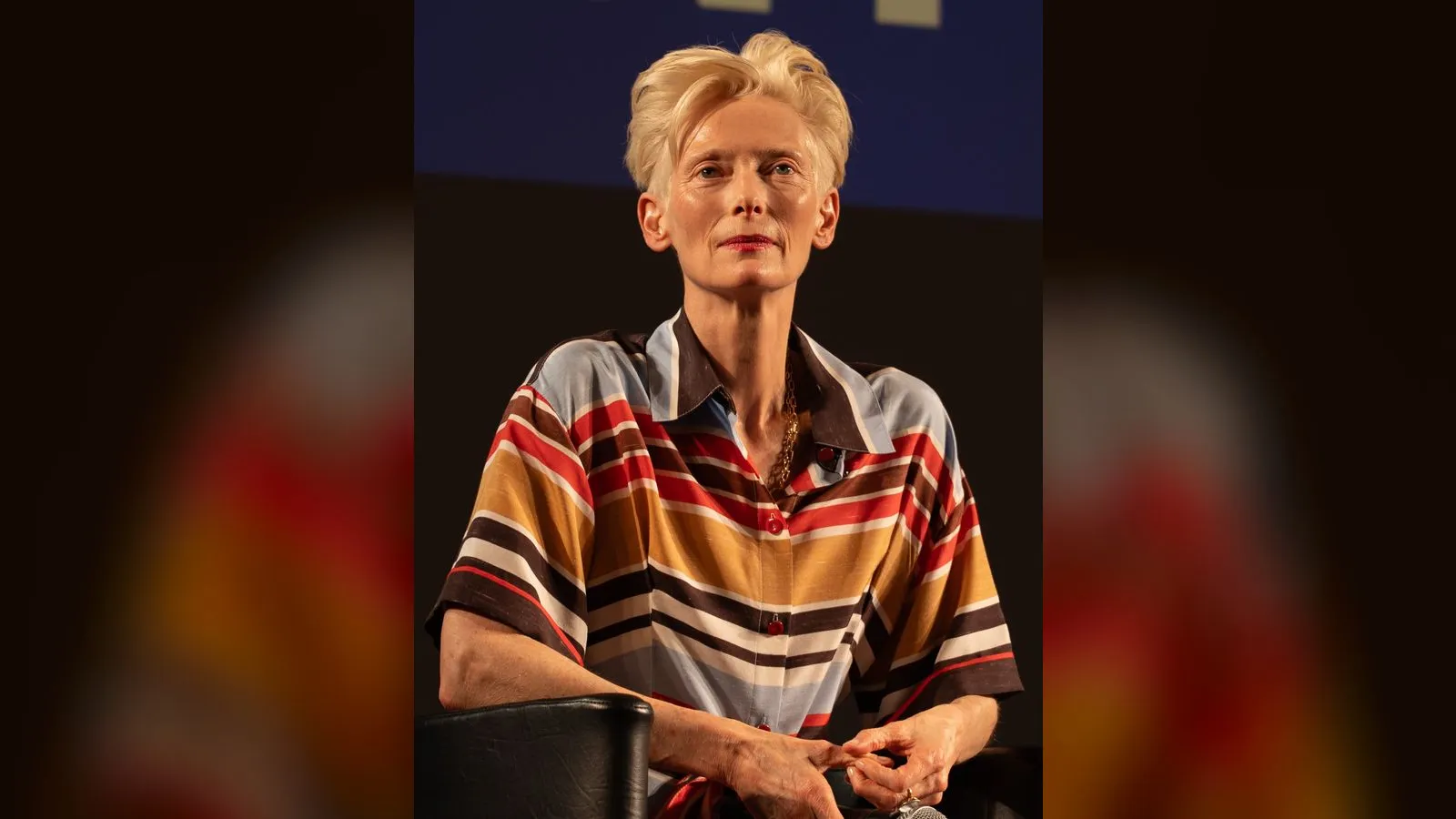

Tilda Swinton (b. 1960)
Contents
TL;DR
- established Born in London to an aristocratic Scottish Borders family, Katherine Matilda Swinton identifies as Scottish, citing both her clan heritage — the Swintons of Kimmerghame, traceable to the 9th century — and her long residence in Scotland, where she has lived since 1997.
- established She built her early career almost entirely through collaboration with avant-garde director Derek Jarman, appearing in seven of his films between 1986 and 1993, before breaking through to wider audiences with Sally Potter's gender-fluid adaptation Orlando (1992).
- established She won the Academy Award for Best Supporting Actress for Michael Clayton (2007) and has since become one of contemporary cinema's most distinctive character actors, known for roles ranging from the White Witch in the Chronicles of Narnia films to frequent collaborations with Wes Anderson and Pedro Almodóvar.
- Documented/Shared. Her 2016 casting as "the Ancient One" in Marvel's Doctor Strange — a role originally a Tibetan man in the source comics — drew significant criticism as whitewashing; Marvel Studios president Kevin Feige later publicly acknowledged it had been a mistake.
- established She has two children with Scottish artist and playwright John Byrne, her partner from 1989 to 2004, and has lived since 2004 with German painter Sandro Kopp; in a 2021 interview she described herself as queer in terms of sensibility rather than a fixed categorical label.
Key Facts
- Born
- 5 November 1960, London, England
- Family seat
- Kimmerghame House, Scottish Borders
- Education
- Cambridge University (New Hall), social and political sciences, graduated 1983
- Known for
- Orlando, Michael Clayton, We Need to Talk About Kevin, Snowpiercer, Wes Anderson and Pedro Almodóvar collaborations
- Honours
- Academy Award, Best Supporting Actress (Michael Clayton, 2007); BFI Fellowship (2020); Venice Golden Lion for Lifetime Achievement (2020)
- Children
- Twins Honor and Xavier (b. 1997), with John Byrne
- Residence
- Nairn, Scottish Highlands
Scottish Impact Index (SI Score)
- Global Influence
- 7/10
- Enduring Relevance
- 6/10
- Material Contribution
- 4/10
- Exceptional Achievement
- 6/10
- Lasting Legacy
- 4/10
- Recognition
- 7/10
34/60
Ranked =67th of 200 in Great Scots
A Note on Claims and Evidence
Swinton's filmography, awards, and biographical facts are extensively documented and treated as Established. Her own stated political and personal identifications — on Palestinian rights, on queerness, on her relationship to Scottishness despite an English birthplace — are reported here as her own stated positions, not as claims this article independently adjudicates. The Doctor Strange casting controversy involves a genuine, widely reported public dispute over representation; this article reports the facts of the casting, the criticism it drew, and Marvel's later public acknowledgment, without claiming to resolve what Swinton herself privately believed at the time of casting beyond what she has said on the record.
Timeline
Born in London to Sir John Swinton of Kimmerghame and Judith Balfour Killen.
Graduates from Cambridge University (New Hall) with a degree in social and political sciences; had joined the Communist Party as a student.
Joins the Royal Shakespeare Company.
Film debut in Derek Jarman's Caravaggio, beginning a close creative partnership.
Edward II; wins the Volpi Cup for Best Actress at Venice.
Orlando, adapted from Virginia Woolf, becomes her international breakthrough.
Gives birth to twins Honor and Xavier with John Byrne; relocates to Scotland.
The Deep End; Golden Globe nomination.
Begins relationship with painter Sandro Kopp; moves to Nairn in the Scottish Highlands.
Plays the White Witch in the Chronicles of Narnia film series.
Wins the Academy Award for Best Supporting Actress for Michael Clayton.
We Need to Talk About Kevin.
Co-founds Drumduan Upper School in Findhorn.
Snowpiercer; begins a prolific run of Wes Anderson collaborations.
Doctor Strange released; "Ancient One" casting draws whitewashing criticism.
Resigns as director of Drumduan Upper School.
Named among the New York Times's "greatest actors of the 21st century"; receives BFI Fellowship and Venice's Golden Lion for Lifetime Achievement.
Wins Primetime-adjacent acclaim continues; publicly describes herself as queer in a Vogue interview.
Discloses recovery from long COVID.
The Room Next Door with Julianne Moore; Golden Globe nomination.
Receives Honorary Golden Bear at the Berlinale; makes public statements at the Berlin Film Festival on Gaza.
Details
An aristocratic Borders lineage and a Scottish identity
Swinton was born in London, the daughter of Major-General Sir John Swinton of Kimmerghame, a senior British Army officer, and grew up partly at the Swinton family's ancestral estate in the Scottish Borders — a clan lineage the family traces back to the 9th century. Despite her English birthplace, she has consistently identified as Scottish, pointing to her family's deep Borders roots and, more concretely, to her own choice to live in Scotland since 1997. She attended West Heath Girls' School (where she was a contemporary of Diana Spencer, later Princess of Wales) before studying social and political sciences at Cambridge, where she joined the Communist Party as a student and later supported the Scottish Socialist Party — a notably left-wing political trajectory for someone of her aristocratic background, which she has never downplayed.
The Jarman years and Orlando
Swinton's early career was built almost entirely around her collaboration with the experimental filmmaker Derek Jarman, beginning with Caravaggio (1986) and continuing through The Last of England (1987), War Requiem (1989), and Edward II (1991), for which she won the Volpi Cup for Best Actress at Venice. This was a formative, deliberately non-commercial apprenticeship rather than a conventional rise through mainstream film. Her 1992 role in Sally Potter's Orlando, adapted from Virginia Woolf's gender-shifting novel, proved transformative for her wider public profile, drawing on what she has described as a lifelong interest in androgyny and the "limitlessness" of gender presentation — themes that have recurred throughout her subsequent career and public persona.
From art-house to Oscar winner
Swinton's career broadened substantially through the 2000s: a Golden Globe-nominated role in The Deep End (2001), the villainous White Witch in the Chronicles of Narnia films (2005–2010), and her Academy Award-winning performance as corporate attorney Karen Crowder in Michael Clayton (2007). She has since become one of the most prolific and distinctive character actors of her generation, appearing in critically major work including We Need to Talk About Kevin (2011), Snowpiercer (2014), and repeated collaborations with directors Wes Anderson (Moonrise Kingdom, The Grand Budapest Hotel, The French Dispatch, Asteroid City) and Pedro Almodóvar, most recently The Room Next Door (2024) opposite Julianne Moore, which earned her a further Golden Globe nomination.
The Doctor Strange whitewashing controversy
In 2016, Swinton was cast as "the Ancient One" in Marvel's Doctor Strange — a role that, in the original comics, was a Tibetan man. The casting of a white British actress in the part drew substantial public criticism as an instance of Hollywood whitewashing, a debate that intensified amid a broader industry reckoning over the casting of Asian characters with white actors in the mid-2010s. At the time, Marvel Studios publicly defended the decision, and commentary at the time noted the studio's commercial interest in avoiding politically sensitive material tied to Tibet given the Chinese box-office market — though that specific motivation was disputed by Marvel. Years later, in 2021, Marvel Studios president Kevin Feige publicly acknowledged that the casting had been a mistake, describing it as "a wake-up call" for the studio and stating that the production had wrongly assumed avoiding a "wizened, old, wise Asian man" stereotype required casting outside that ethnicity altogether, when in fact — as Feige put it — there was a better way to do both. This article treats the criticism and Marvel's later acknowledgment as well-documented fact; it does not attempt to characterise Swinton's own private views on the casting beyond what she and Marvel have said publicly.
Personal life, identity, and activism
Swinton had two children, twins Honor and Xavier, with Scottish artist and playwright John Byrne, her partner from 1989 to 2004 (Byrne himself is covered elsewhere on this list). Since 2004 she has lived with German painter Sandro Kopp in Nairn, on the Moray Firth. In a 2021 Vogue interview, she described herself as queer, framing the term as a matter of sensibility rather than a fixed identity category, and spoke about a long-standing sense of gender fluidity in her own life. She co-founded Drumduan Upper School, a Steiner-method school in Findhorn offering education without grades or formal testing, in 2013, resigning as its director in 2019. She has been a vocal advocate for Palestinian rights, signing a 2023 ceasefire petition and making pointed public statements at the 2025 Berlin Film Festival criticising Israeli military action in Gaza — stated political positions reported here as her own views, not independently adjudicated claims. In January 2022, she disclosed a difficult recovery from long COVID and spoke about having considered retraining as a palliative carer, drawing on experiences witnessing the AIDS epidemic and caring for her parents at the end of their lives.
Did You Know?
- She was a childhood schoolmate of Diana Spencer, later Princess of Wales, at West Heath Girls' School.
- She joined the Communist Party as a Cambridge student, despite her own aristocratic family background.
- Her family, the Swintons of Kimmerghame, trace their lineage as a clan back to the 9th century.
- She appeared in seven films by avant-garde director Derek Jarman before her mainstream breakthrough.
- She co-founded a Steiner-method school in Scotland that offers no grades or formal testing.
- She has been ranked among the "greatest actors of the 21st century" by the New York Times.
- Marvel Studios president Kevin Feige publicly called her Doctor Strange casting a mistake, years after the film's release.
- She has lived in the Scottish Highlands, near Nairn, since the mid-2000s.
FAQ
1Is Tilda Swinton actually Scottish?
She was born in London, but comes from an old Scottish Borders family (the Swintons of Kimmerghame) and has lived in Scotland since 1997. She identifies as Scottish on that basis.
2What was Tilda Swinton's breakthrough role?
Her 1992 lead role in Sally Potter's Orlando, though she had already built a significant art-house career through seven films with director Derek Jarman in the preceding years.
3Did she win an Oscar?
Yes — Best Supporting Actress for Michael Clayton (2007).
4What was the controversy over her Doctor Strange role?
She played "the Ancient One," a character originally written as a Tibetan man in the Marvel comics. Casting a white actress in the role drew significant criticism as whitewashing; Marvel Studios president Kevin Feige later publicly called the decision a mistake.
5Who are her children's parents?
She has twins, Honor and Xavier, with Scottish artist and playwright John Byrne, her partner from 1989 to 2004.
6Is she in a relationship now?
She has lived with German painter Sandro Kopp since 2004.
7What did she say about her gender identity?
In a 2021 Vogue interview she described herself as queer, framing it as a matter of personal sensibility rather than a fixed label, and discussed a long-standing sense of gender fluidity.
8Does she run a school?
She co-founded Drumduan Upper School in Findhorn, Scotland, in 2013, a Steiner-method school without grades or formal exams; she stepped down as director in 2019.
9What are her political views?
She has been an outspoken supporter of Palestinian rights, including public statements at the 2025 Berlin Film Festival criticising Israeli military action in Gaza — her own stated position.
Sources and Further Reading
Primary/Institutional
Scholarly/Critical
General
Caveats: Myths and Disputed Claims
- Clarification: Some commentary at the time of Doctor Strange's release suggested the Ancient One's race was changed specifically to avoid Chinese censorship sensitivities around Tibet; Marvel disputed this specific motivation at the time, even as the broader casting choice was later acknowledged as a mistake by studio president Kevin Feige. This article reports both the criticism and the later acknowledgment without asserting the original internal motivation as settled fact.
- Clarification: Swinton's Scottish identity is a matter of heritage and residence, not birthplace — she was born in London. This is not a contradiction; many prominent Scots have been born outside Scotland while maintaining strong family and residential ties to it.
- Note: Swinton's political statements on Gaza and Palestinian rights are her own publicly stated views and are reported as such.
Card 121 · Great Scots