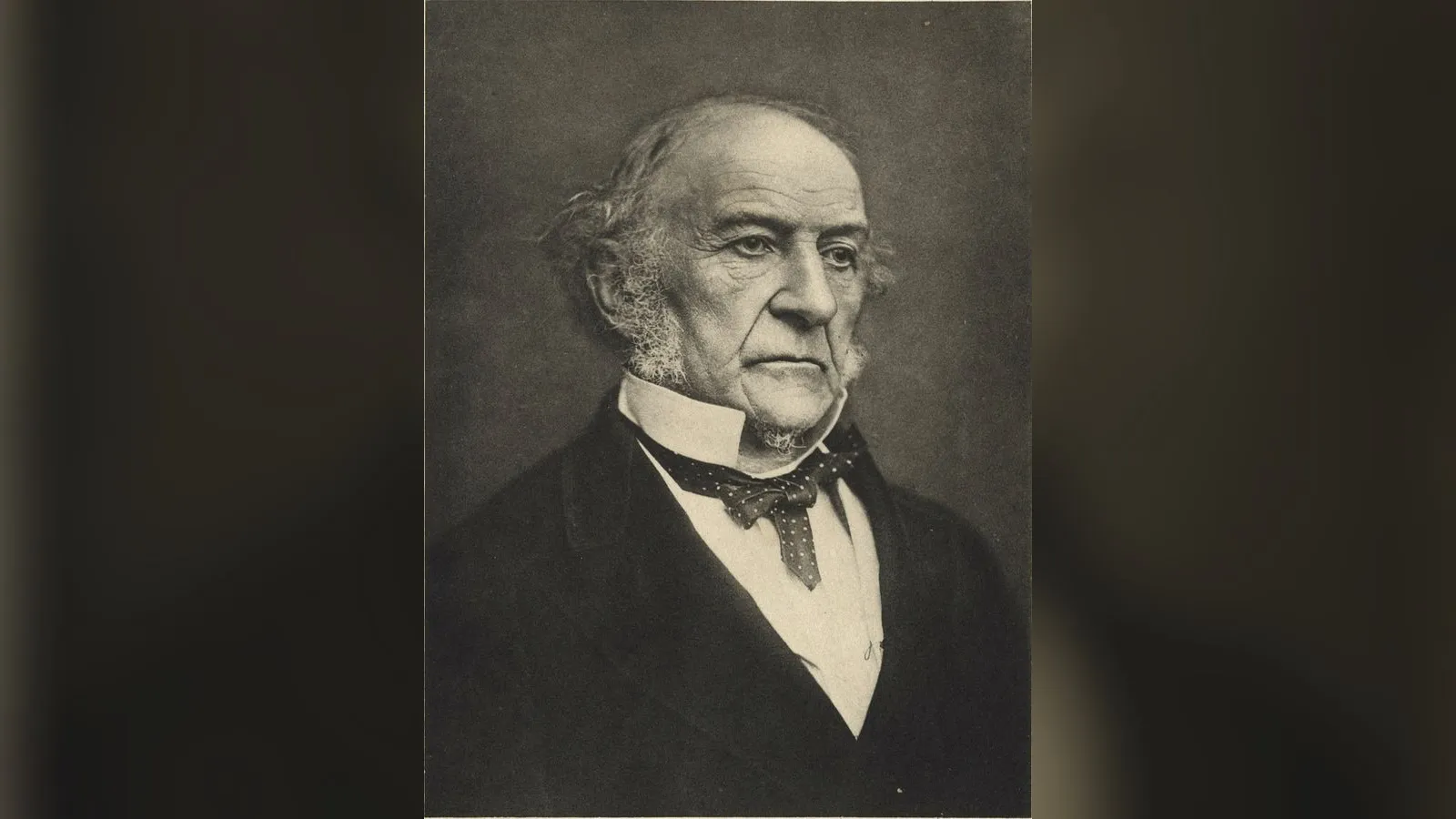

William Ewart Gladstone (1809–1898)
Contents
TL;DR
- established Born in Liverpool to a family of purely Scottish ancestry — his father, Sir John Gladstone, was a wealthy Scottish merchant, and his mother, Anne MacKenzie Robertson, was from the Scottish Highlands — Gladstone served four separate terms as British Prime Minister between 1868 and 1894, a record of political longevity unmatched in British history, and later represented the Scottish constituency of Midlothian in Parliament.
- established Gladstone's political career began as a defender of his own father's interests: his 1833 maiden speech in Parliament defended slaveholders' compensation claims, directly connected to the fact that Sir John Gladstone had owned enslaved people on Caribbean plantations and received substantial compensation under the 1833 Slavery Abolition Act — the financial foundation of the family's considerable wealth. This article reports this origin directly rather than allowing Gladstone's later reputation as a reforming Liberal to obscure his family's direct, documented connection to slavery and his own early parliamentary defence of it.
- established Gladstone drove substantial domestic reform across his governments, including Irish Church disestablishment, the secret ballot, expanded working-class suffrage through the Third Reform Act, and legalisation of trade unions, while pursuing a foreign and fiscal philosophy of "peace and retrenchment."
- established From 1849 onward, Gladstone personally conducted what he called "rescue work," walking London's streets at night to engage directly with prostitutes in an effort to help them leave sex work — an unusual and, at the time, genuinely scandal-prone practice for a senior politician; persistent contemporary rumours questioned his motives, which he addressed in a solemn written declaration, only opened after his death, affirming he had never been unfaithful to his wife. This article reports both the practice and the rumours surrounding it plainly.
- Disputed/Established. Historians have also documented a pattern of hostile rhetoric from Gladstone toward British Jewish communities during the 1876 Bulgarian Crisis, and a deep and publicly expressed hostility toward Roman Catholicism, including a widely read 1874 pamphlet attacking papal authority — genuine and documented blemishes on his record this article does not omit in deference to his broader reforming reputation.
Key Facts
- Born
- 29 December 1809, Liverpool, England (to Scottish parents)
- Died
- 19 May 1898, Hawarden Castle, Wales, aged 88
- Known for
- Four-time British Prime Minister (1868–74, 1880–85, 1886, 1892–94)
- Scottish constituency
- Midlothian, 1880–1895
- Father
- Sir John Gladstone, 1st Baronet — Scottish merchant and slaveholder
- Record
- Oldest person ever to serve as British Prime Minister, leaving office at 84
Scottish Impact Index (SI Score)
- Global Influence
- 6/10
- Enduring Relevance
- 8/10
- Material Contribution
- 3/10
- Exceptional Achievement
- 4/10
- Lasting Legacy
- 5/10
- Recognition
- 5/10
31/60
Ranked =84th of 200 in Great Scots
A Note on Claims and Evidence
Gladstone's biography, his legislative record, and his family's documented connection to slavery and compensation under the 1833 Slavery Abolition Act are extensively recorded in British parliamentary and historical records and treated as Established. His nighttime "rescue work" with prostitutes and the contemporary rumours surrounding it, including his own later written denial, are documented in his personal diaries and subsequent biographical scholarship and reported here directly. His documented hostile rhetoric during the 1876 Bulgarian Crisis and his anti-Catholic writings are Established from his own published works and contemporary historical analysis.
Timeline
Born in Liverpool to Sir John Gladstone, a Scottish merchant, and Anne MacKenzie Robertson, of the Scottish Highlands.
Educated at Eton and Christ Church, Oxford, achieving a double first-class degree.
Enters Parliament for Newark as a High Tory, through the patronage of the Duke of Newcastle.
Delivers his maiden speech in Parliament, defending slaveholders' compensation claims connected to his own father's interests, shortly after the Slavery Abolition Act.
Serves within successive Conservative governments.
Aligns with the Peelite faction following the Corn Laws split.
Begins his personal "rescue work," engaging directly with prostitutes on London's streets in an effort to help them leave sex work.
Formally joins the Liberal Party.
First premiership; drives Irish Church disestablishment, the secret ballot, and Irish land reform.
Publishes The Vatican Decrees in their Bearing on Civil Allegiance, a widely read pamphlet attacking Catholic papal authority.
Makes a series of documented hostile public remarks regarding British Jewish communities during the Bulgarian Crisis.
Conducts the Midlothian campaign, regarded as Britain's first modern mass political campaign.
Second premiership; extends the franchise via the Third Reform Act; faces major controversy over the Egyptian intervention and the delayed relief of General Gordon at Khartoum.
Represents the Scottish constituency of Midlothian in Parliament.
Third, brief premiership; introduces the first Irish Home Rule Bill, which splits the Liberal Party.
Fourth premiership, formed at age 82; introduces the Second Home Rule Bill, passed by the Commons but defeated decisively in the House of Lords.
Resigns as Prime Minister, aged 84, the oldest person ever to hold the office.
Writes a solemn private declaration, to be opened only after his death, affirming he had never been unfaithful to his wife.
Dies at Hawarden Castle, Wales, aged 88; buried in Westminster Abbey.
Details
A Scottish family's fortune, built on slavery
Although born in Liverpool, Gladstone was of entirely Scottish parentage: his father, Sir John Gladstone, was a prominent Scottish merchant, and his mother, Anne MacKenzie Robertson, came from the Scottish Highlands. This article states directly, as a documented and consequential fact rather than a minor family footnote, that Sir John Gladstone's considerable wealth — the financial foundation of his son's subsequent education, social standing, and political career — derived substantially from the ownership of enslaved people on Caribbean plantations, for which he received a very large sum in compensation under the 1833 Slavery Abolition Act, part of the £20 million fund paid to former slaveholders (never to the enslaved themselves) upon abolition. The younger Gladstone's own maiden speech in Parliament in 1833 directly defended slaveholders' compensation claims connected to his own father's interests — an origin to his long political career that sits in genuine, documented tension with his later reputation as a reforming Liberal statesman, and one this article does not allow that later reputation to obscure.
From Tory loyalist to Liberal reformer
Gladstone's political evolution across his long career reflected a genuine and well-documented intellectual journey rather than simple opportunism: he began as a High Tory in the early 1830s, moved through Conservative and then Peelite affiliations following the mid-century split over the Corn Laws, and formally joined the Liberal Party in 1859. Across his four premierships between 1868 and 1894, he drove substantial domestic reform, including the disestablishment of the Irish Church, the introduction of the secret ballot, significant expansion of working-class suffrage through the Third Reform Act of 1884, and the legalisation of trade unions — a legislative record that earned him a lasting reputation, still widely held among historians, as one of Britain's most consequential reforming prime ministers. His fiscal philosophy of "peace and retrenchment" emphasised reduced government expenditure and lower taxation, and he became known as a genuine liberator of British trade through his systematic reduction of tariffs.
Nighttime "rescue work" and persistent rumour
From 1849 onward, Gladstone personally and repeatedly engaged in what he called "rescue work" — walking London's streets alone at night to approach and speak directly with prostitutes, in a genuine effort to help them leave sex work, including by arranging alternative employment and supporting institutions such as the House of Mercy at Clewer. This article reports the practice plainly as a documented and unusual feature of his personal life, together with the fact that it generated persistent contemporary rumour and speculation about his own motives and conduct, a serious reputational risk for any senior Victorian politician. Gladstone appears to have taken these rumours seriously enough that, in December 1896, nearing the end of his life, he composed a solemn private written declaration, sealed to be opened only after his death, formally affirming that he had never been unfaithful to his wife — a document this article treats as Gladstone's own direct response to speculation that dogged him for much of his adult life, without this article itself adjudicating the underlying rumours beyond what Gladstone's own documented statement addresses.
Documented hostility toward Jewish and Catholic communities
Gladstone's record also includes genuine, well-documented episodes of religiously and ethnically hostile rhetoric that this article does not omit from an otherwise largely reformist account. During the 1876 Bulgarian Crisis, historians including Geoffrey Alderman have documented Gladstone directing pointed, hostile public rhetoric at British Jewish communities, including criticism of perceived "Judaic sympathies" and a notable reluctance to defend persecuted Jewish populations in Russia and Romania during the same period. Separately, Gladstone harboured and publicly expressed deep hostility toward Roman Catholicism, publishing a widely read 1874 pamphlet, The Vatican Decrees in their Bearing on Civil Allegiance, which sold some 150,000 copies and attacked the doctrine of papal infallibility as a threat to the civil loyalty of British Catholics, going on in a subsequent pamphlet to characterise the Catholic Church in starkly hostile terms. These documented positions sit, this article notes, in real tension with Gladstone's broader reputation for moral and reforming leadership, a complexity reflective of wider contradictions common among prominent Victorian statesmen.
Ireland, Midlothian, and a Scottish political identity
Gladstone's Scottish identity found direct political expression later in his career: from 1880 to 1895 he represented the Scottish constituency of Midlothian, and his 1879–1880 Midlothian campaign — a sustained programme of mass public speeches directly appealing to ordinary voters — is widely regarded by historians as Britain's first modern political campaign, drawing enormous crowds and establishing a new template for popular democratic politics. His later career was dominated by the question of Irish Home Rule, which he championed with genuine conviction across his third and fourth premierships; the issue split the Liberal Party, with "Liberal Unionists" breaking away in opposition, and his final, 1893 Home Rule Bill passed the Commons only to be decisively defeated in the House of Lords, a defeat that contributed directly to his resignation in 1894, aged 84 — making him, to this day, the oldest person ever to have served as British Prime Minister.
Death and a historically complex legacy
Gladstone died at Hawarden Castle in Wales in May 1898, aged 88, and was buried with full honours in Westminster Abbey, closing a parliamentary career spanning nearly the entirety of the Victorian era. Historians continue to rank him among Britain's most significant and consequential prime ministers for his genuine legislative achievements, fiscal discipline, and expansion of the franchise. This article presents that substantial legacy together with the real, documented complexities of his record — his family's direct financial foundation in slavery, his own early parliamentary defence of slaveholders' interests, his documented hostility toward Jewish and Catholic communities at points in his career, and the persistent personal rumour attached to his nighttime "rescue work" — consistent with its commitment to accuracy over a purely celebratory account of even its most consequential and reform-minded subjects.
Did You Know?
- Gladstone's maiden parliamentary speech in 1833 defended slaveholders' compensation claims connected to his own father's plantation interests.
- He personally walked London's streets at night for decades, engaging directly with prostitutes in an effort to help them leave sex work.
- He wrote a solemn private declaration, opened only after his death, affirming his marital fidelity amid persistent rumours about his nighttime activities.
- He remains the oldest person ever to serve as British Prime Minister, leaving office at age 84.
- He owned a personal library of over 32,000 volumes.
- He had a lifelong hobby of felling trees, mostly oak, which he continued until age 81, while quietly replanting saplings.
- His 1879–1880 Midlothian campaign is regarded as Britain's first modern mass political campaign.
- His final Home Rule Bill for Ireland was defeated in the House of Lords by a margin of 419 to 41.
FAQ
1What is William Gladstone best known for?
Serving four separate terms as British Prime Minister between 1868 and 1894, driving major domestic reforms, and campaigning for Irish Home Rule.
2Was Gladstone Scottish?
Yes — though born in Liverpool, both his parents were Scottish, and he later represented the Scottish constituency of Midlothian in Parliament.
3Did Gladstone's family have ties to slavery?
Yes — his father, Sir John Gladstone, owned enslaved people on Caribbean plantations and received substantial compensation under the 1833 Slavery Abolition Act, the financial foundation of the family's wealth.
4What was Gladstone's "rescue work"?
From 1849, he personally and repeatedly walked London's streets at night to engage directly with prostitutes, aiming to help them leave sex work — a practice that generated persistent contemporary rumour about his own conduct.
5Did Gladstone hold any documented prejudiced views?
Yes — historians have documented hostile public rhetoric toward British Jewish communities during the 1876 Bulgarian Crisis, and he published widely read pamphlets attacking Roman Catholic papal authority.
6What was the Midlothian campaign?
Gladstone's 1879–1880 mass public speaking campaign, widely regarded as Britain's first modern political campaign.
7How long did he serve as Prime Minister?
Across four separate terms between 1868 and 1894, making him the longest-serving and oldest-ever British Prime Minister.
8How did he die?
He died at Hawarden Castle, Wales, in 1898, aged 88, and was buried in Westminster Abbey.
Sources and Further Reading
Primary/Institutional
Scholarly/Critical
- William Gladstone, Slavery and Reparatory Truth — History Reclaimed
- Family of former British PM apologises for links to slavery — Al Jazeera
- Graeme Morton, "Identity within the Union State, 1800–1900", in T. M. Devine and Jenny Wormald (eds), The Oxford Handbook of Modern Scottish History (Oxford University Press, 2012) — further reading on Gladstone and Scottish home rule
General
Caveats: Myths and Disputed Claims
- Clarification: Gladstone's reputation as a reforming Liberal statesman is sometimes presented without reference to his family's direct financial foundation in slavery and his own early parliamentary defence of slaveholders' interests. This article gives both equal, direct weight, consistent with house style's commitment to accuracy over a purely celebratory account.
- Note: The persistent rumours surrounding Gladstone's "rescue work" with prostitutes have never been conclusively proven true or false by historians; this article reports the documented practice and the rumours around it, along with Gladstone's own solemn written denial, without independently adjudicating the underlying question beyond what the historical record supports.
- Clarification: Gladstone's documented hostile rhetoric toward Jewish communities during the Bulgarian Crisis and his anti-Catholic writings are sometimes omitted from celebratory accounts of his reforming legacy; this article includes them directly as genuine, documented aspects of his record.
Card 154 · Great Scots