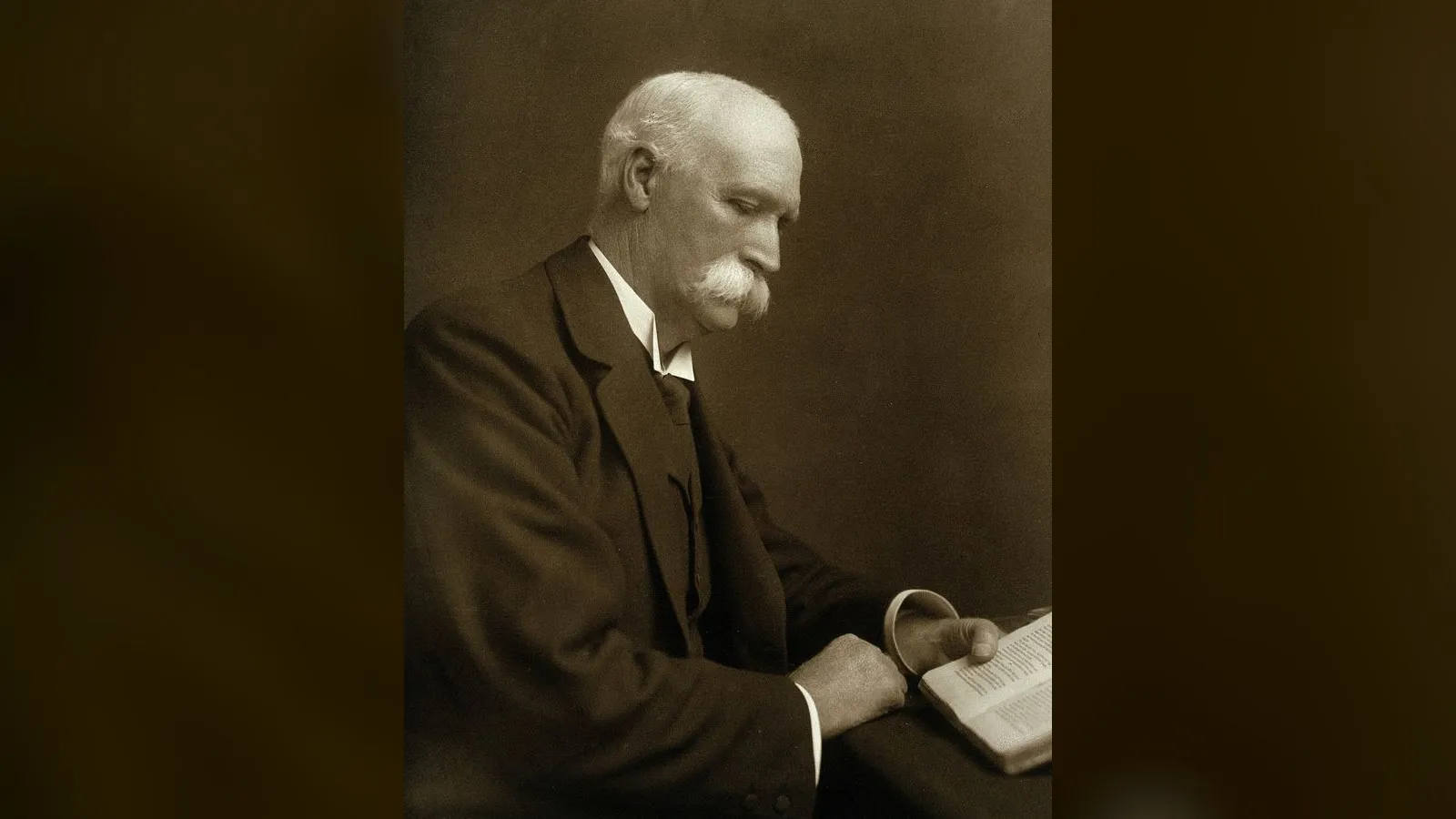

Sir William Macewen (1848–1924)
Contents
TL;DR
- Established/Documented: Macewen performed what is now widely recognised as the first successful, deliberately localised brain tumour resection in surgical history — operating on 14-year-old Barbara Watson on 27 July 1879, using clinical neurological signs alone (no imaging technology existed) to pinpoint and remove a meningioma, five years before the case more commonly credited internationally as "the first" brain tumour operation.
- Disputed/Documented — a genuine priority correction: The 1884 operation by English surgeon Rickman Godlee is the case most frequently cited in general histories of neurosurgery as the "first" successful brain tumour removal, but Macewen's 1879 operation preceded it by five years and was documented at the time in his own private journal and in the Glasgow Medical Journal — this card treats Macewen's case as the genuinely earlier and better-founded claim to priority, while noting that Godlee's case received far greater contemporary publicity, largely a function of London's greater medical prominence at the time rather than any deficiency in Macewen's own work.
- Established/Documented: Macewen independently developed and first performed oral endotracheal intubation — inserting a breathing tube through the mouth and past the vocal cords to maintain an airway during surgery — on 5 July 1878, a technique whose basic principle remains in routine use in operating theatres and intensive care units worldwide today.
- Established/Documented: Macewen pioneered modern bone-grafting surgery, using the patient's own bone tissue to treat severe skeletal deformities, particularly those caused by rickets — a disease of vitamin D deficiency that was genuinely widespread in industrial-era Scotland and that his surgical techniques directly and significantly alleviated.
- Established/Documented: Late in his career, Macewen helped found and served as first chief surgeon of the Princess Louise Scottish Hospital for Limbless Sailors and Soldiers at Erskine (1916), developing the "Erskine artificial limb" for First World War amputees in direct collaboration with shipbuilding engineers — a practical, humanitarian wartime achievement that sits alongside his more academically celebrated surgical firsts.
Key Facts
- Born
- 22 June 1848, Port Bannatyne, Isle of Bute, Scotland
- Died
- 22 March 1924, Glasgow, Scotland (aged 75)
- Education
- University of Glasgow, MB (1872), trained under Joseph Lister
- Known for
- Pioneering neurosurgery (1879 brain tumour resection); endotracheal intubation (1878); modern bone-grafting surgery; pneumonectomy technique
- Key positions
- Surgeon, Glasgow Royal Infirmary (from 1875); Surgeon, Royal Hospital for Sick Children, Glasgow (from 1883); Regius Professor of Surgery, University of Glasgow (from 1892)
- Honours
- FRS (1895); Cameron Prize, University of Edinburgh (1896); Honorary Fellow, Royal College of Surgeons of England (1900); Knighted (1902); Companion of the Order of the Bath (1917); President, British Medical Association (1922)
- Medical eponyms
- "MacEwen's triangle" (temporal bone landmark); "MacEwen's sign" (diagnostic indicator for hydrocephalus and brain abscess); "MacEwen's operation" (hernia repair technique)
Scottish Impact Index (SI Score)
- Global Influence
- 5/10
- Enduring Relevance
- 8/10
- Material Contribution
- 3/10
- Exceptional Achievement
- 7/10
- Lasting Legacy
- 5/10
- Recognition
- 2/10
30/60
Ranked =93rd of 200 in Great Scots
Claim-Status and Evidence Note
Claims below are evidence-tiered as Established/Documented (settled by primary sources, contemporary journal publication, or broad scholarly consensus), Shared/Traditional (widely told and broadly accurate, if simplified), disputed (credible sources genuinely disagree), or Legend/Myth (actively corrected here). Macewen's case is one of the clearer examples in this series of a Scottish surgeon whose priority in a major medical first has been under-recognised internationally in favour of a later, better-publicised English case — a pattern worth stating plainly with the documentary evidence behind it, rather than either overclaiming or simply repeating the more familiar Godlee-first version.
Timeline
Born in Port Bannatyne, Isle of Bute.
Graduates MB from the University of Glasgow, having trained under Joseph Lister, the pioneer of antiseptic surgery.
Elected Fellow of the Royal College of Physicians and Surgeons of Glasgow.
Joins Glasgow Royal Infirmary as assistant surgeon.
Correctly diagnoses a frontal lobe brain abscess in a patient using clinical neurological examination alone; the family declines surgery, and autopsy later confirms his diagnosis was accurate.
Becomes full surgeon at Glasgow Royal Infirmary; develops early bone-grafting techniques and a specialised beveled osteotome for treating rickets-related bone deformity.
Performs the first documented oral endotracheal intubation, inserting a breathing tube through the mouth and past the vocal cords to maintain airway control during surgery.
Operates on 14-year-old Barbara Watson, removing a left frontal meningioma using purely clinical neurological localisation; the operation is a documented success, and Watson lives for eight further years, with autopsy after her eventual death confirming complete tumour removal.
Establishes a nursing training programme focused on sterilisation practice with Matron Rebecca Strong.
Appointed lecturer in Systematic Surgery, University of Glasgow.
Appointed surgeon to the Royal Hospital for Sick Children, Glasgow.
English surgeon Rickman Godlee performs a brain tumour removal in London that becomes widely and internationally credited as the "first" successful operation of its kind — five years after Macewen's own documented success.
Publishes work on pupillary changes as an indicator of raised intracranial pressure, findings still regarded as clinically relevant today.
Appointed Regius Professor of Surgery at the University of Glasgow — the same chair previously held by his own mentor, Joseph Lister — and moves his practice to the Western Infirmary.
Elected Fellow of the Royal Society.
Awarded the Cameron Prize for Therapeutics by the University of Edinburgh.
Made an Honorary Fellow of the Royal College of Surgeons of England.
Knighted by King Edward VII at Buckingham Palace for services to medicine.
Helps found the Princess Louise Scottish Hospital for Limbless Sailors and Soldiers at Erskine; serves as its first chief surgeon, co-developing the "Erskine artificial limb" for First World War amputees with shipbuilding engineers.
Made a Companion of the Order of the Bath.
Serves as President of the British Medical Association.
Dies in Glasgow, aged 75; buried at St Blane's Church, Kingarth, on his native Isle of Bute.
Details
From Lister's shadow to independent innovation
William Macewen was born in 1848 on the Isle of Bute and studied medicine at the University of Glasgow, graduating in 1872 during the period when Joseph Lister — himself a towering figure in the history of surgery — was transforming the discipline through the introduction of antiseptic technique: systematic hand scrubbing, instrument sterilisation, surgical gowns, and the use of carbolic acid (phenol) to prevent the infections that had previously killed a large proportion of surgical patients regardless of how skilfully an operation itself was performed. Macewen trained directly under Lister and absorbed his methods thoroughly, but he did not remain simply an imitator of his teacher's achievement — over the following two decades he built an independent body of surgical innovation across multiple, largely unrelated fields, a breadth of contribution relatively unusual even among the most accomplished surgeons of his era.
The brain tumour operation history mostly credits to someone else
Macewen's most historically significant achievement, and the one most deserving of direct correction in how it is popularly remembered, is his 1879 brain tumour operation. Working entirely without the imaging technology that would later transform neurosurgery — no X-rays, let alone CT or MRI scanning — Macewen drew on the emerging neurological mapping research of John Hughlings Jackson and David Ferrier to develop and apply a method of localising brain lesions purely through careful clinical observation of a patient's motor and sensory symptoms. He had already demonstrated the soundness of this approach in 1876, correctly diagnosing a frontal lobe abscess in a patient whose family declined surgery; autopsy later confirmed his diagnosis had been exactly right.
On 27 July 1879, Macewen applied this method decisively: operating on 14-year-old Barbara Watson, he used her pattern of focal epileptic seizures to localise and successfully remove a left frontal meningioma. The operation was a genuine, lasting success — Watson lived for a further eight years, and autopsy after her eventual death confirmed the tumour had been completely removed with no recurrence. This is now generally recognised by specialist historians of neurosurgery as the first successful, deliberately localised brain tumour resection in surgical history.
Here is the correction this card makes explicitly: general popular and even some professional accounts of the history of neurosurgery more commonly credit English surgeon Rickman Godlee's 1884 operation in London as the "first" successful brain tumour removal — a full five years after Macewen's own documented success. Macewen's case was not obscure or undocumented at the time; he recorded it in his own private journal and published it in the Glasgow Medical Journal, meaning the priority claim rests on solid, contemporary documentary evidence rather than later reconstruction. The likeliest explanation for Godlee's greater international prominence is straightforwardly a matter of geography and institutional visibility rather than any deficiency in Macewen's own achievement: London in the 1880s carried far greater weight in the international medical press and professional networks than Glasgow did, regardless of where the more significant surgical advance had actually first taken place. This is a pattern worth naming directly rather than passing over — a genuine Scottish medical first, overshadowed in wider historical memory by a later English case with better publicity.
A pioneer of the airway, a year before his more famous operation
A year before the Watson operation, on 5 July 1878, Macewen achieved a second, independently significant surgical first: the earliest documented case of oral endotracheal intubation. Faced with a patient requiring pharyngeal surgery, where a standard chloroform mask would have obstructed the surgical field, Macewen — in his own words — determined "to introduce into the trachea, by way of the mouth, a tube which would extend beyond the vocal cords," allowing uninterrupted anaesthetic administration throughout the procedure without a tracheotomy. The basic principle he established — securing and maintaining a patient's airway directly via a tube passed through the mouth past the vocal cords — remains the fundamental method of airway management used in operating theatres and intensive care units across the world today, making this arguably as consequential a contribution to everyday modern medical practice as his more celebrated neurosurgical work, even though it receives considerably less popular attention.
Bone grafting, rickets, and practical surgery for an industrial-era disease
Alongside his work in neurosurgery and anaesthesia, Macewen developed modern techniques of bone-grafting surgery from 1877 onward, along with a specialised beveled osteotome instrument for cutting bone without shattering it. This work had direct, large-scale practical significance in his own time: rickets, a bone-deformation disease caused by vitamin D deficiency, was genuinely widespread in industrial Scotland, where poor diet and limited sunlight exposure in densely built, heavily polluted cities produced high rates of childhood skeletal deformity. Macewen's surgical techniques for correcting and treating these deformities, along with his broader experimental research into how bone actually grows and repairs itself, represented a substantial and directly applied medical response to a real public health problem of his era, not merely an abstract surgical curiosity.
Beyond the brain and bone: lungs, ears, and a camera in the operating theatre
Macewen's range of contributions extended still further. He developed surgical techniques for lung removal (pneumonectomy) that went on to become an important treatment option for tuberculosis and lung cancer, and his expertise in the anatomy and disease patterns of the temporal bone and nasal sinuses — an area of study that produced the still-used medical eponym "MacEwen's triangle" — made him a leading authority on treating brain abscesses arising from ear and sinus infections, a genuinely serious and common complication in the pre-antibiotic era. He was also, notably for his time, an early and deliberate user of clinical photography, systematically documenting patient cases, pathological specimens, and the pre-, intra-, and post-operative condition of his patients for teaching purposes — an innovation in medical documentation and education that anticipated practices now standard throughout modern medicine.
A wartime hospital, and limbs built with shipbuilders
Late in his career, already in his late sixties, Macewen turned his practical surgical expertise directly toward the human cost of the First World War. In 1916 he helped found the Princess Louise Scottish Hospital for Limbless Sailors and Soldiers at Erskine, serving as its first chief surgeon. Rather than treating prosthetic limb design as a purely medical afterthought, Macewen worked directly with engineers from Yarrow Shipbuilders to design what became known as the "Erskine artificial limb," and personally trained pattern-makers in its manufacture — a genuinely interdisciplinary, hands-on humanitarian achievement that brought his lifelong practical, problem-solving approach to surgery to bear directly on one of the war's most visible and lasting forms of human cost. He recruited Agnes Carnochan Douglas, a colleague from his own Western Infirmary practice, as the hospital's first matron, reflecting the same attention to skilled, dedicated staffing that had characterised his earlier nursing training initiatives in Glasgow decades before.
Recognition, death, and a legacy still visible in the language of medicine
Macewen's achievements brought substantial formal recognition over his career: Fellowship of the Royal Society in 1895, the Cameron Prize from Edinburgh in 1896, an honorary fellowship of the Royal College of Surgeons of England in 1900, a knighthood in 1902, appointment as Companion of the Order of the Bath in 1917, and the presidency of the British Medical Association in 1922. He died in Glasgow in March 1924, aged 75, and was buried at St Blane's Church on his native Isle of Bute. His name persists directly within the working vocabulary of modern medicine — "MacEwen's triangle," "MacEwen's sign" (a diagnostic indicator still used for hydrocephalus and brain abscess), and "MacEwen's operation" (a hernia repair technique) — a form of lasting recognition that, unlike a statue or a plaque, is used by working clinicians, often without any particular awareness of the individual surgeon behind the name, every working day.
Did You Know
- Macewen performed what is now regarded as the first successful, deliberately localised brain tumour operation in 1879 — five years before the 1884 London case by Rickman Godlee that is far more commonly cited as "the first" in general histories of neurosurgery.
- His 1879 patient, 14-year-old Barbara Watson, lived for eight further years after her tumour removal, and her eventual autopsy confirmed the meningioma had been completely and successfully removed.
- Macewen's 1878 development of oral endotracheal intubation — a breathing tube passed through the mouth past the vocal cords — established the basic principle still used in operating theatres and intensive care units worldwide today.
- Macewen trained directly under Joseph Lister and later held the exact same Regius Professor of Surgery chair at the University of Glasgow that Lister himself had once occupied.
- His bone-grafting surgery and specialised surgical instruments were developed specifically to treat the severe skeletal deformities caused by rickets, a disease that was genuinely widespread in industrial-era Scottish cities.
- Macewen was an early adopter of clinical photography, systematically documenting his patients' conditions and surgical cases for teaching purposes well before this became standard medical practice.
- In his late sixties, during the First World War, Macewen personally collaborated with shipbuilding engineers at Yarrow Shipbuilders to design the "Erskine artificial limb" for wounded soldiers, and trained the pattern-makers who manufactured it.
- Three separate medical eponyms — "MacEwen's triangle," "MacEwen's sign," and "MacEwen's operation" — are still in active clinical use today, a form of everyday recognition most historical figures never receive.
FAQ
1Did William Macewen really perform the first brain tumour operation, not Rickman Godlee?
On the documentary evidence, yes — Macewen's 1879 operation on Barbara Watson, recorded contemporaneously in his own journal and in the Glasgow Medical Journal, preceded Godlee's better-known 1884 London operation by five years. Godlee's case is more commonly cited in general histories, largely because London carried far greater international medical prominence at the time, not because Macewen's case was less well documented or less successful.
2How did Macewen locate a brain tumour without X-rays or scans?
He used purely clinical neurological examination, drawing on the mapping research of contemporaries like John Hughlings Jackson and David Ferrier, to infer the location of a lesion from a patient's specific pattern of motor and sensory symptoms — in the 1879 case, the character of the patient's focal epileptic seizures.
3What is Macewen's most widely used contribution to everyday modern medicine?
Arguably his 1878 development of oral endotracheal intubation, whose basic principle — a breathing tube passed through the mouth past the vocal cords to secure a patient's airway — remains fundamental to modern anaesthesia and intensive care, even though it receives far less popular attention than his neurosurgical work.
4What was Macewen's connection to Joseph Lister?
Lister was his teacher at the University of Glasgow, and Macewen thoroughly adopted Lister's antiseptic surgical methods. Later in his career, Macewen was appointed to the same Regius Professor of Surgery chair at Glasgow that Lister himself had previously held.
5Why was bone-grafting surgery for rickets significant at the time?
Rickets, caused by vitamin D deficiency, was a genuinely widespread disease in industrial-era Scottish cities due to poor diet and limited sunlight exposure in densely built, polluted urban areas. Macewen's surgical techniques for correcting the resulting skeletal deformities addressed a real and common public health problem of his era.
6What did Macewen do during the First World War?
In 1916, already in his late sixties, he helped found the Princess Louise Scottish Hospital for Limbless Sailors and Soldiers at Erskine and served as its first chief surgeon, personally working with shipbuilding engineers to design the "Erskine artificial limb" for wounded veterans.
7Is Macewen's name still used in medicine today?
Yes, in three distinct medical eponyms: "MacEwen's triangle" (a temporal bone anatomical landmark), "MacEwen's sign" (a diagnostic indicator for hydrocephalus and brain abscess), and "MacEwen's operation" (a hernia repair technique) — all still in active clinical use.
8Where is William Macewen buried?
At St Blane's Church, Kingarth, on the Isle of Bute, his native island.
9Did Macewen receive recognition during his own lifetime?
Substantial recognition, yes: Fellowship of the Royal Society, the Cameron Prize, an honorary fellowship of the Royal College of Surgeons of England, a knighthood in 1902, appointment to the Order of the Bath, and the presidency of the British Medical Association in 1922.
10What made Macewen's range of contributions unusual?
He made genuinely significant, independent contributions across several largely unrelated fields — neurosurgery, anaesthesia, orthopaedics, ear/sinus surgery, and thoracic (lung) surgery — a breadth of major innovation that is unusual even among the most accomplished surgeons of his era, most of whom are remembered for a single major advance.
Sources and Further Reading
Primary/Institutional
- Royal College of Physicians and Surgeons of Glasgow, "William Macewen: At the Cutting Edge," heritage.rcpsg.ac.uk
- University of Glasgow archives, William Macewen collection
- Royal Hospital for Sick Children, Glasgow, historical doctor records (hharp.org)
Scholarly
- World Neurosurgery (ScienceDirect), "Sir William Macewen (1848–1924): Pioneering the Field of Neurosurgery with Early Breakthroughs in Tumor Resection"
- Child's Nervous System (Springer), "William Macewen and the first documented successful resection of a brain tumor"
- LITFL Medical Eponym Library, "William Macewen"
General
- Wikipedia, "William Macewen"
- Sabbatini, R.M.E., "Sir William Macewen: A Brief Biography," cerebromente.org.br
Caveats: Myths and Disputed Claims
The central correction this card makes is on priority for the first successful brain tumour operation: Macewen's 1879 case is treated here as the better-documented and earlier true "first," rather than the more commonly cited 1884 Godlee case, on the strength of Macewen's own contemporary journal record and publication in the Glasgow Medical Journal. This is not presented as a matter of national pride overriding evidence — specialist historians of neurosurgery have themselves increasingly recognised Macewen's priority — but readers should understand that general and popular accounts of the history of neurosurgery still more commonly credit Godlee, and this discrepancy reflects differences in contemporary publicity and institutional prominence between London and Glasgow rather than any genuine ambiguity in the underlying documentary record. No other major claim in this card required similar correction; Macewen's other innovations (endotracheal intubation, bone grafting, pneumonectomy) are consistently and uncontroversially attributed to him across the specialist literature.
Card 055 · Great Scots