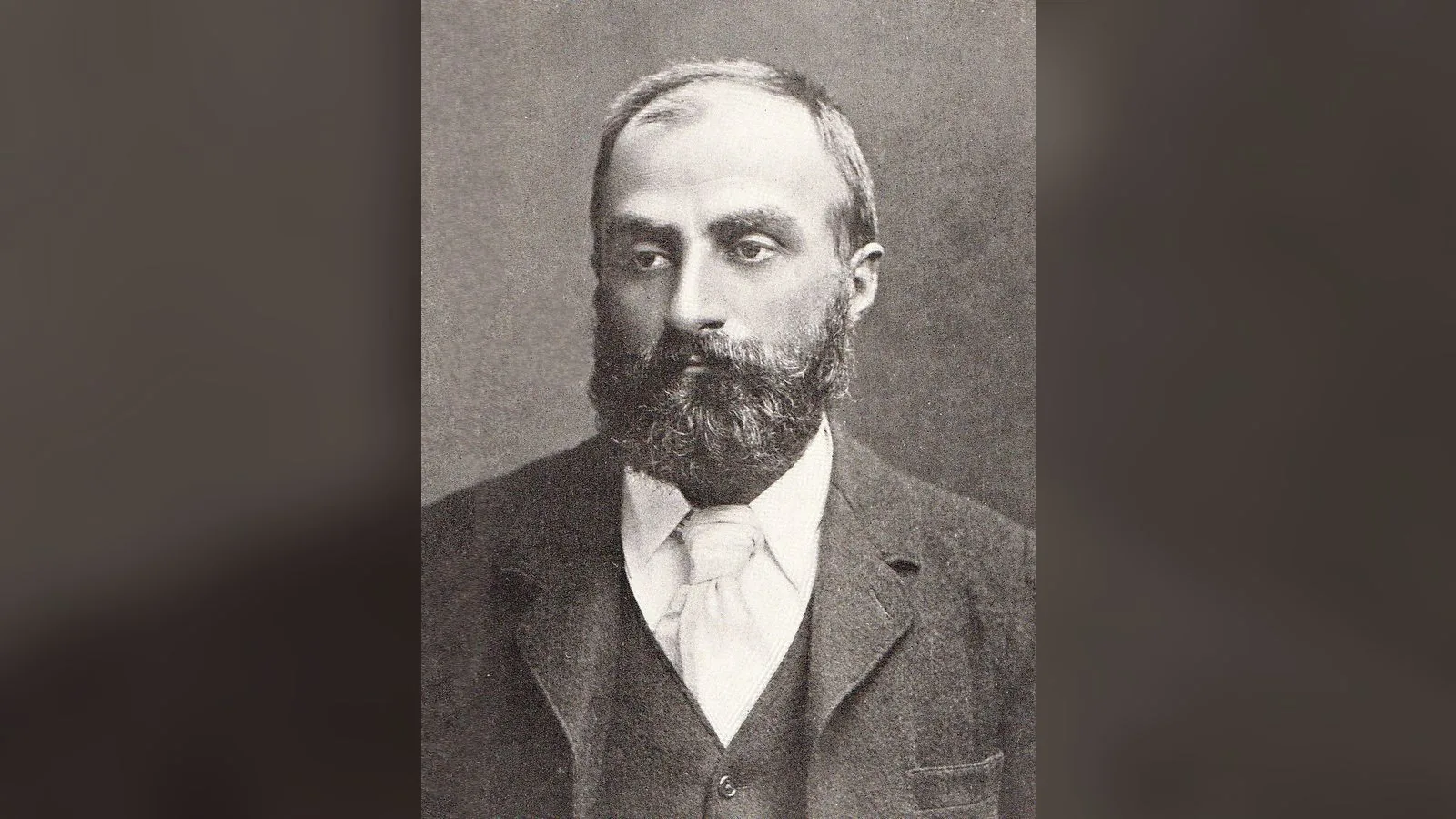

William Speirs Bruce (1867–1921): Scotland's Forgotten Polar Scientist
Contents
TL;DR
- Established (Documented): Bruce led the Scottish National Antarctic Expedition (1902–04) aboard the Scotia, which charted new coastline (Coats Land), gathered over 1,100 species of flora and fauna, and completed one of the most scientifically rigorous Antarctic programmes of the "Heroic Age" — with only one death among the entire crew.
- Established (Documented): The expedition founded Omond House on Laurie Island, later handed to Argentina as Orcadas Base — still operating today as the longest continuously running weather station in Antarctica.
- Documented/Disputed: Bruce was never awarded the Polar Medal given to virtually every other British Antarctic expedition member of the era. Contemporaries and Bruce himself blamed Royal Geographical Society president Sir Clements Markham's personal animosity; historians broadly support this but note Bruce's own difficult, prickly temperament likely compounded the problem.
- Established (Documented): Despite outperforming several better-funded rivals scientifically, Bruce died in 1921 in relative professional obscurity, his 1910 plan for a transcontinental Antarctic crossing having gone unfunded — only for Ernest Shackleton, whom Bruce had personally advised, to raise money for a similar scheme and receive the fame Bruce never did.
- Shared/Traditional, now being corrected: Long remembered (if at all) as a minor, quarrelsome footnote to Scott and Shackleton, Bruce has undergone a significant 21st-century reassessment, with historians now rating the Scotia expedition as arguably the best-planned and most cost-effective scientific expedition of its age.
Key Facts
- Born
- 1 August 1867, Kensington Gardens Square, London
- Died
- 28 October 1921, Liberton Hospital, Edinburgh (aged 54)
- Parents
- Samuel Noble Bruce (Scottish physician), Mary Lloyd (Welsh)
- Education
- University College London (medicine, uncompleted); University of Edinburgh medical school; Scottish Marine Station, Granton
- Key mentors
- Patrick Geddes, John Arthur Thomson, Dr John Murray (of the Challenger expedition)
- Spouse
- Jessie Mackenzie, married 1901 (marriage later estranged, c.1916)
- Major expedition
- Scottish National Antarctic Expedition, 1902–1904, aboard SY Scotia
- Key discovery
- Coats Land, Antarctica (named for the expedition's financial backers)
- Key institution founded
- Scottish Oceanographical Laboratory, Edinburgh (1906–1919)
- Notable snub
- Never awarded the Polar Medal, unlike nearly every contemporary British Antarctic explorer
- Legacy site
- Orcadas Base, Laurie Island — still operating, Argentina's oldest continuously staffed Antarctic station
Scottish Impact Index (SI Score)
- Global Influence
- 4/10
- Enduring Relevance
- 7/10
- Material Contribution
- 2/10
- Exceptional Achievement
- 6/10
- Lasting Legacy
- 4/10
- Recognition
- 2/10
25/60
Ranked =133rd of 200 in Great Scots
A Note on Claim Status
This article follows ScottishInventions.co.uk's standard evidence tiers: Established/Documented (supported by primary sources, expedition records, or strong scholarly consensus), Shared/Traditional (widely repeated but resting on weaker evidence), disputed (credible sources disagree), and Legend/Myth (popular but unsupported or contradicted by the record). Bruce's case is unusual in this series: the central controversy of his life — why he was denied the Polar Medal and lasting recognition — is itself a matter of ongoing historical debate rather than settled fact, and this article treats it as such rather than adopting Bruce's own version of events uncritically.
Timeline
Born in London to a Scottish father and Welsh mother.
Attends summer courses at the Scottish Marine Station, Granton; abandons medicine for natural science.
Joins the Dundee Whaling Expedition to Antarctic waters as scientific assistant; finds the commercial captain uninterested in research.
Spends a year at Cape Flora, Franz Josef Land, with Frederick Jackson's expedition, collecting some 700 zoological specimens.
Oceanographic voyages to Spitsbergen with patron Andrew Coats and Prince Albert I of Monaco.
Attempts to join Scott's National Antarctic Expedition; clashes with RGS president Sir Clements Markham over an independent Scottish expedition.
Marries Jessie Mackenzie.
SY Scotia departs Troon for Antarctica.
Scotia reaches 70°25′S before pack ice forces retreat to Laurie Island, South Orkneys.
Omond House established on Laurie Island — the first permanent weather station in Antarctica.
In Buenos Aires, Bruce arranges for Argentina to take over and permanently staff the station (later Orcadas Base).
Scotia discovers and charts Coats Land on the eastern Weddell Sea coast.
Scotia returns to Scotland; expedition awarded the RSGS Gold Medal.
Scottish Oceanographical Laboratory opens in Edinburgh, officially inaugurated by Prince Albert of Monaco.
SNAE scientific reports published in stages.
Scottish Spitsbergen Syndicate founded for mineral prospecting.
Bruce proposes a £50,000 transcontinental Antarctic crossing; fails to secure funding.
Shackleton announces a similar transcontinental plan and, unlike Bruce, secures major government and private funding.
Bruce is excluded from Shackleton's relief committee; writes bitterly of being overlooked for being "north of the Tweed."
Failing health forces closure of the Scottish Oceanographical Laboratory; its contents dispersed.
Dies in Edinburgh, aged 54.
Biography by Robert Rudmose Brown published; Bruce Memorial Prize established.
Centenary of the SNAE prompts renewed Scottish interest; a motion for posthumous recognition is tabled in the Scottish Parliament.
Details
From medicine to the Antarctic
William Speirs Bruce was, despite his name, not born in Scotland but in London, to a Scottish doctor father and a Welsh mother. His path to polar science began almost by accident: while a medical student, he attended a summer course at the Scottish Marine Station in Granton, near Edinburgh, where he came under the influence of the biologist Patrick Geddes and the naturalist John Arthur Thomson. He never returned to complete his medical training. Instead, working under the oceanographer Dr John Murray — who had overseen analysis of specimens from the landmark Challenger expedition of the 1870s — Bruce found his true vocation in the emerging discipline of oceanography.
His apprenticeship in fieldwork was hard-won. The 1892–93 Dundee Whaling Expedition, ostensibly a scientific opportunity, left him frustrated by a commercially minded captain uninterested in research. A year at Cape Flora in Franz Josef Land (1896–97) under Frederick Jackson produced roughly 700 specimens but also the first recorded friction over Bruce's proprietorial attitude toward his own collections — a pattern of interpersonal difficulty that would recur throughout his career. Subsequent Spitsbergen voyages with the textile magnate Andrew Coats and with Prince Albert I of Monaco gave him crucial technical training and, in Coats, a future patron who would prove decisive.
The break with the Royal Geographical Society
In 1899, Bruce sought a place on Robert Falcon Scott's National Antarctic Expedition, then being organised under the Royal Geographical Society's president, Sir Clements Markham. When Bruce indicated in March 1900 that he might be able to raise funds for a second, Scottish-led ship, Markham reacted with open hostility, writing that "such a course will be most prejudicial to the Expedition… I do not know why this mischievous rivalry should have been started." A more conciliatory note followed in February 1901, but the relationship never recovered. Bruce proceeded independently, and the consequences — both scientific and reputational — would shape the rest of his life.
The Scottish National Antarctic Expedition, 1902–1904
With backing from the wealthy Coats family of Paisley thread manufacturers, Bruce purchased a Norwegian whaler, refitted her as a dedicated research vessel, and renamed her Scotia. He recruited an entirely Scottish crew and scientific staff — a deliberate statement of national identity as much as a practical choice — and departed Troon on 2 November 1902.
Blocked by pack ice short of 71°S, the expedition wintered at Laurie Island in the South Orkneys, where the team built Omond House, the first permanent weather station on or near the Antarctic continent. In late 1903, while the Scotia underwent repairs in Buenos Aires, Bruce negotiated the station's transfer to the Argentine government, which has staffed and operated it continuously ever since as Orcadas Base — giving Antarctica its longest unbroken meteorological record, a direct legacy of Bruce's expedition still in active scientific use today.
Returning south in January 1904, the Scotia discovered previously uncharted coastline on the eastern edge of the Weddell Sea, which Bruce named Coats Land after his expedition's financial backers. The ship turned for home in March and reached Scotland on 21 July 1904. Across the expedition, the crew logged more than 4,000 miles of oceanographic survey work and catalogued over 1,100 species of flora and fauna, alongside sustained magnetic, meteorological, and hydrographic observation programmes — a scope later oceanographers judged more comprehensive than any rival Antarctic expedition of its era. The human cost was the lowest of any major Heroic Age Antarctic expedition: a single death, that of chief engineer Allan Ramsay, from a heart attack.
A quieter kind of exploration
Where Scott and Shackleton pursued headline-grabbing goals — the Pole, the transcontinental crossing — Bruce's expedition was explicitly built around sustained scientific measurement rather than a single dramatic objective. This was both a strength and a professional liability. The Scotia expedition generated genuinely enduring science (its climate data remains in active use; modern researchers have returned to Bruce's baseline measurements to track Antarctic change over a century later), but it produced no flag-planting moment for the London press or public to celebrate. Bruce himself was unhelpful to his own cause here: contemporaries and later biographers alike describe him as shy, solitary, and lacking the charisma and publicity instincts that made Scott and especially Shackleton household names. One lifelong friend called him "as prickly as the Scottish thistle itself."
The Polar Medal and the politics of recognition
The clearest injustice of Bruce's career is also its most contested. The Polar Medal was awarded to virtually every member of every major British Antarctic expedition of the period — except the Scotia's crew. Bruce and his supporters attributed this directly to Markham's lingering personal hostility. Robert Rudmose Brown, Bruce's colleague and later biographer, called the omission in 1913 "a slight to Scotland and to Scottish endeavour," and even the Royal Society of Edinburgh's president concurred in 1915 that "Markham had much to answer for." After Markham's death in 1916, Bruce wrote with evident anguish to his Member of Parliament about crew members dying without the medal they had earned.
No medal was ever awarded, in Bruce's lifetime or posthumously — despite nearly a century of advocacy, including a 2002 motion in the Scottish Parliament recommending recognition. The historical record firmly supports that Markham's animosity was real and consequential. What remains genuinely disputed — and this article does not resolve it either way — is whether that animosity fully explains the outcome, or whether it also gave contemporaries and later chroniclers a convenient explanation that let Bruce's own interpersonal difficulties and institutional isolation from London's geographical establishment escape scrutiny. Both factors most likely played a role; apportioning blame between them is not something the surviving evidence settles cleanly.
The transcontinental expedition that never sailed — and Shackleton's that did
In 1910, Bruce proposed an ambitious plan to the Royal Scottish Geographical Society: a two-pronged Antarctic crossing, with one party wintering in Coats Land and a second at the Ross Sea, meeting partway across the continent near the South Pole. Scottish institutions backed the plan unanimously, but the Royal Geographical Society in London — then focused on Scott's Terra Nova Expedition — showed no interest, and despite sustained lobbying, Bruce could not raise the roughly £50,000 required. The scheme died quietly.
In a turn Bruce himself found bitter, he subsequently gave Ernest Shackleton generous advice and support when Shackleton announced a strikingly similar transcontinental plan in 1913. Shackleton succeeded where Bruce had failed, securing £10,000 from the government and £24,000 from the Scottish industrialist Sir James Caird — funding on a scale Bruce had never been able to attract for his own, earlier version of the same idea. Bruce's exclusion from the Shackleton relief committee in 1916 drew one of his sharpest recorded lines of self-pity: "Myself, I suppose, because of being north of the Tweed, they think dead."
Later years, commercial ventures, and decline
After the Scotia expedition, Bruce founded the Scottish Oceanographical Laboratory in Edinburgh in 1906, which for over a decade served as both a repository for his specimens and a meeting point for polar explorers, including Fridtjof Nansen, Shackleton, and Roald Amundsen. He also pursued speculative mineral prospecting in Spitsbergen through the Scottish Spitsbergen Syndicate, founded in 1909, exploiting the territory's then-unclaimed legal status to stake mining claims for coal, gypsum, and possible oil — ventures that consumed capital without ever becoming reliably profitable, continuing in various forms until 1952 without turning a sustained profit.
World War I brought further disappointment: the Admiralty initially had no use for his services, and a 1915 directorship of a Seychelles whaling venture collapsed within four months. By 1919, declining health forced the closure of the Scottish Oceanographical Laboratory, its collections dispersed to the Royal Scottish Museum, the Royal Scottish Geographical Society, and the University of Edinburgh. Bruce died at Liberton Hospital, Edinburgh, on 28 October 1921, aged 54. In keeping with his wishes, his ashes were scattered in the southern ocean off South Georgia.
Obscurity and rediscovery
Despite warm tributes from colleagues — Rudmose Brown wrote that Bruce's name was "imperishably enrolled among the world's great explorers" — Bruce faded rapidly from public memory after his death, reduced in most subsequent polar histories to a dismissive footnote in the biographies of Scott and Shackleton. His own expedition log remained unpublished until its rediscovery in 1992. It took the 2002 centenary of the SNAE, a renewed interest in Scottish national history, and a 2011 BBC documentary presented by Neil Oliver to prompt sustained reassessment. Biographer Peter Speak's 2003 study concluded that the Scotia expedition was "by far the most cost-effective and carefully planned scientific expedition of the Heroic Age" — a judgment that, a century late, finally gave Bruce's science the recognition his personality and his nationality had, in his own lifetime, repeatedly cost him.
Did You Know?
- Bruce named a major Antarctic discovery, Coats Land, not after himself or Scotland, but after the Paisley thread-manufacturing family who funded the expedition.
- The weather station his expedition built on Laurie Island in 1903 — handed over to Argentina in 1904 — is still operating today and holds the longest continuous meteorological record in Antarctica.
- Bruce deliberately recruited an all-Scottish crew and scientific team for the Scotia expedition as a statement of national identity, writing that while "Science" was the expedition's talisman, "Scotland" was "emblazoned on its flag."
- Despite the popular label "Dr Bruce," he never completed a medical degree; his only doctorate was an honorary LLD from the University of Aberdeen.
- The Scotia expedition suffered only one death in the entire venture — First Engineer Allan Ramsay — making it among the safest of all Heroic Age Antarctic expeditions.
- Bruce personally advised and encouraged Ernest Shackleton's Imperial Trans-Antarctic Expedition, a near-copy of a transcontinental plan Bruce himself had proposed three years earlier and failed to fund.
- Bruce's own son, born during the SNAE years, went on to captain a fisheries research ship that — by coincidence rather than design — was also named Scotia.
- A motion recommending posthumous recognition of Bruce's polar contributions was tabled in the Scottish Parliament in 2002, more than eighty years after his death.
Frequently Asked Questions
1Who was William Speirs Bruce?
A Scottish oceanographer and polar scientist (1867–1921) who led the Scottish National Antarctic Expedition (1902–04), one of the most scientifically productive Antarctic expeditions of its era.
2What was the Scottish National Antarctic Expedition?
A Scottish-funded and Scottish-crewed scientific expedition to Antarctica aboard the ship Scotia, which charted new coastline, gathered over 1,100 species records, and established the first permanent weather station in the Antarctic region.
3Did Bruce reach the South Pole?
No. Unlike Scott, Shackleton, and Amundsen, Bruce never attempted to reach the Pole; his expedition was oriented around sustained scientific measurement rather than a single geographic target.
4What is Coats Land?
A stretch of Antarctic coastline on the eastern Weddell Sea discovered by Bruce's expedition in March 1904 and named after the expedition's financial backers, the Coats family of Paisley.
5Why didn't Bruce receive the Polar Medal?
He and his contemporaries blamed the personal hostility of Royal Geographical Society president Sir Clements Markham, stemming from a dispute over Bruce's independent Scottish expedition. Historians largely support this explanation, though some also point to Bruce's own difficult temperament and isolation from the London geographical establishment as contributing factors; the full picture remains debated.
6Is it true he was known as "Dr Bruce"?
The title was popularly used but is misleading — Bruce never completed his medical degree. His only doctorate was an honorary LLD awarded by the University of Aberdeen.
7What happened to the weather station his expedition built?
Bruce negotiated its transfer to Argentina in 1904. Renamed Orcadas Base, it has operated continuously ever since and holds Antarctica's longest unbroken meteorological record.
8Why is Bruce less famous than Scott or Shackleton?
A combination of factors: his expedition prioritised science over headline-grabbing exploration goals, he lacked their publicity skills and personal charisma, and his conflict with the Royal Geographical Society isolated him from London's press and institutional networks.
9Did Bruce help Shackleton's famous expedition?
Yes — somewhat ironically, Bruce personally advised Shackleton on a transcontinental Antarctic crossing plan very similar to one Bruce himself had proposed in 1910 and failed to fund. Shackleton went on to secure major funding for his own version.
10How did Bruce die, and was he financially ruined?
He died in Edinburgh in 1921 after years of declining health, aged 54. While he experienced chronic funding difficulties throughout his career, his estate was valued at roughly £7,000 (around £300,000 in today's money) — modest, but not evidence of absolute destitution as sometimes claimed.
11Has Bruce's reputation been reassessed?
Yes, significantly. Since the 2002 centenary of his expedition, historians and broadcasters — including a 2003 biography by Peter Speak and a 2011 BBC documentary — have reappraised the Scotia expedition as among the best-planned and most scientifically productive of the entire Heroic Age.
Sources and Further Reading
Primary / Institutional
- William Speirs Bruce — University of Edinburgh, Notable Alumni
- William Speirs Bruce papers — Archives Hub
- Royal Scottish Geographical Society: William Speirs Bruce and the Scotia
Scholarly
- Medals awarded to the personnel of the Scottish National Antarctic Expedition 1902–1904: an inconsistency of recognition — Scottish Geographical Journal (PDF)
- William Speirs Bruce and the Polar Medal: myth and reality — The Polar Journal
- Recovering Scotland's Antarctic Research and Literary Contributions — The Bottle Imp
General
- Wikipedia: William Speirs Bruce
- Wikipedia: Scottish National Antarctic Expedition
- Undiscovered Scotland: William Speirs Bruce
- UK Antarctic Heritage Trust: William Speirs Bruce
- Freeze Frame: Biography of Bruce, William Speirs
Caveats: Myths and Disputed Claims
- "Dr Bruce" was a fully qualified physician. Myth. Bruce abandoned his medical studies to join the 1892 Dundee Whaling Expedition and never completed a medical degree. His honorific derived solely from an honorary LLD from the University of Aberdeen.
- The Scotia expedition "never reached land" or achieved little. Myth, and a persistent one in some English-language accounts (notably Elspeth Huxley's). In fact the expedition discovered and charted Coats Land, established the first permanent Antarctic weather station, and completed one of the most extensive scientific programmes of any Heroic Age expedition.
- Markham's animosity single-handedly explains the Polar Medal snub. Disputed. This is Bruce's own explanation, echoed by sympathetic contemporaries and largely supported by the documentary record of Markham's hostility — but some historians argue it also served as a convenient account that obscured Bruce's own difficult temperament and self-imposed isolation from the London geographical establishment. The surviving evidence does not allow a clean apportionment of responsibility.
- Bruce died destitute. An overstatement. He faced genuine, chronic funding difficulties throughout his career, but his final estate — around £7,000, roughly £300,000 in today's money — indicates modest financial security at death, not the total ruin sometimes implied in more dramatic retellings.
- Bruce was purely a victim of English prejudice against Scots. An oversimplification. While Bruce's own Scottish nationalism was genuine and his exclusion from London's geographical establishment real, historians note his personal difficulties — described even by sympathetic colleagues as "prickly" — likely compounded rather than were wholly caused by anti-Scottish bias.
Card 084 · Great Scots