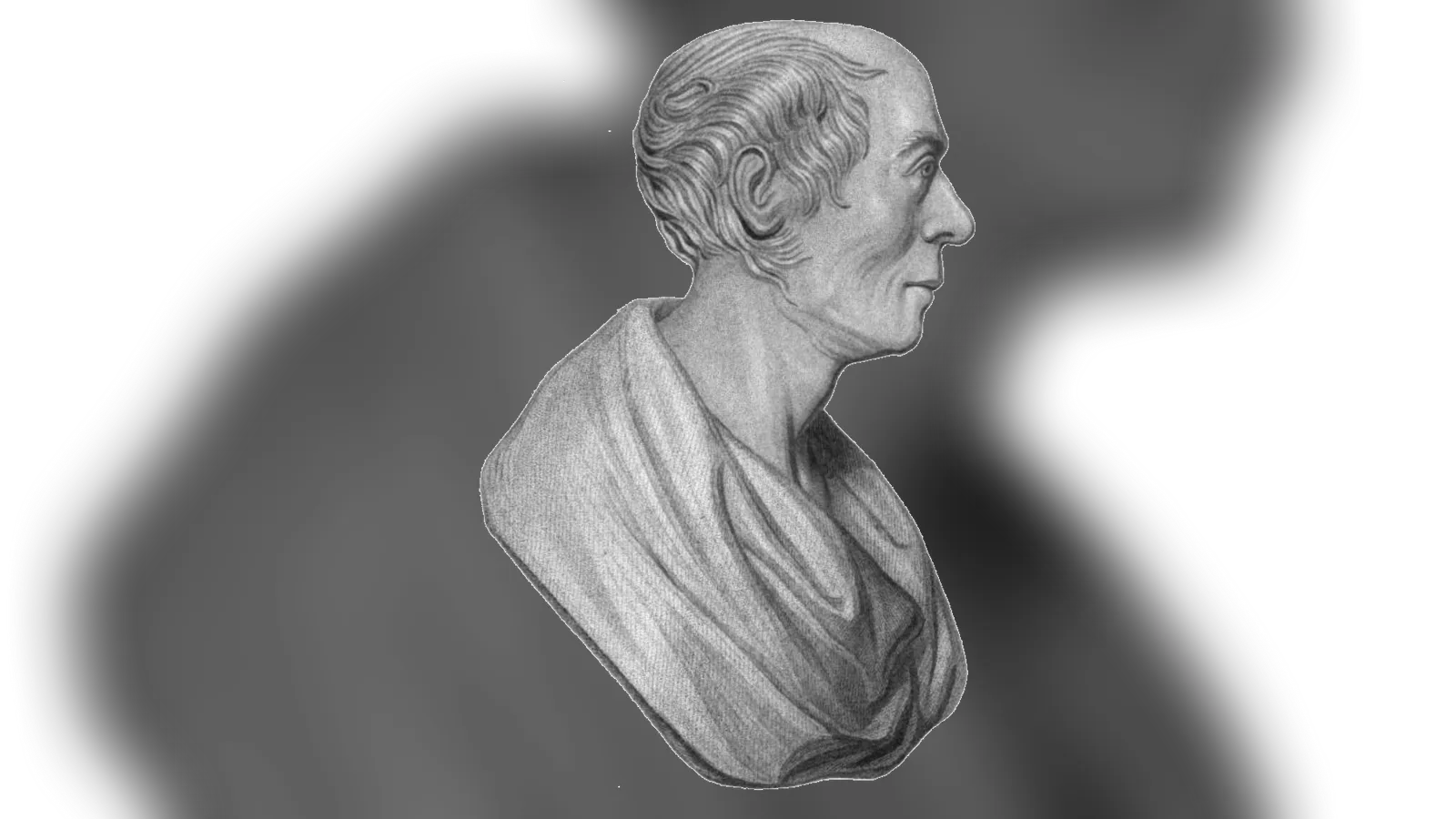

William Symington (1764–1831)
Contents
TL;DR
- Established/Documented: Symington built and operated the Charlotte Dundas (1801–1803), widely recognised as the world's first practical, commercially capable steamboat — on 28 March 1803 it towed two 70-ton loaded barges some 19 miles along the Forth and Clyde Canal in nine and a quarter hours, against a headwind that had stopped conventional horse-drawn traffic, proving steam propulsion's practical value beyond mere self-propelled demonstration.
- Established/Documented: Despite this clear technical success, the Forth and Clyde Canal Company refused to commission further vessels, reportedly over fears that the Charlotte Dundas's wash would erode the canal's earthen banks — a specific, documented institutional decision, not a vague loss of interest, that directly prevented Symington's invention from becoming the world's first operating commercial steamship service.
- Disputed/Documented — a genuine credit question worth stating precisely: James Taylor, tutor to Patrick Miller's sons and the man who first introduced Symington to Miller for the earlier 1788 Dalswinton Loch steamboat trial, later claimed for himself the title of "inventor" of steam navigation — a claim inscribed on his own headstone — but contemporary testimony from Carron Company manager Henry Stainton, who actually built the relevant engines, identified Taylor as having no mechanical background and no role beyond recommending Symington to Miller; this card treats Taylor's later self-description as unsupported by the documentary evidence, while crediting him accurately for the real, if narrower, contribution of having connected Symington with his first steamboat patron.
- Established/Documented: Symington died in poverty in London in 1831, having received only two small one-off ex gratia payments (£50 and £100) rather than any pension, despite a Member of Parliament formally petitioning the House of Lords on his behalf in 1825 — a stark, well-documented gap between his technical achievement and the financial recognition he received in his own lifetime.
- Shared/Traditional: Symington's pioneering work is widely and credibly said to have directly influenced both Robert Fulton's subsequent American steamboat development and Henry Bell's Comet in Scotland, though the specific, documented nature of any direct contact between Symington and Fulton is thinner than the confident popular version of this connection sometimes suggests, and this card is careful to state what is and is not firmly established on that point.
Key Facts
- Born
- 1764, Leadhills, South Lanarkshire, Scotland
- Died
- 22 March 1831, London, England (aged 66–67)
- Education
- University of Edinburgh (science lectures, from 1786), sponsored by mining manager Gilbert Meason
- Known for
- Building the Charlotte Dundas (1801–1803), widely regarded as the world's first practical steamboat to demonstrate commercially useful steam towing
- Key early work
- 1787 patent for an improved atmospheric steam engine; 1788 Dalswinton Loch steamboat trial for Patrick Miller
- Later career
- Built at least 32 stationary mining and mill engines by 1808; colliery manager and engine consultant to the Carron Company
- Legacy
- Bust unveiled at the National Museum of Scotland (1890); Leadhills obelisk (1891); inducted, Scottish Engineering Hall of Fame (2023)
Scottish Impact Index (SI Score)
- Global Influence
- 6/10
- Enduring Relevance
- 8/10
- Material Contribution
- 6/10
- Exceptional Achievement
- 7/10
- Lasting Legacy
- 6/10
- Recognition
- 3/10
36/60
Ranked =52nd of 200 in Great Scots
Claim-Status and Evidence Note
Claims are evidence-tiered as Established/Documented (settled by primary records, contemporary testimony, or broad scholarly consensus), Shared/Traditional (widely told and broadly accurate, though sometimes overstated in specific detail), disputed (credible sources genuinely differ), or Legend/Myth (unsupported and actively corrected here). Symington's story contains a clear case requiring direct correction — James Taylor's later self-claimed title as "inventor" of steam navigation — alongside a more familiar but genuinely poignant pattern common to several figures in this series: a real, working invention that was allowed to fail commercially for institutional rather than technical reasons, leaving its inventor to die in poverty.
Timeline
Born in Leadhills, South Lanarkshire, son of a practical mechanic working at the local lead mines.
Joins his brother George at Wanlockhead to build steam engines, having been originally intended by his parents for the ministry.
Sponsored by mining manager Gilbert Meason to attend science lectures at the University of Edinburgh.
Patents an improved atmospheric steam engine, combining elements of James Watt's efficiency improvements with Thomas Newcomen's simpler mechanical approach.
The Dalswinton Loch steamboat trial takes place, with a Symington-built engine installed in a vessel commissioned by banker Patrick Miller, reportedly reaching around 8 km/h — among the earliest practical demonstrations of steam-powered water propulsion.
Builds numerous stationary steam engines for mines and mills.
Develops a crank-drive mechanism with an overhead crosshead for coal-winding operations, subsequently built in around 15 units.
Has built at least 32 engines across his career; works as colliery manager and engine consultant to the Carron Company.
An unsuccessful steamboat trial using a design by Captain Schank precedes Thomas, Lord Dundas's decision to commission a new vessel from Symington.
The Charlotte Dundas, named for Lord Dundas's daughter, is launched at Glasgow.
The Charlotte Dundas tows two loaded 70-ton barges roughly 19 miles along the Forth and Clyde Canal in nine and a quarter hours, despite a headwind strong enough to halt conventional horse-drawn canal traffic — a landmark demonstration of steam power's practical commercial value.
The Forth and Clyde Canal Company declines to commission further vessels, reportedly citing concern about the Charlotte Dundas's wash eroding the canal's earthen banks; a separate proposed arrangement to build eight similar boats for the Duke of Bridgewater's canal collapses when the Duke dies just days before the planned trial.
Symington is engaged in a protracted and ultimately unsuccessful legal dispute at Edinburgh's High Court over a colliery partnership at Callendar, a case he loses.
MP Ronald Craufurd Ferguson formally petitions the House of Lords on Symington's behalf; Symington ultimately receives two one-off ex gratia payments of £50 and £100, rather than any ongoing pension.
Ill and in debt, Symington relocates with his wife to London to live with their daughter.
Dies in London; buried in the churchyard of St Botolph's without Aldgate.
The abandoned, unused Charlotte Dundas is finally demolished at Bainsford, having sat idle for roughly 58 years since her one great demonstration.
A bust of Symington is unveiled at what became the National Museum of Scotland.
An obelisk memorial to Symington is erected in his native Leadhills by public subscription.
Symington is inducted into the Scottish Engineering Hall of Fame.
Details
A mining village engineer, sponsored into a scientific education
William Symington was born in 1764 in Leadhills, a remote South Lanarkshire mining village, to a family he himself later described as "respectable but not wealthy" — his father worked as a practical mechanic at the local mines, giving Symington direct, early exposure to the mechanical trades despite his parents' original intention that he enter the ministry. Symington instead joined his brother George at nearby Wanlockhead in 1785 to build steam engines, and his evident aptitude impressed Gilbert Meason, manager of the local mining company, who sponsored Symington's attendance at science lectures at the University of Edinburgh from 1786 — a genuinely significant act of patronage that gave a mining village mechanic's son access to formal scientific education he could not otherwise have afforded. Symington used this combination of practical trade skill and formal scientific grounding productively: by 1787 he had patented his own improved atmospheric steam engine, deliberately combining the efficiency improvements associated with James Watt's designs with the mechanically simpler approach of Thomas Newcomen's earlier engines.
Dalswinton Loch, 1788: an early trial, and a credit question worth stating precisely
Symington's first practical steamboat work came through a commission from banker Patrick Miller of Dalswinton, who had already been experimenting with paddle-wheel boat designs and sought to integrate steam power into a pleasure vessel on his own estate loch. The resulting trial, on 14 October 1788, is generally reported to have succeeded, with the boat reportedly reaching around 8 kilometres per hour — an early and genuinely significant practical demonstration of steam-powered water propulsion, predating Symington's more famous Charlotte Dundas by well over a decade.
The connection between Symington and Miller came through James Taylor, then tutor to Miller's sons, and this card addresses directly a credit dispute worth correcting rather than glossing over. Taylor's actual documented role was specific and limited: he introduced Symington to Miller and recommended him as "an ingenious mechanic," having no background of his own in mechanics or engineering. Taylor nevertheless later claimed, for the rest of his life and even on his own headstone, the title of "inventor" of steam navigation, and asserted that he had personally "superintended the installation of the engine" on Miller's boats. This claim does not survive contact with contemporary documentary evidence: Henry Stainton, the Carron Company manager who actually built the relevant engines, described Taylor at the time as essentially an observer acting on Miller's behalf, and stated plainly that the actual technical instructions and drawings for the machinery came from Symington. A mid-nineteenth-century assessment by the historian Bennet Woodcroft concluded fairly that Taylor's genuine merit lay entirely in having successfully urged Miller to undertake the steamboat experiments in the first place — a real and useful contribution, but a world away from the "inventor" title Taylor claimed for himself. This card credits Taylor accurately for that narrower, genuine role, while stating clearly that his broader self-claimed title as inventor is not supported by the documentary record.
A working engineering career built well beyond steamboats
It would be a mistake to treat Symington purely as a steamboat pioneer who happened to also do other work; in the years following the Dalswinton trial, he built a substantial and genuinely successful career as a stationary steam engine designer and builder, constructing engines for mines and mills from 1790 onward — by 1808 he had built at least 32 such engines — and developing, in 1793, a crank-drive mechanism with an overhead crosshead specifically designed for coal-winding operations at mines, a design successful enough that roughly 15 units were built to it. He also worked as a colliery manager and engine consultant to the Carron Company, one of Scotland's most significant industrial enterprises of the period. This body of solid, commercially successful conventional engineering work is worth stating clearly, since it establishes that Symington's later financial ruin was not the result of general professional incompetence, but arose specifically from the particular commercial failure of his most ambitious and historically significant project.
The Charlotte Dundas: genuine technical triumph
Symington's defining achievement came through his relationship with Thomas, Lord Dundas, governor of the Forth and Clyde Canal Company, who recognised the commercial potential of steam-powered canal towing for his business interests. Following an unsuccessful 1801 trial of a different design by Captain Schank, Dundas commissioned Symington to build a new vessel, named the Charlotte Dundas after his daughter. The boat itself was a genuine engineering achievement: 56 feet long, 18 feet wide, and 8 feet deep, built by John Allan with an engine manufactured by the Carron Company, using a horizontal steam engine directly connected to a central paddle wheel — a configuration specifically intended, notably, to minimise the very canal-bank erosion concern that would later doom the project commercially.
Launched on 4 January 1803 with Lord Dundas himself aboard, the Charlotte Dundas achieved its decisive demonstration on 28 March 1803, towing two loaded 70-ton barges approximately 19 miles along the Forth and Clyde Canal in nine and a quarter hours — accomplished, notably, despite adverse weather conditions strong enough to have halted conventional horse-drawn canal traffic that day. This was not merely a technical curiosity or a self-propelled demonstration; it was a direct, practical proof that steam power could perform genuinely useful commercial towing work under real operating conditions, and it is on this basis that the Charlotte Dundas is widely recognised by historians of technology as the world's first practical steamboat — more precisely, the first steam-powered vessel to demonstrate commercially useful towing capability, as distinct from earlier steam-propelled vessels that had achieved self-propulsion without comparable practical load-bearing work.
A commercial failure caused by institutional caution, not technical shortcoming
What makes Symington's story genuinely poignant, and worth stating with full directness rather than softening, is that the Charlotte Dundas's clear technical success did not translate into commercial adoption. The Forth and Clyde Canal Company — Symington's own patron's organisation — declined to commission any further vessels, reportedly over specific concern that the wash generated by the boat's operation would erode the canal's earthen banks, a real and reasonable engineering concern for a narrow artificial waterway, even though Symington's own design had been specifically configured to minimise exactly this risk. A separate, promising opportunity to build eight similar vessels for the Duke of Bridgewater's canal network collapsed for an unrelated and simply tragic reason: the Duke died just days before the scheduled trial that would have secured the contract. The abandoned Charlotte Dundas itself sat unused at Bainsford for some 58 years before finally being demolished in 1861 — a genuinely striking image of a working, proven invention left to rot rather than ever operating commercially at scale.
Influence on Fulton and Bell: a real connection, stated with appropriate precision
Symington's pioneering work is widely and credibly said to have directly influenced subsequent steamboat development elsewhere — most notably Robert Fulton's American steamboat work and Henry Bell's Comet, the vessel generally credited with launching Europe's first commercially successful steamboat service in 1812. This card notes this influence as broadly well supported, while being precise that the specific, documented details of any direct personal contact between Symington and Fulton are thinner in the primary record than some popular retellings confidently suggest — the broader claim of Symington's pioneering influence on the wider trajectory of steamboat development is well founded, without needing to overstate the specific mechanics of exactly how that influence was transmitted in every individual case.
Legal defeat, poverty, and a government that offered charity rather than recognition
Symington's later life was marked by serious and compounding financial hardship, directly traceable to the Charlotte Dundas's commercial failure combined with a separate legal disaster: between 1804 and 1810 he was engaged in a protracted legal dispute at Edinburgh's High Court over a colliery partnership at Callendar, a case he ultimately lost. The combination of Miller's earlier reluctance to pursue commercial steamboat development, Dundas's withdrawal of support following the canal company's decision, and this lost legal battle left Symington in genuine financial distress. In 1825, Member of Parliament Ronald Craufurd Ferguson formally petitioned the House of Lords on Symington's behalf, seeking recognition and support for a man whose invention had, by then, demonstrably influenced the wider development of steam navigation — but the result was strikingly modest: Symington received only two one-off ex gratia payments, of £50 and £100 respectively, rather than any ongoing pension. By 1829, ill and in debt, he and his wife relocated to London to live with their daughter, and he died there on 22 March 1831, buried in the churchyard of St Botolph's without Aldgate — a quietly unceremonious end for a man whose engine had been described, even at the time, as without doubt the most compact and efficient marine steam engine yet built.
Did You Know
- The Forth and Clyde Canal Company refused to order further Charlotte Dundas vessels specifically over fears the boat's wash would erode the canal's earthen banks — even though Symington had deliberately designed the vessel's engine configuration to minimise exactly that risk.
- The Charlotte Dundas sat abandoned and unused at Bainsford for roughly 58 years after her one great demonstration voyage before finally being demolished in 1861.
- James Taylor, who introduced Symington to his first steamboat patron Patrick Miller, later claimed the title "inventor" of steam navigation for himself — a claim inscribed on his own headstone but contradicted by contemporary testimony that he had no mechanical background whatsoever.
- A separate deal to build eight steamboats for the Duke of Bridgewater's canal collapsed for a tragic, unrelated reason: the Duke died just days before the planned trial that would have secured the contract.
- Despite a Member of Parliament formally petitioning the House of Lords on his behalf in 1825, Symington received only two small one-off payments — £50 and £100 — rather than any pension, for an invention widely credited with influencing the entire subsequent development of steam navigation.
- The Charlotte Dundas successfully towed two 70-ton loaded barges nearly 19 miles in under ten hours despite a headwind strong enough to have stopped conventional horse-drawn canal traffic that day.
- Symington's early education at the University of Edinburgh was funded entirely through the sponsorship of Gilbert Meason, a local mining manager who recognised his talent — without that patronage, Symington would likely never have gained formal scientific training at all.
- Symington died in London, far from his native Leadhills, and was buried in a London churchyard rather than in Scotland.
FAQ
1Was the Charlotte Dundas really the first practical steamboat?
It is widely recognised by historians of technology as the world's first practical, commercially capable steamboat — specifically, the first steam vessel to demonstrate genuinely useful commercial towing work under real operating conditions, as distinct from earlier self-propelled steam vessel demonstrations.
2Why didn't the Charlotte Dundas succeed commercially despite its technical triumph?
The Forth and Clyde Canal Company, Symington's own patron's organisation, declined to commission further vessels over concern that the boat's wash would erode the canal's earthen banks, and a separate opportunity with the Duke of Bridgewater's canal network collapsed when the Duke died days before the planned trial.
3Did James Taylor really invent steam navigation, as his headstone claims?
No — contemporary testimony, including from the Carron Company manager who actually built the relevant engines, establishes that Taylor had no mechanical or engineering background and that the technical work came from Symington. Taylor's genuine, documented contribution was introducing Symington to his first steamboat patron, Patrick Miller — a real but much narrower role than "inventor."
4Did Symington die wealthy from his engineering success?
No — he died in poverty in London in 1831, having received only two small one-off ex gratia payments (£50 and £100) from the government despite formal parliamentary advocacy on his behalf, and after losing a protracted legal dispute over a separate colliery partnership.
5What was Symington's connection to Robert Fulton and the development of American steamboats?
His pioneering work is widely and credibly said to have influenced Fulton's subsequent American steamboat development, though the precise documented details of direct contact between the two men are less firmly established than some popular accounts suggest.
6What other engineering work did Symington do besides steamboats?
A great deal — he built at least 32 stationary steam engines for mines and mills by 1808, developed a successful crank-drive mechanism for coal-winding operations (around 15 units built), and worked as a colliery manager and engine consultant to the Carron Company.
7What happened to the Charlotte Dundas itself after 1803?
It sat unused at Bainsford for approximately 58 years before finally being demolished in 1861, never having entered the commercial service its successful trial had demonstrated it was capable of.
8How is Symington remembered today?
Through a bust unveiled at what is now the National Museum of Scotland in 1890, an 1891 obelisk memorial erected by public subscription in his native Leadhills, and his 2023 induction into the Scottish Engineering Hall of Fame.
9What was Symington's first steamboat project, before the Charlotte Dundas?
The 1788 Dalswinton Loch trial, commissioned by banker Patrick Miller, which reportedly reached around 8 km/h — an earlier and less commercially significant, but still genuinely important, early demonstration of steam-powered water propulsion.
10Where is William Symington buried?
In the churchyard of St Botolph's without Aldgate, London, having relocated there from Scotland in his final, impoverished years.
Sources and Further Reading
Primary/Institutional
- Grace's Guide to British Industrial History, "William Symington"
- Scottish Engineering Hall of Fame, William Symington profile (2023 induction)
- charlottedundas.com, "William Symington" — dedicated biographical and historical resource
- sites.google.com/view/williamsymington — detailed primary-source archive including 1841 testimonial pamphlet and James Taylor credit dispute documentation
Scholarly
- Wikipedia, "William Symington" and "Charlotte Dundas" — sourced timeline and technical detail
- Bennet Woodcroft, historical assessment of the Dalswinton steamboat trial and James Taylor's role (1848)
General
- Encyclopaedia Britannica, "William Symington" and "Charlotte Dundas"
- Undiscovered Scotland, biography of William Symington
Caveats: Myths and Disputed Claims
The clearest myth this card corrects is James Taylor's self-claimed title as "inventor" of steam navigation, inscribed on his own headstone but contradicted by contemporary testimony establishing that his real, documented contribution was limited to introducing Symington to Patrick Miller — a genuine but much narrower role than the one Taylor claimed for himself. This card credits Taylor accurately for that introduction while not repeating his broader inventor claim as though it were established fact. Separately, readers should understand that while Symington's broader influence on Robert Fulton's and Henry Bell's later steamboat work is well supported in general terms, the specific documented evidence of direct personal contact between Symington and Fulton is less robust than some popular tellings imply, and this card states the connection with that appropriate degree of caution rather than asserting a more definite link than the record supports.
Card 066 · Great Scots