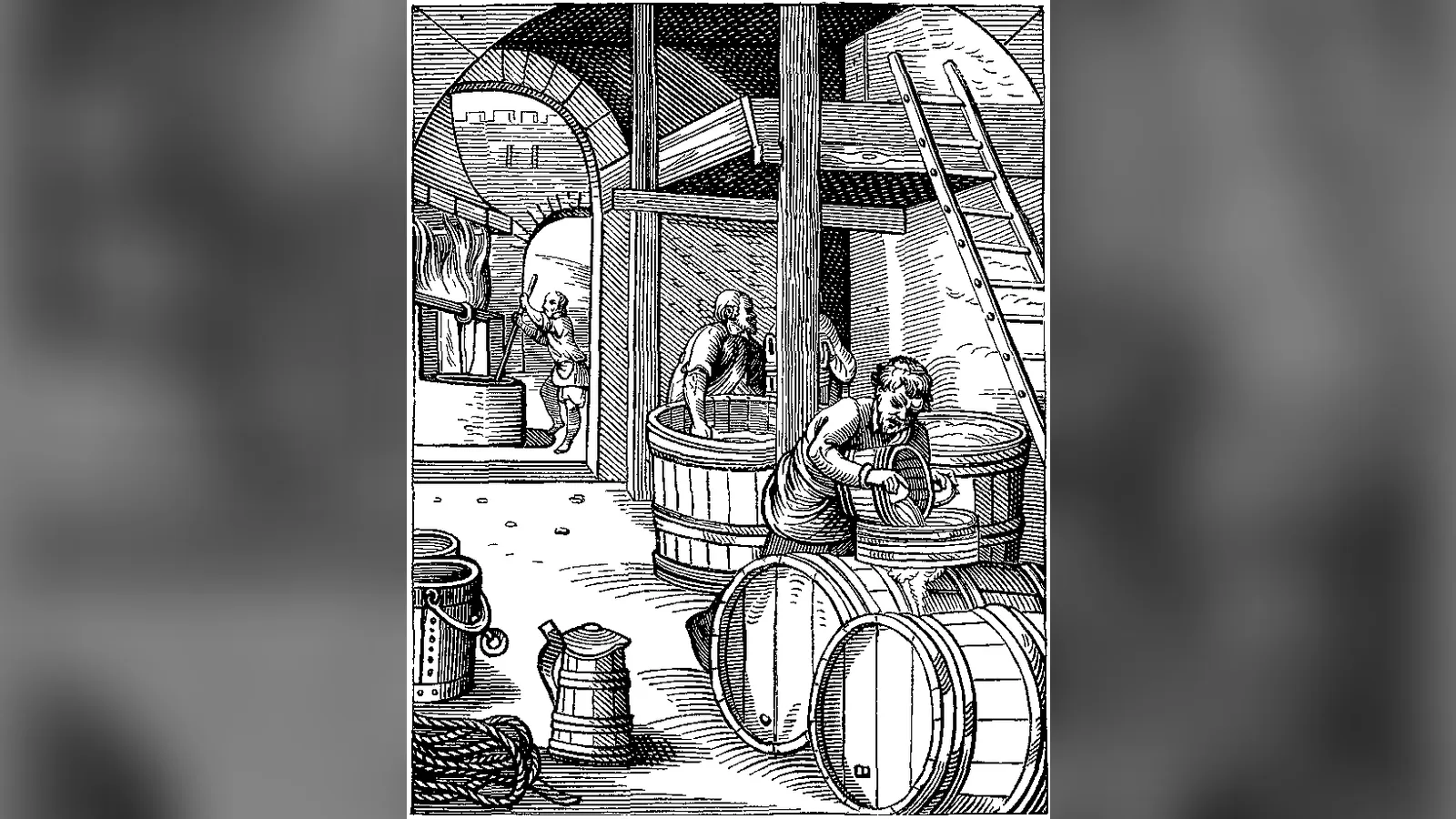

Brewing
Contents
Legend/Myth Opener
Beer is often seen as England's drink, and whisky as Scotland's — but for much of the 19th and early 20th centuries, Edinburgh was one of the largest brewing centres in Britain, rivalling anything in England in both output and reputation. That history was nearly erased by 20th-century consolidation and closures, before a very different craft-beer movement — led by companies like BrewDog — revived Scottish brewing's global visibility from the 2000s onward.
TL;DR
- established Edinburgh became one of the largest brewing centres in Britain during the 19th century, with firms including William Younger & Co and William McEwan & Co operating major breweries in the Fountainbridge area, because this scale and concentration are documented in company histories, trade records, and contemporary accounts.
- established Edinburgh's brewing success was built on genuinely favourable local conditions — notably good well water and strong rail/export links — because these advantages are consistently cited in historical and industry sources as structural, not incidental, factors.
- established The Edinburgh brewing industry consolidated heavily in the 20th century, culminating in the 1931 merger of William Younger's and William McEwan's into Scottish Brewers (later part of Scottish & Newcastle), and most of Edinburgh's major historic breweries, including the large Fountain Brewery, had closed by the early 21st century, because these mergers and closures are matters of corporate and local record.
- established A craft-beer revival from the 2000s onward, most visibly led by BrewDog (founded in Fraserburgh in 2007), substantially reshaped Scotland's brewing identity and reintroduced Scottish beer to a global audience, because BrewDog's founding, growth, and international expansion are extensively documented in business press coverage.
- disputed BrewDog's public image as a disruptive, ethical craft underdog has been challenged by reporting on its workplace culture and corporate conduct, so this article notes that image and controversy as distinct, rather than treating either as settled fact.
Key Facts
- Category
- Detail
- Peak Era
- 19th century–early 20th century (Edinburgh's brewing peak); 2007–present (craft revival)
- Key Locations
- Fountainbridge, Edinburgh (historic); Ellon/Aberdeenshire, Fraserburgh (modern craft)
- Key Companies/Figures
- William Younger & Co; William McEwan & Co; Scottish Brewers/Scottish & Newcastle; BrewDog
- Status Today
- Historic large-scale Edinburgh brewing largely ended; vibrant craft-beer sector led by firms like BrewDog, now a major global brand
- SI Score
- 59/60
Scottish Impact Index (SI Score)
- Economic Impact
- 10/10
- Industrial Longevity
- 10/10
- Material Contribution
- 10/10
- Industrial Distinctiveness
- 9/10
- Industrial Legacy
- 10/10
- Recognition
- 10/10
59/60
Ranked =4th of 50 in Industry
A Note on Claims and Evidence
Scottish brewing history divides into two well-documented but very different eras. The 19th and early 20th century peak is supported by solid company records, trade directories, and civic history showing Edinburgh's scale as a brewing centre and the specific firms and sites involved. The modern craft-beer revival is even more thoroughly documented, given its recent business press coverage, but it also carries contested elements — particularly around BrewDog's self-presentation versus later reporting on its internal culture — which this article flags as disputed rather than settled. There is little genuine legend-myth material in brewing history; the main risk is treating either era's marketing narrative (the "beer capital of Britain" boast, or BrewDog's "punk" branding) as uncomplicated fact.
Timeline
Brewing is already established in Edinburgh, benefiting from good-quality well water in areas such as Fountainbridge/Holyrood.
Brewing firms including William Younger & Co and William McEwan & Co expand significantly, exploiting improved rail transport and growing export markets.
Edinburgh becomes one of Britain's largest brewing centres, with dozens of breweries operating in the city at points during this period, exporting widely including to the British Empire.
William Younger's and William McEwan's merge to form Scottish Brewers.
Scottish Brewers merges with Newcastle Breweries to form Scottish & Newcastle, a major UK brewing group.
Industry consolidation, changing drinking habits, and competition lead to the closure of many of Edinburgh's historic breweries.
The large Fountain Brewery in Edinburgh closes, a symbolic end point for the city's historic brewing concentration.
BrewDog is founded in Fraserburgh, Aberdeenshire, by James Watt and Martin Dickie, as a small craft brewery.
BrewDog expands rapidly, opening bars internationally, pursuing crowdfunding ("Equity for Punks"), and building a large new brewery at Ellon.
BrewDog faces public scrutiny and criticism over workplace culture and corporate governance, alongside continued commercial growth, reflecting a more complicated picture than its early "punk" branding suggested.
Details
Origins and the Rise of Edinburgh as a Brewing Centre
Brewing has a long history in Scotland, but Edinburgh's rise to become one of the largest brewing centres in Britain was a specifically 19th-century phenomenon, driven by a combination of favourable natural resources and infrastructure. The Fountainbridge and Holyrood areas of the city sat above naturally good-quality well water, an essential raw material for brewing, and the city's expanding rail network and port access gave brewers efficient routes to both domestic and export markets, including across the British Empire. Firms such as William Younger & Co and William McEwan & Co grew from modest 18th- and early 19th-century operations into large industrial breweries, and by the Victorian era Edinburgh hosted dozens of breweries, giving it a density and output that rivalled major English brewing centres.
This was not a marginal or provincial industry — contemporary accounts and trade literature from the period describe Edinburgh explicitly as one of the leading brewing cities in Britain, and firms like McEwan's built substantial export businesses, with McEwan's Export in particular becoming a recognised brand well beyond Scotland. The scale of investment in brewery infrastructure during this period — large maltings, extensive bottling and distribution operations, and significant employment — reflected genuine industrial weight, not just local pride.
Peak Scale, Consolidation, and Structural Advantages
The structural advantages underpinning Edinburgh's brewing success were real and specific: reliable, good-quality water; efficient transport links for both raw materials (barley, hops) and finished product distribution; and a skilled, concentrated workforce built up over generations. These factors allowed Edinburgh brewers to compete effectively not just regionally but nationally and in export markets, a contrast with the common assumption that Scotland's brewing industry was always secondary to England's.
As with much of British industry in the 20th century, however, consolidation reshaped the sector. In 1931, William Younger's and William McEwan's — by then the city's two dominant brewing firms — merged to form Scottish Brewers, itself merging with the English firm Newcastle Breweries in 1960 to create Scottish & Newcastle, which became one of the largest brewing groups in the UK. This consolidation brought efficiency and scale but also concentrated an industry that had once comprised dozens of independent firms into a small number of large corporate groups, setting the stage for later closures as production was rationalised across fewer, larger sites.
Decline and the End of an Era
Changing consumer tastes, the decline of traditional cask ale's market share relative to lager and other drinks, and continued industry consolidation led to the closure of most of Edinburgh's historic breweries across the second half of the 20th century. The symbolic end point came in 2004, when the large Fountain Brewery — a major production site that had, by then, come to represent much of what remained of large-scale Edinburgh brewing — closed. This closure effectively ended Edinburgh's status as a major brewing centre in the sense the Victorians would have recognised: a city thick with competing, locally rooted breweries employing large numbers of workers. It is important to state plainly that this decline was real and significant, not a minor footnote — Edinburgh went from being one of Britain's great brewing cities to having almost none of its historic large-scale capacity within a few generations.
The Craft Beer Revival and BrewDog
Scottish brewing's near-total eclipse as a large-scale industry was followed, from the mid-2000s, by a very different kind of revival: the craft beer movement. The most prominent example is BrewDog, founded in 2007 in Fraserburgh, Aberdeenshire, by James Watt and Martin Dickie, two young brewers who positioned the company explicitly against the perceived blandness of mainstream British beer. BrewDog grew rapidly through aggressive marketing, a self-styled "punk" brand identity, innovative (and sometimes deliberately provocative) beers, and early adoption of crowdfunding through its "Equity for Punks" scheme, which let ordinary consumers buy shares in the company. The company expanded into a large modern brewery at Ellon, a chain of international bars, and significant export and retail presence, becoming one of the most recognisable beer brands to come out of Scotland in decades.
It is worth noting, in keeping with an accuracy-over-patriotism standard, that BrewDog's public narrative has not gone unchallenged. From the late 2010s, media reporting raised serious questions about the company's internal workplace culture and corporate conduct, complicating the "disruptive underdog" image the company had cultivated. This article treats BrewDog's commercial success and industry influence as well documented, while treating its self-presentation as a scrappy, purely countercultural brand as a more contested claim that should be weighed against subsequent critical reporting.
Beyond BrewDog, Scotland's craft beer sector grew substantially through the 2010s and 2020s, with numerous smaller breweries establishing themselves across the country, reflecting a broader UK and global craft-beer trend rather than a uniquely Scottish phenomenon — but one in which Scottish brewers, led by BrewDog's visibility, played an outsized role.
Did You Know?
- McEwan's Export, originally developed for international markets, became one of the most widely recognised Scottish beer brands of the 20th century.
- Edinburgh's brewing success depended heavily on naturally good-quality well water in the Fountainbridge and Holyrood areas — the same kind of resource advantage that shaped many of the world's great brewing cities.
- The 1931 merger that created Scottish Brewers combined two of Edinburgh's biggest rival firms, William Younger's and William McEwan's, into a single company.
- Scottish & Newcastle, formed from Scottish Brewers' 1960 merger with an English firm, became one of the largest brewing companies in the UK before later changes in ownership.
- The closure of the Fountain Brewery in 2004 marked a symbolic end to large-scale traditional brewing in a city that had once been one of Britain's biggest brewing centres.
- BrewDog's "Equity for Punks" crowdfunding scheme was an early and influential example of consumer crowdfunding in the UK drinks industry, letting fans become literal shareholders.
- BrewDog was founded far from Edinburgh's old brewing heartland, in Fraserburgh — a reflection of how the modern craft revival has a different geography to the historic industry.
- BrewDog's rapid growth and provocative marketing drew both praise for innovation and later serious criticism over workplace culture, making it a genuinely contested modern case study rather than a simple success story.
FAQ
1Was Edinburgh really one of Britain's largest brewing centres?
Yes — during the 19th and early 20th centuries, Edinburgh hosted dozens of breweries and was consistently regarded as one of Britain's major brewing cities, supported by good water and strong transport links.
2What were the major historic Edinburgh brewing firms?
William Younger & Co and William McEwan & Co were the two dominant firms, merging in 1931 to form Scottish Brewers.
3What happened to Scottish Brewers?
It merged with Newcastle Breweries in 1960 to become Scottish & Newcastle, a major UK brewing group.
4When did Edinburgh's historic brewing industry effectively end?
The symbolic end point is usually marked by the 2004 closure of the Fountain Brewery, though decline had been underway for decades before that.
5What caused the decline of Edinburgh's brewing industry?
Changing drinking habits, intensifying competition, and ongoing corporate consolidation led to the rationalisation and closure of most historic breweries over the 20th century.
6Who founded BrewDog?
James Watt and Martin Dickie, in Fraserburgh, Aberdeenshire, in 2007.
7What made BrewDog different from mainstream British brewers?
It positioned itself explicitly as a disruptive, flavour-forward "craft" alternative to mainstream lager and ale, supported by provocative marketing and innovative beer styles.
8Has BrewDog's reputation been controversial?
Yes — alongside its commercial success, BrewDog has faced significant media scrutiny and criticism over its workplace culture and corporate conduct in recent years.
9Is Scottish brewing dominated only by BrewDog today?
No — while BrewDog is the most visible Scottish brewing brand globally, a wider range of smaller craft breweries has also grown across Scotland since the 2000s.
10Did Edinburgh's brewing success depend on whisky-style Highland imagery?
No — it depended on practical industrial factors: water quality, transport infrastructure, and skilled labour, rather than romanticised Highland branding.
11Is any large-scale traditional brewing still based in Edinburgh?
Large-scale traditional brewing of the Victorian scale has ended; the city's brewing identity today is shaped more by smaller craft operations than by the historic giants.
12What was "Equity for Punks"?
BrewDog's crowdfunding scheme that allowed members of the public to buy shares in the company, an early and widely noted example of consumer equity crowdfunding in UK brewing.
Sources and Further Reading
Primary/Institutional
- Grace's Guide to British Industrial History, "William McEwan and Co" — https://www.gracesguide.co.uk/William_McEwan_and_Co
- Archives Hub, "Records of William McEwan & Co Ltd, brewers, Edinburgh" — https://archiveshub.ac.uk/glaas/archives/ce7857aa-f49b-3204-9cee-51d55f6a7fe5
Scholarly/Critical
- Funding Universe, "Scottish & Newcastle plc History" — https://www.fundinguniverse.com/company-histories/scottish-newcastle-plc-history/
- Morning Advertiser, "A timeline: how BrewDog became what it is today" — https://morningadvertiser.co.uk/Article/2017/03/13/A-timeline-how-BrewDog-became-what-it-is-today
General
- Wikipedia, "McEwan's" — https://en.wikipedia.org/wiki/McEwan%27s
- Edinburgh News (The Scotsman), "When Edinburgh was a brewing powerhouse" — https://www.edinburghnews.scotsman.com/whats-on/arts-and-entertainment/when-edinburgh-was-a-brewing-powerhouse-823000
- McEwan's official brand history, "160 Years and Counting" — https://www.mcewans.co.uk/story/
Caveats: Myths and Disputed Claims
- Do not state that Edinburgh remains a major large-scale brewing centre today; its historic brewing peak ended with 20th-century consolidation and the 2004 closure of the Fountain Brewery.
- Do not present BrewDog's "punk"/disruptive-underdog branding as an uncontested fact; treat it as the company's own self-presentation, alongside later critical reporting on its workplace culture and conduct.
- Do not state precise historical brewery counts or output figures for Victorian Edinburgh without qualifying them as drawn from specific contemporary sources, since exact figures vary between sources and periods.
- Do not imply the modern Scottish craft beer movement is solely or primarily represented by BrewDog; it is the most visible example within a broader craft sector.
Card 034 · Industry