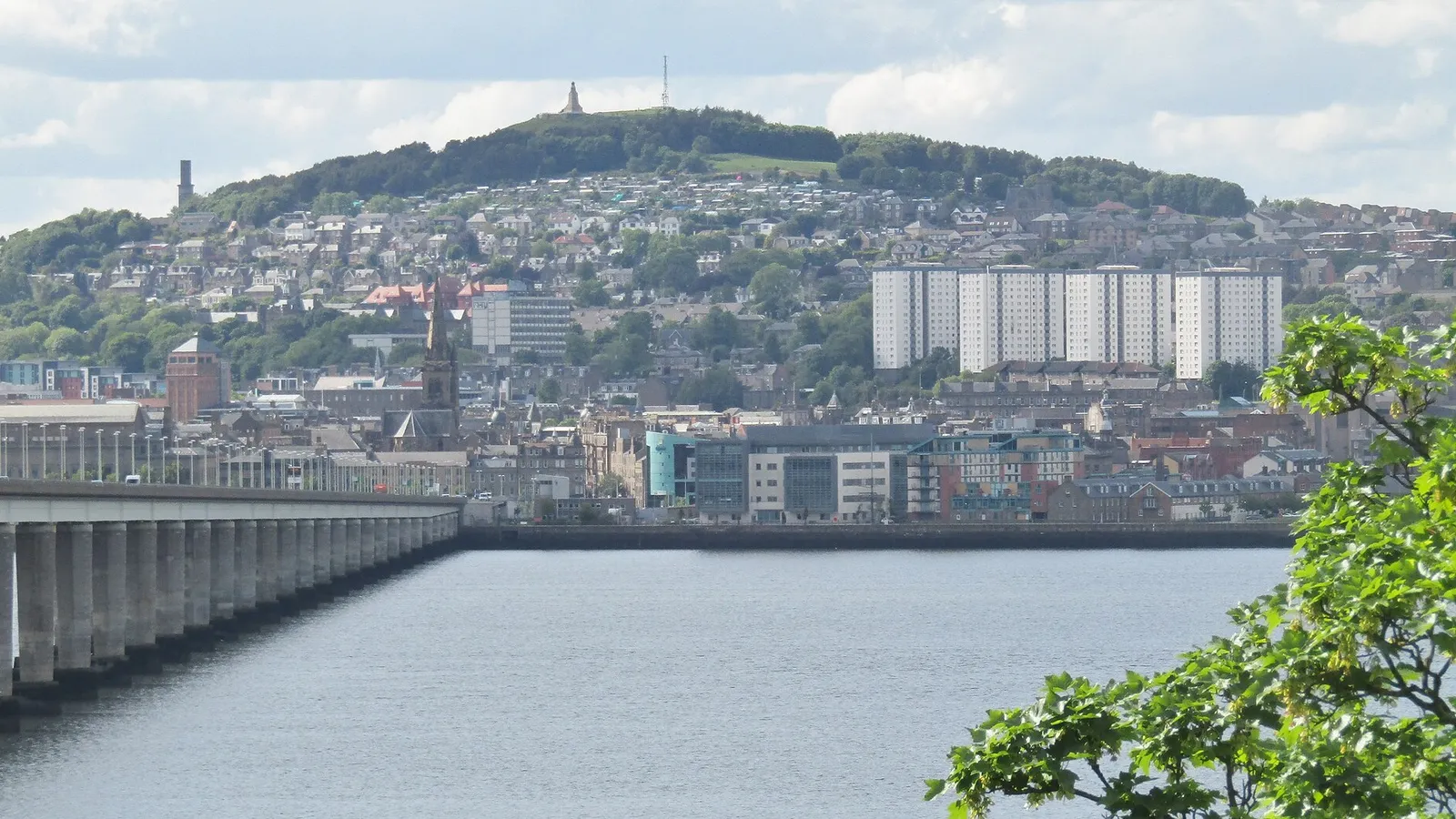

Dundee Jute
Contents
Legend/Myth Opener
Dundee's industrial reputation is often summarised in the breezy civic slogan "Jute, Jam and Journalism," which can make the jute industry sound like one colourful ingredient among three in a quaint local identity. In reality, jute was by far the dominant force of the three, employing tens of thousands and making Dundee one of the most intensively single-industry cities in Britain — and it was built on a raw-material supply chain and workforce structure with genuinely uncomfortable features, including heavy dependence on colonial Bengal and a workforce whose wages were deliberately kept low because it was overwhelmingly female. This card focuses in depth on the jute industry itself; readers wanting the broader city-level "Jute, Jam and Journalism" story should see the companion "Dundee & the Tay" card in the Locations & Landmarks series.
TL;DR
- established Dundee became known as "Juteopolis," the world's dominant centre of jute textile manufacturing from the mid-19th century, processing raw jute fibre imported almost entirely from Bengal (in British India) — this is documented through trade statistics, company records, and extensive academic economic history.
- established The jute workforce in Dundee was predominantly female, giving rise to the enduring social description of "jute mill lassies," alongside a smaller number of male workers in specific roles — this gendered workforce structure is well documented and had direct, lasting effects on Dundee's social and family life, including a reversal of typical breadwinner roles in many households.
- established Dundee's jute industry depended on a colonial supply chain rooted in Bengal, and by the later 19th century faced direct competitive pressure from the growth of jute manufacturing in India itself, which eventually undercut the Scottish industry on labour costs — this dependency and its eventual consequences must be stated plainly rather than treated as incidental.
- established Working conditions in Dundee's jute mills were harsh by modern standards, involving long hours, noise, dust, and low wages even by contemporary industrial standards, reflecting conditions typical of 19th- and early 20th-century textile manufacturing rather than an idealised craft trade.
- established The industry declined sharply through the 20th century, with the last jute mills in Dundee closing by the 1990s, as cheaper jute processing in India and Bangladesh, and the rise of synthetic alternatives such as polypropylene, displaced Scottish production.
Key Facts
- Category
- Detail
- Peak Era
- 1850s – early 20th century
- Key Locations
- Dundee, Angus
- Key Companies/Figures
- Cox Brothers (Camperdown Works, one of the largest jute works in the world); Baxter Brothers; Gilroy & Son; numerous other Dundee jute firms
- Core Raw Material
- Raw jute fibre imported almost entirely from Bengal, British India
- Workforce
- Predominantly female ("jute mill lassies"), with men typically in supervisory, mechanical, or heavier-labour roles
- Status Today
- Industry effectively ended by the 1990s; Verdant Works (former jute mill) preserved as a museum in Dundee; legacy embedded in city's social history and the "Juteopolis" identity
- SI Score
- 58/60
Scottish Impact Index (SI Score)
- Economic Impact
- 10/10
- Industrial Longevity
- 9/10
- Material Contribution
- 10/10
- Industrial Distinctiveness
- 10/10
- Industrial Legacy
- 10/10
- Recognition
- 9/10
58/60
Ranked =9th of 50 in Industry
A Note on Claims and Evidence
Dundee's jute industry is among the most thoroughly researched industrial histories in this series, supported by a substantial body of academic economic and social history (including work on the "commodities of empire" relationship between Dundee and Bengal), company archives, and oral history collections documenting the lived experience of jute mill workers. Documented claims in this card include the scale of the industry, its dependence on Bengal jute, the predominantly female workforce, and the chronology of its 20th-century decline in the face of Indian competition and synthetic substitutes. Traditional claims include widely used social characterisations such as "jute mill lassies" and associated accounts of Dundee's distinctive gender-reversed household economy, which are strongly supported by social history research even where individual family anecdotes cannot all be independently verified. This card deliberately foregrounds the colonial-supply and labour-conditions dimensions of the industry rather than presenting Dundee's jute story solely as a tale of civic ingenuity and prosperity, consistent with house style's insistence on stating uncomfortable history plainly.
Timeline
Dundee's existing flax and linen-handling expertise and port infrastructure position it to begin processing jute, a coarse fibre imported from Bengal, as a cheaper substitute and supplement to flax for sacking, sailcloth, and coarse textile products.
Technical innovations, including the discovery that treating jute fibre with whale oil (and later other emulsions) made it easier to spin on existing flax machinery, accelerate the industry's growth in Dundee.
Dundee's jute industry expands rapidly, with major firms such as Cox Brothers building large-scale integrated works (including the Camperdown Works, reputedly one of the largest jute mills in the world) and the city earning the nickname "Juteopolis."
The industry becomes the dominant employer in Dundee, with a workforce overwhelmingly composed of women and girls, fundamentally shaping the city's social and family structures; raw jute supply remains almost entirely dependent on Bengal.
Jute processing begins to develop within India itself, initially encouraged in part by transferred Dundee expertise and investment, laying the groundwork for future competitive pressure on the Scottish industry.
Robert Fleming, backed by Dundee jute families, launches the Scottish American Investment Trust, making the city a centre of overseas investment.
Cox Brothers' Camperdown Works at Lochee employs about 14,000 people, mainly women, the largest single jute complex in the world.
Bengal overtakes Dundee as the world's main centre of jute manufacture.
The Cox family's share portfolio holds sixty-four companies, three-quarters of them American.
Over 1,000 million Dundee jute sandbags are shipped to the fronts.
Indian jute manufacturing, benefiting from lower labour costs and proximity to raw material, continues to grow at Dundee's expense.
Nearly half the jute workforce is unemployed; Dundee's pleas for tariffs on Calcutta imports fail.
Gradual contraction of Dundee's jute sector amid Indian/Bangladeshi competition, changing global demand, and the eventual rise of synthetic alternatives such as polypropylene sacking from the mid-20th century onward.
Closure of Dundee's remaining jute mills; the last major jute-processing operations in the city cease by the 1990s, ending over a century of dominance.
Verdant Works, a former jute mill, operates as a dedicated museum interpreting the industry's history, technology, and social impact; Dundee's broader civic identity continues to reference its jute heritage, including through institutions such as V&A Dundee's engagement with jute's "hidden histories."
Details
Origins: From Flax Town to Juteopolis
Dundee entered the 19th century as an established centre of flax spinning and linen manufacturing, with a skilled textile workforce and substantial mill infrastructure already in place along the Tay. Jute — a coarse, strong fibre grown predominantly in Bengal, in British-controlled India — offered Dundee manufacturers a cheaper raw material that could, with the right processing, be spun and woven using broadly similar machinery to flax. A key technical breakthrough came in the 1830s and 1840s with the discovery that treating raw jute fibre with whale oil (and subsequently other oil-based emulsions) softened it sufficiently to be processed on existing flax-spinning equipment, dramatically improving its workability and paving the way for mass production.
This combination of cheap imported raw material, adaptable existing machinery, and an established textile workforce allowed Dundee's jute industry to grow with remarkable speed through the middle decades of the 19th century. Major firms, including Cox Brothers — whose Camperdown Works became one of the largest jute-processing complexes in the world — built vast integrated mills combining spinning, weaving, and finishing under single ownership, and the city earned its enduring nickname "Juteopolis" in recognition of its near-total identification with the trade.
established The historian T. M. Devine, in To the Ends of the Earth (2011), places jute within a longer imperial story. In the eighteenth century Fife, Angus and Perthshire specialised in coarse linens, protected by tariffs and subsidised by export bounties, and nine-tenths of Scottish linen exports went to North America and the West Indies, much of it as cheap clothing for enslaved people. Jute grew out of that coarse-linen specialisation. The East India Company sent samples of the Bengal fibre to British textile centres in the hope that its cheapness would attract buyers, and Dundee solved the problem of its dryness and brittleness by "batching" it with whale oil and water. The oil was to hand because Dundee had been a leading Scottish whaling port since the later eighteenth century.
established Demand came from world trade and war. From the 1840s Dundee bagging carried commodities as varied as East India coffee and Latin American guano, and sandbags were in heavy demand during the Crimean War, the American Civil War and the Franco-Prussian War. Devine gives the Camperdown Works of Cox Brothers in Lochee about 14,000 workers in the 1880s, mostly women, making it the largest single jute complex in the world. In the First World War over 1,000 million Dundee sandbags had been sent to the fronts by 1918.
Peak Scale: A City Built on a Single Fibre, and the Women Who Worked It
At its peak, jute processing was not simply Dundee's largest industry — it was close to the entire economic basis of the city, employing a very large share of the working population directly or in closely related trades. The defining social feature of this workforce was its composition: the great majority of jute mill workers were women and girls, a pattern driven partly by the nature of certain jute-processing tasks and partly by manufacturers' straightforward preference for cheaper female labour over equivalent male wages. This gave rise to the enduring social description of "jute mill lassies" and produced a genuinely unusual household economy in many Dundee families, in which women were frequently the primary or sole wage earners while men experienced correspondingly higher rates of unemployment or underemployment, or took on domestic roles more typically associated with women in other British industrial cities of the period. This reversal of conventional gender-wage roles is one of the most socially significant and well-documented features of Dundee's industrial history, and it should be presented as a genuine social phenomenon rather than a quaint footnote.
Working conditions inside the mills were demanding and often harsh: long hours, high noise levels, pervasive jute dust (with associated respiratory health risks), and wages that remained low even relative to other textile trades of the period, in substantial part because the workforce's gender composition was itself used to justify lower pay. This should be stated directly: Dundee's jute wealth was built in part on the systematic underpayment of a mostly female workforce, a labour-conditions reality that sits alongside, rather than being erased by, the industry's genuine scale and civic significance. Devine puts it bluntly: employing poorly paid women was the city's first line of defence against Indian competition. Female jute workers nonetheless struck at regular intervals.
Colonial Supply Chains and the Rise of Indian Competition
Dundee's jute industry was, from its origins, entirely dependent on raw material grown and harvested in Bengal, then part of British India, under a colonial economic and administrative system that shaped cultivation, trade, and labour conditions on the subcontinent in ways largely outside Dundee's direct control but deeply entangled with its prosperity. This dependency is a defining structural feature of the industry that cannot be honestly separated from an account of Dundee's success: the city's jute wealth rested on a one-directional colonial trade relationship, importing raw fibre grown and harvested by Indian agricultural labour under conditions set by British colonial economic policy, and exporting finished goods for global sale.
That same relationship ultimately became the source of the Scottish industry's undoing. From the later 19th century, jute-processing mills began to be established within India itself, in and around Calcutta (Kolkata), in some cases with capital, technical expertise, or machinery connections traceable back to Dundee firms and engineers. Indian mills benefited from direct proximity to the raw material and, critically, from labour costs dramatically lower than those in Scotland even by the low standards of Dundee's own jute-mill wages. Over the following decades, Indian — and later Pakistani/Bangladeshi — jute manufacturing grew to rival and then substantially exceed Dundee's output, creating a long, slow competitive squeeze that defined the Scottish industry's 20th-century trajectory. This is a particularly pointed illustration of a colonial economic relationship ultimately turning back on the metropolitan industry that had built its fortune on it.
established Devine dates the turning point earlier than is often assumed: by the 1890s Bengal had already overtaken Dundee as the world's dominant centre for jute sacks and hessian. Several large Dundee firms were themselves opening mills in India. After a brief post-war boom, demand fell, and at the depth of the depression in the early 1930s nearly half the industry's workforce was unemployed. Dundee interests repeatedly asked for tariffs on cheap Calcutta imports, without success. In Devine's reading, Dundee now looked more like the colony and Bengal the metropole. He also notes that when India became independent in 1947 the Dundee Courier did not even mention the city's long connection with it.
Jute Money Abroad: Dundee and the Investment Trusts
established Jute profits flowed overseas. Devine describes the "juteocracy" of the Baxters, Coxes, Gilroys and others as among the richest families in Scotland and at the heart of Dundee's overseas investment boom from the 1870s. They backed younger men such as Robert Fleming, the main influence on the Scottish American Investment Trust of 1873, which made the city a centre of investment management; Fleming was later said to have crossed the Atlantic 128 times. The Statist claimed in the 1880s that almost any man in Dundee with over £300 a year had money staked "on prairies, or some kindred gamble". In 1904 the Cox family, the greatest of the jute dynasties, held shares in sixty-four companies; three-quarters were American, mostly railways, and most of the rest English. Little was Scottish, let alone local.
shared Devine sets this against the condition of the city. A young professor arriving at University College in 1904 recalled idle, hungry men in rags in the Greenmarket and judged Dundee worse than the slums of London, Glasgow and Liverpool. Devine uses Dundee, the investment-trust capital of Scotland, as his sharpest example of a nation of plenty for some and terrible poverty for many. The professor's infant mortality figures, recalled years later, should not be cited as statistics.
Decline and Legacy: From Juteopolis to Heritage City
Dundee's jute industry contracted steadily rather than collapsing in a single moment, as Indian and later Bangladeshi competition eroded its cost advantage and, from the mid-20th century, synthetic alternatives such as polypropylene sacking began to displace jute products in many of their traditional markets (sacking, carpet backing, and packaging materials). Mill closures and workforce reductions continued through the interwar period, the postwar decades, and accelerated markedly from the 1970s onward, with the last significant jute-processing operations in the city closing by the 1990s — bringing to an end well over a century of near-total economic dependence on a single imported fibre.
Today, Dundee's jute heritage is preserved most directly at Verdant Works, a former jute mill now operating as a dedicated museum that interprets the industry's technology, working conditions, and social history, including its gendered workforce and colonial supply chain, for public audiences. The city's wider cultural institutions, including V&A Dundee, have engaged with what has been described as jute's "hidden histories" — a framing that explicitly acknowledges the industry's less comfortable dimensions alongside its civic significance. This card treats Dundee's jute story as inseparable from its Bengal supply chain and its predominantly female, low-waged workforce: the industry's scale and importance to Scottish economic history are genuinely significant, but they cannot be honestly told as a story of simple civic triumph.
The Final Decades in Figures
G. C. Peden's survey in the Oxford Handbook of Modern Scottish History (2012) charts the end. After the Second World War a government Jute Control protected the industry by fixing the price of imported goods, but higher prices encouraged substitutes, such as paper sacks instead of hessian and man-made fibres for carpet backing. Employment fell from a peak of 21,000 in the mid-1950s to 16,000 in 1969, when quotas replaced the Jute Control, and to 7,000 by 1979. The quotas lapsed in 1984 and jute production ended in 1998.
Some firms switched to polypropylene from the late 1960s, but it needed only about a sixth of the labour per yard, and the industry came to be dominated by multinational petrochemical companies. Don and Low of Forfar became a subsidiary of Shell in 1986. Dundee's American-owned branch factories began to contract in the 1970s, and by the end of the century the city's largest employers were the NHS, its two universities and the council. Its population fell from just over 180,000 in 1971 to 142,000 in 2001, while Aberdeen's rose. The historian Jim Tomlinson calls this process "deglobalisation".
Counting the women who worked
The historian Eleanor Gordon shows how badly official figures understated women's work in Dundee. The 1911 census recorded 25 per cent of married women in the town as working, yet a survey by the Dundee Social Union around 1905 found about half of all wives working or temporarily unemployed, and many earned irregular money it did not count, such as "taking in babies by the day". In 1871 a census enumerator noted that "many factory girls keep independent households for themselves", and a 1905 survey of 3,650 households in the west of the town found over a third rented by women: 804 widows, 370 unmarried women and 111 wives living apart from their husbands. The Union reckoned about a third of all households in Dundee were headed by women.
Gordon argues that these women were poorly served by the trade union ideal of a "family wage" earned by a male breadwinner. With average female wages in Britain at about 42 per cent of men's, the many women who supported households alone were condemned to poverty, and some full-time outworkers had to apply for poor relief. Even women strikers were treated as daughters: the Reverend Henry Williamson, president of the Dundee Mill and Factory Operatives' Union, chided a crowd of strikers by asking what their fathers thought of their behaviour, though most of them were adult women.
Did You Know?
- Around 1905 about a third of Dundee's households were headed by women.
- Dundee's whaling industry supplied the oil used to soften raw jute for spinning.
- By 1918 over 1,000 million Dundee jute sandbags had been shipped to the trenches.
- In 1904 the Cox jute family's investments were three-quarters American.
- Jute employment in Scotland fell from 21,000 in the mid-1950s to 7,000 by 1979; production ended in 1998.
- The technical breakthrough that made mass jute processing possible in Dundee was the discovery that treating raw jute fibre with whale oil made it workable on existing flax-spinning machinery.
- Dundee's jute workforce was so overwhelmingly female that the city developed an unusual household economy in which women were frequently the primary wage earners, reversing typical gender-income roles of the period.
- Cox Brothers' Camperdown Works in Dundee was reputedly one of the largest jute-processing mills in the world at its peak.
- Dundee's raw jute supply came almost entirely from Bengal, in British India, making the city's entire industrial base dependent on a single colonial agricultural commodity chain.
- Indian jute manufacturing, which eventually overtook Dundee's output, developed in part with technical and capital links traceable back to Dundee firms and engineers themselves.
- The last major jute mills in Dundee did not close until the 1990s, meaning the industry persisted, in diminished form, for over a century after its mid-19th-century boom began.
- Verdant Works, a former jute mill, now operates as a museum dedicated specifically to interpreting the industry's history, technology, and social conditions.
- Dundee's famous "Jute, Jam and Journalism" civic slogan understates just how dominant jute specifically was relative to the city's marmalade and newspaper trades — jute was, by far, the larger economic force of the three.
FAQ
1Why is Dundee called "Juteopolis"?
Because jute processing became so dominant in the city's economy from the mid-19th century that it effectively defined the city's industrial identity, employing a very large share of its workforce.
2Where did Dundee's jute raw material come from?
Almost entirely from Bengal, in British India, making the industry structurally dependent on a colonial agricultural supply chain throughout its history.
3Why were most jute mill workers women?
A combination of the nature of certain jute-processing tasks and manufacturers' preference for lower-waged female labour over equivalent male wages shaped the workforce; this gave rise to the "jute mill lassies" description still used in Dundee's social history today.
4Were working conditions in the jute mills harsh?
Yes — long hours, noise, dust, and low wages (even relative to other textile trades of the period) were typical, reflecting standard conditions for 19th- and early 20th-century industrial textile labour rather than an idealised craft trade.
5What eventually undermined Dundee's jute industry?
Primarily the rise of lower-cost jute manufacturing in India and later Bangladesh, which benefited from proximity to raw material and much lower labour costs, combined with the later displacement of jute products by synthetic materials such as polypropylene.
6Did Dundee itself contribute to the rise of Indian jute manufacturing that later competed with it?
In some documented cases, yes — capital, machinery, and technical expertise linked to Dundee firms and engineers contributed to the establishment of jute mills in and around Calcutta, which went on to outcompete Dundee.
7When did jute manufacturing end in Dundee?
The last significant jute-processing operations in the city closed by the 1990s.
8Can the jute industry be visited or experienced today?
Yes — Verdant Works, a former jute mill in Dundee, operates as a museum dedicated to the industry's history and social impact.
9Is this card the same as the "Jute, Jam and Journalism" story?
No — that broader city-level framing is covered in the companion "Dundee & the Tay" card in the Locations & Landmarks series; this card focuses specifically and in greater depth on the jute industry itself.
10What products were made from Dundee jute?
Primarily coarse textiles such as sacking, sailcloth, carpet backing, and packaging materials, valued for jute's strength and low cost relative to other fibres.
11Is jute manufacturing a colonial-era industry in a meaningful sense, or just geographically coincidental?
It is meaningfully colonial — the entire raw-material supply chain depended on Bengal's position within British India, and the industry's profits, labour relations, and eventual competitive history were all shaped by that colonial economic relationship.
12When did India overtake Dundee?
According to T. M. Devine, Bengal had become the world's dominant centre of jute manufacture by the 1890s.
13Where did the jute barons invest their profits?
Largely abroad. Jute families backed Robert Fleming's investment trusts, and in 1904 the Cox family's portfolio was mostly American railways.
14Did Dundee's jute wealth benefit the whole city equally?
No — mill owners and associated commercial interests accumulated substantial wealth and civic influence, while the predominantly female workforce that generated that wealth was paid low wages under demanding conditions; the benefits were unevenly distributed.
Sources and Further Reading
Primary/Institutional
- Verdant Works (Dundee Heritage Trust) — museum dedicated to the jute industry
- University of Dundee — research and press materials on jute history, including collaboration with V&A Dundee
Scholarly/Critical
- Eleanor Gordon, "The Scottish Trade Union Movement, Class and Gender, 1850–1914", Journal of the Scottish Labour History Society, 23 (1988), 30–44
- G. C. Peden, "A New Scotland? The Economy", in T. M. Devine and Jenny Wormald (eds), The Oxford Handbook of Modern Scottish History (Oxford University Press, 2012)
- T. M. Devine, To the Ends of the Earth: Scotland's Global Diaspora, 1750–2010 (Allen Lane, 2011)
- Jim Tomlinson, "Supplying 'Juteopolis': Dundee and Bengal Jute, c.1850–1914" — Commodities of Empire working paper
- Academic research hosted via southasianist.ed.ac.uk on Dundee–Bengal jute trade connections
General
- V&A Dundee — "Jute's hidden histories explored at V&A Dundee"
- The Courier (Dundee) — historical coverage of the Dundee jute industry and jute mills
- VisitDundee — Verdant Works visitor information
Caveats: Myths and Disputed Claims
- Do not present Dundee's jute story solely as a tale of civic prosperity and ingenuity — the industry's entire raw-material base depended on a colonial supply chain from Bengal, and its workforce was paid low wages under demanding conditions; both facts must be stated directly.
- Do not treat the "jute mill lassies" household-economy pattern as a purely charming cultural quirk — it reflects underlying labour-cost discrimination against women workers, which should be named as such alongside its social-history interest.
- Avoid duplicating the full "Jute, Jam and Journalism" city-level narrative here — that belongs to the companion "Dundee & the Tay" card; this card should stay focused on the jute industry's technical, economic, and labour history in depth.
- Do not say Indian manufacture overtook Dundee only in the twentieth century; Devine dates Bengal's lead to the 1890s.
- Do not claim precise, universally agreed figures for peak jute-industry employment in Dundee without a specific documented source — describe scale qualitatively as very large and economically dominant rather than citing an unverified exact number.
Card 025 · Industry