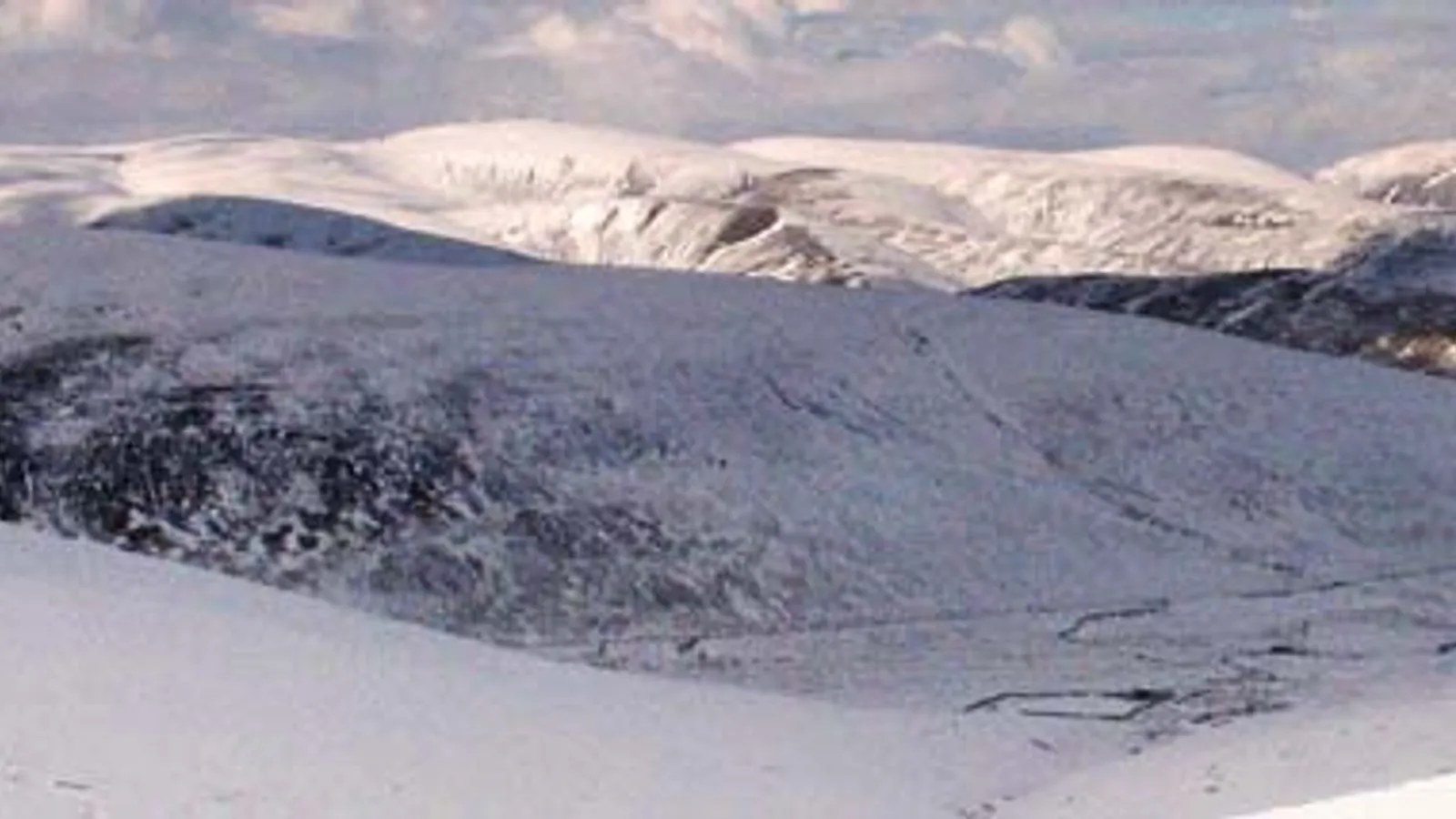

Lead & the Lowther Hills
Contents
Legend/Myth Opener
Wanlockhead and Leadhills are often presented today purely as picturesque "highest villages in Scotland," charming relics of a quaint historic industry. What is frequently left out is that the lead mining which built these communities also left a lasting environmental legacy of heavy-metal contamination in local soils and watercourses — a legacy that remains an active environmental and regulatory concern in the area today, not merely a closed chapter of industrial history.
TL;DR
- established Wanlockhead (Dumfries and Galloway) and Leadhills (South Lanarkshire), in the Lowther Hills of the Southern Uplands, were Scotland's principal historic lead-mining communities, worked from at least the medieval period and intensively from the 17th through 19th centuries — confirmed by British Geological Survey and heritage body records.
- established Wanlockhead, at around 467 metres above sea level, is Scotland's highest permanently inhabited village, with Leadhills close behind — both towns' very existence and location were shaped directly by the lead (and associated silver and gold) deposits beneath them, a geographic fact rather than a matter of interpretation.
- established Lead mining in the district declined steadily through the late 19th and 20th centuries due to falling ore grades, foreign competition, and the exhaustion of easily worked deposits, with commercial mining ending entirely by the mid-20th century — confirmed by mining company and heritage records.
- established Historic lead mining has left a well-documented legacy of heavy-metal (lead, zinc, cadmium) contamination in local soils and watercourses, including the Wanlock Water and wider river system, which remains an active environmental monitoring and remediation concern — confirmed by peer-reviewed environmental science research and investigative journalism into site management.
- disputed The adequacy of current and historic efforts by landowners and authorities to manage and remediate this contamination has been publicly questioned, including specific allegations reported by investigative journalism regarding toxic mine-water ponds — this article flags the adequacy-of-remediation question as disputed/contested rather than settled, since it involves ongoing regulatory and landowner disagreement.
Key Facts
- Peak Era
- c. 1700s–1860s (peak production and population)
- Key Locations
- Wanlockhead (Dumfries and Galloway) and Leadhills (South Lanarkshire), Lowther Hills, Southern Uplands
- Key Companies/Figures
- Scots Mining Company (historic operator); various landowning estates including the Hopetoun and Buccleuch estates
- Status Today
- Closed/legacy — commercial mining ended by the mid-20th century; heavy-metal contamination remains an active environmental concern
- Elevation
- Wanlockhead: ~467m — Scotland's highest permanently inhabited village
- SI Score
- 42/60
Scottish Impact Index (SI Score)
- Economic Impact
- 6/10
- Industrial Longevity
- 9/10
- Material Contribution
- 7/10
- Industrial Distinctiveness
- 8/10
- Industrial Legacy
- 7/10
- Recognition
- 5/10
42/60
Ranked #49 of 50 in Industry
A Note on Claims and Evidence
The Leadhills–Wanlockhead lead mining district is documented through British Geological Survey geological surveys, Historic Environment Scotland heritage records (including the preserved Wanlockhead Beam Engine), and the Museum of Lead Mining at Wanlockhead. This article treats the district's mining history, elevation facts, and mid-20th-century closure as documented. The environmental contamination legacy is also documented through peer-reviewed environmental science research (including studies published via the International Mine Water Association and university geomorphology research) establishing elevated heavy-metal concentrations in local soils and watercourses. Where this article flags genuine disputed territory is specifically around the adequacy of current remediation and site management by responsible landowners and authorities — investigative reporting (e.g. The Ferret) has raised specific concerns that estate management of toxic mine-water ponds has been inadequate, which affected landowners may dispute; this is presented as a live, contested issue rather than a settled finding of wrongdoing.
Timeline
Earliest recorded lead extraction in the Lowther Hills, with some evidence suggesting Roman-era awareness of the area's mineral wealth.
Mining activity increases; silver and gold associated with the lead deposits attract early royal and aristocratic interest in the district's mineral wealth.
The Scots Mining Company, formed after the 1715 rising by Sir John Erskine, is incorporated by royal charter and goes on to lease mines at Leadhills, becoming a major operator in the district.
Wanlockhead and Leadhills develop into substantial mining communities; both villages gain reputations for relatively progressive social provision for the era, including early subscription libraries established by miners themselves: the Leadhills Reading Society in 1741 and the Wanlockhead library in 1756.
Peak era of production and population; the district becomes one of the most important lead-mining areas in Scotland and Britain, with associated silver and gold extraction also significant.
A beam engine is installed at Wanlockhead to pump water from deep workings, reflecting the scale of continued investment even as the industry begins to face mounting pressures.
Falling ore grades, exhaustion of the most easily worked deposits, and growing competition from cheaper lead production elsewhere (including larger-scale overseas mining) put sustained pressure on the district.
Commercial lead mining activity winds down significantly, with final closure of major operations by the mid-20th century.
The Museum of Lead Mining is established at Wanlockhead, preserving the district's industrial heritage, including the historic beam engine.
A gold-bearing quartz vein is found at Cononish, near Tyndrum, far from the Lowthers.
Scotgold Resources produces its first gold at Cononish.
Cononish stops operating; Scotgold enters administration in November.
Acrux Sorting Technology buys Cononish and later restarts production.
Environmental science research and investigative journalism document ongoing heavy-metal contamination in local soils and watercourses, raising active questions about site remediation and landowner responsibility that remain unresolved.
Details
Origins and Early Development
The Lowther Hills of the Southern Uplands contain some of Scotland's richest lead deposits, along with associated silver and, more unusually, gold — a mineral combination that drew attention to the district from at least the medieval period, with some evidence suggesting earlier Roman-era awareness of the area's mineral wealth. Systematic commercial mining developed from the 16th and 17th centuries onward, with the formal establishment of the Scots Mining Company in the 1680s marking a significant step toward more organised, larger-scale extraction. The two settlements that grew up to serve this industry — Wanlockhead and Leadhills — are notable not just as mining communities but as genuinely remote, high-altitude settlements whose location was dictated entirely by the underlying geology rather than any other factor; Wanlockhead, at roughly 467 metres above sea level, remains Scotland's highest permanently inhabited village.
Peak Scale and Significance
Through the 18th and into the mid-19th century, Wanlockhead and Leadhills grew into substantial and, by the standards of remote Scottish mining communities, relatively well-provided-for settlements. Both villages developed early subscription libraries established and run by the miners themselves — a detail frequently cited as evidence of a genuine, self-organised commitment to education and self-improvement among the mining workforce, and one of the more distinctive social features of this particular industry compared with some other, harsher Scottish extractive industries. The historian Jonathan Rose, in The Intellectual Life of the British Working Classes (2001), counts Leadhills (1741), Wanlockhead (1756) and Westerkirk (1792) as the first working-class libraries in Britain. Drawing on John Crawford's research, he links them to the conditions of the trade: lead miners were relatively well paid, worked short shifts of about six hours a day, lived in isolated villages with stable populations, and worked for companies that wanted an educated workforce. That explanation is Rose's interpretation rather than the miners' own account. The libraries were run by and for men; Wanlockhead admitted women members in 1812 and Leadhills only in 1881. Their stock was markedly religious, about a quarter of the books in each in 1790 and 1800, and in 1837 the miners refused to take George Combe's Constitution of Man because they considered it hostile to revealed religion. The scale of continued investment in the district through the 19th century is reflected in substantial engineering works, including the beam engine installed at Wanlockhead to manage water pumping from ever-deeper workings — a sign both of the ore's continuing value and of the mounting technical difficulty of extracting it as the most accessible deposits were worked out.
The associated silver (and occasional gold) found alongside the district's lead ore added further economic and historical interest, and at points in its history the district's output was significant enough to be of genuine national economic importance, not merely a remote curiosity.
Decline
The district's decline through the later 19th and into the 20th century followed a now-familiar pattern for Scottish extractive industry: as the richest and most easily worked deposits were progressively exhausted, falling ore grades made continued extraction steadily less profitable, while growing competition from larger-scale lead production elsewhere in the world further eroded the district's competitiveness. Unlike the dramatic, politically charged closures of the coal industry a century later, Leadhills and Wanlockhead's decline was a quieter, more gradual economic wind-down, with commercial mining activity effectively ending by the mid-20th century as the remaining operations became uneconomic.
The Honest Environmental Legacy
A complete account of this industry cannot stop at its closure, because the mining left behind a lasting and still-active environmental problem that deserves equal weight with the social history above. Peer-reviewed environmental science research — including studies presented through the International Mine Water Association and university geomorphology research focused specifically on Leadhills — has documented significant and persistent heavy-metal contamination (lead, zinc, cadmium and related elements) in local soils and in watercourses including the Wanlock Water and the wider river system draining the former mining district. This is not a minor historical footnote: elevated heavy-metal concentrations of this kind pose genuine ecological risks to watercourses and potential risks to human health where exposure pathways exist, and such contamination from historic mining is a recognised and serious category of environmental legacy across former mining regions worldwide.
More pointedly, investigative journalism (notably reporting by The Ferret) has raised specific, publicly contested allegations that landowning estates with responsibility for parts of the former mining area, including the Buccleuch estate, have failed to adequately protect people and the environment from toxic mine-water ponds associated with the historic workings. This article treats the underlying contamination as documented environmental fact, while treating the adequacy of specific landowners' and authorities' remediation and management responses as a genuinely disputed, ongoing issue — one that affected parties may contest, and on which this article does not purport to deliver a final verdict, consistent with house style's commitment to flagging contested claims rather than asserting them as settled.
Present-Day Legacy
Today, Wanlockhead and Leadhills survive primarily as heritage destinations and small residential communities rather than working mining settlements. The Museum of Lead Mining at Wanlockhead, which preserves the historic beam engine and extensive mining heritage, is the district's principal visitor attraction and a genuinely valuable resource for understanding the social and technical history of Scottish lead mining. At the same time, the district's environmental legacy remains an active, unresolved concern: ongoing environmental monitoring and periodic remediation proposals continue to address the heavy-metal contamination left by over two centuries of intensive extraction, a reminder that even a mining industry closed for the better part of a century can leave problems that outlast it by generations.
Scotland's Modern Gold: Cononish
The Lowther Hills were Scotland's historic source of gold: the 41 ounces of Scottish gold added to the Crown of Scotland when it was remodelled in 1540 came from Leadhills. The country's modern gold story, however, is in the western Highlands.
established In 1984 the Irish company Ennex International found a gold-bearing quartz vein on the lower slopes of Beinn Chùirn, above Cononish Farm near Tyndrum, inside what is now Loch Lomond and the Trossachs National Park. A tunnel of about 1,280 metres was driven into the hill in the 1990s, but falling gold prices made the small deposit uneconomic. In 2007, after prices rose, the concession was bought by Scotgold Resources, a company based in Perth, Western Australia.
shared Scotgold produced its first gold in August 2016 after an ore-processing trial, and in February 2018 the National Park Authority unanimously approved full commercial production. The company and the press described Cononish as Scotland's first commercial gold mine. Its plans spoke of about 12,000 ounces a year for up to 17 years.
established The plans were not met. Operations were held back by a lack of underground power and ventilation and by lower-than-expected ore grades. The mine effectively stopped at the end of September 2023, and Scotgold entered administration on 24 November 2023. Critics, notably the campaign blog Parkswatchscotland, also pointed to a settlement pond that had leaked polluted water into the River Cononish and to restoration-bond payments that had not been made in full.
shared In March 2025 the South African firm Acrux Sorting Technology bought the mine. By January 2026 it reported that production had resumed and that it was targeting 2,000 ounces a month with around 70 staff; these are company-stated figures.
The Lead Works of Glasgow
Lead was processed as well as mined in Scotland. Stana Nenadic, in the Oxford Handbook of Modern Scottish History (2012), notes that major works in and around Glasgow supplied lead for roofs, water and gas pipes and printers' type, and that the industry was particularly damaging to health. By the late nineteenth century, inspectors were recommending protective clothing, respirators and regular medical checks, and the law banned women under twenty from working with white lead, which was known to damage fertility.
Did You Know?
- Scotland's only working gold mine, Cononish near Tyndrum, was found in 1984 and has changed hands twice since.
- Wanlockhead, at roughly 467 metres above sea level, is Scotland's highest permanently inhabited village — a direct consequence of the lead deposits that dictated the settlement's location.
- Both Wanlockhead and Leadhills developed early miners' subscription libraries, a notable example of self-organised education and self-improvement among the mining workforce.
- The lead deposits of the Lowther Hills were historically accompanied by silver, and occasionally gold, adding to the district's mineral significance.
- A historic beam engine, preserved at the Museum of Lead Mining in Wanlockhead, was installed to pump water from the district's deep mine workings.
- Heavy-metal contamination from historic lead mining in the area remains an active environmental research and monitoring subject today, more than half a century after commercial mining ended.
- Investigative journalism has specifically raised concerns about landowner management of toxic mine-water ponds linked to the historic workings in the district.
- The district's decline, unlike the Scottish coal industry's politically charged 1980s closures, was a quiet, gradual economic wind-down with little national controversy at the time.
- Some evidence suggests awareness of the Lowther Hills' mineral wealth dates back as far as the Roman period, long before systematic commercial mining began.
FAQ
1Where is the historic Scottish lead mining district?
In the Lowther Hills of the Southern Uplands, centred on the villages of Wanlockhead (Dumfries and Galloway) and Leadhills (South Lanarkshire).
2Why is Wanlockhead called Scotland's highest village?
Because at roughly 467 metres above sea level, it is the highest permanently inhabited settlement in Scotland, its location dictated by the underlying lead deposits.
3When did lead mining in the district peak?
Roughly the 18th century through the mid-19th century, with commercial mining winding down and ending by the mid-20th century.
4Why did the industry decline?
Falling ore grades as the richest deposits were exhausted, combined with growing competition from larger-scale lead production elsewhere, made continued extraction increasingly uneconomic.
5Is there still an environmental problem from the old mines?
Yes — peer-reviewed research has documented ongoing heavy-metal (lead, zinc, cadmium) contamination in local soils and watercourses, which remains an active environmental monitoring and remediation concern.
6Who is responsible for managing the contamination today?
Various landowning estates and relevant environmental authorities hold responsibility for different parts of the affected area; the adequacy of their management has been publicly questioned by investigative journalism, and remains a contested issue.
7Was gold or silver also found in the district?
Yes, lead ore in the Lowther Hills was historically accompanied by silver and, more unusually, occasional gold.
8What is the Museum of Lead Mining?
A heritage museum at Wanlockhead preserving the district's mining history, including a historic beam engine used to pump water from deep workings.
9Did miners in the district have any notable social institutions?
Yes. The miners founded subscription libraries at Leadhills in 1741 and Wanlockhead in 1756, which the historian Jonathan Rose counts among the first working-class libraries in Britain. Members ran them through elected committees; women were admitted only later, at Wanlockhead in 1812 and Leadhills in 1881.
10Is there any active mining in the district today?
No, commercial lead mining ended by the mid-20th century; the area today is a heritage and residential district.
11How long has the Lowther Hills area been mined?
Possibly since the Roman period, with documented medieval activity, and intensive commercial mining from the 16th/17th century through to the mid-20th century.
12Can visitors see the historic mining infrastructure today?
Yes — the Museum of Lead Mining at Wanlockhead preserves and displays significant mining heritage, including the historic beam engine, for public visitors.
Sources and Further Reading
Primary/Institutional
- British Geological Survey — "Lead and Zinc Ores of Scotland, Area I: The Leadhills–Wanlockhead District"
- Historic Environment Scotland — "Wanlockhead Beam Engine: History and Stories"
- Museum of Lead Mining, Wanlockhead
Scholarly/Critical
- Stana Nenadic, "Industrialization and the Scottish People", in T. M. Devine and Jenny Wormald (eds), The Oxford Handbook of Modern Scottish History (Oxford University Press, 2012)
- Jonathan Rose, The Intellectual Life of the British Working Classes (Yale University Press, 2001)
- University of Dundee — "Geomorphology and Pollution: The Environmental Impacts of Lead Mining, Leadhills, Scotland"
- International Mine Water Association (IMWA) — conference papers on heavy-metal release and mine-water management in former lead mining districts
- University of Stirling — research on environmental and occupational exposure to heavy-metal poisoning
General
-
Wikipedia — "Beinn Chùirn" (Cononish gold discovery and early history)
-
Mining.com, "Scotland to have its first commercial gold mine", 27 February 2018
-
Parkswatchscotland, "Scotgold in administration: the implications for the Cononish goldmine", 5 February 2024
-
Scottish Financial News, "Scotland's only gold mine restarts as prices hit record highs", 27 January 2026
-
Wikipedia — "Wanlockhead"
-
The Ferret — "Buccleuch Accused of Failing to Protect People from Toxic Ponds"
-
Scottish Geology Trust — Leadhills–Wanlockhead geological guide
-
Wikipedia, "Scots Mining Company" (https://en.wikipedia.org/wiki/Scots_Mining_Company)
Caveats: Myths and Disputed Claims
- Do not state that the district's environmental problems are purely historical and fully resolved — peer-reviewed research confirms ongoing contamination and active monitoring/remediation concerns as of recent years.
- Do not present the allegations about inadequate toxic-pond management by specific landowning estates as settled fact — this is a contested, publicly disputed issue raised by investigative journalism, not a formal finding against any named party, unless and until confirmed by a relevant regulatory or legal process.
- Do not romanticise the historic mining workforce's living and working conditions without noting that this was, nonetheless, hard, often dangerous physical labour in a remote and demanding environment.
- Do not overstate the precision of claims about Roman-era awareness of the district's mineral wealth — this rests on limited historical/archaeological evidence and should be presented as suggestive rather than definitively proven.
- Do not say that the gold in the Crown of Scotland came from the same hills as Cononish. The crown's Scottish gold came from Leadhills in the Southern Uplands; Cononish is near Tyndrum in the western Highlands.
- Do not present "Scotland's first commercial gold mine" as an independently verified title; it is the company's and the press's framing. Production figures for the restarted mine are company-stated.
Card 009 · Industry