
Nobel & Ardeer
Contents
Legend/Myth Opener
A persistent rumour attached to Ardeer, Ayrshire's vast former explosives works, is that the Semtex plastic explosive used in the 1988 Lockerbie bombing was somehow linked to the site. It was not. Semtex is a Czechoslovak invention, manufactured at Semtín and Vlašim in the former Czechoslovakia, and the explosive recovered in the Lockerbie investigation was traced to Czechoslovak state production and export channels, not to Ardeer or any ICI Nobel product. Ardeer's own, very real history is dramatic enough without that invented connection: at its peak it was the largest explosives factory in the world, built on a remote Ayrshire sand-dune peninsula specifically because Alfred Nobel's dynamite was too dangerous to manufacture anywhere people might be harmed if it went wrong.
TL;DR
- established Alfred Nobel established the British Dynamite Company at Ardeer, Ayrshire, with production beginning in January 1873, choosing the remote coastal dune site specifically for safety reasons given the extreme hazards of nitroglycerine-based explosives manufacture — this is documented in company and industrial-heritage histories.
- established At its twentieth-century peak, the Ardeer works employed close to 13,000 people and functioned as a near self-contained industrial community with its own internal transport, banking, and welfare services, a scale confirmed by Wikipedia's Nobel Enterprises history and corroborating local industrial records.
- established Ardeer became part of Nobel Industries and then, from the 1926 merger, part of Imperial Chemical Industries (ICI), supplying explosives and related nitrocellulose products through both World Wars under War Office and military contracts — a documented corporate and wartime history.
- established There is no documented connection between Ardeer and the Semtex explosive used in the 1988 Lockerbie (Pan Am Flight 103) bombing — Semtex is a Czechoslovak product, and this article explicitly corrects the popular misconception rather than implying a link, because stating this plainly matters for accuracy over sensational narrative.
- disputed The precise relative weight of changing military demand, environmental/safety regulation costs, and corporate restructuring (ICI's break-up and subsequent ownership changes) in Ardeer's long decline from its mid-century peak is not settled among industrial historians, and this article treats it as a combination of contested factors rather than a single cause.
Key Facts
- Category
- Detail
- Peak Era
- Late 19th century founding through WWI/WWII peak (1870s–1940s); gradual contraction from the 1960s–2000s
- Key Locations
- Ardeer peninsula, Stevenston, North Ayrshire; related Nobel sites at Westquarter and Linlithgow
- Key Companies/Figures
- Alfred Nobel (founder); George McRoberts (chief chemist/manager, provided initial capital with John Downie); British Dynamite Company → Nobel's Explosives Co. → Nobel Industries → ICI Nobel/Nobel Enterprises → Inabata (2002) → Chemring Group (2005)
- Status Today
- Greatly reduced — now operates as Chemring Energetics UK Ltd, employing roughly 300 people, a fraction of its historic peak
- SI Score
- 52/60
- Peak employment
- Approximately 13,000 workers at mid-20th-century height
Scottish Impact Index (SI Score)
- Economic Impact
- 8/10
- Industrial Longevity
- 8/10
- Material Contribution
- 9/10
- Industrial Distinctiveness
- 10/10
- Industrial Legacy
- 9/10
- Recognition
- 8/10
52/60
Ranked =31st of 50 in Industry
A Note on Claims and Evidence
The founding, site-selection rationale, corporate evolution, and wartime role of Ardeer are well documented through company records, Wikipedia's sourced Nobel Enterprises entry, and Scottish industrial-heritage bodies such as Canmore, and these facts are treated here as established. By contrast, the causes of Ardeer's long twentieth-century decline — involving shifting military procurement, rising safety and environmental regulation costs, and the broader dismantling of ICI from the 1990s — are not reducible to a single documented cause, and this article presents them as a combination of contested, overlapping factors. On the specific question of any supposed Lockerbie connection, the documentary record is unambiguous: Semtex is a Czechoslovak product with no sourced link to Ardeer, and this article states that correction plainly rather than hedging it, consistent with the "accuracy over patriotism/sensationalism" standard applied throughout this series.
Timeline
Alfred Nobel establishes Nobel Industries Limited/the British Dynamite Company to manufacture dynamite in the UK, with Ardeer selected as the production site.
Production begins at Ardeer, with Alfred Nobel personally producing the first charge; George McRoberts, a Scottish chemist, becomes chief chemist and factory manager and, with John Downie, provides key initial capital.
Ardeer expands rapidly, exploiting its remote dune-peninsula location (chosen specifically to isolate hazardous processes from populated areas) to grow into the world's first and largest dynamite factory.
Product range diversifies beyond dynamite to blasting gelatine, gelignite, ballistite, guncotton, and cordite, alongside nitrocellulose-based varnishes and inks, reflecting the site's growing chemical sophistication.
An accident in the cartridge factory at Ardeer kills ten teenage girls and injures four others.
Ardeer secures War Office contracts for explosives, propellants, guns, shells, small arms, and ammunition, becoming a critical military-industrial asset; related Nobel sites at Westquarter and Linlithgow also expand production.
Nobel Industries merges with Brunner Mond, the United Alkali Company, and British Dyestuffs Corporation to form Imperial Chemical Industries (ICI); Ardeer becomes part of ICI's explosives division (ICI Nobel).
Ardeer again expands explosives and munitions production for the war effort, reinforcing its strategic national importance.
Ardeer reaches peak employment of close to 13,000 workers, operating almost as a self-contained industrial town with its own transport (including dedicated trains), banking, dental, and welfare services for its workforce.
A nylon and nitric acid plant is built at the site but closes after only around twelve years, an early sign of the site's shifting economics.
Military and commercial demand patterns shift, and the site undergoes sustained contraction in workforce and output relative to its mid-century peak.
ICI/Nobel Enterprises interests at Ardeer are sold to Inabata, a Japanese trading company.
Ownership passes to the Chemring Group.
A major fire at the site involves 1,500–1,700 tonnes of nitrocellulose; no serious injuries are reported, but the incident underlines the continuing hazards inherent to the site's operations.
The site operates as Chemring Energetics UK Ltd, employing approximately 300 people — a small fraction of its historic workforce, reflecting the scale of decline from the 20th-century peak.
Details
Origins: safety by isolation
Alfred Nobel's invention of dynamite in 1867 solved the problem of making nitroglycerine-based explosives safe enough to transport and use commercially, but manufacturing them remained extraordinarily hazardous — nitroglycerine is notoriously unstable, and the production process carried real and recurring risks of catastrophic accidental detonation. When Nobel sought a British manufacturing site in the early 1870s, this hazard profile drove the choice decisively: Ardeer, a remote, sparsely populated peninsula of sand dunes on the Ayrshire coast near Stevenston, offered exactly the isolation needed to contain the consequences of any accident, with few people nearby to be harmed and open ground to absorb blast effects. Production began in January 1873, with Nobel himself present to produce the factory's first charge, and Scottish chemist George McRoberts — who, together with businessman John Downie, had provided crucial early capital — became the site's chief chemist and manager, steering its rapid early growth.
Peak scale: the world's largest explosives factory and a company town
Ardeer's growth over the following decades was remarkable. The site diversified well beyond dynamite into blasting gelatine, gelignite, ballistite (a smokeless propellant), guncotton, cordite, and nitrocellulose-based products used in varnishes and inks — reflecting a genuinely sophisticated chemical operation, not merely bulk explosives manufacture. Both World Wars drove enormous expansion: during WWI, Ardeer secured substantial War Office contracts for explosives, propellants, and munitions components, a role it repeated and expanded during WWII. By the mid-twentieth century, the site employed close to 13,000 people, making it one of the largest single industrial employers in Scotland, and its scale required Ardeer to function almost as a self-contained community: dedicated trains ran workers to and from the site, bus services (including the Western Scottish Bus Company) supplemented them, and the works maintained its own banking, dental, and welfare provisions for a workforce that, for practical and safety reasons, needed to be managed almost as a small town in its own right. Nobel's original company became Nobel Industries, and in 1926 was absorbed into the newly formed Imperial Chemical Industries (ICI) as its explosives division, ICI Nobel — a corporate structure that would govern the site for the following seven decades.
Decline: changing demand and a shrinking footprint
Ardeer's decline from its mid-century peak was gradual and multi-causal rather than a single collapse. An attempt to diversify into nylon and nitric acid production with a new plant built in the late 1960s proved short-lived, closing after roughly twelve years — an early signal that the site's traditional explosives-manufacturing economics were becoming harder to sustain at the previous scale. Over the following decades, changing military procurement patterns (including reduced demand for the kind of bulk conventional explosives and propellants Ardeer had historically supplied), rising safety and environmental regulatory costs associated with large-scale explosives manufacture, and the broader dismantling of ICI itself from the 1990s onward (as the conglomerate was broken up through demergers and divestments) all contributed to sustained contraction. Ownership passed from ICI-descended Nobel Enterprises to the Japanese trading company Inabata in 2002, and then to the Chemring Group in 2005 — successive changes of ownership that reflected the site's shift from a flagship national industrial asset to a much smaller specialist operation. A serious fire in September 2007, involving over 1,500 tonnes of stored nitrocellulose, caused no serious injuries but served as a stark reminder that even a greatly reduced Ardeer still handled genuinely hazardous materials at industrial scale.
Present-day legacy
Today, the site operates as Chemring Energetics UK Ltd, employing around 300 people — roughly 2% of its mid-twentieth-century peak workforce. This dramatic contraction mirrors the broader pattern across Scotland's heavy explosives and chemical manufacturing sector (detailed in this series' broader Chemical Industry card), where changing military and industrial demand, consolidation, and global competition have reduced once-vast operations to specialist remnants. Ardeer's legacy nonetheless remains significant: it was, in its prime, the largest explosives factory in the world, a genuinely global superlative for a site on a remote Ayrshire peninsula, and its history offers an unusually clear case study in how industrial safety considerations can directly determine a site's location, scale, and the shape of the surrounding community. The site's story is also a useful corrective to invented or sensationalised connections — including the Lockerbie/Semtex misconception addressed above — illustrating why accurate sourcing matters even, or especially, for a site with as dramatic and genuinely dangerous a history as Ardeer's.
The 1884 Cartridge Factory Disaster
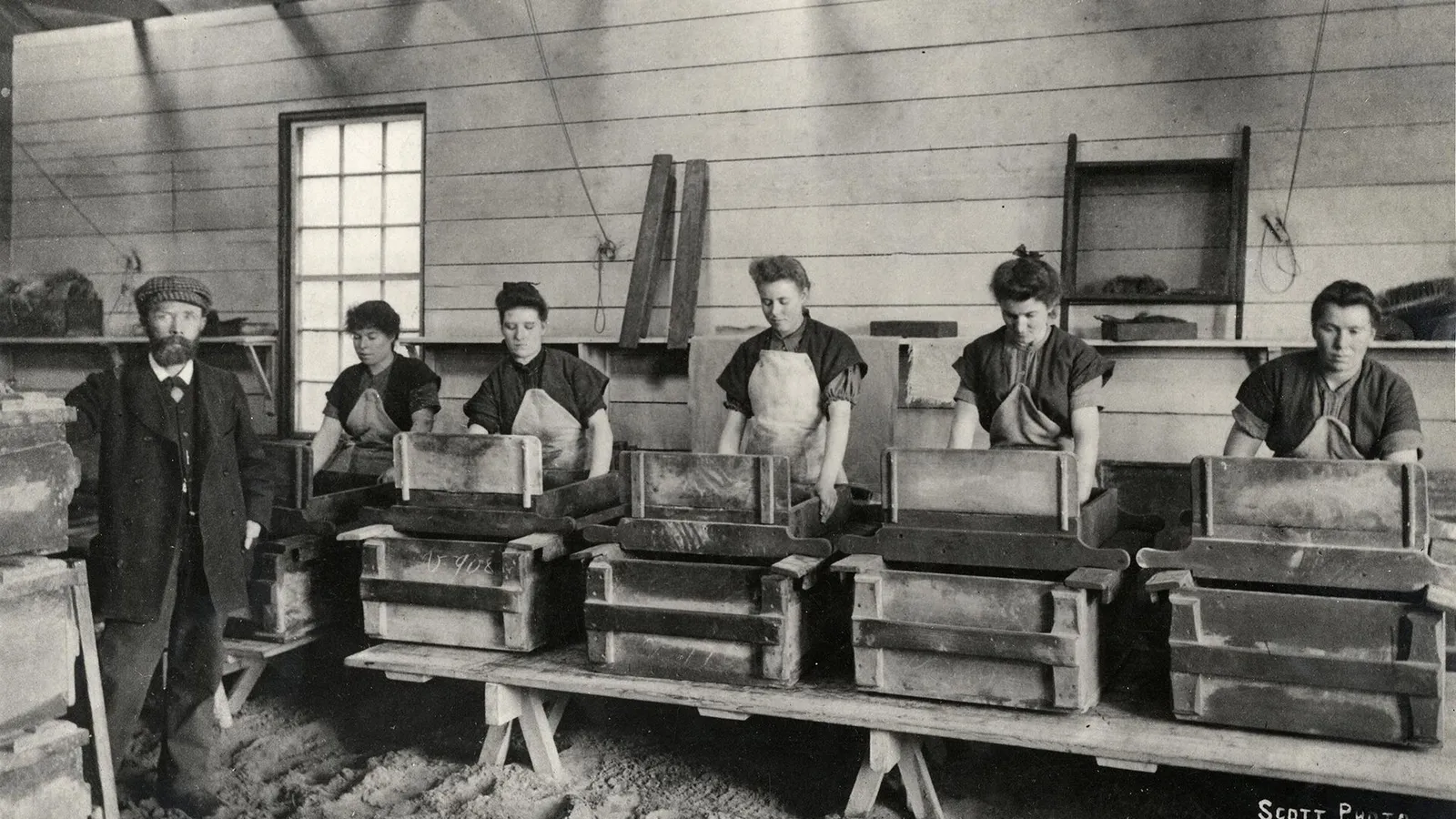
The social historian Stana Nenadic, in the Oxford Handbook of Modern Scottish History (2012), notes that explosives works were hazardous places for their mainly female workforces. A report to the Home Secretary in 1884, following an accident in the Nobel Explosive Company's cartridge factory at Ardeer, recorded that ten teenage girls had been killed and four injured.
Did You Know?
- Ardeer was chosen by Alfred Nobel specifically because its remoteness would limit casualties if the inherently unstable nitroglycerine-based manufacturing process went wrong — safety, not convenience, drove the site selection.
- At its peak, Ardeer employed close to 13,000 people and ran its own dedicated worker trains, alongside internal banking and even dental services, functioning almost as a self-contained town.
- Scottish chemist George McRoberts, not Alfred Nobel himself, provided much of the practical leadership and early capital (with businessman John Downie) that got the Ardeer factory running and growing.
- Ardeer's product range eventually extended well beyond dynamite to include guncotton, cordite, ballistite, and nitrocellulose-based inks and varnishes — a far more diversified chemical operation than its "dynamite factory" reputation suggests.
- The Semtex plastic explosive used in the 1988 Lockerbie bombing has no documented connection to Ardeer; it was manufactured in Czechoslovakia, and this is a correction worth stating plainly given how often the two get conflated in popular memory.
- A 1960s attempt to diversify Ardeer into nylon and nitric acid production lasted only about twelve years before closing, an early sign of the site's shifting economics well before its more dramatic later contraction.
- A major fire at the site in September 2007 involved over 1,500 tonnes of stored nitrocellulose, yet caused no serious injuries — a reminder of both the hazards still present at even a much-reduced Ardeer and the safety measures built into its operation.
- Ardeer's workforce today, at roughly 300 people under Chemring Energetics UK Ltd, is a small fraction — around 2% — of its mid-twentieth-century peak.
FAQ
1Why did Alfred Nobel choose Ardeer for his explosives factory?
Its remote, sparsely populated coastal dune location minimised the risk to people if the inherently hazardous nitroglycerine-based manufacturing process went wrong.
2When did production begin at Ardeer?
In January 1873, with Nobel himself producing the factory's first charge.
3How big did Ardeer become?
At its mid-twentieth-century peak it employed close to 13,000 people and was the largest explosives factory in the world.
4Was Ardeer connected to the Lockerbie bombing?
No. The Semtex explosive used in the 1988 Lockerbie bombing was manufactured in Czechoslovakia; there is no documented connection to Ardeer or its products.
5What happened to Ardeer after ICI was formed?
It became ICI's explosives division (ICI Nobel) following the 1926 merger that created Imperial Chemical Industries, remaining under that corporate structure for decades.
6What products did Ardeer manufacture beyond dynamite?
Blasting gelatine, gelignite, ballistite, guncotton, cordite, and nitrocellulose-based varnishes and inks.
7Why did Ardeer decline?
A combination of changing military demand, rising safety/environmental regulatory costs, and the break-up of ICI from the 1990s onward; the precise weighting of these causes is debated rather than settled.
8Who owns the site today?
It operates as Chemring Energetics UK Ltd, part of the Chemring Group, which acquired the site in 2005 after an earlier 2002 sale to the Japanese trading company Inabata.
9How many people work at Ardeer today?
Approximately 300, a small fraction of its historic peak workforce of around 13,000.
10Did Ardeer play a role in the World Wars?
Yes — it secured significant War Office contracts for explosives, propellants, and munitions components during both WWI and WWII.
11Was there ever a serious accident at Ardeer?
A major fire in September 2007 involved over 1,500 tonnes of stored nitrocellulose, though it caused no serious injuries.
12Is Ardeer still a major employer in the area today?
No — its current workforce of around 300 is far smaller than its historic role as one of Scotland's largest single industrial employers.
Sources and Further Reading
Primary/Institutional
- Canmore (National Record of the Historic Environment, Scotland) — "Ardeer, ICI Works, Nobel's Explosives Factory"
- Grace's Guide to British Industrial History — "Nobel Industries"
Scholarly/Critical
- Stana Nenadic, "Industrialization and the Scottish People", in T. M. Devine and Jenny Wormald (eds), The Oxford Handbook of Modern Scottish History (Oxford University Press, 2012)
- Wikipedia — "Nobel Enterprises" (sourced corporate and operational history, including peak employment figures and the 2007 fire)
- RCAHMS/Canmore archival PDF survey material on the Ardeer site
General
- Konect Scotland — "How Dynamite Came to Scotland"
- Scottish-places.info — feature entry on Ardeer
Caveats: Myths and Disputed Claims
- Do not state or imply any connection between Ardeer and the Semtex explosive used in the 1988 Lockerbie bombing — correct phrasing states plainly that Semtex is a Czechoslovak product with no documented Ardeer link, directly correcting a popular misconception.
- Do not attribute Ardeer's decline to a single definitive cause — correct phrasing presents a combination of contested factors (military demand shifts, regulatory costs, ICI's break-up) rather than one settled explanation.
- Do not credit Alfred Nobel alone with Ardeer's practical establishment and growth — correct phrasing credits George McRoberts and John Downie's capital and management alongside Nobel's founding role.
- Avoid describing Ardeer's current operations as comparable in scale to its historic peak — correct phrasing makes clear today's roughly 300 employees represent a small fraction of the historic workforce of nearly 13,000.
Card 045 · Industry