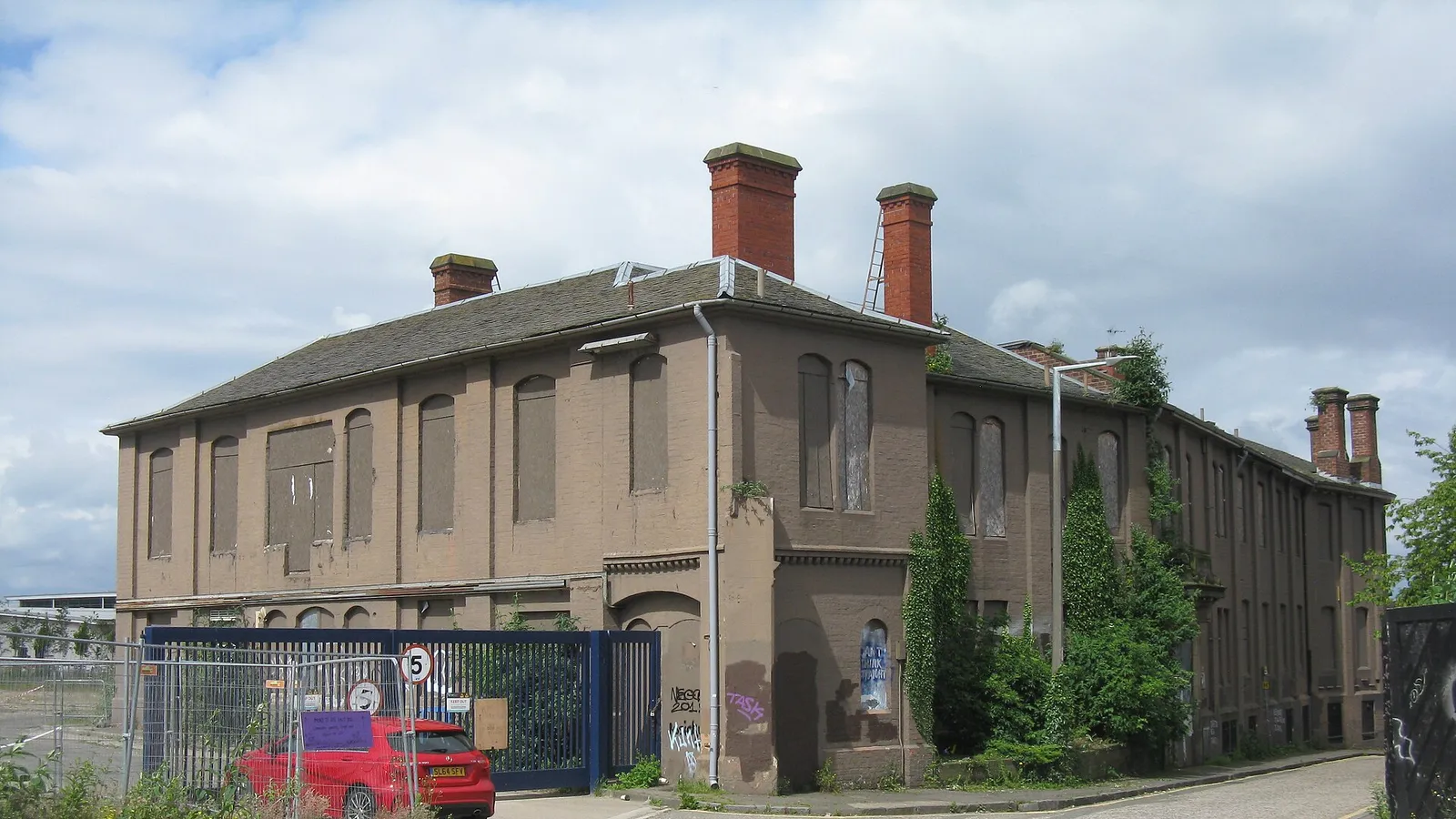

North British Rubber
Contents
Legend/Myth Opener
The Wellington boot is popularly imagined as a purely English invention — named for the Duke of Wellington's leather riding boot and never improved upon. In fact, the rubber Wellington boot that the whole world now recognises was developed and mass-manufactured in Edinburgh, at the Castle Mills works of the North British Rubber Company, and it was Scottish industrial rubber technology — not English leatherwork — that turned "the welly" into a global, indispensable piece of footwear.
TL;DR
- established The North British Rubber Company was founded in Edinburgh in 1856 and became one of Britain's largest rubber manufacturers, because its founding date and scale are documented in company and civic records.
- established The company's Castle Mills factory at Fountainbridge/Gilmore Park mass-produced the rubber Wellington boot from the mid-19th century onward, because surviving factory buildings, museum collections and contemporary advertising confirm continuous Wellington production there.
- established North British Rubber supplied millions of boots and other rubber equipment to the British armed forces in both World Wars, including trench waders and gas-mask components, because wartime procurement records and military histories document these contracts directly.
- traditional The company is often credited with "inventing" the rubber Wellington boot outright, but the underlying vulcanised-rubber boot technology derived from Hiram Hutchinson and Charles Goodyear's rubber patents; North British Rubber's real achievement was industrial-scale adaptation and marketing, a distinction worth preserving rather than collapsing into a simple invention myth.
- established The Edinburgh factory closed in 1984 and the brand, now known as Hunter Boot Ltd, moved production elsewhere, because this closure and rebrand are well documented in local press and company history.
Key Facts
- Category
- Detail
- Peak Era
- 1850s–1960s (founding through post-WWII peak of military and civilian demand)
- Key Locations
- Castle Mills/Gilmore Park, Fountainbridge, Edinburgh
- Key Companies/Figures
- North British Rubber Company (founded 1856); successor brand Hunter Boot Ltd
- Status Today
- Edinburgh factory closed 1984; Hunter Boot brand survives, manufacturing moved elsewhere (later including Dumfries and overseas)
- Peak Output
- Reportedly over a million pairs of boots and other items for British forces during WWI
- SI Score
- 48/60
Scottish Impact Index (SI Score)
- Economic Impact
- 8/10
- Industrial Longevity
- 8/10
- Material Contribution
- 9/10
- Industrial Distinctiveness
- 8/10
- Industrial Legacy
- 8/10
- Recognition
- 7/10
48/60
Ranked =42nd of 50 in Industry
A Note on Claims and Evidence
Scottish industrial history is full of claims that blur "first to manufacture at scale" with "first to invent." For North British Rubber, the documented record is strong on manufacturing scale, military contracts, and factory history — these are supported by company records, surviving buildings, museum holdings and contemporary press. What is traditional rather than strictly documented is the popular shorthand that Edinburgh "invented" the Wellington boot; the underlying rubber-boot technology had earlier origins in the vulcanised-rubber industry pioneered by Goodyear and Hutchinson in the 1840s–50s. There are no serious legend-myth claims attached to this company beyond the inflated "invented the welly" framing, which this article corrects rather than repeats uncritically.
Timeline
The North British Rubber Company is founded in Edinburgh, established by American investors seeking to exploit vulcanised rubber technology in Britain.
The company builds its Castle Mills works at Fountainbridge/Gilmore Park, becoming one of the largest rubber-goods factories in Europe.
North British Rubber diversifies into tyres, hoses, flooring, golf balls and footwear, including early rubber boots.
The company supplies large quantities of rubber trench boots ("Wellingtons") and other equipment to the British Army during the First World War, as trench warfare creates urgent demand for waterproof footwear.
Wartime production again expands, including gas-mask components and further military footwear for the Second World War.
Post-war, the Wellington boot becomes a civilian staple for farming, gardening, fishing and wet-weather wear across Britain.
The brand name "Hunter" is introduced for the company's boots.
The Castle Mills Edinburgh factory closes; production relocates.
Hunter Boot Ltd continues as a globally recognised brand, with manufacturing dispersed beyond its Edinburgh birthplace; the former factory site has been partly redeveloped, with some buildings preserved for cultural/heritage use.
Details
Origins and Early Development
The North British Rubber Company was founded in Edinburgh in 1856, in the wake of Charles Goodyear's vulcanisation patents, which made rubber durable and commercially practical rather than prone to melting or cracking. American entrepreneurs saw an opportunity in Britain's growing demand for waterproof and industrial rubber goods, and Edinburgh — with its skilled workforce, canal and rail links, and proximity to the Port of Leith for importing raw rubber — became the site of a large new factory at Castle Mills, Fountainbridge. The choice of Edinburgh over England's established industrial centres is itself notable: it reflects both available capital and the city's underused manufacturing capacity in the mid-19th century, rather than any pre-existing Scottish rubber tradition.
The factory rapidly diversified beyond a single product line. Alongside footwear, North British Rubber manufactured rubber tyres for bicycles and early motor vehicles, conveyor belting, hosing, flooring, golf balls, and other industrial rubber goods, making it a broad-based manufacturer rather than a boot specialist in its early decades.
Peak Scale and the Wellington Boot
The item that made North British Rubber internationally famous was the rubber Wellington boot. Named after the Duke of Wellington's leather riding boot of the early 1800s, the rubber version was a 19th-century adaptation that used vulcanised rubber to create a fully waterproof boot that could be mass-produced far more cheaply and consistently than hand-made leather boots.
The company's defining moment came with the First World War. Trench warfare on the Western Front created a public-health and operational crisis: soldiers standing for days in flooded, mud-filled trenches suffered from "trench foot," a debilitating condition caused by prolonged exposure to cold and wet. The War Office turned to North British Rubber to supply waterproof trench boots at enormous scale — contemporary accounts describe production in the millions of pairs over the course of the war, run around the clock at the Castle Mills works. This wartime demand cemented the Wellington boot's reputation as essential, rugged protective footwear rather than a civilian fashion item, and it gave North British Rubber a scale of production that few rival rubber manufacturers in Britain could match. The company's role extended into the Second World War as well, when it again supplied military boots and rubber components, including parts used in gas masks, reflecting the breadth of its industrial rubber expertise beyond footwear alone.
After 1945, the Wellington boot's military reputation translated directly into civilian demand. Post-war Britain's farmers, gardeners, fishermen, and outdoor workers adopted the Wellington boot as standard wet-weather equipment, and the North British Rubber Company — renamed its footwear line "Hunter" in 1966 — rode this demand through the mid-20th century. The boots also found an unlikely second life in fashion and leisure, worn at festivals, on country estates, and eventually (in the late 20th and 21st centuries) as a recognisable lifestyle brand.
Decline, Closure, and Transformation
Like much of Scotland's heavy and mid-weight manufacturing, North British Rubber's Edinburgh operation faced growing pressure in the second half of the 20th century from rising costs, foreign competition, and the broader contraction of British manufacturing. The Castle Mills factory in Fountainbridge closed in 1984, ending more than a century of rubber manufacturing on the site. This closure was part of a wider pattern across Scottish industry in the 1970s–80s, as traditional manufacturing employment fell sharply in Edinburgh and the central belt.
The brand did not disappear, however. "Hunter" continued as a footwear brand under various ownership structures, and production was relocated away from Edinburgh — at various points including sites in England and overseas manufacturing — while retaining the Wellington boot as its signature product. Hunter experienced a notable commercial revival in the 2000s and 2010s as its boots became a fashion item, particularly after high-profile appearances at outdoor festivals such as Glastonbury, demonstrating how a 19th-century industrial product could be repositioned for a 21st-century consumer market.
Present-Day Legacy
Little of North British Rubber's original industrial presence remains in Edinburgh beyond the historic factory buildings at Fountainbridge/Gilmore Park, some of which have been adapted for new uses, preserving a visible link to the city's rubber-manufacturing past. The Hunter brand remains globally recognised, and the rubber Wellington boot itself — Scotland's most ubiquitous contribution to the world's wet-weather wardrobe — continues to be manufactured and sold worldwide, even though almost none of that manufacturing now happens in the city where the modern boot was perfected and mass-produced.
Did You Know?
- The rubber Wellington boot is named after the 1st Duke of Wellington's leather riding boot, but the rubber version that bears his name was a mid-19th-century reinvention, not his own footwear.
- North British Rubber's Castle Mills factory also produced golf balls, conveyor belts, and bicycle and early motor-car tyres — it was far more than a boot factory.
- Wellington boots were issued at huge scale during the First World War specifically to combat "trench foot," a painful and sometimes gangrenous condition caused by prolonged standing in cold, wet trenches.
- The "Hunter" brand name for the company's boots was only introduced in 1966 — for over a century the boots were sold without that name.
- The former North British Rubber factory site in Fountainbridge has at various times been considered and partly redeveloped for cultural and arts use, reusing historic industrial buildings.
- Hunter Wellington boots became an unlikely high-fashion item in the 2000s after celebrities and festival-goers (notably at Glastonbury) adopted them, decades after the Edinburgh factory that made the brand famous had closed.
- Early vulcanised rubber technology, which made boots like these possible, depended on Charles Goodyear's 1840s patents — the same foundational chemistry behind rubber tyres.
- Edinburgh's choice as a rubber-manufacturing centre in 1856 had more to do with available capital, transport links and workforce than any prior Scottish expertise in rubber.
FAQ
1Did North British Rubber invent the Wellington boot?
Not exactly. The leather Wellington boot dates to the early 1800s; vulcanised rubber technology that allowed a waterproof rubber version was developed in the 1840s. North British Rubber's achievement was large-scale industrial manufacture of the rubber Wellington from the mid-19th century, which made it the item's defining producer, even though the underlying material innovation came from elsewhere.
2Where was the company based?
At Castle Mills, Fountainbridge/Gilmore Park, in Edinburgh, a site it occupied from the mid-19th century until the factory's 1984 closure.
3What is the connection to the Hunter boot brand?
The company's footwear line was rebranded "Hunter" in 1966. Hunter Boot Ltd is the modern descendant of the North British Rubber Company's boot business.
4What role did the company play in the First World War?
It was a major supplier of rubber trench boots to the British Army, helping address the trench-foot crisis caused by prolonged exposure to mud and water in Western Front trenches.
5Did it make anything besides boots?
Yes — tyres, conveyor belting, hosing, flooring, and golf balls were all part of its product range at various points, reflecting its identity as a general rubber manufacturer rather than a specialist bootmaker.
6When did the Edinburgh factory close?
1984, after more than a century of continuous operation on the site.
7Is Hunter Boot still a Scottish company?
The brand's origins are Scottish, but manufacturing has been dispersed beyond Edinburgh since the factory's closure; ownership and production locations have changed multiple times since.
8Why did the Edinburgh factory close?
Broader pressures facing British manufacturing in the late 20th century — rising costs, changing ownership, and competition from lower-cost production elsewhere — rather than any single cause.
9Were Wellington boots used in the Second World War too?
Yes, military rubber footwear and other rubber components (including parts associated with gas masks) continued to be produced during WWII, alongside the wider wartime rubber-goods effort.
10Why did Wellington boots become popular with farmers and gardeners after the wars?
Military-grade waterproofing and durability translated directly into civilian value for outdoor and agricultural work, and ex-military production capacity pivoted easily to a civilian market and was already familiar from wartime issue.
11Is the Fountainbridge factory site still standing?
Portions of the historic buildings remain and have been subject to redevelopment and heritage-reuse proposals, though the site is no longer an active rubber factory.
12Did the Wellington boot really become a fashion item?
Yes — particularly from the 2000s onward, Hunter Wellingtons were adopted as festival and lifestyle footwear, a significant repositioning of a 19th-century industrial safety product.
Sources and Further Reading
Primary/Institutional
- Historic Environment Scotland / Canmore record of the former North British Rubber Company site, Gilmore Park, Edinburgh — https://canmore.org.uk/collection/1459005
- Victoria and Albert Museum collections entry on Wellington boots — https://collections.vam.ac.uk/item/O367868
Scholarly/Critical
- Union Canal Unlocked, "North British Rubber Company" (local industrial heritage history) — https://unioncanalunlocked.org.uk/north-british-rubber-company.php
- History Scotland, "Birthplace of the Welly Takes Centre Stage" — https://www.historyscotland.com/history/birthplace-of-the-welly-takes-centre-stage
General
- Wikipedia, "Hunter Boot Ltd" — https://en.wikipedia.org/wiki/Hunter_Boot_Ltd
- Wikipedia, "Wellington boot" — https://en.wikipedia.org/wiki/Wellington_boot
- The Scotsman, "Lost Edinburgh: birthplace of the Welly boot" — https://www.scotsman.com/arts-and-culture/lost-edinburgh-birthplace-of-the-welly-boot-1527833
Caveats: Myths and Disputed Claims
- Do not state that North British Rubber "invented" the Wellington boot outright. Correct phrasing: the company mass-manufactured and popularised the rubber Wellington boot using vulcanised-rubber technology that had earlier, non-Scottish origins.
- Do not state precise WWI production figures (e.g., exact millions of pairs) as hard fact without a cited primary source; phrase as "reportedly" or "according to company histories" where figures are not independently verified.
- Do not imply the company exclusively made boots; it was a diversified rubber-goods manufacturer for most of its history.
- Avoid implying continuous unbroken Scottish ownership or manufacture of the Hunter brand to the present day; production and ownership have changed significantly since the 1984 closure.
Card 031 · Industry