
Nuclear Scotland
Contents
Legend/Myth Opener
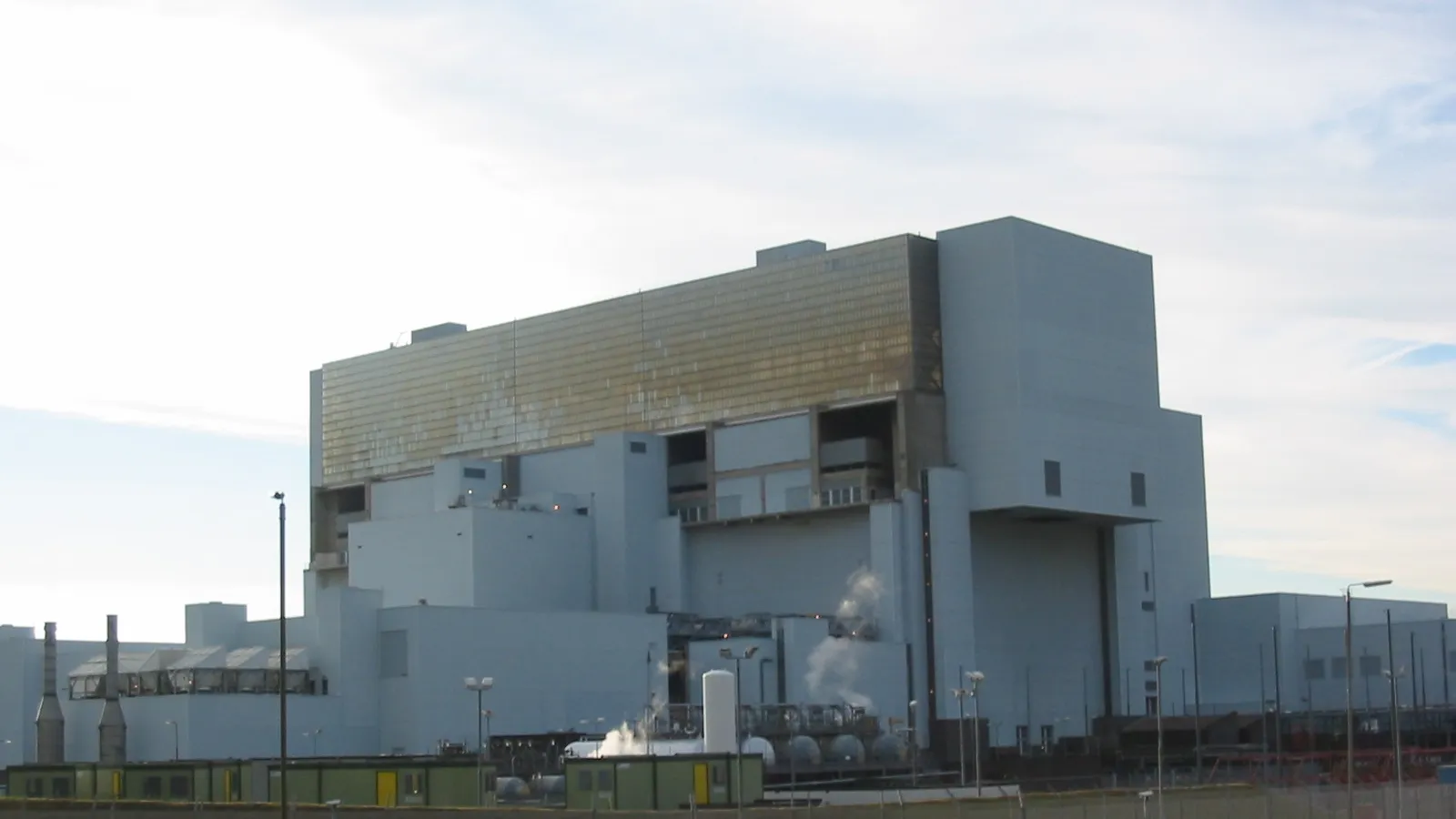
Nuclear power in Scotland is sometimes discussed as a single, static policy issue ("Scotland is anti-nuclear"), when the reality is more layered: Scotland hosted genuinely world-leading experimental nuclear research at Dounreay for decades, ran two significant commercial nuclear power stations that supplied a substantial share of its electricity for many years, and only in recent decades has the devolved Scottish Government adopted a firm policy stance against new nuclear build — a policy that, as of 2025–26, is itself under renewed political pressure and debate, not a permanently settled matter.
TL;DR
- established Dounreay, in Caithness, hosted the UK's experimental fast-reactor research programme from the 1950s through the 1990s, including the world's first fast reactor to supply electricity to a national grid — this is documented by UK Atomic Energy Authority and site operator records.
- established Hunterston (A and B) and Torness were Scotland's main commercial nuclear power stations, with Hunterston A closed in 1990, Hunterston B closed in 2022, and Torness continuing to operate into the mid-2020s before its own planned closure — confirmed by EDF Energy and UK nuclear regulator records.
- established Dounreay's decommissioning is a decades-long, multi-billion-pound undertaking and one of the most technically complex nuclear clean-up projects in the UK, reflecting the experimental and sometimes improvised nature of its original research operations — documented by the Nuclear Decommissioning Authority and site reports.
- established The Scottish Government has maintained a policy position opposed to the construction of new nuclear power stations in Scotland for an extended period, a stance that is a devolved planning matter distinct from UK Government energy policy, which has supported new nuclear elsewhere in the UK — this is current, documented government policy, verified via recent (2025–26) search as still in force and increasingly contested.
- disputed Whether this anti-new-nuclear stance is sound energy policy — given the need for firm, low-carbon power to complement variable renewables — or is unduly ideological, is a live and increasingly heated political debate within Scotland as of 2025–26, not a settled question; this article presents both sides as contested rather than endorsing either.
Key Facts
- Peak Era
- Dounreay research programme, 1950s–1994 (reactor shutdown); commercial generation, Hunterston/Torness, 1976–2020s
- Key Locations
- Dounreay (Caithness); Hunterston (North Ayrshire); Torness (East Lothian)
- Key Companies/Figures
- UK Atomic Energy Authority (Dounreay); EDF Energy (Hunterston, Torness operator); Nuclear Decommissioning Authority (Dounreay clean-up)
- Status Today
- Transformed/declining — Dounreay in long-term decommissioning; Hunterston closed; Torness operating but approaching end of life; no new nuclear build currently planned in Scotland under current devolved policy
- Scottish Government Policy
- Opposed to new nuclear power station construction (devolved planning policy), as confirmed current as of 2025–26, though under active political pressure
- SI Score
- 48/60
Scottish Impact Index (SI Score)
- Economic Impact
- 8/10
- Industrial Longevity
- 7/10
- Material Contribution
- 9/10
- Industrial Distinctiveness
- 8/10
- Industrial Legacy
- 8/10
- Recognition
- 8/10
48/60
Ranked =42nd of 50 in Industry
A Note on Claims and Evidence
Scotland's nuclear history is documented through UK Atomic Energy Authority and Nuclear Decommissioning Authority records, EDF Energy operational statements, and UK/Scottish Government policy documents, giving this topic an unusually solid evidential base for dates, technical milestones, and current policy status. This article treats Dounreay's research timeline, the opening and closure dates of Hunterston and Torness, and current Scottish Government policy as documented, verified via fresh search rather than relying on potentially outdated prior knowledge, given how fast-moving and politically contested this policy area is. Where this article flags genuine disputed territory is squarely in the policy debate over whether Scotland's current anti-new-nuclear stance is good energy and climate policy — a question on which credible voices (including within the UK Government, industry, and some Scottish politicians) disagree sharply with the Scottish Government's position, and on which this article does not take a side.
Timeline
Dounreay established in Caithness as the UK's centre for fast-reactor research, chosen partly for its remoteness.
The Dounreay Fast Reactor (DFR) achieves first criticality; in 1962 it becomes the first fast reactor in the world to supply electricity to a national grid.
Prototype Fast Reactor (PFR) construction begins at Dounreay, continuing the site's experimental fast-reactor programme through subsequent decades.
Hunterston B nuclear power station begins commercial operation in North Ayrshire (Hunterston A had opened earlier, in the 1960s, as one of the UK's first-generation Magnox stations).
Torness nuclear power station in East Lothian begins commercial operation.
Hunterston A closes.
The Dounreay Prototype Fast Reactor ceases operation, ending the site's main experimental power-generation programme; decommissioning becomes the site's primary mission from this point.
Dounreay decommissioning intensifies under the Nuclear Decommissioning Authority, addressing complex legacy waste and contamination issues, including historic particle contamination on nearby beaches.
Hunterston B closes, ending commercial generation at that site after 46 years of operation.
Torness continues operating, approaching the end of its operational life, with EDF managing extended operation and eventual closure planning.
Renewed political debate over Scottish Government nuclear policy intensifies, with UK Government figures and some opposition politicians in Scotland pressing for a policy reversal to allow new nuclear development, against continued Scottish Government opposition.
Details
Origins and Early Development
Scotland's nuclear story began not with commercial power generation but with frontier scientific research. In the 1950s, the UK Atomic Energy Authority selected the remote, sparsely populated coastline of Dounreay in Caithness as the site for its fast-reactor research programme — a deliberate choice reflecting both the experimental and potentially hazardous nature of the technology being developed and the political reality that such research needed to be sited somewhere perceived as safely distant from major population centres. The Dounreay Fast Reactor achieved a landmark global first in 1962, becoming the first fast reactor anywhere in the world to supply electricity to a national grid, a genuine achievement that placed Caithness, briefly, at the cutting edge of global nuclear science. This was followed by the larger Prototype Fast Reactor, continuing Dounreay's role as the UK's principal centre for fast-reactor research through to the 1990s.
Commercial nuclear power generation developed alongside and after this research effort, with Hunterston A in North Ayrshire among the UK's first generation of Magnox power stations, followed later by the more advanced Hunterston B (1976) and Torness (1988), both Advanced Gas-cooled Reactor (AGR) stations that went on to provide a substantial, reliable share of Scotland's electricity for decades.
Peak Significance and Scale
At their respective peaks, Scotland's nuclear stations were a cornerstone of the country's electricity supply, providing large, continuous baseload generation that complemented — and for long periods significantly exceeded — the contribution of the then-smaller renewable sector. Dounreay, meanwhile, functioned less as a power-generation site in the conventional sense and more as a globally significant research facility: its fast-reactor work, while never scaled up to commercial fast-reactor deployment in the UK, contributed genuinely important technical knowledge to international nuclear science, and the site at its peak employed thousands of scientists, engineers and support staff, transforming the economy of a remote part of Caithness in much the way hydro schemes transformed parts of the Highlands.
Decline, Decommissioning, and Honest Costs
Dounreay's experimental and often pioneering nature carried a corresponding cost once operations ended: because its research reactors and associated facilities were built and operated at the frontier of nuclear technology, without the benefit of today's decommissioning standards and planning, the site left behind a legacy of complex, difficult-to-manage waste and contamination. Most notably, historic radioactive particles from Dounreay operations were found on beaches in the surrounding area over an extended period, requiring sustained monitoring and clean-up efforts — a genuinely serious and long-running environmental legacy issue that should not be glossed over in any honest account of the site's history. Dounreay's decommissioning, managed by the Nuclear Decommissioning Authority, is now one of the most technically complex and expensive nuclear clean-up programmes in the UK, expected to continue for decades and to cost billions of pounds — a sobering counterpoint to the site's earlier scientific prestige.
Scotland's commercial nuclear fleet has also entered its closing chapter: Hunterston A closed in 1990, and Hunterston B — after extended-life operation beyond its original design lifetime — finally closed in 2022 after 46 years of service. Torness, the newer of the two AGR stations, has likewise been approaching the end of its operational life through the 2020s, with EDF Energy managing its eventual closure. Decommissioning these stations is itself a lengthy, costly process involving careful handling of spent fuel and radioactive materials, adding further to the long-term financial and technical legacy of Scotland's nuclear generation.
Current Policy and the Live Debate
Unlike the broadly settled historical facts above, Scotland's nuclear future is an unresolved and actively contested policy question. The Scottish Government has for an extended period maintained a policy position opposing the construction of new nuclear power stations in Scotland, exercising its devolved planning powers to block new nuclear development even as the UK Government, responsible for broader UK energy strategy, has supported new nuclear projects elsewhere in Britain (such as Hinkley Point C and Sizewell C in England). As of 2025–26, this divergence has become an increasingly prominent and heated political flashpoint: UK Government ministers and some Scottish opposition politicians have publicly pressed the Scottish Government to reverse its stance, arguing that new nuclear capacity is needed to provide reliable, low-carbon power as older stations close and as the limits of a renewables-only system become more apparent; the Scottish Government has continued to defend its position, citing cost, waste management, and a preference for renewable and storage-based solutions. This article does not adjudicate that dispute — both the case for and the case against new nuclear in Scotland involve genuine, good-faith disagreements among credible energy experts and policymakers, and readers should understand this as a live, unresolved debate rather than a matter with an objectively correct answer.
Present-Day Legacy
Today, Scotland's nuclear landscape is one of transition and, in significant part, decline: Dounreay exists almost entirely as a decommissioning site rather than an active research or generation facility, a process expected to continue for many years yet; Hunterston has fully closed; and Torness represents the last operating link to Scotland's decades of commercial nuclear generation, itself approaching retirement. Whatever the outcome of the current political debate over new nuclear build, Scotland's 20th-century nuclear generating capacity is ending, and the question of what — nuclear, renewables, storage, or some combination — replaces that capacity's contribution to grid reliability remains one of the most consequential open questions in Scottish energy policy.
Did You Know?
- Dounreay's fast reactor became, in 1962, the first fast reactor in the world to supply electricity to a national grid — a genuine global scientific first achieved in a remote corner of Caithness.
- Decommissioning Dounreay is expected to take decades and cost billions of pounds, reflecting the experimental, non-standardised way the site's facilities were originally built and operated.
- Radioactive particles from historic Dounreay operations were found on nearby beaches, requiring sustained environmental monitoring and clean-up — a serious and long-running legacy issue.
- Hunterston B operated for 46 years before finally closing in 2022, having run well beyond its originally planned operational lifetime.
- Scotland's devolved planning powers allow the Scottish Government to block new nuclear power stations even where the UK Government supports nuclear expansion elsewhere in Britain — a distinctive feature of the UK's devolved energy policy landscape.
- As of 2025–26, the Scottish Government's anti-new-nuclear policy faces renewed and vocal political pressure, making it an active rather than settled policy question.
- Dounreay's remote site was partly chosen in the 1950s specifically because of the perceived hazards of pioneering fast-reactor research — a tacit acknowledgment, even then, of the technology's risks.
- At their respective peaks, Hunterston and Torness together supplied a very substantial share of Scotland's electricity, a contribution often underappreciated in discussions that focus mainly on hydro and, more recently, wind power.
FAQ
1What was Dounreay used for?
Dounreay in Caithness was the UK's principal centre for experimental fast-reactor research from the 1950s to the 1990s, including achieving the world's first fast reactor to supply a national grid, in 1962.
2Is Dounreay still operating as a nuclear facility?
No — it ceased reactor operations in 1994 and is now in long-term decommissioning, a process expected to take decades.
3What were Scotland's commercial nuclear power stations?
Hunterston A and B (North Ayrshire) and Torness (East Lothian). Hunterston A closed in 1990, Hunterston B in 2022, and Torness has continued operating into the 2020s.
4Does Scotland currently allow new nuclear power stations?
No — the Scottish Government has maintained a devolved planning policy opposing new nuclear build, though this policy faces active political pressure as of 2025–26.
5Why is nuclear decommissioning at Dounreay so complex and expensive?
Because Dounreay's facilities were built and operated at the frontier of nuclear science without the benefit of modern decommissioning standards, leaving a legacy of unusually difficult waste and contamination issues, including historic radioactive particles on nearby beaches.
6Is the UK Government's nuclear policy the same as Scotland's?
No — the UK Government has supported new nuclear projects in England (e.g. Hinkley Point C, Sizewell C), while nuclear planning in Scotland is a devolved matter where the Scottish Government has taken a different, opposing stance.
7Is there a chance Scotland's nuclear policy could change?
This is an active political debate as of 2025–26, with the policy under renewed pressure, but no change had been confirmed at the time of writing.
8How much of Scotland's electricity did nuclear power once supply?
At their peak, Hunterston and Torness together supplied a substantial proportion of Scotland's electricity, though exact percentages varied year to year and have declined as the stations aged and renewables expanded.
9What happened to the workers at Hunterston and Dounreay after closure?
Decommissioning work itself provides long-term employment at both sites, though at reduced levels compared with operational staffing, and transition/retraining support has been a feature of closure planning.
10Is nuclear power considered a low-carbon energy source?
Yes, nuclear generation produces very low direct carbon emissions during operation, which is central to arguments from new-nuclear advocates; critics instead emphasise cost, waste, and safety/timeline concerns.
11What is the Nuclear Decommissioning Authority?
A UK public body responsible for managing the decommissioning of civil nuclear sites, including Dounreay, on behalf of the government.
12Will Torness be Scotland's last nuclear power station?
Under current Scottish Government policy against new nuclear build, Torness's eventual closure would end commercial nuclear generation in Scotland, though this outcome depends on the unresolved policy debate discussed above.
Sources and Further Reading
Primary/Institutional
- Scottish Government — "Nuclear Stations" policy page (gov.scot)
- Nuclear Decommissioning Authority — Dounreay site reports
- EDF Energy — Hunterston and Torness operational statements
Scholarly/Critical
- Nuclear Engineering International — "Dounreay Fast Reactor Celebrates Fifty Years"
- The Engineer — "Don't Neglect Scotland's Nuclear Legacy"
- Power Engineering / Hoist Magazine — coverage of Dounreay decommissioning complexity
General
- Northern Times — "Dounreay at Forefront of Nuclear Decommissioning, 70 Years"
- Scottish Parliament — recent parliamentary questions and debate on nuclear policy (2025–26)
- Press coverage (New Statesman, LBC, Express & Star) on the 2025–26 Scottish nuclear policy debate
Caveats: Myths and Disputed Claims
- Do not state that Scotland's opposition to new nuclear is permanently settled policy — it is current policy as of this writing but is under active, documented political pressure and could change; phrase as "current Scottish Government policy, under renewed debate."
- Do not claim a definitive, single verdict on whether nuclear or renewables-only strategies are "better" for Scotland's energy future — this is a genuinely disputed question among credible experts and should be presented as such.
- Do not minimise the Dounreay beach particle contamination issue as a minor historical footnote — it was a serious, sustained environmental and public health monitoring issue and should be stated plainly.
- Do not imply Dounreay ever became a commercially deployed fast-reactor power station at scale — it remained an experimental/research programme; commercial generation in Scotland came from the separate Hunterston and Torness stations.
Card 005 · Industry