
Paisley Thread
Contents
Legend/Myth Opener
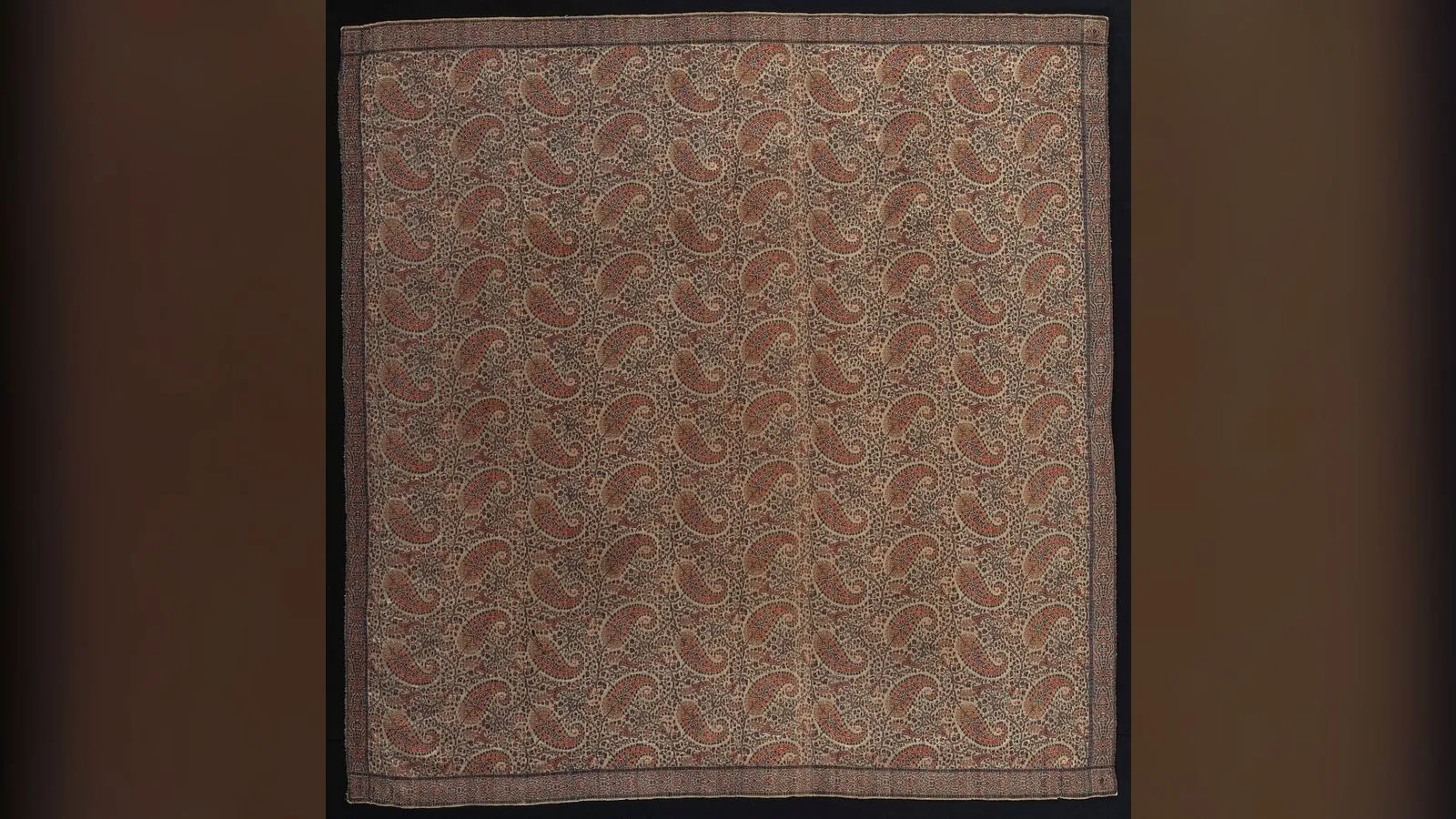
Paisley's thread industry is sometimes folded into the town's more famous textile identity — the swirling "paisley pattern" shawl trade — as though thread manufacturing were simply an offshoot of that decorative weaving tradition. In fact, the cotton thread industry built by the Clark and Coats families became commercially and industrially far larger and more globally significant than the shawl trade that gave the town its popular design-world fame, and the two should not be conflated.
TL;DR
- established Paisley became one of the largest cotton thread manufacturing centres in the world, dominated by two intertwined family firms, J&P Coats and Clark & Company — this is documented through company records, shareholder histories, and surviving industrial architecture.
- established J&P Coats grew, through the late 19th and early 20th centuries, into one of the largest textile manufacturing companies in the world by capitalisation, generating enormous wealth for the Coats and Clark families — this is supported by business history records and stock-market/company data of the period.
- established The wealth generated by the thread industry funded major civic and cultural institutions in Paisley, including the Coats Observatory and substantial support for what is now Paisley Museum — this patronage is well documented and forms a genuine, positive civic legacy.
- traditional Paisley is popularly described as having been, at points, "the thread capital of the world" — a widely used and broadly justified characterisation of the town's industrial reputation, though it is a summary description of market dominance rather than a single precisely defined, universally agreed metric.
- established Like other Scottish textile centres, Paisley's thread industry declined through the later 20th century amid globalisation, changing retail thread demand (the rise of ready-made clothing reducing home sewing), and corporate restructuring, with Coats plc moving its operations and headquarters away from large-scale Paisley manufacturing.
Key Facts
- Category
- Detail
- Peak Era
- Mid-19th century – mid-20th century
- Key Locations
- Paisley, Renfrewshire
- Key Companies/Figures
- J&P Coats (founded from the Coats family thread business); Clark & Company (James Clark, founded late 18th/early 19th century); the Coats and Clark families
- Core Product
- Cotton sewing thread, manufactured at industrial scale for domestic and export markets
- Civic Legacy
- Coats Observatory (gifted by Coats family, opened 1883); major funding for Paisley Museum and Art Galleries
- Status Today
- Large-scale thread manufacturing in Paisley has ended; Coats Group plc survives as a global thread and textile business headquartered elsewhere; Paisley Thread Mill Museum and Paisley Museum preserve the heritage
- SI Score
- 59/60
Scottish Impact Index (SI Score)
- Economic Impact
- 10/10
- Industrial Longevity
- 10/10
- Material Contribution
- 10/10
- Industrial Distinctiveness
- 10/10
- Industrial Legacy
- 10/10
- Recognition
- 9/10
59/60
Ranked =4th of 50 in Industry
A Note on Claims and Evidence
Paisley's thread industry is one of the better-documented cases in this series, with substantial company archive material (held in collections such as those catalogued by Glasgow University and the Archives Hub), business histories of J&P Coats as a major multinational corporation, and well-preserved civic institutions funded directly by thread-industry wealth. Documented claims here include the companies' founding dates, their eventual merger, Coats plc's growth into a major international business, and the funding of civic institutions such as the Observatory. Traditional claims include widely used but less precisely quantifiable characterisations such as Paisley's reputation as "the thread capital of the world," which reflects a real and substantial historical market position without corresponding to one single, universally agreed statistical ranking. There is minimal legend-myth material specific to the thread industry itself; this card instead focuses on separating the thread trade clearly from the town's more romanticised "paisley pattern" shawl-weaving heritage, which is a related but distinct textile tradition.
Timeline
James Clark establishes a thread-manufacturing business in Paisley, part of the town's broader shift from handloom weaving toward industrial textile production.
The Coats family, led by James Coats and later his sons, develops a rival thread business, J&P Coats (named for sons James and Peter Coats), in Paisley.
Both firms expand rapidly, driven by the mechanisation of sewing (including the rise of the domestic and industrial sewing machine, which dramatically increased demand for reliable, standardised cotton thread) and growing export markets.
The Coats Observatory opens in Paisley, a gift to the town funded by the Coats family's thread-industry wealth, reflecting the family's substantial civic philanthropy.
J&P Coats becomes one of the largest textile manufacturing companies in the world by market capitalisation, with extensive international operations and investments well beyond Paisley itself.
Clark & Company (then Clark & Co Ltd) and J&P Coats formalise closer corporate ties, with Coats acquiring a controlling interest, bringing Paisley's two great thread dynasties under common ownership.
Continued large-scale manufacturing in Paisley, alongside Coats' expanding international manufacturing footprint, reflecting the global nature of the business by this period.
Gradual decline of large-scale thread manufacturing employment in Paisley itself, as Coats restructures operations internationally, domestic sewing declines with the rise of mass-produced ready-made clothing, and production shifts to lower-cost locations.
Coats Group plc survives as a major global thread, apparel, and performance-materials company, though its large-scale Paisley manufacturing base has been reduced to a fraction of its historic scale; local heritage institutions (Paisley Thread Mill Museum, Paisley Museum, Coats Observatory) preserve and interpret the industry's legacy.
J. & P. Coats merges with Vantona Viyella to form Coats Viyella.
The last thread mill in Paisley closes.
Details
Origins: Two Families, One Industry
Paisley's identity as a textile town predates its thread industry by generations, built originally on handloom weaving, including the fine figured shawls that gave the "paisley pattern" its name. The thread industry that would come to define the town's industrial fortune, however, developed as a distinct and ultimately far larger business, driven by two family firms: Clark & Company, founded by James Clark in the late 18th or early 19th century, and J&P Coats, established by the sons of James Coats. Both firms recognised, earlier and more decisively than most competitors, the commercial opportunity in standardised, machine-spun cotton sewing thread, wound onto spools for consistent retail sale — a product distinct from the raw cotton yarn supplied to weavers, aimed instead at the growing market for sewing, both domestic and, increasingly, industrial.
The two firms operated as genuine rivals for much of the 19th century, each building substantial mills in Paisley and competing for domestic and export markets, before J&P Coats acquired a controlling interest in Clark & Co in 1896, bringing the town's two dominant thread dynasties under one corporate roof while the Clark brand and some separate operations continued for a time.
Peak Scale: A World Thread Capital
The scale the Paisley thread industry achieved by the late 19th and early 20th centuries was extraordinary by any measure. J&P Coats grew into one of the largest textile manufacturing enterprises in the world, with a market capitalisation at points placing it among the largest companies of any kind on British stock exchanges — a scale of corporate size that is easy to understate when thread, as a product, seems modest compared to, say, shipbuilding or steel. The company built and operated mills and manufacturing operations not only in Paisley but across multiple countries, reflecting an unusually early and thorough internationalisation of production for a British manufacturing firm of the period. This global reach was itself made possible by the mechanisation of sewing — the spread of domestic and industrial sewing machines through the second half of the 19th century created soaring demand for cheap, reliable, standardised thread, exactly the product Coats and Clark had spent decades refining and marketing at scale.
The wealth this generated for the Coats and Clark families was substantial, and it translated directly into significant civic investment in Paisley itself. The Coats Observatory, gifted to the town and opened in 1883, stands as a direct physical legacy of thread-industry wealth funding public scientific and educational infrastructure — an example of industrial philanthropy that this card treats as a genuine, well-documented positive legacy rather than mere corporate self-promotion. The Coats and Clark families were also major benefactors of what developed into Paisley Museum and Art Galleries, helping build one of the most significant civic museum collections of any Scottish town of its size. Valerie Reilly, in The Paisley Pattern (1987), records that the museum opened in 1871 as Scotland's first municipally run museum, paid for by Sir Peter Coats, senior partner of J. & P. Coats, and that its purpose-built shawl gallery, opened in 1974, used money given by his son Daniel Coats in 1918.
Reilly also notes the link between the two trades. When the shawl fashion ended in the 1870s, Paisley's handloom weaving died out, and the ancillary industries that had grown around it, thread, starch and dyeing, were the ones that survived.
Decline: Globalisation, Changing Markets, and Corporate Restructuring
The forces that eroded Paisley's thread-manufacturing dominance through the 20th century were a mixture of changing consumer behaviour and corporate strategy rather than a single dramatic collapse. The rise of mass-produced, ready-made clothing through the 20th century steadily reduced the scale of home sewing, which had been a core driver of retail thread demand; at the same time, industrial thread use shifted toward globalised supply chains in which manufacturing increasingly moved to lower-cost locations outside Britain. Coats, as a genuinely international company by this point, responded to these pressures the way many multinational manufacturers did: by consolidating and relocating production rather than preserving manufacturing jobs in its historic home town purely out of sentiment.
This meant that even as the Coats corporate entity — eventually restructured and renamed Coats Group plc — continued to exist and indeed remains a substantial global business today, the large-scale manufacturing employment that had once defined Paisley's economy and identity diminished sharply. This is an important distinction to draw honestly: the "Coats" name surviving as a successful modern multinational does not mean Paisley's thread-manufacturing economy survived with it: the company's success became increasingly decoupled from large-scale local production in the town that built it.
Legacy: Museums, Observatories, and a Town Shaped by Thread
Paisley's built and cultural environment still carries the unmistakable imprint of the thread industry. The Paisley Thread Mill Museum documents the industry's working life directly, drawing on surviving machinery, buildings, and oral testimony from former mill workers. Paisley Museum, substantially enriched through Coats and Clark family patronage, holds one of the most important civic collections in Scotland, spanning the town's textile heritage (including the famous shawls) alongside wider art and natural history collections. The Coats Observatory remains in operation, a continuing piece of scientific infrastructure directly traceable to thread-industry wealth. Together, these institutions make Paisley's industrial legacy unusually well preserved and interpretable compared to some other Scottish textile towns, even as the mills themselves no longer operate at anything like their historic scale.
The End of Thread-Making in Paisley
G. C. Peden's survey in the Oxford Handbook of Modern Scottish History (2012) records the final chapter. J. & P. Coats merged with Vantona Viyella in 1967 to form Coats Viyella, registered in Uxbridge, Middlesex. Despite moving into synthetic fabrics in the 1950s, the Paisley mills could not compete with cheap imports. Coats built mills in India and Brazil, and the last mill in Paisley closed in 1993.
Did You Know?
- J&P Coats grew, at its height, into one of the largest textile companies in the world by market capitalisation — a scale of corporate size rarely associated today with something as modest-seeming as sewing thread.
- The rise of the domestic and industrial sewing machine in the 19th century was a direct driver of Paisley thread's global success, since machines demanded more reliable, standardised thread than most home-spun alternatives could offer.
- J&P Coats acquired a controlling interest in its great Paisley rival, Clark & Company, in 1896, bringing the town's two dominant thread dynasties under common ownership.
- The Coats Observatory, opened in 1883 and still operating today, was a direct gift to the town funded by thread-industry wealth.
- Paisley Museum's substantial civic collection owes much of its depth and funding to Coats and Clark family philanthropy, linking the town's museum heritage directly to its thread-industry fortunes.
- Coats' international manufacturing footprint by the late 19th century was unusually advanced for a British firm of the period, with production operations established in multiple countries well before this became standard multinational practice.
- The "paisley pattern" for which the town is globally famous in design terms is a related but genuinely distinct textile tradition from the cotton thread industry — conflating the two understates just how large and separate the thread business became.
- Coats Group plc survives today as a global thread, apparel, and performance-materials business, though its large-scale manufacturing presence in Paisley itself has been dramatically reduced from its historic peak.
FAQ
1Who were the main companies in Paisley's thread industry?
J&P Coats and Clark & Company were the two dominant firms, eventually brought under common ownership when Coats acquired a controlling interest in Clark in 1896.
2Was Paisley really "the thread capital of the world"?
It is a widely used and broadly justified characterisation of the town's historic industrial dominance in cotton thread manufacturing, reflecting genuine market scale rather than one single precisely defined ranking.
3What drove the industry's rapid growth in the 19th century?
The spread of domestic and industrial sewing machines sharply increased demand for standardised, reliable cotton thread, which Coats and Clark were well positioned to supply at scale.
4What is the Coats Observatory?
A scientific and educational institution in Paisley, opened in 1883, funded as a gift to the town by the Coats family's thread-industry wealth; it remains in operation today.
5Is Paisley Museum connected to the thread industry?
Yes — the museum's collections and development were substantially supported by Coats and Clark family philanthropy, linking it directly to the town's thread-manufacturing wealth.
6Does J&P Coats still exist as a company?
In restructured form, yes — the business survives today as Coats Group plc, a global thread, apparel, and performance-materials company, though it is no longer centred on large-scale manufacturing in Paisley.
7Why did large-scale thread manufacturing decline in Paisley?
A combination of the decline in home sewing (due to the rise of ready-made clothing), globalisation of manufacturing, and corporate restructuring that moved production to other locations.
8Is the "paisley pattern" design linked to the thread industry?
It is related but distinct. The pattern itself came from Kashmir shawls; it took the town's name because Paisley's 19th-century shawl weavers made imitations of them in such numbers. The thread industry was a separate, ultimately much larger manufacturing business.
9Can you visit a thread-industry heritage site in Paisley today?
Yes — the Paisley Thread Mill Museum and Paisley Museum both document and preserve the industry's history and artefacts. Paisley Museum has been closed for a £68.7m redevelopment and, according to the Museums Association in September 2026, is due to reopen early in 2027.
10How large was the wealth generated by the Coats and Clark families?
Substantial enough to fund major civic institutions, including the Coats Observatory, and to make J&P Coats one of the largest textile companies in the world by market capitalisation at its peak.
11When did Coats and Clark become linked?
Coats acquired a controlling interest in Clark & Co in 1896, though the firms had operated as separate, competing businesses for most of the 19th century before that.
12Was Paisley's thread industry export-oriented?
Yes — both Coats and Clark built substantial export and eventually international manufacturing operations, reflecting the global reach their products and brands achieved.
Sources and Further Reading
Primary/Institutional
- Grace's Guide to British Industrial History — entries on J. and P. Coats and Clark and Co (of Paisley)
- Archives Hub — records of James Clark and Clark & Co Ltd, thread manufacturers, Paisley
- Paisley Thread Mill Museum — https://www.paisleythreadmill.co.uk/
Scholarly/Critical
- G. C. Peden, "A New Scotland? The Economy", in T. M. Devine and Jenny Wormald (eds), The Oxford Handbook of Modern Scottish History (Oxford University Press, 2012)
- University of Glasgow business history research (eprints.gla.ac.uk) on Coats and the Paisley thread industry
- Valerie Reilly, The Paisley Pattern: The Official Illustrated History (Richard Drew, 1987)
General
- European Route of Industrial Heritage (ERIH) — Paisley's People's Archive / Threadmill Museum entry
- Local and regional heritage coverage of Paisley's thread-manufacturing history
Caveats: Myths and Disputed Claims
- Do not treat "the thread capital of the world" as a single precisely sourced statistical title — present it as a widely used characterisation of genuine historic market dominance, not a formally awarded or universally measured ranking.
- Do not conflate the thread-manufacturing industry with the "paisley pattern" shawl-weaving tradition — these are related but historically and commercially distinct textile trades in the town, and should be described as such.
- Avoid implying that Coats Group plc's continued existence as a successful modern company means Paisley's thread-manufacturing economy itself survived intact — the company's modern success is substantially decoupled from large-scale local production in the town today.
- Do not present precise peak-era employment or output figures for Paisley's thread mills without a specific documented source — give qualitative descriptions of massive scale rather than inventing exact numbers.
Card 024 · Industry