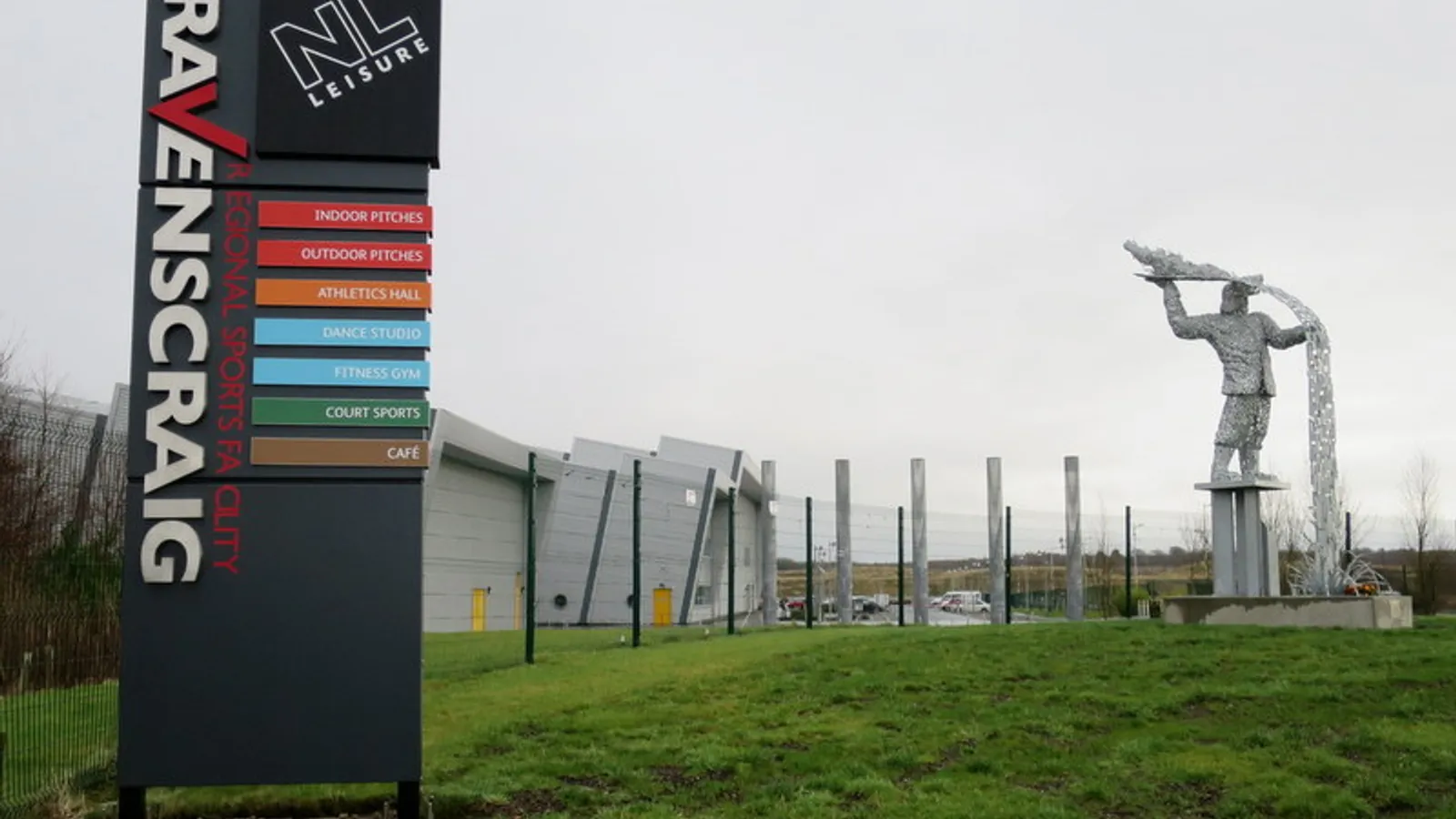

Ravenscraig
Contents
Legend/Myth Opener
Ravenscraig's closure is frequently remembered in Scotland as a simple act of political betrayal — a thriving plant deliberately killed by a Westminster government hostile to Scottish industry. The underlying economics were real and documented (global steel overcapacity, an ageing plant competing against newer continental and Asian capacity), but the political dimension — genuine anger at how the decision was handled, broken assurances about the plant's future, and the absence of any comparable government intervention to protect the jobs — is also real and documented. Both strands deserve honest treatment rather than collapsing the story into either pure economics or pure political villainy.
TL;DR
- established Ravenscraig, built by Colvilles between 1954 and 1959 at Motherwell, became the largest hot strip steel mill in Western Europe by the time of its 1992 closure — this scale is documented in industry and historical records, not local pride alone.
- established Closure in 1992 directly eliminated 770 jobs and was linked to around 10,000 further jobs in the wider Lanarkshire economy — these figures come from contemporary reporting and subsequent historical accounts.
- disputed Whether the closure was primarily driven by genuine economic unviability or by a political decision to run down Scottish heavy industry remains contested; both economic and political historians have made documented cases for each emphasis, so neither should be stated as the sole explanation.
- established Ravenscraig's site is now recognised as the largest brownfield site in Europe, a status confirmed by redevelopment authorities, and is being converted into a new town decades after closure.
- traditional The 1992 closure is widely described as "the end of Scottish heavy industry"; this is stated as traditional framing because other Scottish steel and heavy engineering activity (Dalzell, Clydebridge) continued afterward, albeit at far smaller scale.
Key Facts
- Category
- Detail
- Peak Era
- 1960s–1980s
- Key Locations
- Motherwell, North Lanarkshire
- Key Companies/Figures
- Colvilles Ltd (builder); British Steel Corporation (operator from 1967); Ian MacGregor (BSC chairman associated with closures policy)
- Status Today
- Demolished; site under long-term redevelopment as new town of Ravenscraig
- Peak Employment
- Around 12,000 at height (across site and linked operations)
- Closure Date
- 1992 (last steel produced)
- Direct Jobs Lost
- 770, with roughly 10,000 further jobs affected regionally
- SI Score
- 51/60
Scottish Impact Index (SI Score)
- Economic Impact
- 9/10
- Industrial Longevity
- 6/10
- Material Contribution
- 10/10
- Industrial Distinctiveness
- 8/10
- Industrial Legacy
- 9/10
- Recognition
- 9/10
51/60
Ranked =34th of 50 in Industry
A Note on Claims and Evidence
The physical facts of Ravenscraig — construction dates, scale, operator history, closure date, and job-loss figures — are documented in Hansard records, contemporary press coverage, and subsequent industrial histories, and are treated as settled here. The characterisation of the closure as purely a deliberate political act against Scotland, versus purely an inevitable economic consequence of global steel overcapacity, is genuinely disputed: both framings have documented support (economic data on overcapacity and plant age on one side; parliamentary records of broken assurances and asymmetric treatment compared to English plants on the other), and this article presents both rather than adjudicating a final verdict. Popular memory of Ravenscraig as an almost mythic symbol of total Scottish industrial collapse is closer to traditional narrative framing, since Scottish steelmaking continued afterward in reduced form elsewhere — a nuance this card states plainly rather than letting the symbolism override the facts.
Timeline
Colvilles constructs the integrated Ravenscraig iron and steel works at Motherwell.
Strip mill completed, giving Ravenscraig a hot-rolling capability among only a handful in the UK at the time.
Colvilles nationalised into British Steel Corporation; Ravenscraig becomes part of a state-owned national network.
Colvilles, close to bankruptcy, is nationalised into the British Steel Corporation.
UK and global steel overcapacity drives repeated rounds of rationalisation across British Steel's plants; Ravenscraig survives several closure threats and becomes a focal point of Scottish industrial campaigning.
Ian MacGregor's tenure as British Steel chairman (preceding his more famous role at the National Coal Board) is associated with aggressive capacity-cutting across the UK steel sector.
British Steel privatisation process and continuing overcapacity bring Ravenscraig's closure to a head; political assurances about the plant's future are made and later seen as broken.
Ravenscraig produces its last batch of steel; plant closes, with 770 direct job losses and around 10,000 further jobs affected across the region.
Demolition of the Ravenscraig site begins following closure.
Long-running redevelopment of the site as a new town, part-funded by Tata Steel Europe as British Steel's eventual corporate successor; site remains, for years, the largest brownfield site in Europe.
Details
Origins and Early Development
Ravenscraig was built by Colvilles between 1954 and 1959 at Motherwell in North Lanarkshire, integrating ironmaking, steelmaking, and — crucially — a strip mill capable of rolling steel into the flat sheet product increasingly demanded by the automotive and white-goods industries, among others. It was one of only a handful of strip mills in the UK at the time, and its construction reflected real confidence, backed by significant capital investment, in the long-term future of British and Scottish steel demand during the postwar industrial expansion. Within a decade and a half, Ravenscraig had grown into one of the largest integrated steelworks in Western Europe, with a workforce that at its peak reached around 12,000 across the site and closely linked operations.
Peak Scale and Significance
By the time concerns about its future began to mount in the 1970s and 1980s, Ravenscraig's hot strip mill was, by most accounts, the largest in Western Europe — a genuinely significant technical and economic asset, not merely a large employer. It fed steel into shipbuilding, construction, and manufacturing supply chains across Scotland and beyond, and its scale made it one of the clearest physical symbols of Scotland's twentieth-century industrial identity, comparable in symbolic weight to the Clyde shipyards. Ravenscraig's survival through the 1970s and into the 1980s, even as the UK steel sector underwent repeated rounds of rationalisation under British Steel Corporation leadership, including that of Ian MacGregor (who became BSC chairman before his later, more widely remembered role confronting the National Union of Mineworkers at the National Coal Board), became a point of genuine political contention. Scottish politicians, unions, and campaigners fought multiple closure threats across the 1970s and 1980s, each time securing stays that fed a narrative — not without foundation — that Ravenscraig survived partly through political pressure rather than economic logic alone.
Decline and Closure
The end, when it came in 1992, should be described honestly and specifically rather than softened. British Steel's continuing privatisation process, combined with persistent global steel overcapacity and Ravenscraig's age relative to newer continental and Asian plants, led to the decision to close the works. Ravenscraig produced its last batch of steel in 1992, directly eliminating 770 jobs, with contemporary and subsequent estimates putting the wider regional job impact at around 10,000 positions once supply-chain and dependent local employment are counted. This was not simply a statistic: Motherwell and the wider Lanarkshire steel belt had built generations of community identity, skill, and local economy around the plant, and its closure is widely and accurately described in local and national accounts as one of the most devastating single moments of Scottish deindustrialisation.
The political dimension of the closure deserves honest treatment rather than erasure in either direction. On one hand, the underlying economics of an ageing, single-site integrated steelworks competing against leaner, more modern capacity elsewhere in the world were genuinely difficult, and simply keeping Ravenscraig open indefinitely through subsidy was not a cost-free option. On the other hand, campaigners and historians have documented specific instances in which assurances given about Ravenscraig's future were later set aside, and have pointed to what they argue was an asymmetry in how the UK government and British Steel treated Scottish plants compared to equivalent English sites facing similar competitive pressures. Both of these documented strands — real economic pressure, and real grievances about process and fairness — belong in an honest account of the closure; neither should be allowed to fully displace the other.
Present-Day Legacy
Ravenscraig was demolished following closure, and the site has since become one of the most visible physical legacies of Scottish industrial decline: for years it held the status of the largest brownfield site in Europe, a vast expanse of cleared industrial land in the heart of Lanarkshire. Redevelopment has proceeded slowly and in stages, converting the site into a new town with housing, retail, education, and leisure facilities, part-funded by Tata Steel Europe as the eventual corporate successor to British Steel. The pace of this redevelopment — decades, rather than years — is itself a quiet but telling data point about the real difficulty of replacing large-scale industrial employment with equivalent economic activity, and it is worth stating that plainly rather than presenting the new town as a simple happy ending to the Ravenscraig story.
A Political Decision
G. C. Peden, in the Oxford Handbook of Modern Scottish History (2012), describes Ravenscraig as a political decision from the start. In 1958 Prime Minister Harold Macmillan, worried that Scottish unemployment was above the UK average, wanted jobs taken to the workers, and a strip mill at Motherwell was thought essential for a Scottish motor and light-engineering industry. The chance to move steelmaking to the Clyde coast, closer to imported ore, was missed. Sir Andrew McCance, chairman of Colvilles, predicted it would be a financial disaster, but gave way when offered a government loan. Demand never matched capacity, and by nationalisation in 1967 Colvilles was close to bankruptcy.
When Linwood closed in 1981, Ravenscraig lost its main customer. It stayed open, Peden argues, largely because Scottish Conservatives did not want the blame for closing a nationalised plant. After British Steel was privatised in 1988 it had to pay its way, and despite better productivity it closed in 1992.
Did You Know?
- At its peak, Ravenscraig employed around 12,000 people across the integrated site and closely linked operations — comparable in scale to a small town's entire working population.
- Ian MacGregor, who became chairman of British Steel Corporation and was associated with the era's capacity-cutting policies, later became even more widely known for his confrontational role at the National Coal Board during the 1984–85 miners' strike.
- Ravenscraig's strip mill was, by the time of closure, the largest hot strip mill in Western Europe — a genuinely world-class piece of industrial infrastructure, not just a large local employer.
- The plant survived multiple closure threats across the 1970s and 1980s before finally closing in 1992, reflecting years of sustained political and union campaigning to keep it open.
- The site's redevelopment as a new town has been part-funded by Tata Steel Europe, the Indian-owned successor to British Steel — a striking link between the plant's closure and its eventual rebirth.
- For years after demolition, the former Ravenscraig site held the formal status of the largest brownfield site in all of Europe.
- Despite Ravenscraig's closure, Scottish steel rolling did not disappear entirely — nearby Dalzell and Clydebridge continued operating at much smaller scale under later owners.
- The 1992 closure is still regularly cited in Scottish political debate, decades later, as a reference point in discussions of industrial policy and devolution.
FAQ
1When did Ravenscraig close?
It produced its last batch of steel in 1992, ending integrated large-scale steelmaking in Scotland.
2How many jobs were lost?
770 direct jobs were lost immediately, with around 10,000 further jobs in the wider regional economy affected by the closure.
3Who built Ravenscraig?
Colvilles Ltd constructed it between 1954 and 1959; it later passed to British Steel Corporation following nationalisation in 1967.
4Was Ravenscraig really the largest hot strip mill in Western Europe?
Yes, by most industry accounts, at the time of its closure in 1992.
5Was the closure purely a political decision?
No — it reflected genuine economic pressures from global steel overcapacity and the plant's relative age, but it also involved documented political grievances over broken assurances and perceived unequal treatment; both factors are part of the honest record.
6Who was Ian MacGregor and what was his role?
He was chairman of British Steel Corporation during a period of major capacity cuts, before becoming better known for his later, more confrontational role at the National Coal Board during the 1984–85 miners' strike.
7What happened to the site after closure?
It was demolished and became, for years, the largest brownfield site in Europe, now undergoing long-term redevelopment as a new town.
8Does Scottish steelmaking still exist after Ravenscraig?
Yes, in much reduced form — nearby Dalzell and Clydebridge continued rolling steel under later ownership, though without Ravenscraig's integrated scale.
9Why is Ravenscraig considered so symbolically important in Scotland?
Because its scale, its decades-long survival through repeated closure threats, and its sudden 1992 end made it one of the most visible single markers of Scottish industrial decline.
10Did the plant face closure threats before 1992?
Yes, repeatedly across the 1970s and 1980s, each time surviving through a combination of political pressure and temporary economic justification.
11Who funds the current redevelopment of the Ravenscraig site?
It has been part-funded by Tata Steel Europe, the successor to British Steel.
12Is it accurate to call 1992 "the end of Scottish heavy industry"?
Not entirely — it ended large-scale integrated steelmaking specifically, but other heavy industry and reduced-scale steel rolling continued in Scotland afterward.
Sources and Further Reading
Primary/Institutional
- Hansard, House of Commons debates on Ravenscraig and steel production, 1982 and 1992
- Canmore (Historic Environment Scotland), Ravenscraig steelworks site records
Scholarly/Critical
- G. C. Peden, "A New Scotland? The Economy", in T. M. Devine and Jenny Wormald (eds), The Oxford Handbook of Modern Scottish History (Oxford University Press, 2012)
- CultureNL, "Closure of Ravenscraig"
- Revolutionary Socialism in the 21st Century, "British Steel Workers' Rights Disregarded"
General
- Wikipedia, "Ravenscraig steelworks"
- The Sunday Post, "On this day in 1992: Ravenscraig produced its last batch of steel as closure devastated community"
- TheGlasgowStory.com, industrial history features
- Business Standard, "Scotland's steel heartland offers stark message to Port Talbot"
Caveats: Myths and Disputed Claims
- Do not state as settled fact that Ravenscraig's closure was purely a politically motivated act against Scotland, nor that it was purely an unavoidable economic inevitability — both the economic and political dimensions are documented and contested, and should be presented together.
- Avoid describing 1992 as the absolute end of all Scottish steelmaking — reduced-scale rolling at Dalzell and Clydebridge continued under later ownership.
- Peak employment figures (around 12,000) refer to the site's historical high point across decades, not the workforce at the moment of closure (770 direct jobs lost in 1992); these two figures should not be conflated.
- The "largest brownfield site in Europe" claim should be attributed to the period following demolition and is a widely cited but evolving status as redevelopment has progressed over the decades since.
Card 013 · Industry