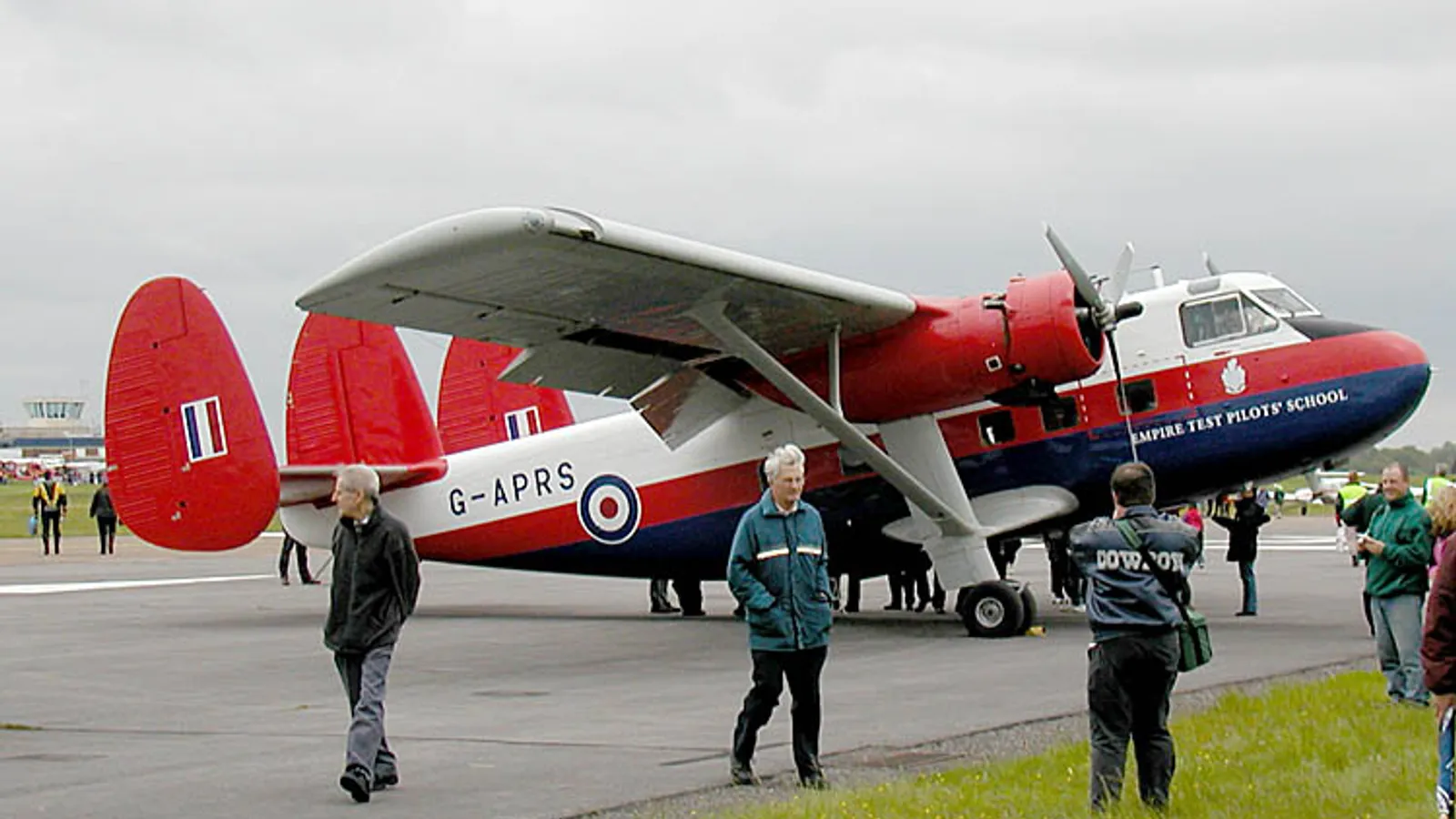

Scottish Aviation
Contents
Legend/Myth Opener
Scotland is sometimes presented as a forgotten powerhouse of British aircraft manufacturing, overshadowed only by chance. The documented reality is more modest: Scottish aviation manufacturing — from Beardmore's airship and aircraft works on the Clyde to Scottish Aviation Ltd at Prestwick — was real, innovative in places, and locally significant, but it was consistently a smaller, more peripheral player than the aircraft industries of the English Midlands and south, and it never approached their scale of output or employment.
TL;DR
- established William Beardmore & Company diversified from Clyde shipbuilding into aircraft and airship manufacture in the early 20th century, including building the airship R34, because this is documented in company and museum archives.
- established Scottish Aviation Ltd was founded at Prestwick in 1935 and became Scotland's principal post-war aircraft manufacturer, producing types including the Pioneer, Twin Pioneer, Bulldog trainer, and Jetstream, because these are recorded in aviation industry histories and official type records.
- established Scotland's aviation manufacturing base was always smaller in scale and output than England's major centres (such as those around Bristol, Coventry, and the London/Hertfordshire area), because comparative employment and output figures across British aviation history confirm this consistently.
- traditional Prestwick's role as a key transatlantic staging base during the Second World War is often cited as evidence of Scottish aviation's wartime importance, which is true of the airfield's logistics role but should be distinguished from Scotland having a large-scale aircraft manufacturing industry.
- established Scottish Aviation was absorbed into British Aerospace in 1977 and Prestwick's manufacturing role diminished sharply thereafter, because this nationalisation/merger and subsequent decline are part of the documented corporate history of British aerospace consolidation.
Key Facts
- Category
- Detail
- Peak Era
- 1930s–1960s (Scottish Aviation Ltd); 1910s–1920s (Beardmore aviation)
- Key Locations
- Prestwick (Ayrshire); Dalmuir and Inchinnan (Clydeside, Beardmore)
- Key Companies/Figures
- Scottish Aviation Ltd; William Beardmore & Company
- Key Aircraft
- Beardmore WB series, airship R34; Scottish Aviation Pioneer, Twin Pioneer, Bulldog, Jetstream
- Status Today
- Absorbed into British Aerospace (1977); Prestwick site retains aerospace-adjacent activity (maintenance, logistics) but large-scale manufacturing has ended
- Relative Scale
- Always smaller than English aviation centres (Bristol, Coventry, Hertfordshire, etc.)
- SI Score
- 47/60
Scottish Impact Index (SI Score)
- Economic Impact
- 8/10
- Industrial Longevity
- 7/10
- Material Contribution
- 9/10
- Industrial Distinctiveness
- 8/10
- Industrial Legacy
- 8/10
- Recognition
- 7/10
47/60
Ranked =45th of 50 in Industry
A Note on Claims and Evidence
Scottish aviation history divides cleanly into documented corporate and production facts — company foundings, specific aircraft types, factory locations, mergers — all well recorded in aviation-industry histories, museum archives and official records, and a more traditional/popular narrative that inflates Scotland's relative importance within British aviation as a whole. This article keeps those separate: Beardmore's airship and aircraft work, and Scottish Aviation's post-war output at Prestwick, are real and specific, but they represented a minor fraction of British aviation manufacturing capacity and employment at any point in the 20th century. There is no serious legend-myth material here, mainly a traditional tendency toward overstatement that this article corrects by keeping the comparative scale explicit.
Timeline
William Beardmore & Company, already a major Clydeside shipbuilder and steelmaker, diversifies into aircraft and airship manufacture at Dalmuir and later Inchinnan.
Beardmore builds the rigid airship R34, which makes the first east-to-west transatlantic airship crossing — a genuine technical achievement, though a one-off rather than a sign of sustained large-scale output.
Beardmore's aviation activities wind down as post-WWI demand collapses and the company refocuses on its core heavy-engineering and shipbuilding businesses.
Scottish Aviation Ltd is founded at Prestwick, Ayrshire, to build and maintain aircraft and to provide pilot training.
Prestwick becomes an important Second World War staging point for transatlantic ferry flights and aircraft maintenance/modification, significantly boosting its wartime importance even though large-scale new-aircraft manufacturing remained limited compared to English centres.
The Scottish Aviation Prestwick Pioneer short-takeoff utility aircraft makes its first flight.
The Twin Pioneer twin-engined utility aircraft enters production, used by air forces and civil operators in colonial and developing contexts.
Scottish Aviation produces the Bulldog military trainer aircraft, later built in larger numbers after licensing arrangements.
The Jetstream twin-turboprop airliner/trainer, originally a Handley Page design, is taken on by Scottish Aviation for continued production after Handley Page's collapse.
Scottish Aviation is nationalised and merged into British Aerospace as part of the wider consolidation of the UK aircraft industry.
Large-scale aircraft manufacturing at Prestwick ends; the site continues in aerospace-related maintenance, logistics and support roles rather than as a major manufacturing centre.
Details
Origins: Beardmore and the First Phase of Scottish Aviation
Scotland's first serious engagement with aircraft manufacturing came not from a dedicated aviation firm but from William Beardmore & Company, one of Clydeside's giant shipbuilding and heavy-engineering concerns. In the early 20th century, as aviation shifted from novelty to strategic necessity, Beardmore diversified from its shipyards and steelworks into aircraft and airship production at sites including Dalmuir and Inchinnan on the Clyde. This was a natural, if opportunistic, extension of existing heavy-engineering capacity — the same skills in metal fabrication, large structures, and precision engineering that built ships could, with adaptation, build airframes and airship hulls.
Beardmore's most famous product was the rigid airship R34, completed in 1919, which achieved a genuine first: the first airship crossing of the Atlantic from east to west (following an earlier British airship's westward crossing by aircraft had not yet been matched eastward in reverse by airship until R34's return leg completed the first two-way crossing). This was a landmark in aviation history and a point of real Scottish technical achievement. However, it should not be mistaken for evidence of a large, sustained Scottish aircraft industry: airship and aircraft work at Beardmore was a relatively short-lived diversification, driven by wartime and immediate post-war demand, and it declined through the 1920s as that demand dried up and the company returned its focus to shipbuilding and steel.
Scottish Aviation Ltd and the Prestwick Era
The more substantial and longer-lived chapter of Scottish aircraft manufacturing began with the founding of Scottish Aviation Ltd at Prestwick in Ayrshire in 1935. The choice of Prestwick reflected the site's favourable flying weather (notably lower fog incidence than much of the rest of Britain) and its developing role as an airfield. Scottish Aviation combined aircraft manufacturing, maintenance, and pilot training, and it grew substantially in importance during the Second World War, when Prestwick became a key staging and transit point for aircraft being ferried across the Atlantic from North America to Britain, as well as a maintenance and modification centre for Allied aircraft.
After the war, Scottish Aviation developed a run of distinctive, if niche, aircraft types. The Pioneer (first flown 1947) and the later twin-engined Twin Pioneer (1955) were short-takeoff-and-landing utility aircraft well suited to rough airstrips in colonial and developing-world contexts, finding buyers among air forces and civil operators who needed rugged, simple aircraft for difficult terrain. In the 1960s, the company built the Bulldog military trainer, and — in one of its more notable moves — took over production of the Jetstream twin-turboprop after the original manufacturer, Handley Page, collapsed in 1970. These were respectable, specialised contributions to British aviation, but they were modest in volume compared with the output of England's major aircraft manufacturers of the same period, such as the large-scale production runs coming out of the Bristol, Coventry, and Hertfordshire-based aircraft industries, which built the bulk of Britain's airliners, bombers, and fighters.
Honest Assessment: Scale Relative to English Aviation Centres
It is important to state plainly what the documented record shows: Scotland was never a first-rank centre of British aircraft manufacturing. England's aviation industry — concentrated around companies and sites associated with Bristol, de Havilland, Hawker, Vickers, and others in the Midlands, south-east, and south-west — employed far more workers, produced vastly larger numbers of aircraft, and dominated Britain's most strategically important aircraft programmes, from wartime fighters and bombers to post-war airliners. Scottish Aviation and its predecessor Beardmore aviation work were real, but they occupied a secondary, specialised niche: utility and short-run aircraft types, maintenance and ferrying services, and licensed continuation production (as with the Jetstream), rather than leading-edge fighter or large airliner design and mass production. Presenting Scottish aviation as comparable in scale to England's aircraft industry would be a significant overstatement unsupported by employment or output figures.
Decline, Consolidation, and Present-Day Status
As with much of the British aircraft industry, the 1960s and 1970s brought consolidation driven by the high cost of aircraft development and government industrial policy. Scottish Aviation was nationalised and merged into the newly formed British Aerospace in 1977, ending its independent existence. Over subsequent decades, large-scale new-aircraft manufacturing at Prestwick wound down, though the site has continued to host aerospace-related activity, including aircraft maintenance, overhaul, and logistics operations, reflecting a broader pattern across British regional aviation manufacturing of shifting from building aircraft to servicing and supporting them. Prestwick Airport itself remains operational, carrying forward the airfield's long association with aviation even as the manufacturing identity that once defined Scottish Aviation Ltd has largely disappeared.
Did You Know?
- The Beardmore-built airship R34 completed the first two-way crossing of the Atlantic by air in 1919, years before fixed-wing aircraft could reliably do the same.
- Scottish Aviation's Twin Pioneer was specifically designed for rough, short airstrips, making it popular with air forces and operators in colonial-era and developing-world contexts rather than mainstream European air travel.
- Scottish Aviation took over production of the Jetstream after its original manufacturer, Handley Page, went bankrupt in 1970 — a rescue of an English aircraft design by a Scottish company.
- Prestwick's reputation for unusually clear flying weather compared with much of Britain was a specific factor in choosing it as an airfield and manufacturing site.
- William Beardmore & Company was primarily a shipbuilder and steelmaker; aviation was a diversification, not its core business, and its aircraft/airship activity lasted only a couple of decades.
- Scottish Aviation Ltd combined manufacturing with pilot training and aircraft maintenance from its earliest years, reflecting a more diversified business model than pure aircraft-building rivals.
- Prestwick's wartime importance came largely from its role in the transatlantic ferrying of aircraft from North America, a logistics function distinct from manufacturing new aircraft.
- Scottish Aviation Ltd's absorption into British Aerospace in 1977 was part of the same wave of nationalisation that merged most of Britain's major aircraft manufacturers into a small number of state-backed groups.
FAQ
1Was Scotland ever a major centre of British aircraft manufacturing?
No. Scottish aviation manufacturing, through Beardmore and later Scottish Aviation Ltd, was real but consistently smaller in scale than England's major aviation centres, which dominated British aircraft output and employment.
2What did William Beardmore & Company make before aviation?
Beardmore was primarily a shipbuilder and steelmaker on the Clyde; aviation was a diversification undertaken in the early 20th century.
3What was the R34 airship?
A rigid airship built by Beardmore, famous for completing the first two-way transatlantic airship crossing in 1919.
4When was Scottish Aviation Ltd founded?
In 1935, at Prestwick in Ayrshire.
5What aircraft did Scottish Aviation produce?
Notable types included the Pioneer, Twin Pioneer, Bulldog trainer, and the Jetstream (which it took over from Handley Page).
6Why was Prestwick chosen as a site?
Primarily for its comparatively clear, low-fog flying weather relative to much of the rest of Britain, and its developing role as an airfield.
7What role did Prestwick play in the Second World War?
It served as an important staging and transit point for aircraft ferried across the Atlantic, and as a maintenance and modification base — a significant logistics role, distinct from large-scale new manufacturing.
8What happened to Scottish Aviation?
It was nationalised and merged into British Aerospace in 1977, ending its independent corporate existence.
9Is aircraft manufacturing still a major activity at Prestwick?
Large-scale new-aircraft manufacturing has ended; the site retains aerospace-related maintenance, overhaul, and logistics activity.
10Did Scottish Aviation ever build fighter aircraft or large airliners?
No — its output was concentrated in utility aircraft, trainers, and licensed continuation production, not frontline fighters or major airliners.
11Is the comparison to England's aviation industry fair?
Yes — it is grounded in documented differences in manufacturing scale, employment, and the strategic importance of the aircraft types each side produced.
12Why did Scottish Aviation take over the Jetstream?
Handley Page, the original manufacturer, went into liquidation in 1970, and Scottish Aviation stepped in to continue production of the aircraft type.
Sources and Further Reading
Primary/Institutional
- University of Glasgow Archives & Special Collections, "William Beardmore & Co Ltd" digitised collection — https://www.gla.ac.uk/myglasgow/archivespecialcollections/digitisedcollections/takeflight/williambeardmorecoltd
- West Dunbartonshire Council, museum collections on Clydebank shipbuilding and Beardmore — https://west-dunbarton.gov.uk/leisure-parks-events/museums-and-galleries/collections/shipbuilding/shipbuilding-clydebank/beardmore
Scholarly/Critical
- Grace's Guide to British Industrial History, "Beardmore" — https://www.gracesguide.co.uk/Beardmore
- Threadinburgh, "The brief life of the Dalmuir aero industry" — https://threadinburgh.scot/2022/11/06/the-thread-about-the-brief-life-of-the-dalmuir-aero-industry-when-clyde-shipbuilders-constructed-the-largest-aircraft-in-the-world
General
- Wikipedia, "Scottish Aviation" — https://en.wikipedia.org/wiki/Scottish_Aviation
- Wikipedia, "Scottish Aviation Pioneer" — https://en.wikipedia.org/wiki/Scottish_Aviation_Pioneer
- Wikipedia, "Scottish Aviation Twin Pioneer" — https://en.wikipedia.org/wiki/Scottish_Aviation_Twin_Pioneer
Caveats: Myths and Disputed Claims
- Do not present Scotland as a major or leading centre of British aircraft manufacturing. Correct phrasing: Scottish aviation manufacturing was real and locally significant but consistently smaller in scale than England's principal aviation centres.
- Do not describe Beardmore's aviation work as a long-running, core business; it was a diversification lasting roughly two decades before winding down.
- Do not overstate Prestwick's wartime manufacturing role; its principal wartime significance was as a transatlantic ferrying and maintenance hub, not as a large new-aircraft production centre.
- Do not imply Scottish Aviation designed the Jetstream; it inherited and continued production of an existing Handley Page design.
Card 032 · Industry