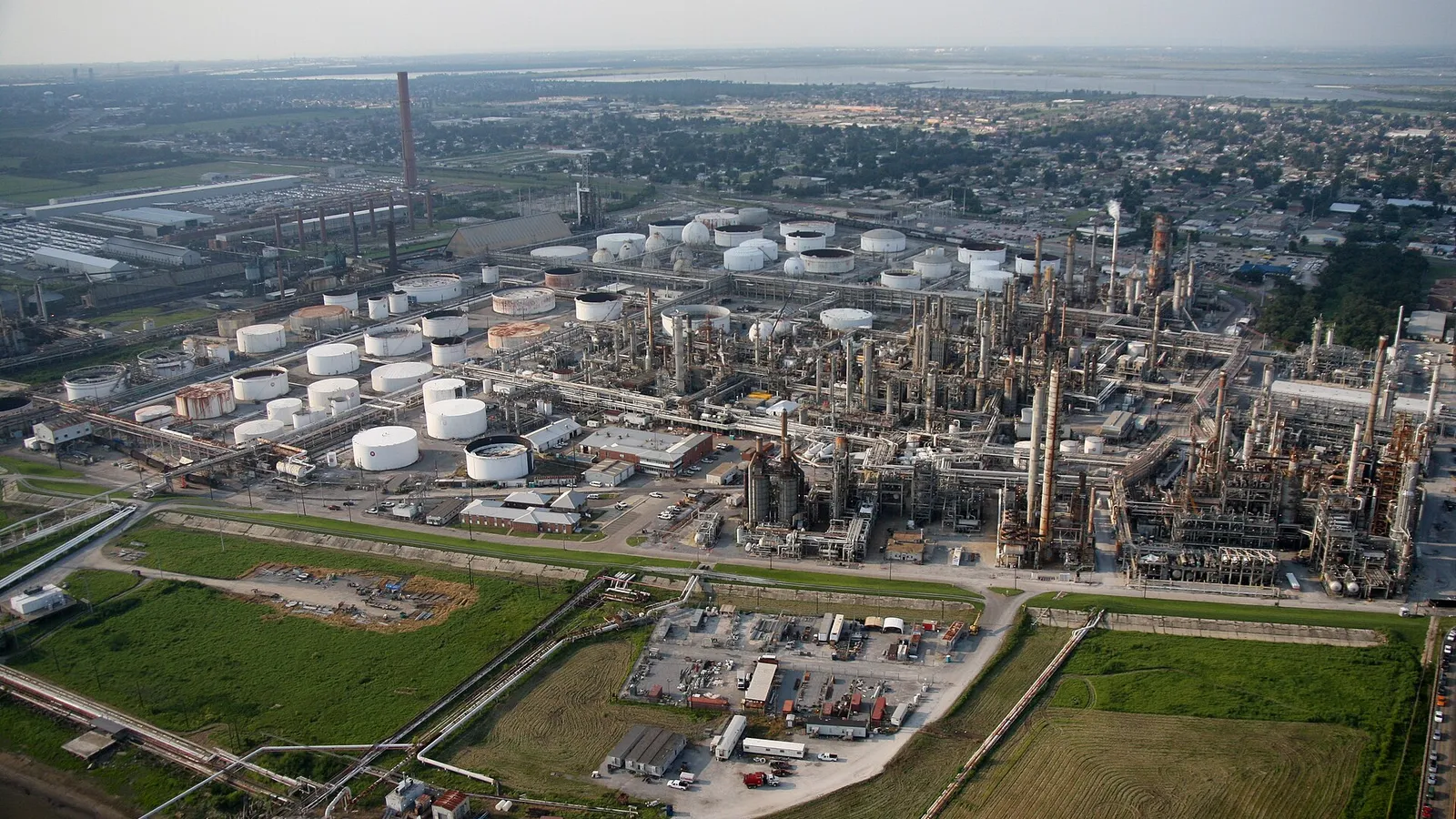

The Chemical Industry
Contents
Legend/Myth Opener
Scotland's popular industrial memory runs heavily to coal, steel, and ships — yet by the twentieth century Scotland had also become one of the most significant chemical-manufacturing regions in Britain, producing everything from synthetic dyes and explosives to petrochemicals and plastics. This was not a single industry in one place but a cluster of distinct chemical sectors — dyestuffs at Grangemouth, explosives at Ardeer, alkali and heavy chemicals around the industrial belt, and later oil-derived petrochemicals — whose combined scale rivalled anything in heavy engineering, even though it rarely gets the same cultural attention as shipbuilding on the Clyde.
TL;DR
- established Scotland's chemical industry developed as several distinct clusters rather than one unified sector — synthetic dyestuffs and petrochemicals at Grangemouth, explosives manufacturing at Ardeer in Ayrshire, and alkali/heavy chemical production across the industrial central belt — a structure confirmed by company and industrial-history records such as Grace's Guide and Canmore.
- established Imperial Chemical Industries (ICI), formed in 1926 from the merger of several British chemical firms including Nobel Industries, became the dominant corporate presence across most of Scotland's major chemical sites for much of the twentieth century, a documented corporate history.
- established Two sites — Grangemouth and Ardeer (Nobel's explosives works) — account for a disproportionate share of Scotland's chemical-industry history and scale, and are covered in depth in their own dedicated articles in this series rather than duplicated at length here.
- disputed The extent to which Scotland's chemical industry should be credited as a driver versus a byproduct of the country's oil and petrochemical boom from the 1970s onward is debated among economic historians, and this article treats the relative weighting as an open question rather than settled fact.
- traditional Grangemouth's self-description as "Scotland's only oil refinery town" captures a strong and accurate local/traditional identity, though the site's role has recently shifted (see the dedicated Grangemouth card) away from refining toward import-terminal operations.
Key Facts
- Category
- Detail
- Peak Era
- 1920s–1980s (dyestuffs/explosives/alkali); 1950s–2000s (petrochemicals)
- Key Locations
- Grangemouth, Ardeer (Ayrshire), the central Scotland industrial belt, Westquarter (Falkirk)
- Key Companies/Figures
- Imperial Chemical Industries (ICI); Nobel Industries/Nobel's Explosives Co.; Scottish Dyes Ltd (Grangemouth); BP Chemicals; INEOS (from 2005)
- Status Today
- Contracted and consolidated — Grangemouth's petrochemical cracker and former refinery remain Scotland's largest single chemical site, under INEOS/Petroineos ownership, but much of the historic explosives and dyestuffs capacity has closed
- SI Score
- 57/60
- Cross-references
- See dedicated cards: "Grangemouth" and "Nobel & Ardeer" for site-specific detail
Scottish Impact Index (SI Score)
- Economic Impact
- 10/10
- Industrial Longevity
- 9/10
- Material Contribution
- 10/10
- Industrial Distinctiveness
- 9/10
- Industrial Legacy
- 10/10
- Recognition
- 9/10
57/60
Ranked =14th of 50 in Industry
A Note on Claims and Evidence
The corporate and site-level history of Scotland's chemical industry is well documented through company records, industrial heritage surveys (Canmore, Grace's Guide), and academic economic history, and the broad narrative of expansion, ICI-era consolidation, and later contraction is not seriously disputed. Where more care is needed is in attributing causation for the industry's later trajectory — whether North Sea oil and gas should be credited as the primary driver of Scotland's petrochemical-era growth, or whether existing chemical infrastructure and skills were simply well-placed to benefit from it, is a matter of historical interpretation rather than settled consensus, and this article treats it accordingly. This card deliberately keeps its treatment of Grangemouth and Ardeer brief, since both sites carry their own dedicated, more detailed articles elsewhere in this series.
Timeline
Early Scottish chemical manufacture develops around alkali production, bleaching agents, and other inputs for the textile industry, feeding Scotland's dominant 19th-century cotton and linen trades.
Alfred Nobel establishes a dynamite factory at Ardeer, Ayrshire — Scotland's entry into large-scale explosives manufacturing (see dedicated Nobel & Ardeer card).
Grangemouth develops as a chemical and, from 1924, oil-refining centre, exploiting its position on the Firth of Forth and proximity to the Forth and Clyde Canal (see dedicated Grangemouth card).
Scottish Dyes Ltd is established at Grangemouth, becoming a significant synthetic dyestuffs producer and later an ICI subsidiary.
Imperial Chemical Industries (ICI) is formed from the merger of Brunner Mond, Nobel Industries, United Alkali Company, and British Dyestuffs Corporation — bringing most of Scotland's major chemical sites under a single corporate umbrella.
ICI-era consolidation and expansion across Scottish sites; explosives, dyestuffs, and heavy chemical production continue at scale.
Grangemouth's petrochemical complex develops alongside its refinery, and later benefits from North Sea oil and gas feedstock from the 1970s onward.
Gradual contraction of traditional explosives and dyestuffs manufacturing (Ardeer's explosives role winds down significantly); petrochemicals at Grangemouth become the dominant surviving chemical activity.
INEOS acquires the Grangemouth petrochemical and refining assets from BP, becoming the dominant modern operator.
Petroineos (the Petrochina/INEOS refining joint venture) announces and completes the closure of crude-oil refining at Grangemouth, converting the site to an import/distribution terminal (see dedicated Grangemouth card for full detail).
Details
Origins: textiles, alkali, and the first explosives works
Scotland's chemical industry grew initially as a support function for other industries rather than as an end in itself. The country's dominant nineteenth-century textile trades — cotton, linen, and later jute — required bleaching agents, dyes, and other chemical inputs at industrial scale, and this demand seeded an early domestic alkali and bleach-manufacturing capacity across the central industrial belt. A more dramatic departure came in the 1870s, when the Swedish inventor Alfred Nobel chose a remote stretch of coastal sand dunes at Ardeer, Ayrshire, as the site for a large dynamite factory — a decision driven by safety considerations given the hazards of explosives manufacture, and one that would eventually make Ardeer the largest explosives factory in the world (treated in full in the dedicated Nobel & Ardeer card in this series).
Grangemouth's chemical identity developed somewhat later but became, over the twentieth century, the single most important site in Scottish chemical manufacturing. Positioned on the Firth of Forth at the eastern end of the Forth and Clyde Canal, Grangemouth combined port access, canal transport, and proximity to central Scotland's industrial markets. Scottish Dyes Ltd, established there in the 1920s, became a significant producer of synthetic dyestuffs — a sophisticated and technically demanding branch of chemistry — before the site's focus expanded further with the arrival of oil refining in 1924 (the Grangemouth card in this series covers that history and the site's recent transformation in full).
Peak scale: the ICI era and a diversified industrial base
The single most important corporate event in Scotland's chemical-industry history was the 1926 formation of Imperial Chemical Industries, a merger of four major British chemical firms — Brunner Mond, Nobel Industries, the United Alkali Company, and British Dyestuffs Corporation — that brought Ardeer's explosives operation, Grangemouth's dyestuffs production, and various alkali interests across Scotland under a single corporate structure. For much of the mid-twentieth century, ICI was effectively the dominant employer and technical authority across Scotland's chemical sector, running explosives, dyestuffs, and (increasingly from mid-century) petrochemical operations with a scale of capital investment that smaller independent firms could rarely match.
This period saw Scotland's chemical industry diversify and deepen. Dyestuffs production at Grangemouth required genuinely sophisticated organic chemistry and, alongside the explosives expertise concentrated at Ardeer, gave Scotland real technical depth in the field, not merely bulk manufacturing capacity. The arrival of North Sea oil and gas production from the 1970s added a further, transformative layer: Grangemouth's refining and petrochemical infrastructure was well positioned to process North Sea crude and associated gas, feeding an expanding petrochemical cracker complex that for decades supplied a significant share of the UK's ethylene and related feedstocks for the plastics industry.
Decline, transformation, and consolidation
Scotland's chemical industry did not collapse uniformly; rather, different branches declined, consolidated, or transformed at different times and for different reasons. Explosives manufacturing at Ardeer wound down substantially over the late twentieth century as military and commercial demand patterns changed and the economics of the original site became less favourable (detailed in the dedicated Nobel & Ardeer card). Traditional dyestuffs manufacturing also faced mounting competition from lower-cost overseas producers, particularly in Asia, eroding the position firms like Scottish Dyes/ICI had once held.
Petrochemicals at Grangemouth proved more resilient for longer, benefiting from integrated refining-and-cracking economics and North Sea feedstock, and surviving the break-up of ICI itself (which was dismantled through demergers and acquisitions from the 1990s onward) under successive owners including BP and, from 2005, INEOS. However, even this flagship activity faced a reckoning in the 2020s: Petroineos, the refining joint venture between INEOS and PetroChina, announced in September 2024 that Grangemouth's century-old crude-oil refining operation would close, a process completed by April 2025, with the site converted into a fuel import and distribution terminal rather than continuing as an active refinery — a closure that eliminated hundreds of skilled jobs and marked a symbolic end to a particular era of Scottish chemical manufacturing (full detail in the dedicated Grangemouth card).
Present-day legacy
Scotland's chemical industry today is a much smaller and more consolidated sector than at its mid-twentieth-century peak, concentrated overwhelmingly around Grangemouth's remaining petrochemical cracker and the broader central-Scotland chemical/industrial cluster, with the historic explosives and dyestuffs manufacturing largely gone as standalone activities. The legacy nonetheless runs deep: generations of skilled chemical engineers, process technicians, and scientists were trained within this sector, feeding into Scotland's broader industrial and, more recently, life-sciences and energy-transition economies. The industry's history also leaves a complicated environmental and safety legacy — from explosives-handling risks at Ardeer to the carbon-intensive nature of refining and petrochemical production at Grangemouth — that continues to shape policy debate as Scotland navigates the broader transition away from fossil-fuel-based chemical feedstocks.
Did You Know?
- Imperial Chemical Industries (ICI), formed in 1926, was for decades one of the largest companies in Britain, and its Scottish operations spanned explosives, dyestuffs, and eventually petrochemicals under one corporate roof.
- Scotland's synthetic dyestuffs industry at Grangemouth required chemistry sophisticated enough to rival the expertise found in Germany's famous dye industry, historically the world leader in the field.
- The same remote-site safety logic that led Alfred Nobel to choose Ardeer for his explosives works also shaped where much of Scotland's heavier chemical manufacturing was sited more generally.
- Grangemouth's petrochemical cracker, for decades, supplied a meaningful share of the feedstock used in UK plastics manufacturing.
- ICI's eventual break-up from the 1990s onward (through demergers such as Zeneca and later acquisitions) dismantled the single-company structure that had unified much of Scottish chemical manufacturing for over sixty years.
- INEOS, which bought Grangemouth's chemical and refining assets from BP in 2005, became one of the most significant privately controlled industrial groups in UK manufacturing.
- The April 2025 cessation of crude-oil refining at Grangemouth ended a site tradition stretching back to 1924, over a century of continuous refining operation.
- Scotland's chemical sector's skilled workforce has substantially fed into the country's modern pharmaceutical and life-sciences industry, a continuity covered in this series' dedicated Pharmaceuticals & Life Sciences card.
FAQ
1Was Scotland's chemical industry a single unified sector?
No — it developed as several distinct clusters (explosives at Ardeer, dyestuffs and later petrochemicals at Grangemouth, alkali production across the central belt) that were later brought together substantially under ICI's corporate structure.
2What was ICI's role in Scottish chemical manufacturing?
Formed in 1926 from a merger of major British chemical firms, ICI became the dominant corporate presence across most significant Scottish chemical sites for much of the twentieth century.
3Is Grangemouth still an active chemical site?
Yes, though its role changed significantly in 2024–2025 when crude-oil refining ceased; it retains a petrochemical cracker and has become a fuel import/distribution terminal — see the dedicated Grangemouth card for full detail.
4What happened to Ardeer's explosives industry?
It wound down substantially over the late twentieth century; see the dedicated Nobel & Ardeer card for the full history.
5Why is Scotland's chemical industry less culturally prominent than shipbuilding or coal?
This is a matter of cultural memory rather than scale — the chemical sector was genuinely large and significant but has not attracted the same popular/cultural narrative attention as shipbuilding on the Clyde.
6Did North Sea oil create Scotland's chemical industry?
No — the industry predates North Sea oil by decades (explosives from the 1870s, dyestuffs from the 1920s), though North Sea feedstock significantly boosted the petrochemical branch from the 1970s onward.
7Who owns Grangemouth's chemical operations today?
INEOS, in a refining joint venture (Petroineos) with PetroChina for the now-closed refining side, while INEOS retains the petrochemical cracker operations.
8What is Scottish Dyes Ltd?
A Grangemouth-based synthetic dyestuffs producer established in the 1920s, later absorbed into ICI's corporate structure.
9Did Scotland's chemical industry have safety and environmental problems?
Yes — explosives manufacturing carried inherent hazards (detailed in the Nobel & Ardeer card), and refining/petrochemical production at Grangemouth carries a significant carbon and environmental footprint, both acknowledged openly rather than glossed over in this series.
10Is Scotland's chemical sector connected to its modern pharmaceutical industry?
There is meaningful workforce and institutional continuity, though the modern pharmaceutical/life-sciences sector (covered in its own dedicated card) has developed largely as a distinct, university-research-driven industry.
11What does "chemical industry" include in this card?
Explosives, dyestuffs, alkali/heavy chemicals, and petrochemicals — the broad sector overview, with site-specific depth deferred to the Grangemouth and Nobel & Ardeer cards.
Sources and Further Reading
Primary/Institutional
- Grace's Guide to British Industrial History — entries on Scottish Dyes, Border Chemicals, and related firms
- Canmore (National Record of the Historic Environment, Scotland) — Ardeer and related industrial sites
Scholarly/Critical
- The Chemical Engineer — review of "The Dyes: Scotland's dyestuff pioneers and a century of chemical manufacturing in Grangemouth"
- Wikipedia — "Chemical industry in the United Kingdom" (sectoral and corporate history context)
General
- Wikipedia — "ICI Nobel" and related corporate-history pages
- Undiscovered Scotland and local history resources on Grangemouth's industrial development
Caveats: Myths and Disputed Claims
- Do not present Scotland's chemical industry as a single company or single site's story — correct phrasing recognises it as several distinct historical clusters later partially unified under ICI.
- Do not state that North Sea oil "created" Scotland's chemical industry — correct phrasing notes the industry predates North Sea production by decades, with oil/gas boosting but not originating the sector.
- Do not duplicate detailed Grangemouth or Ardeer history here — this card intentionally cross-references the dedicated cards for site-level depth.
- Do not describe Grangemouth's 2025 status as a full closure of the site — correct phrasing is that crude-oil refining ceased while the site continues as a petrochemical and import-terminal operation.
Card 043 · Industry