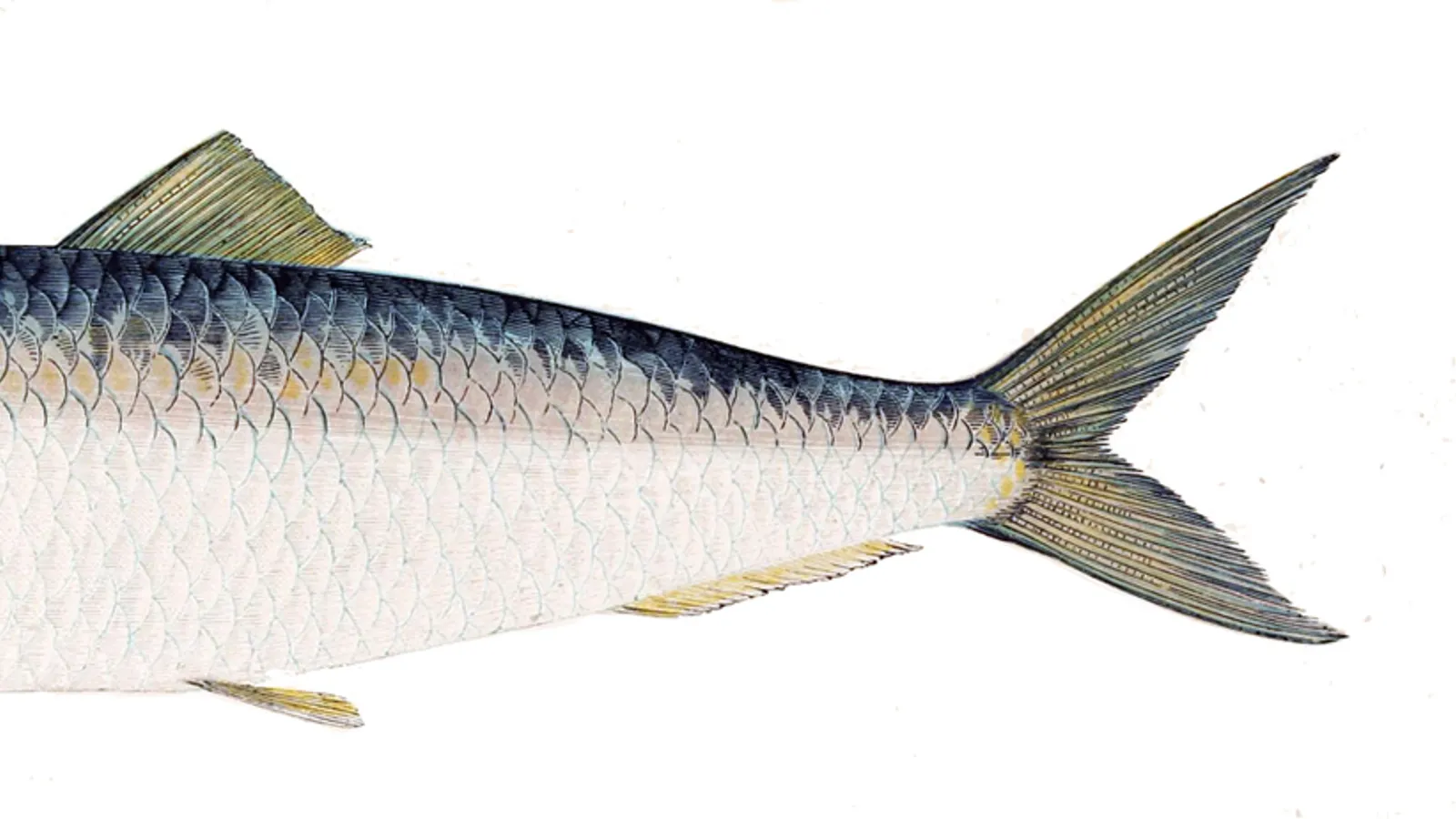

The Herring Industry
Contents
Legend/Myth Opener
The herring boom of the 19th and early 20th centuries is often remembered nostalgically — the "silver darlings," bustling harbours, and the hardy herring girls who followed the fleet. What is less often told with equal clarity is why that boom ended: the Scottish herring fishery collapsed in the mid-20th century substantially because it was fished far beyond sustainable limits. This was not simply a change in taste or a shift to other foods; it was a documented case of overfishing driving a stock, and an entire industry, into collapse.
TL;DR
- established Scotland's herring fishery grew into a massive industry across the 19th and early 20th centuries, with major fishing and curing centres at ports including Wick, Lerwick, Peterhead, and Fraserburgh, and seasonal migration of the fleet and workforce as far as Great Yarmouth, because this scale and geography are documented in fishery records, port histories, and museum archives.
- established The herring fishery employed large numbers of "herring girls," women who travelled seasonally between fishing ports to gut, sort, and pack herring by hand, following the fleet down the English and Scottish coasts, because this labour system is extensively documented in oral history, photographic archives, and local museum collections.
- established The Scottish and wider North Sea herring fishery suffered a dramatic decline by the mid-20th century, driven substantially by overfishing of herring stocks, because scientific and historical analyses of the fishery's catch data and stock collapse support this conclusion directly.
- established A North Sea herring fishing moratorium was imposed in the 1970s in response to stock collapse, because this regulatory response is a matter of documented fisheries-management record.
- traditional The herring boom is sometimes remembered as a purely romantic, prosperous era for fishing communities, but conditions for herring girls and fishermen involved hard, often dangerous and poorly paid labour, a reality this article keeps alongside the industry's undeniable economic significance.
Key Facts
- Category
- Detail
- Peak Era
- 1880s–1930s (with a shorter post-WWII resurgence before collapse)
- Key Locations
- Wick, Lerwick, Peterhead, Fraserburgh (Scotland); Great Yarmouth (England, seasonal migration endpoint)
- Key Groups
- Herring fleet owners/skippers; "herring girls" (gutters, packers); curers and merchants
- Key Cause of Decline
- Overfishing of herring stocks, compounded by changing markets and post-WWII industrial fishing intensity
- Status Today
- Industry collapsed by mid-20th century; North Sea herring stocks later recovered under management, but the historic Scottish herring fishery and its associated communities/industry never returned to former scale
- SI Score
- 59/60
Scottish Impact Index (SI Score)
- Economic Impact
- 10/10
- Industrial Longevity
- 10/10
- Material Contribution
- 10/10
- Industrial Distinctiveness
- 10/10
- Industrial Legacy
- 10/10
- Recognition
- 9/10
59/60
Ranked =4th of 50 in Industry
A Note on Claims and Evidence
The Scottish herring industry's rise, its labour system built around the herring girls, and its mid-20th-century collapse are all well documented through fisheries records, local and maritime museum archives, and scientific stock-assessment literature. The documented record is unambiguous that overfishing was a central driver of the herring stock's collapse, and this article states that plainly rather than attributing the industry's end solely to changing consumer tastes or external economic shifts, which were secondary factors at most. The romanticised image of the herring boom as a golden, harmonious era is treated here as traditional cultural memory, set against the documented reality of hard physical labour, economic precarity for many workers, and the eventual ecological consequences of the fishery's own success.
Timeline
Scottish herring fishing expands from a smaller-scale coastal activity into a major commercial industry, driven by growing demand for cured (salted/smoked) herring in domestic and export markets, particularly in the Baltic and Eastern Europe.
Herring landings rise about eightfold, driven by larger decked sailing boats and cotton nets rather than steam.
The industry reaches a first major peak, with large fishing fleets based at ports such as Wick, Fraserburgh, Peterhead, and in Shetland (Lerwick), and the herring girl labour system fully established, with women travelling seasonally down the coast as the fishing season progressed.
Scottish herring fleets and herring girls regularly travel as far as Great Yarmouth and Lowestoft in England, following the herring shoals and the fishing season southward each year.
The First World War disrupts fishing and export markets (notably the loss of Baltic/Russian export markets), causing significant short-term damage to the industry.
The industry partially recovers but faces growing structural pressures, including lost export markets and changing demand.
The Second World War again disrupts the fishery.
Post-war, some recovery occurs, but increasingly intensive and technologically efficient fishing (larger vessels, more effective gear) leads to escalating catch pressure on herring stocks.
Scientific assessments reveal serious depletion of North Sea herring stocks; catches decline sharply despite continued fishing effort, a classic signature of overfishing-driven stock collapse.
A North Sea herring fishing moratorium is imposed to allow stocks to recover, effectively ending the large-scale commercial herring fishery as it had existed.
North Sea herring stocks recover under managed quotas in subsequent decades, but the once-vast Scottish herring fishing and curing industry, and the communities and labour systems built around it, do not return to their historic scale.
Details
Origins and the Rise of the Herring Boom
Herring fishing off Scotland's coasts long predates the industrial-scale fishery of the 19th century, but it was in that century that the industry transformed into one of Scotland's most significant export trades. Rising demand for cured herring — salted and sometimes smoked for preservation — in domestic British markets and, crucially, in export markets across the Baltic and Eastern Europe, drove rapid expansion of the Scottish fishing fleet. Ports such as Wick in Caithness grew explosively around the herring trade; at its peak Wick was among the busiest herring ports in Europe, its harbour crowded with fishing boats during the summer season. Shetland's Lerwick, and the Aberdeenshire ports of Peterhead and Fraserburgh, similarly developed as major centres of the fishery, each supporting large fleets, curing yards, and the merchant infrastructure needed to process and export the catch.
The export trade grew out of older links across the North Sea. Customs records for Banff and Inverness up to 1830 give a full page every quarter to ships carrying herring to the Continent, many of them small Moray Firth schooners of 60 to 70 tons making the 770-mile run to Stettin, the distribution centre for herring in northern Europe. Scottish curers had to break a Dutch hold on the trade, built on better salt and better curing. Government regulation of curing standards from the early nineteenth century and the "Crown Brand", the official quality mark on inspected barrels, gave Scottish herring a reputation that merchants could borrow against. Ian Hustwick notes that bills of lading for Crown Brand herring were accepted as security for credit across Europe. Low duties in the German customs union, the Zollverein, helped too: British herring arriving at Stettin rose from about 15,000 barrels in 1824 to more than 100,000 a year by the late 1840s. As the shoals moved further offshore in mid-century, the trade concentrated on the big curing ports of Wick, Helmsdale, Fraserburgh and Peterhead.
Peak Scale: The Herring Girls and the Seasonal Fishery
What made the Scottish herring industry distinctive, beyond its sheer scale, was its labour system. Herring had to be gutted, sorted by size and quality, and packed in barrels with salt quickly after landing to prevent spoilage, and this labour was performed overwhelmingly by women — the "herring girls" — working in teams of three (two gutting, one packing) with remarkable speed and skill. These women were not simply local labourers; they followed the herring fishing season as it moved down the coast, travelling from the northern Scottish ports in early summer down to Great Yarmouth and Lowestoft in East Anglia by autumn, living in temporary lodgings in each port in turn. This seasonal migration of a largely female workforce, often numbering in the thousands across the industry at its height, was a genuinely distinctive feature of British fishing history, combining hard, physically demanding, and often poorly paid work with a degree of independence and mobility unusual for working-class women of the period. The romantic folk memory of herring girls singing while they worked, and of close-knit fishing communities organised around the rhythm of "the herring," reflects a real cultural history, but it should not obscure the fact that the work itself was arduous, the pay often precarious, and the conditions — long hours, cold, wet, and the risk of injury from gutting knives — genuinely hard.
The scale of the fishery at its peak, in the decades either side of 1900, was enormous: enormous landings of herring were shipped from ports across the north and east of Scotland, supporting not just fishing crews and herring girls but curers, coopers (barrel-makers), merchants, and transport networks. The First World War caused significant disruption, notably by cutting off key export markets in Russia and the Baltic region, and the industry never fully regained its pre-war export position in the interwar period, even as fishing itself continued at a substantial scale.
Decline: Overfishing and Collapse
The mid-20th-century history of the herring industry must be told honestly, because the documented pattern is unambiguous: the fishery's eventual collapse was driven substantially by overfishing. As fishing technology improved after the Second World War — larger, more powerful vessels, more efficient nets, and improved detection methods — the already heavily exploited herring stocks of the North Sea came under escalating pressure. Rather than stabilising at a sustainable level, catches were pushed higher even as the underlying stock was shrinking, a pattern fisheries science recognises as a classic precursor to stock collapse. By the 1960s and into the 1970s, scientific assessments showed that North Sea herring stocks had been severely depleted, and catches began to fall sharply despite continued, intensive fishing effort.
The response, in 1977, was a moratorium on North Sea herring fishing — a dramatic acknowledgment that the stock could not sustain continued exploitation at existing levels. This moratorium effectively ended the historic Scottish herring fishery as a mass-employment industry; even though herring stocks did eventually recover under subsequent fisheries management and quota systems, the vast fleets, curing yards, and seasonal herring-girl labour system of the 19th and early 20th centuries never returned. This is a case where an industry's own success — ever-increasing efficiency in catching more fish — directly undermined the resource it depended on, and it should be presented as a cautionary example of resource overexploitation rather than simply as a sad but unexplained decline.
Present-Day Legacy
Today, the vast herring fishery and the communities built around it survive mainly in cultural memory, museum collections, and heritage sites — the Shetland Museum and Archives, maritime museums in ports such as Wick and Fraserburgh, and oral history projects documenting the herring girls' experiences are among the main custodians of this history. Some herring fishing continues in Scottish and North Sea waters today, under quota-managed, far smaller-scale operations than the historic fishery, and herring remains part of Scotland's seafood economy, but nothing on the scale, or with the distinctive seasonal labour migration, of the 19th- and early-20th-century boom. The herring industry's history stands as one of Scotland's clearest documented examples of a genuinely world-class industry being brought down largely by the overexploitation of its own resource base.
Overfishing: the environmental cost
Environmental historian T. C. Smout argues that the first great expansion of the herring fishery owed nothing to steam. It came from larger decked wooden sailing boats able to go further out, usually fitted with new cotton nets, and herring landings rose about eightfold between 1810 and 1880. Steam trawlers from the 1880s transformed white fishing, and steam-driven, steel-hulled drifters dominated the herring fishing by the eve of the First World War. By then the herring catch, at over 2 million barrels, was twenty times what it had been a century earlier.
Smout suggests that already by the 1880s more herring were probably being caught than the breeding stock could replace, as some suspected at the time. But Professor W. C. McIntosh of the Gatty Marine Laboratory at St Andrews, the leading Scottish fish scientist of his day, declared there was no need to worry, backed by Thomas Huxley, who held the seas to be inexhaustible. The reassuring voice of science, combined with the enterprise of the fishermen, "prepare[d] the way for emptying the seas of palatable fish". Smout gives the productivity of the North Sea today, in these terms, as about one-tenth of what it was in 1883.
The British Fisheries Society, 1786
Before the great east-coast boom, improvers hoped the herring of the west coast could transform the Highlands. Promoters such as the bookseller John Knox claimed the herring were worth more "than the mines of Mexico and Peru". In 1786 George Dempster, Henry Beaufoy and their allies founded the British Fisheries Society, which raised £7,000 from more than a hundred subscribers at £50 a share, plus about £6,000 later subscribed by Scots in India. It planned free fishing towns at Ullapool, Tobermory, Lochbay on Skye and Wick. Adam Smith privately warned Beaufoy that investors would "lose every shilling".
Fredrik Albritton Jonsson shows how far reality fell short. Knox had costed a 36-house village at £2,000, but Ullapool swallowed more than £9,000 between 1788 and 1796. The directors cut costs by giving each settler a kail-yard and a cow's grass, which tied the town to spade husbandry rather than full-time fishing. War with France in 1793, the shift of the herring shoals away from the west coast in 1798 and renewed emigration after 1801 undid the plan. Lochbay all but collapsed, Ullapool stagnated, and Tobermory prospered mainly from other trade. Only Wick on the east coast met the founders' expectations.
Did You Know?
- By 1914 the Scottish herring catch was over 2 million barrels, about twenty times what it had been a century earlier.
- At its peak, Wick in Caithness was one of the busiest herring ports in Europe, with its harbour crowded with fishing boats during the summer herring season.
- Herring girls typically worked in teams of three — two gutting, one packing — and could process remarkable numbers of fish per minute with practiced speed using small, sharp gutting knives.
- Herring girls migrated seasonally down the British coast, following the fishing fleet from northern Scottish ports in early summer to Great Yarmouth and Lowestoft in England by autumn.
- The Scottish herring trade depended heavily on export markets in the Baltic and Russia before the First World War, and losing these markets during the war caused lasting damage to the industry's post-war recovery.
- The 1977 North Sea herring fishing moratorium was a direct regulatory response to scientifically documented stock collapse caused by overfishing.
- Coopers (barrel-makers) were essential, skilled tradespeople within the herring industry, producing the barrels needed to salt-cure and transport herring at scale.
- Despite the eventual collapse of the historic fishery, North Sea herring stocks did recover under managed quotas in the decades following the 1977 moratorium, demonstrating that the underlying ecological damage, while severe, was not irreversible with sufficiently strict management.
- Herring was historically nicknamed "the silver darlings" in Scottish fishing communities, a term that has become shorthand for the romanticised cultural memory of the herring boom.
FAQ
1Who were the "herring girls"?
Women who travelled seasonally between fishing ports to gut, sort, and pack herring by hand, following the fishing fleet down the Scottish and English coasts as the season progressed.
2What caused the collapse of the Scottish herring industry?
Primarily overfishing of herring stocks, intensified by improved post-war fishing technology, which depleted stocks faster than they could replenish, leading to the 1977 North Sea fishing moratorium.
3Where were the main centres of the Scottish herring industry?
Wick, Lerwick, Peterhead, and Fraserburgh were among the most important Scottish herring ports, with the fishing season extending seasonally as far south as Great Yarmouth in England.
4Did the herring fishery ever recover?
North Sea herring stocks recovered under managed quotas after the 1977 moratorium, but the historic mass-employment fishery and its herring-girl labour system did not return to their former scale.
5Was working as a herring girl well paid?
Pay was often precarious and the work physically demanding; while it offered unusual mobility and independence for working-class women of the era, it should not be romanticised as easy or lucrative.
6What impact did the First World War have on the herring industry?
It cut off key export markets, particularly in Russia and the Baltic region, causing lasting damage to the industry's trade position even after the war ended.
7Is herring fishing still practised in Scotland today?
Yes, on a much smaller, quota-managed scale compared with the historic 19th- and early-20th-century fishery.
8What is the significance of the 1977 moratorium?
It marked an official acknowledgment that North Sea herring stocks had collapsed under overfishing and could not sustain continued exploitation without a pause.
9Did overfishing alone cause the industry's decline, or were there other factors?
Overfishing was the central driver of the stock collapse; changing export markets (especially post-WWI) and shifting consumer demand were contributing but secondary factors.
10What happened to the coastal communities that depended on herring?
Many fishing towns and villages that had grown around the herring trade experienced significant economic decline as the industry contracted, a pattern echoed in other collapsed fisheries worldwide.
11Were herring girls unique to Scotland?
The system of seasonal female herring labour was shared across Scottish and English East Coast fishing communities, with workers migrating between ports in both countries during the fishing season.
12Is the herring industry's collapse considered a cautionary tale in fisheries science?
Yes — it is frequently cited as a clear historical example of how overfishing can drive the collapse of what was once an extremely productive fishery.
Sources and Further Reading
Primary/Institutional
- Shetland Museum and Archives, "Preparing for the herring – photos from the archives" — https://www.shetlandmuseumandarchives.org.uk/blog/herring-blog-photos-from-archive
- Woven Communities, "The Herring Industry" collection — https://wovencommunities.org/collection/the-herring-industry/
Scholarly/Critical
- Fredrik Albritton Jonsson, Enlightenment's Frontier: The Scottish Highlands and the Origins of Environmentalism (Yale University Press, 2013)
- T. C. Smout, "Land and Sea: The Environment", in T. M. Devine and Jenny Wormald (eds), The Oxford Handbook of Modern Scottish History (Oxford University Press, 2012)
- Cambridge University Press / Environmental Conservation, "Natural resource exploitation and the role of new technology: a case-history of the UK herring industry" — https://resolve.cambridge.org/core/journals/environmental-conservation/article/abs/natural-resource-exploitation-and-the-role-of-new-technology-a-casehistory-of-the-uk-herring-industry/385524BAD0585B39BE00F0EC8BABEA66
- Oceanographic Magazine, "The edge of obsolete: the UK's overfishing problem" — https://oceanographicmagazine.com/features/the-edge-of-obsolete-the-uk-s-overfishing-problem/
General
- Museum Stavanger, "Doon to Lerwick and up to Yarmouth" (Kate Newland, 1999) — https://www.museumstavanger.no/uploads/sm/1999-KATE-NEWLAND-Doon-to-Lerwick-and-up-to-Yarmouth.pdf
- Suffolk Archives, "Following the Fish" — https://suffolkarchives.shorthandstories.com/following-the-fish/
- Ian Hustwick, Moray Firth Ships and Trade during the Nineteenth Century (Aberdeen: Scottish Cultural Press, 1994), drawing on Customs registers, Lloyd's surveys and the Old and New Statistical Accounts
Caveats: Myths and Disputed Claims
-
The Oxford Handbook text prints the St Andrews marine scientist's initials as "W. E. McIntosh". He was William Carmichael McIntosh (1838–1931), first director of the Gatty Marine Laboratory, so this article uses "W. C. McIntosh".
-
Do not attribute the herring industry's collapse mainly to changing consumer tastes or external economic shifts; the documented primary cause was overfishing of herring stocks.
-
Do not romanticise the herring girls' working conditions as uniformly positive or well paid; the work was physically demanding and often poorly compensated, even as it offered unusual mobility for the period.
-
Do not imply the herring fishery never recovered in any sense; North Sea stocks did recover under managed quotas after 1977, even though the historic mass-employment industry did not return.
-
Do not treat "the silver darlings" or similar romantic nicknames as evidence of the industry's conditions; these are cultural/folk terms, not descriptions of working conditions.
Card 036 · Industry