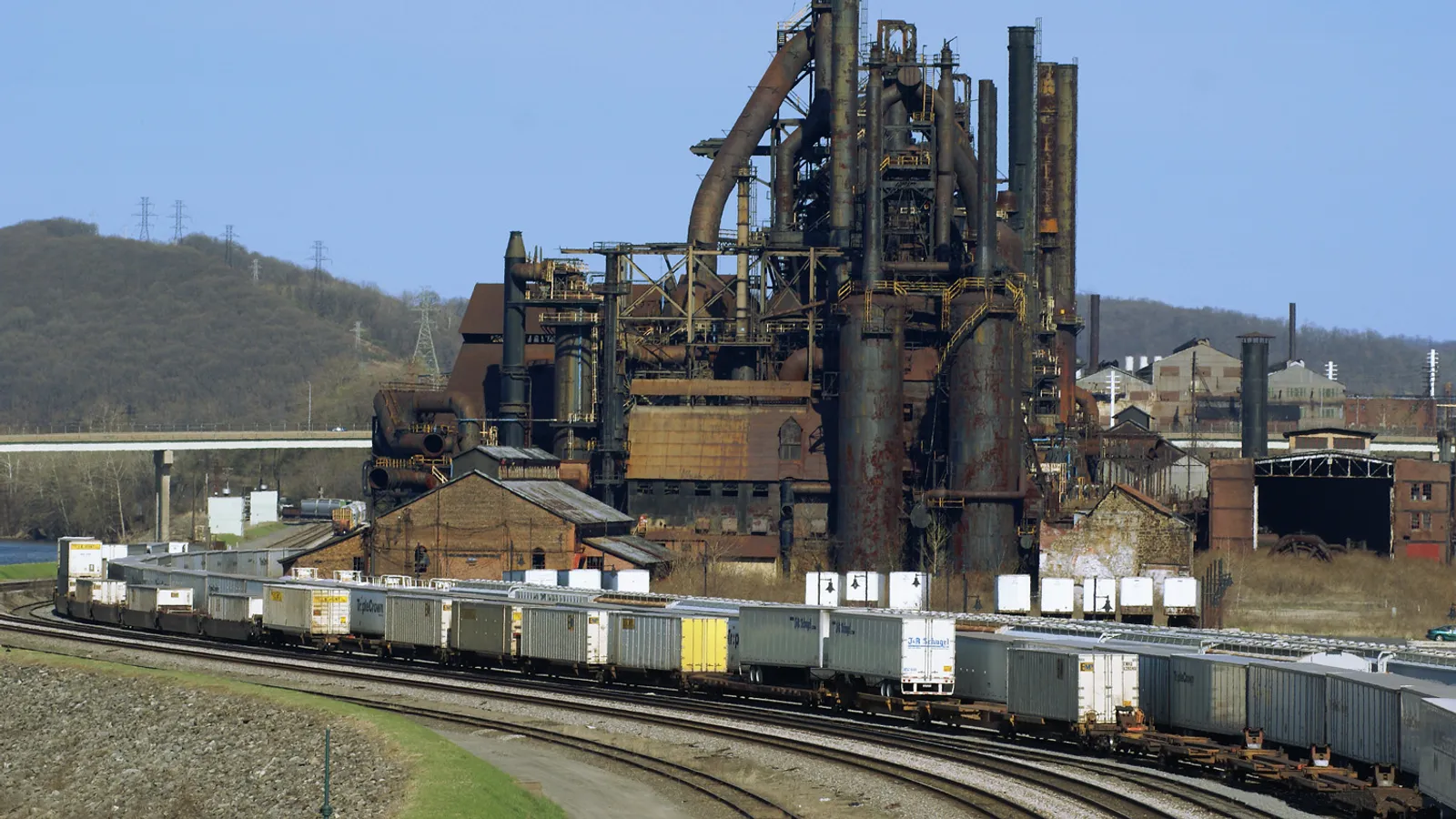

The Steel Industry
Contents
Legend/Myth Opener
Scottish steel is often remembered as a single long golden age running from the Victorian era to Thatcher's "betrayal" in the 1990s. The reality is more specific and more interesting: Scottish steelmaking only became viable at scale after a particular technical problem — the high phosphorus content of local pig iron, which ruined early steel — was solved by David Colville and Sons in the 1870s. Scottish steel was never simply "there"; it had to be engineered into existence against a real metallurgical obstacle.
TL;DR
- established Scotland's modern steel industry effectively began with David Colville and Sons opening the Dalzell works in Motherwell in 1872, using an adapted open-hearth method to overcome the high-phosphorus pig iron that had previously made Scottish steel unreliable — this is documented in industrial histories, not folklore.
- established Output grew explosively in the late 19th century, from around 1,199 tons in 1873 to roughly 58,500 tons by 1890, directly tied to demand from Clyde shipbuilding and major engineering projects like the Forth Bridge — figures are drawn from company and industry records.
- established Colvilles was nationalised into the British Steel Corporation in 1967, which at one point accounted for around 90% of UK steel production — a documented structural fact of UK industrial policy, not an exaggeration.
- established Ravenscraig's 1992 closure ended large-scale integrated steelmaking in Scotland; this card treats Ravenscraig only briefly and cross-references the dedicated Ravenscraig card for the full, honest account of that closure.
- traditional Scottish steel's "revival" under Liberty Steel from the 2010s is often presented as a straightforward comeback story; it is flagged as traditional/optimistic framing here because Liberty's Scottish operations have faced repeated financial instability since acquisition.
Key Facts
- Category
- Detail
- Peak Era
- 1950s–1970s (post-nationalisation integrated steelmaking)
- Key Locations
- Motherwell, Dalzell, Clydebridge, Glengarnock, Ravenscraig (all North Lanarkshire / Lanarkshire)
- Key Companies/Figures
- David Colville and Sons; Colvilles Ltd; British Steel Corporation (1967); Tata Steel (2007); Liberty Steel (2016 onward)
- Status Today
- Dalzell and Clydebridge survive in reduced form under Liberty Steel, with intermittent production; Ravenscraig site is Europe's largest brownfield redevelopment
- Early Output Growth
- c.1,199 tons (1873) to c.58,500 tons (1890)
- SI Score
- 57/60
Scottish Impact Index (SI Score)
- Economic Impact
- 10/10
- Industrial Longevity
- 9/10
- Material Contribution
- 10/10
- Industrial Distinctiveness
- 9/10
- Industrial Legacy
- 10/10
- Recognition
- 9/10
57/60
Ranked =14th of 50 in Industry
A Note on Claims and Evidence
The foundational facts of Scottish steel's growth — the Colville family's role, the open-hearth solution to phosphoric pig iron, nationalisation in 1967, and the sequence of corporate ownership through British Steel, Tata, and Liberty — are documented in company records, parliamentary history, and contemporary trade press, and are treated as settled here. Claims about steel's symbolic role in Scottish industrial identity, or framings of Liberty Steel's ownership as a "revival," lean more traditional, reflecting a popular narrative rather than a settled financial verdict, since Liberty's Scottish sites have experienced real operational uncertainty since taking over. There is little outright legend-myth material specific to this card — the mythologising in Scottish steel tends to cluster around Ravenscraig's closure specifically, which is why that subject receives its own dedicated treatment rather than being re-argued here.
Timeline
David Colville and Sons opens the Dalzell steelworks in Motherwell, solving the high-phosphorus pig iron problem with an adapted open-hearth process.
Output rises from roughly 1,199 tons to roughly 58,500 tons annually as shipbuilding and construction demand grows.
Scottish steel supplies major engineering projects including the replacement Tay Bridge and the Forth Bridge, and feeds a Clyde shipbuilding industry producing around a quarter of world shipping tonnage by 1913.
Company expands, acquiring Clydebridge and Glengarnock steelworks.
Ravenscraig integrated steelworks and strip mill constructed by Colvilles at Motherwell.
Colvilles nationalised into the newly formed British Steel Corporation, which accounts for roughly 90% of UK steel output.
UK steel overcapacity, oil shocks, and global competition drive repeated rounds of plant closures and job losses across British Steel's network.
Ravenscraig closes, ending integrated large-scale steelmaking in Scotland (see dedicated Ravenscraig card for full detail).
Tata Steel acquires Dalzell, Clydebridge, and other former British Steel assets.
Liberty Steel (GFG Alliance) acquires Dalzell and Clydebridge, with intermittent restarts and periods of mothballing amid group-wide financial difficulties.
Details
Origins and Early Development
Scotland had iron in abundance from the eighteenth century onward, but steel — stronger, more versatile, and increasingly demanded for rails, bridges, and ship plate — was a different metallurgical problem. Scottish pig iron was notoriously high in phosphorus, which made early steelmaking processes produce brittle, unreliable metal. The breakthrough came from David Colville and Sons, who opened the Dalzell steelworks in Motherwell in 1872 and adapted the open-hearth process to successfully remove enough phosphorus to make commercially viable steel. This is worth stating plainly: Scottish steel did not simply emerge from Scottish iron by default, it had to be engineered past a specific chemical obstacle, and the firm that solved it became the backbone of the entire subsequent industry.
Growth from that point was rapid. Industry figures show output climbing from around 1,199 tons in 1873 to approximately 58,500 tons by 1890, a scale of expansion that tracks closely with the parallel boom in Clyde shipbuilding, which by 1913 was producing roughly a quarter of the world's ship tonnage and needed enormous quantities of plate and structural steel. Scottish steel also fed major civil engineering landmarks, including the replacement Tay Bridge (after the 1879 disaster) and the Forth Bridge, both of which demanded steel of a reliability that earlier Scottish iron could not have supplied.
Peak Scale and Significance
Colvilles, the successor firm to David Colville and Sons, consolidated its position through the twentieth century by acquiring the Clydebridge and Glengarnock steelworks, building an integrated network across Lanarkshire. The crowning piece of this expansion was Ravenscraig, built at Motherwell between 1954 and 1959, which became one of the largest and most technically advanced integrated steelworks in Western Europe, eventually incorporating one of the longest continuous hot-strip rolling lines in the world. (Ravenscraig's full story — construction, peak employment, political controversy, and 1992 closure — is covered in depth in its own dedicated card; this article references it only briefly to avoid duplication.)
The nationalisation of Colvilles into the newly formed British Steel Corporation in 1967 marked the high-water mark of state-directed scale: British Steel accounted for around 90% of UK steel production at points in this era, and Scottish plants were a significant component of that national output. This was genuinely peak-era heavy industry — vast integrated works, tens of thousands of direct and indirect jobs across Lanarkshire, and steel that fed shipyards, construction, and engineering across Britain and for export.
Decline and Transformation
The decline of Scottish steel did not happen in a single moment, and it would be dishonest to pretend otherwise. Global overcapacity, the end of the postwar shipbuilding boom, the 1970s oil shocks, and increasingly competitive steel production from continental Europe and Asia combined to make much of British Steel's network, including its Scottish plants, economically unsustainable by the late twentieth century. The 1992 closure of Ravenscraig was the most visible and symbolically devastating moment in this process, ending integrated large-scale steelmaking in Scotland and costing, by most accounts, around 770 direct jobs and roughly 10,000 further jobs linked to the plant — but it was the culmination of a longer structural decline across the whole sector, not an isolated political decision made in a vacuum.
After Ravenscraig, a reduced Scottish steel sector persisted around Dalzell (plate rolling) and Clydebridge, passing through British Steel, then Tata Steel from 2007, and then Liberty Steel (part of the GFG Alliance) from 2016. This later chapter should also be told honestly rather than as a simple "revival" narrative: Liberty's ownership has been marked by repeated periods of mothballing, financial uncertainty tied to the wider collapse of GFG's financing arrangements, and intermittent rather than continuous production. Calling this a straightforward comeback would misrepresent a genuinely precarious situation.
Present-Day Legacy
Today, Scottish steel survives in a much-reduced footprint compared to its mid-twentieth-century peak. Dalzell and Clydebridge continue to operate intermittently under Liberty Steel, rolling plate steel rather than running full integrated ironmaking-to-finished-steel operations. The site of Ravenscraig itself, once the symbol of Scottish heavy industry's scale, is now Europe's largest brownfield redevelopment site, slowly being converted into a new town with housing, retail, and leisure facilities — part-funded by Tata Steel Europe as British Steel's eventual successor. The transformation of an integrated steelworks site into suburban housing is as stark an illustration of deindustrialisation's human and physical legacy as exists anywhere in Scotland, and it is treated honestly here rather than softened into nostalgia.
Did You Know?
- Scottish pig iron's high phosphorus content was so problematic that viable Scottish steelmaking only became possible after David Colville and Sons adapted the open-hearth process specifically to deal with it.
- Steel output in Scotland grew roughly fiftyfold between 1873 and 1890, tracking the parallel explosion in Clyde shipbuilding demand.
- British Steel Corporation, formed by nationalising Colvilles and other firms in 1967, accounted for around 90% of UK steel production at its height.
- By 1913, Clyde shipyards were producing about a quarter of all shipping tonnage launched worldwide — a major reason Scottish steel mills ran at such volume.
- Ravenscraig's hot strip mill was, by the time of its 1992 closure, the largest in Western Europe, a scale rarely appreciated outside specialist industrial history.
- The site of Ravenscraig is now officially recognised as the largest brownfield site in Europe, awaiting full redevelopment decades after closure.
- Tata Steel, the Indian conglomerate, became the owner of former British Steel assets including Dalzell and Clydebridge in 2007.
- Liberty Steel's Scottish operations have been repeatedly mothballed and restarted since 2016, reflecting wider financial instability in its parent group rather than a settled recovery.
FAQ
1When did Scotland's modern steel industry begin?
Effectively in 1872, when David Colville and Sons opened the Dalzell works in Motherwell and solved the problem of high-phosphorus Scottish pig iron using an adapted open-hearth process.
2What drove the rapid growth of Scottish steel in the late 19th century?
Demand from Clyde shipbuilding and major civil engineering projects such as the Forth Bridge and the replacement Tay Bridge.
3What was Colvilles?
The successor company to David Colville and Sons, which expanded to own multiple Lanarkshire steelworks including Clydebridge and Glengarnock before nationalisation in 1967.
4What was British Steel Corporation's role?
Formed in 1967 by nationalising Colvilles and other UK steel firms, it accounted for roughly 90% of UK steel production at its peak.
5Did Ravenscraig close as a single sudden event?
It closed in 1992, but this followed a longer period of overcapacity and competitive pressure across the whole UK steel sector; see the dedicated Ravenscraig card for the full account.
6Does Scotland still make steel today?
Yes, but at much reduced scale — Dalzell and Clydebridge continue intermittent plate-rolling operations under Liberty Steel rather than full integrated steelmaking.
7Who owns Scottish steel plants now?
Liberty Steel, part of the GFG Alliance, has owned Dalzell and Clydebridge since 2016, following Tata Steel's ownership from 2007.
8Is Liberty Steel's ownership a stable revival?
Not straightforwardly — operations have been repeatedly mothballed and restarted amid financial difficulties within the wider GFG Alliance, so "revival" should be treated as an optimistic rather than settled description.
9What happened to the Ravenscraig site?
It is now Europe's largest brownfield redevelopment site, being converted into a new town with housing and other facilities.
10How much steel did Scotland produce at its 19th-century peak growth period?
Output rose from about 1,199 tons in 1873 to about 58,500 tons by 1890, according to industry records.
11Why couldn't Scotland make good steel before the 1870s?
Local pig iron's high phosphorus content made early steelmaking processes produce brittle, unreliable metal until Colville's open-hearth adaptation solved the problem.
12Was the decline of Scottish steel unique to Scotland?
No — it mirrored a broader UK and Western European pattern of steel overcapacity and declining competitiveness from the 1970s onward.
Sources and Further Reading
Primary/Institutional
- Canmore (Historic Environment Scotland), Ravenscraig and Motherwell steelworks site records
Scholarly/Critical
- Bella Caledonia, "Scottish Steel – a lesson from history?"
- Stenlake Publishing, "The Scottish Iron & Steel Industry"
- G. C. Peden, "A New Scotland? The Economy", in T. M. Devine and Jenny Wormald (eds), The Oxford Handbook of Modern Scottish History (Oxford University Press, 2012) — further reading on steel and Ravenscraig
General
- The Scotsman, "Steel industry in Scotland – a short history"
- Wikipedia, "Clydebridge Steelworks"
- Wikipedia, "Ravenscraig steelworks"
- TheGlasgowStory.com, industrial history features
Caveats: Myths and Disputed Claims
- Do not present Scottish steelmaking as a natural extension of Scottish ironworking — it required a specific, documented technical solution to high-phosphorus pig iron before it became viable at scale.
- Do not describe Liberty Steel's ownership of Dalzell and Clydebridge as a secure or completed "revival" — operations have been intermittent and financially uncertain since 2016.
- Avoid treating the 1992 Ravenscraig closure as an isolated or purely political event disconnected from the broader structural decline of UK and European steel; see the dedicated Ravenscraig card for the full, specific account rather than re-litigating it here.
- Precise historical tonnage figures (e.g., 1873 and 1890 output) come from industry histories rather than a single verified government statistical series, and should be treated as broadly accurate rather than exact.
Card 012 · Industry