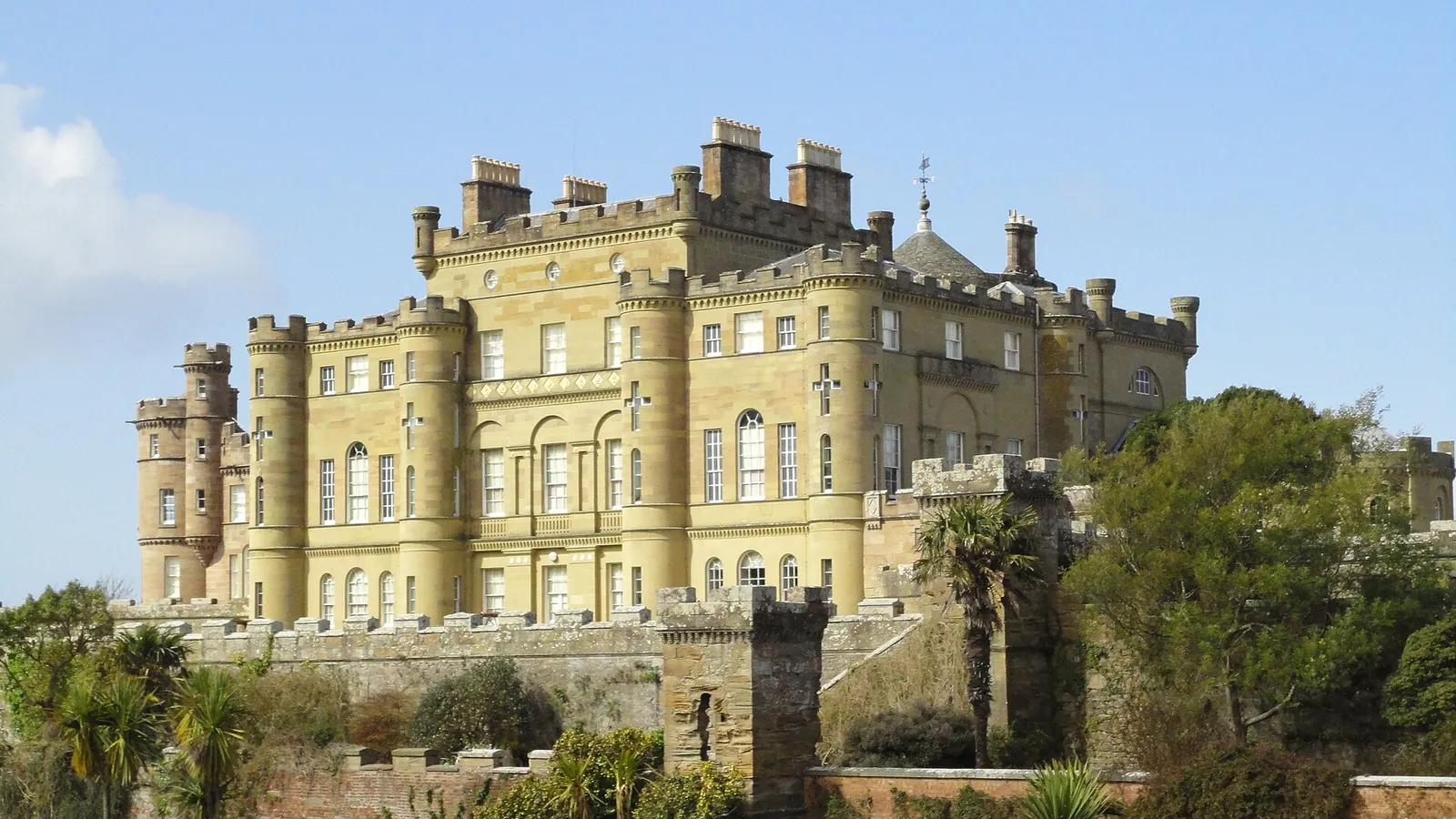

Culzean Castle & the Ayrshire Coast
Contents
TL;DR
- established Culzean Castle was transformed from an earlier tower house into its present form by architect Robert Adam for the 10th Earl of Cassillis, in phased work between 1777 and 1792 — documented through Adam's own drawings and the Kennedy family's building records.
- established The Kennedy family (Marquess of Ailsa) gifted the castle and grounds to the National Trust for Scotland in 1945, with a specific provision reserving the uppermost apartment for General Dwight D. Eisenhower — recorded in the deed of gift and NTS institutional history.
- established Eisenhower first visited in 1946 and returned multiple times, including during his US presidency, cementing a well-documented personal connection between the castle and a 20th-century American statesman — an unusual link for a Scottish country house.
- established A substantial restoration programme at Culzean was funded in part by a bequest from American philanthropist William Lindsay, connected to the Eisenhower association — recorded in National Trust for Scotland funding history.
- traditional Culzean's dramatic clifftop setting and sea caves are popularly described as having been used by smugglers, a claim repeated in visitor material and local tradition but not confirmed by documented historical record for any specific episode.
Key Facts
- Location
- Clifftop above the Firth of Clyde, South Ayrshire, Scotland
- Era/Period
- Earlier tower house predates 1777; present form built 1777–1792
- Type
- Robert Adam country house / clifftop castle
- Managed/Owned by
- National Trust for Scotland (since 1945 gift by the Kennedy family)
- Visitor status
- Open seasonally, paid admission; grounds and country park largely year-round; c. 334,000 visitors in 2025
- Grounds
- 240-acre country park with walled garden, sea caves, and holiday accommodation
Scottish Impact Index (SI Score)
- National Significance
- 7/10
- Historical Continuity
- 8/10
- Human & Economic Importance
- 7/10
- Landscape / Architectural Distinctiveness
- 10/10
- Cultural & Historical Legacy
- 8/10
- Recognition
- 8/10
48/60
Ranked =39th of 43 in Locations
A Note on Claims and Evidence
Culzean's documented history is unusually rich thanks to Robert Adam's own surviving drawings, the Kennedy family's estate records, and well-kept National Trust for Scotland archives covering the 1945 gift and subsequent restoration funding. The documented tier covers Adam's design work, the Kennedy-to-NTS transfer, and the Eisenhower connection with its associated philanthropic funding — all independently verifiable through institutional and architectural records. The traditional tier covers folklore around the castle's sea caves, including smuggling associations repeated in tourism material, which are plausible given the Ayrshire coast's documented smuggling history in the eighteenth century generally, but not tied to specific, confirmed episodes at Culzean itself.
Timeline
An earlier tower house occupies the Culzean site, held by the Kennedy family of Cassillis.
The 10th Earl of Cassillis commissions Robert Adam to remodel and expand the castle.
Phased construction under Adam transforms the structure, including the drum tower and circular saloon, oval staircase, and principal reception rooms.
Ayrshire's coastline, including the area around Culzean, is associated with smuggling activity amid high excise duties, feeding later (not fully documented at Culzean specifically) traditions about the castle's sea caves.
The Kennedy family, holders of the Marquessate of Ailsa, gift Culzean Castle and its grounds to the National Trust for Scotland, with a provision reserving the uppermost apartment for General Dwight D. Eisenhower.
Eisenhower makes his first visit to Culzean.
Eisenhower returns to Culzean during his presidency, deepening the castle's association with him.
American philanthropist William Lindsay directs a substantial bequest, connected to the Eisenhower association, toward Culzean's restoration.
Country park developed around the castle, including walled garden, Gas House/Murdoch exhibits, and holiday cottages.
Managed by the National Trust for Scotland; major visitor attraction on the Ayrshire coast.
Details
From tower house to Adam masterpiece
Culzean's present grandeur conceals an older core: before Robert Adam's involvement, an earlier Kennedy tower house occupied the clifftop site above the Firth of Clyde, reflecting the family's long-standing presence in this part of Ayrshire. In 1777, the 10th Earl of Cassillis commissioned Adam — by then one of Britain's most celebrated neoclassical architects — to transform the existing structure into a sophisticated country residence befitting the family's status. Adam's work proceeded in phases through 1792, incorporating the older fabric into an ambitious new design rather than demolishing it outright. The result, most famously the large drum tower containing a circular saloon, alongside an oval staircase and a sequence of finely detailed reception rooms, represents one of Adam's most celebrated essays in combining castellated Gothic exterior drama with restrained, elegant neoclassical interiors — a contrast that remains one of Culzean's most discussed architectural features.
A clifftop landscape and its folklore
Culzean's dramatic setting, perched directly above cliffs facing the Firth of Clyde, has long lent itself to romantic and folkloric association, particularly regarding the sea caves beneath the castle. Visitor material and local tradition frequently describe these caves as having been used by smugglers taking advantage of the remote coastline to evade excise duties during the eighteenth century — a claim consistent with the broader, well-documented history of smuggling along the Ayrshire and wider Scottish coast in this period, but one that is not tied, in the specific case of Culzean, to confirmed historical episodes or named individuals. This article treats the castle's smuggling lore as traditional rather than established, while noting that the general historical backdrop of coastal smuggling in the region is itself well documented.
The Kennedy family's gift and an unusual wartime legacy
The decisive moment in Culzean's modern history came in 1945, when the Kennedy family — holders of the Marquessate of Ailsa — gifted the castle and its surrounding grounds to the National Trust for Scotland. The gift carried an unusual and specific condition: the uppermost apartment of the castle would be permanently reserved for the use of General Dwight D. Eisenhower, in recognition of his leadership as Supreme Allied Commander during the Second World War. This was not a symbolic gesture only — Eisenhower made his first visit in 1946 and returned on multiple later occasions, including while serving as President of the United States, making Culzean one of the more unusual Scottish country houses with a documented, sustained personal connection to a major twentieth-century American statesman rather than to Scottish or British royalty.
Restoration and philanthropy
That Eisenhower connection proved consequential beyond its diplomatic symbolism. American philanthropist William Lindsay, drawn to Culzean partly through its Eisenhower association, directed a substantial share of a multi-million-dollar bequest specifically toward the castle's restoration — funding that supported significant conservation work on the fabric and grounds. This kind of international philanthropic funding is relatively unusual among National Trust for Scotland properties and reflects how far Culzean's twentieth-century profile extended beyond purely Scottish or British heritage circles.
The country park and visitor experience today
Culzean today operates as considerably more than a single historic house: the National Trust for Scotland manages a 240-acre country park around the castle, encompassing a walled garden, the restored Gas House complex — notable for its connection to industrial pioneer William Murdoch's early gas-lighting experiments — sea caves open for summer tours, and a range of holiday cottages on the estate. This combination of architectural landmark, designed landscape, and recreational country park has made Culzean one of the Trust's most visited properties, drawing visitors for its Adam interiors, its dramatic coastal scenery, and its distinctive mid-century American diplomatic history in roughly equal measure.
Did You Know?
- The uppermost apartment at Culzean was permanently reserved for General Eisenhower as a condition of the Kennedy family's 1945 gift to the National Trust for Scotland.
- Eisenhower visited Culzean both before and during his US presidency, an unusually sustained connection for a Scottish country house.
- A major restoration of Culzean was funded in part by an American philanthropist, William Lindsay, linked to the castle's Eisenhower association.
- The castle's drum tower contains a circular saloon considered one of Robert Adam's most accomplished interior spaces.
- Culzean's sea caves are popularly linked to smuggling folklore, though no specific documented smuggling episode at the castle itself has been confirmed.
- The estate's Gas House complex houses exhibits on William Murdoch, an early pioneer of gas lighting technology.
- Culzean sits on a genuine working clifftop above the Firth of Clyde, giving it unusually dramatic sea views compared to many inland Scottish castles.
- The 240-acre country park around the castle includes holiday cottages, allowing overnight stays on the historic estate itself.
FAQ
1Who designed Culzean Castle?
Architect Robert Adam, commissioned by the 10th Earl of Cassillis, transformed an earlier tower house into the present castle between 1777 and 1792.
2Who owns Culzean Castle today?
The National Trust for Scotland, following its gift by the Kennedy family (Marquess of Ailsa) in 1945.
3Why is Culzean connected to General Eisenhower?
The 1945 gift to the National Trust for Scotland specifically reserved the castle's uppermost apartment for Eisenhower, in recognition of his WWII leadership; he visited multiple times, including as US President.
4Were the sea caves really used by smugglers?
This is a popular tradition consistent with the region's general smuggling history, but no specific documented smuggling episode at Culzean has been confirmed.
5Can visitors stay overnight at Culzean?
Yes, the estate includes holiday cottages available for rental within the country park.
6What is the Gas House?
A restored estate building connected to early gas-lighting technology, now housing exhibits on pioneer William Murdoch.
7Is there an older building beneath Adam's design?
Yes, Culzean incorporates an earlier Kennedy family tower house into Adam's larger 18th-century design rather than replacing it outright.
8How large is the Culzean estate?
Around 240 acres, including a walled garden, country park, and coastal cliffs.
9Who funded Culzean's major restoration?
Substantial funding came from a bequest by American philanthropist William Lindsay, connected to the castle's Eisenhower association.
10Is Culzean open all year?
The castle itself is open seasonally with paid admission, while much of the surrounding country park and grounds are accessible on a broader, often year-round basis.
11What architectural features is Culzean best known for?
The large drum tower with its circular saloon and an elegant oval staircase are its most celebrated interior features.
12Is Culzean connected to Scottish royalty?
No — its most famous historical guest connection is to General Dwight D. Eisenhower, an American military and political figure, rather than Scottish or British royalty.
Sources and Further Reading
Primary/Institutional
- National Trust for Scotland, official Culzean Castle, Garden & Country Park visitor information
- National Trust for Scotland institutional history of the 1945 Kennedy family gift and Eisenhower apartment
Scholarly/Critical
- Canmore (RCAHMS) site record for Culzean Castle
- Architectural histories of Robert Adam's country house commissions, including Culzean
General
- Wikipedia, "Culzean Castle" — en.wikipedia.org/wiki/Culzean_Castle
- Historic Environment Scotland listed building record (LB51823)
- Stravaiging, Culzean Castle history overview
Caveats: Myths and Disputed Claims
- Do not state as confirmed fact that the sea caves beneath Culzean were used by named smugglers in specific documented episodes. This is a traditional claim consistent with the region's general history but not specifically evidenced at this site.
- Do not describe Culzean as a wholly new 18th-century building; it incorporates an earlier Kennedy tower house within Robert Adam's larger design.
- Present the Eisenhower connection as a documented, specific provision of the 1945 gift, not as informal or anecdotal — it is well recorded in National Trust for Scotland history.
Card 007 · Locations