
Old & New Towns of Edinburgh
Contents
A City-Planning Designation, Not a Castle Tour
This UNESCO World Heritage Site recognises the planning and juxtaposition of two historic urban forms — the medieval Old Town and the Georgian New Town — as a single, internationally significant feat of town planning. It does not centre on any single monument, and Edinburgh Castle, though it anchors the Old Town skyline, has its own separate dedicated card elsewhere in this collection; it is noted here only in its role as a landscape feature, not described in detail.
TL;DR
- established The Old and New Towns of Edinburgh were jointly inscribed as a UNESCO World Heritage Site in 1995, specifically for the contrast and complementary relationship between medieval and Georgian town planning — a documented international designation, not informal praise.
- established The New Town was built from 1767 following a design competition won in January 1766 by 26-year-old architect James Craig, whose simple axial grid plan is confirmed by surviving competition and planning records.
- established Significant New Town construction was financed in part by capital derived from the transatlantic slave trade and colonial plantation economies, a documented historical fact (stated plainly by historians including Sir Geoff Palmer) rather than a politicised modern claim, and it is included here per the site's accuracy-over-patriotism standard.
- established The Old Town's notorious overcrowding — multi-storey tenements housing all social classes stacked vertically, with the wealthy nearer ground level and the poor in the upper storeys — is well documented and was a primary driver behind the New Town's creation, not merely an aesthetic preference for Georgian style.
- established Edinburgh's social life followed the same move north: the public dance assemblies began in Old Town closes in 1723 and passed to the Assembly Rooms in George Street, opened in 1787 and still in use.
- traditional The New Town is often called "the Athens of the North," a label reflecting its Enlightenment-era neoclassical ambitions; this is a longstanding and appropriate descriptive tradition rather than a claim of literal historical equivalence with ancient Athens.
Key Facts
- Category
- Detail
- Location/Region
- Edinburgh city centre, Scotland
- Scale/Date
- Old Town: medieval origins (12th century onward); New Town: built from 1767, first phase complete c.1820 (Charlotte Square)
- Type
- Historic urban planning and architecture (joint UNESCO designation covering both districts)
- Protected/heritage status
- UNESCO World Heritage Site (inscribed 1995); over 75% of buildings within the site individually listed
- Managed/Owned by
- Mixed public/private ownership; heritage oversight by a partnership of City of Edinburgh Council, Edinburgh World Heritage, and Historic Environment Scotland (Management Plan 2025–2035)
- Access notes
- Freely walkable city-centre district; major sites include the Royal Mile, Grassmarket, Charlotte Square, and George Street; Edinburgh Castle sits within the Old Town but has separate admission and its own dedicated card
Scottish Impact Index (SI Score)
- National Significance
- 10/10
- Historical Continuity
- 10/10
- Human & Economic Importance
- 10/10
- Landscape / Architectural Distinctiveness
- 10/10
- Cultural & Historical Legacy
- 10/10
- Recognition
- 10/10
60/60
Ranked #1 of 43 in Locations
A Note on Claims and Evidence
The Old and New Towns of Edinburgh present a genuinely well-documented case: planning competition records, council archives, and modern UNESCO and Historic Environment Scotland assessments give this site unusually strong primary-source backing, and most core claims here are marked established. The one area where popular retelling risks softening the record is the New Town's financing — specifically, the role of profits from slavery and colonial trade in funding its grand squares and townhouses. This article states that connection directly and without euphemism, following the explicit editorial standard that uncomfortable history connected to a place should not be omitted in favour of a cleaner architectural narrative. Romantic labels such as "Athens of the North" are marked traditional as descriptive heritage, not literal historical claims.
Timeline
Edinburgh's Old Town develops along the ridge below the Castle Rock, forming the city's original medieval core, defined by narrow closes and wynds running off the Royal Mile.
Old Town population density increases sharply within the confines of the city walls, producing multi-storey tenement housing (some reaching 10–14 storeys) and severe overcrowding across social classes.
A private dancing assembly meets in a mansion in the West Bow, according to William Maitland.
Edinburgh's first public assembly opens in Patrick Steil's Close (later Old Assembly Close) off the High Street.
The assembly moves to a hall in Bell's Wynd, reached by New Assembly Close.
The Bell's Wynd assembly is refounded under a board of judges and merchants, with profits for charity.
Miss Nicky Murray becomes directress of the assembly.
A design competition for a planned new extension to the city is won by 26-year-old architect James Craig, proposing a simple axial grid plan with a principal street and two garden squares.
Construction of the New Town begins; the Nor Loch (a foul, stagnant body of water below the Castle) begins to be drained to allow access between Old and New Towns.
North Bridge opens, physically linking Old Town to the new development.
First New Town phase built out along Craig's grid (George Street, Princes Street, Queen Street).
The Bell's Wynd assembly closes; the George Square Assembly Rooms open with a ball on 5 January 1785.
The Assembly Rooms in George Street open as the official successor to the Old Town assembly.
Robert Adam designs Charlotte Square, the New Town's only architecturally unified set-piece, completed after his death.
Nor Loch drainage effectively completed; the site later becomes Princes Street Gardens.
First phase of New Town construction substantially complete.
William Henry Playfair leads a more ambitious eastern expansion, including terraces around Calton Hill; The Mound (built from excavated New Town building spoil) reaches its current form.
Old and New Towns of Edinburgh jointly inscribed as a UNESCO World Heritage Site.
Current joint Management Plan period overseen by City of Edinburgh Council, Edinburgh World Heritage, and Historic Environment Scotland.
Details
Two towns, one designation
The UNESCO inscription covering central Edinburgh is unusual among World Heritage Sites in that it protects not a single monument but the relationship between two contrasting, adjoining urban forms: a tightly packed medieval Old Town, shaped by centuries of organic growth within a defensible ridge-top site, and an 18th-century Georgian New Town, laid out in a single deliberate planning act. The site was inscribed in 1995 specifically because this juxtaposition — rather than either half alone — demonstrates a significant moment in the history of European urban planning, in which Enlightenment-era ideas about rational, ordered city design were put into practice directly alongside, and in reaction against, an older medieval urban form that had become dangerously overcrowded.
The Old Town: density as both heritage and hazard
Edinburgh's Old Town grew for centuries along the ridge running down from Castle Rock, confined within city walls that limited outward expansion. The result, by the 17th and 18th centuries, was some of the most densely packed urban housing in Europe: narrow closes and wynds running off the Royal Mile gave access to tenement buildings reaching remarkable heights for the period, in some cases ten to fourteen storeys, housing residents across the full social spectrum stacked vertically within a single building — wealthier households typically occupying the more accessible middle storeys, poorer residents crowded into the garrets above or the damp, airless floors below. Sanitation was primitive even by contemporary standards; waste was frequently thrown directly into the street, and the Nor Loch below the Castle, ostensibly a defensive feature, had become a foul, stagnant dumping ground. This overcrowding and its public-health consequences were not a minor inconvenience but a central, documented driver of the civic push for a planned alternative — the New Town was conceived explicitly as relief from, not merely an aesthetic improvement upon, these conditions.
Designing the New Town: Craig's grid and the Enlightenment city
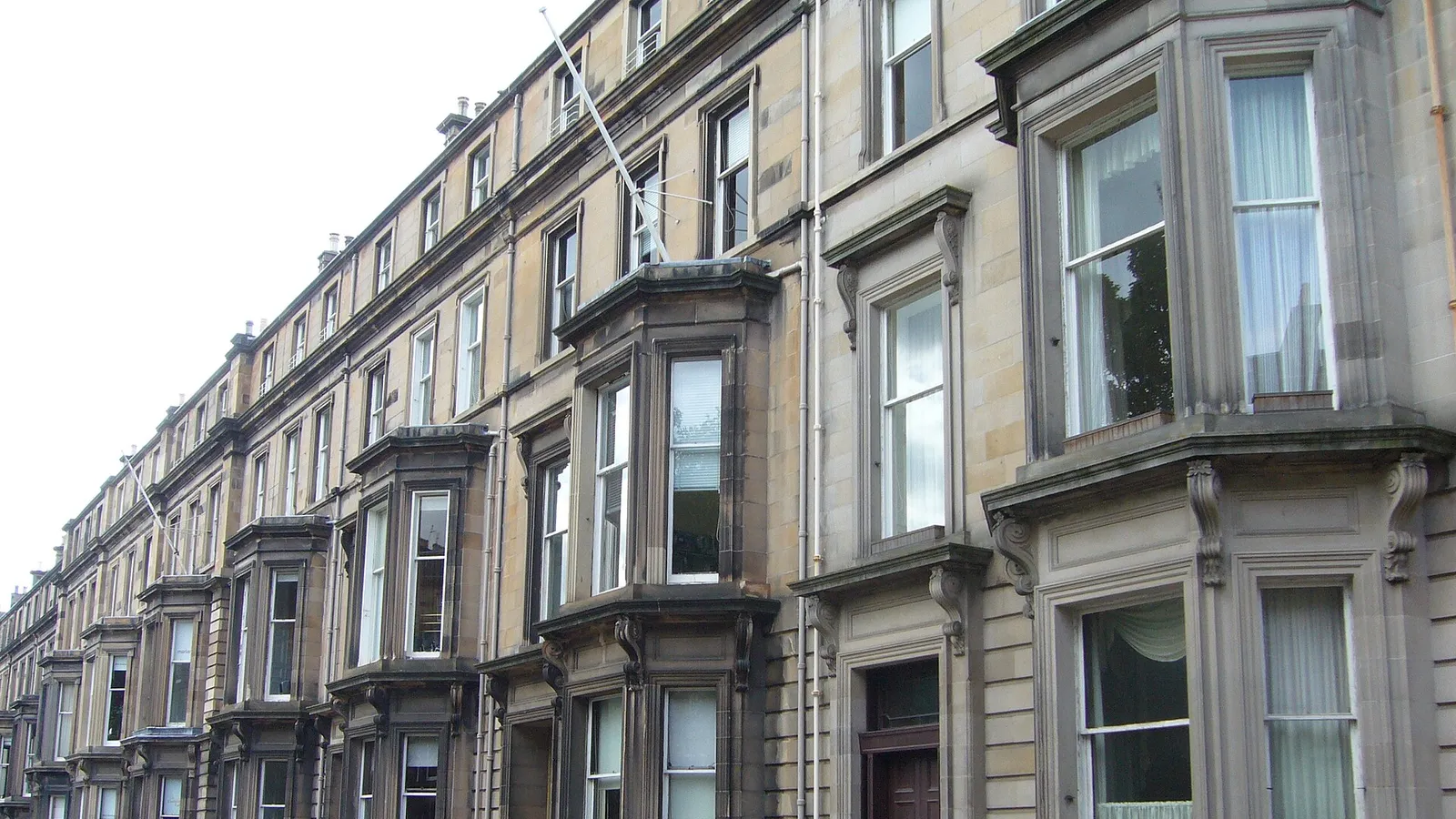
In January 1766, Edinburgh Town Council ran a design competition for a new extension of the city to the north, won by a then-largely-unknown 26-year-old architect, James Craig. His winning design was deliberately simple: a single axial grid built around a principal thoroughfare (today's George Street) running along a ridge, flanked by two garden squares at either end (St Andrew Square and Charlotte Square) and a regular pattern of parallel and cross streets. Construction began in 1767, with the Nor Loch gradually drained — a process not fully completed until around 1817 — to create a usable crossing point, formalised by the North Bridge in 1772. The New Town's architectural high point, Charlotte Square, was designed by Robert Adam in the 1790s and remains the only part of the New Town built to a single unified architectural scheme; later, more ambitious expansion to the east under William Henry Playfair in the 1820s–30s added further grand terraces around Calton Hill. This building programme, rational, orderly, and explicitly Enlightenment-influenced in its symmetry and classicism, earned Edinburgh the enduring descriptive title "the Athens of the North" — a piece of celebratory 18th/19th-century branding rooted in genuine neoclassical ambition, which this article treats as tradition rather than literal historical fact.
Who paid for the New Town, and what that money was
The New Town's elegant squares and townhouses were overwhelmingly built for, and often financed by, Edinburgh's professional and merchant classes — lawyers, bankers, and traders seeking to escape Old Town overcrowding into spacious, socially exclusive new housing. This article states directly, as established historical fact rather than contested modern politics, that a meaningful share of this capital derived from Scotland's participation in the transatlantic slave trade and Caribbean plantation economies: Scottish historian Sir Geoff Palmer and others have documented that New Town development was, in real and traceable part, "funded by the enormous profits derived from the enslavement of Africans." This sits alongside similar documented slave-trade and colonial-wealth connections found across Glasgow's tobacco and sugar merchant fortunes (treated at length in this collection's separate Clyde and Glasgow card) and should not be treated as an isolated anomaly specific to one city; it reflects a broader, well-documented pattern in how 18th-century Scottish urban wealth was accumulated, and omitting it would misrepresent the New Town's social and economic history in service of a tidier architectural story.
Contrast, complementarity, and class
The Old and New Towns were never simply two separate projects; they were, from the outset, understood in relation to each other. The New Town functioned explicitly as a release valve for Edinburgh's wealthier residents, who largely abandoned the Old Town's cramped tenements for the New Town's spacious terraces over the following decades, leaving the Old Town to decline into relative poverty and deeper overcrowding through the 19th century — a social sorting by class and housing quality that UNESCO's own inscription rationale treats as historically significant in its own right, not incidental to the architectural story. Only in the 20th and 21st centuries, through sustained conservation effort, has the Old Town been substantially restored and its housing stock upgraded, while retaining its distinctive medieval street pattern.
Present-day status and management
Today, both districts fall under a joint conservation and management framework led by the City of Edinburgh Council, the charity Edinburgh World Heritage, and the national heritage body Historic Environment Scotland, operating under a current Management Plan covering 2025–2035. More than three-quarters of buildings within the designated site hold individual listed status. The area functions simultaneously as a living, working city centre — with offices, shops, and tens of thousands of residents — and as one of the most visited urban heritage destinations in Europe, a tension between lived city and heritage asset that the management partnership explicitly has to balance.
Dancing in two towns: the assemblies
established The shift from Old Town to New can also be traced through the city's ballrooms. The dance historian George S. Emmerson, in A Social History of Scottish Dance (1972), follows Edinburgh's public dancing from the closes off the High Street to George Street. According to William Maitland's History of Edinburgh, a private assembly met from 1710 in an old Somerville family mansion at the first bend of the West Bow; Robert Chambers repeats a story that a mob once attacked the company and pierced the door with red-hot spits. It had ended by 1723, when a public assembly, run for charity by a group of titled ladies led by the Countess of Panmure, was launched with Allan Ramsay's support. The Caledonian Mercury announced its first night for Thursday 7 November 1723 "in the great hall in Patrick Steil's Close", later known as Old Assembly Close. Tickets cost half a crown, dancing ran from four in the afternoon to eleven at night, and ministers preached against it.
established On 25 May 1736 the assembly moved a few closes along the High Street to a hall between Bell's Wynd and Stevenlaw's Close, reached by what is still called New Assembly Close. After a decline it was refounded in 1746 by a board that included the judges Lord Minto and Lord Drummore, with profits shared among the city's charities. Its rules, hung in the hall, barred ladies in nightgowns and gentlemen in boots, limited each set to ten couples, began with minuets and went on to country dances, and allowed no new dance after eleven. The rooms were cramped and filled with smoke from the footmen's torches in the entry; a tea and card room was built across Bell's Wynd in 1766, joined by an enclosed bridge.
established The best-remembered of the assembly's directresses was Miss Nicky Murray (Helen Nicholas Murray of Stormont, sister of the Earl of Mansfield), appointed in 1765. The directress issued tickets placing every couple in a set and paired partners by rank. The English visitor Edward Topham admired her tact in 1775, and wrote that he knew no place "where dancing is made so necessary a part of polite education as in Edinburgh". Chambers, drawing on Walter Scott's recollections, judged her "more marked by good manners than good nature". She died on 7 November 1777.
established The New Town emptied the old rooms. A rival hall opened near George Square in Buccleuch Street in 1777, and the George Square Assembly Rooms in Buccleuch Place opened with a ball on 5 January 1785. The Bell's Wynd assembly closed in 1784, and its hall was sold to the town for the use of the Town Guard. Its official successor was built on the new grid: the Assembly Rooms in George Street, on a site provided by the town council and promoted by a committee under the Earl of Moray, opened in 1787 and are still in use. New Town hotels such as John Dunn's also let rooms for balls, though a masquerade Dunn advertised in 1786 was abandoned after public protest. Henry Cockburn, who danced at George Square as a young man, called it "the last remains of the ballroom discipline" of the old order, and wrote that the very rooms were obliterated once the New Town's society secured its supremacy.
shared Not everyone welcomed the change. The publisher William Creech complained in the 1780s that Edinburgh now had several new assembly rooms while the charity workhouse the old assembly had supported was neglected, that balls which once began at four now began at eight or nine and ran until three or four in the morning, and that men "reeled from the tavern" into the ballroom. Creech was a moralist with a point to make, and other witnesses, such as Mary Somerville recalling the 1790s, remembered Edinburgh as still a "gay, sociable place".
A divided city
The urban historian Richard Rodger notes that the first New Town, begun in 1767, let Edinburgh's ruling elite quit "the congested closes and wynds of the Old Town" for spacious, regular streets, creating a social and residential segregation more pronounced than in any other Scottish city, though Glasgow's Blythswood estate and Aberdeen's Bon Accord followed the same pattern. Edinburgh grew fast: between 1801 and 1841 the increase in its population alone was greater than the whole city had been in 1800. In the later nineteenth century city improvement schemes straightened streets and cleared many of the Old Town's courts, wynds, pends and vennels, partly to improve policing and partly to create taxable development sites.
Did You Know?
- The UNESCO designation covers the relationship between the Old and New Towns, not either one alone — it is one of relatively few World Heritage Sites inscribed for town-planning contrast rather than a single monument.
- James Craig was only 26 years old, and relatively unknown, when his simple grid design won the competition that shaped central Edinburgh's New Town.
- The Nor Loch, now the picturesque Princes Street Gardens, was for centuries a foul, stagnant dumping ground beneath the Castle before being drained — a process not fully finished until around 1817.
- Some Old Town tenements reached ten to fourteen storeys, among the tallest residential buildings in the world at the time of their construction.
- The Mound, the artificial hill now linking Old and New Towns near the National Gallery, is built almost entirely from spoil excavated during New Town construction.
- A meaningful share of New Town development capital is documented to have derived from profits connected to the transatlantic slave trade and Caribbean plantation economies.
- Charlotte Square, designed by Robert Adam, is the only part of the New Town built to a single, fully unified architectural scheme — most of the rest was built piecemeal by different builders working within Craig's grid.
- Over three-quarters of the buildings inside the World Heritage Site boundary are individually listed for historic or architectural significance.
- Edinburgh's first public dance assembly, in 1723, ran from four in the afternoon to eleven at night, and ministers preached against it.
- The rules of the Old Town assembly in 1746 barred ladies in nightgowns and gentlemen in boots.
- Old Assembly Close and New Assembly Close off the High Street take their names from the dance halls they once led to.
FAQ
1What exactly does the UNESCO designation cover?
The combined Old Town and New Town of Edinburgh, recognised jointly in 1995 for the contrast and complementary relationship between medieval and Georgian town planning.
2Is Edinburgh Castle part of this designation?
It sits within the Old Town and contributes to its skyline, but the Castle itself has a separate, dedicated card elsewhere in this collection.
3Who designed the New Town?
James Craig won the 1766 design competition with a simple grid plan; later architects, notably Robert Adam and William Henry Playfair, added specific set-piece developments.
4Why was the New Town built?
Primarily to relieve severe overcrowding and poor sanitation in the Old Town, as well as to provide fashionable Georgian housing for Edinburgh's professional classes.
5Is it true the New Town was partly funded by slave-trade wealth?
Yes — this is documented historical fact, not a recent political claim, established by historians including Sir Geoff Palmer.
6What happened to the Nor Loch?
It was drained between the 1760s and around 1817 and later landscaped into what is now Princes Street Gardens.
7Why is the New Town sometimes called "the Athens of the North"?
As a descriptive, celebratory label reflecting its Enlightenment-era neoclassical architecture and intellectual ambition — a traditional title, not a literal historical claim.
8Are both districts still lived in today?
Yes — both remain active residential and commercial parts of the city, not preserved museum districts.
9How many buildings are protected?
Over 75% of buildings within the designated World Heritage Site are individually listed.
10Who manages the site today?
A partnership of the City of Edinburgh Council, Edinburgh World Heritage, and Historic Environment Scotland, under a Management Plan currently covering 2025–2035.
11What's the best way to see the contrast between the two towns?
Walking from the Royal Mile down through the Old Town, across North Bridge or the Mound, into George Street and Charlotte Square in the New Town.
12Where did Edinburgh society dance before the New Town?
In assembly halls off the High Street: from 1723 in Patrick Steil's (Old Assembly) Close, and from 1736 in Bell's Wynd, reached by New Assembly Close. A private assembly is said to have met in the West Bow from 1710.
13When did the George Street Assembly Rooms open?
In 1787, as the official successor to the Old Town assembly. They are still in use.
14Who was Miss Nicky Murray?
The directress of the Edinburgh assembly from 1765 until her death in 1777, who assigned dancers their places and partners and became a byword for ballroom authority.
15Is the Old Town the same as the Royal Mile?
The Royal Mile is the Old Town's principal historic spine, but the Old Town extends more widely around it, including areas like the Grassmarket and Cowgate.
Sources and Further Reading
Primary/Institutional
- UNESCO World Heritage Centre — Old and New Towns of Edinburgh inscription (1995)
- Historic Environment Scotland — World Heritage Site documentation
- Edinburgh World Heritage and City of Edinburgh Council — Joint Management Plan 2025–2035
Scholarly/Critical
- Sir Geoff Palmer and other historians on the slave-trade and colonial-wealth financing of Edinburgh's New Town
- Academic urban-planning scholarship on Enlightenment-era town design and the Craig plan
- George S. Emmerson, A Social History of Scottish Dance: Ane Celestial Recreatioun (McGill-Queen's University Press, 1972)
- Richard Rodger, "The Scottish Cities", in T. M. Devine and Jenny Wormald (eds), The Oxford Handbook of Modern Scottish History (Oxford University Press, 2012)
General
- New Town, Edinburgh — Wikipedia
- Historic Environment Scotland World Heritage Sites pages
- Quality press coverage of Edinburgh's slavery-wealth heritage reassessment
Caveats: Myths and Disputed Claims
- Do not describe the New Town as funded solely by "trade" or "commerce" without specifying the documented role of slave-trade and colonial-plantation profits — this is established, named history, not speculation.
- Do not treat "Athens of the North" as a literal historical equivalence — it is a traditional, celebratory descriptive label for the New Town's neoclassical ambitions.
- Do not imply the Old Town's overcrowding was simply "quaint" medieval charm — it involved genuine, severe public-health and sanitation crises that directly motivated the New Town's creation.
- Do not conflate this UNESCO designation with Edinburgh Castle specifically — the Castle has its own separate card and is only a landscape feature within this one.
- Do not treat the 1710 West Bow assembly as firmly documented; it rests on William Maitland's account, and no contemporary newspaper noticed it.
- Do not state James Craig as an established master architect at the time of his competition win — he was a young, largely unproven 26-year-old, a detail worth keeping rather than smoothing into vague seniority.
Card 034 · Locations