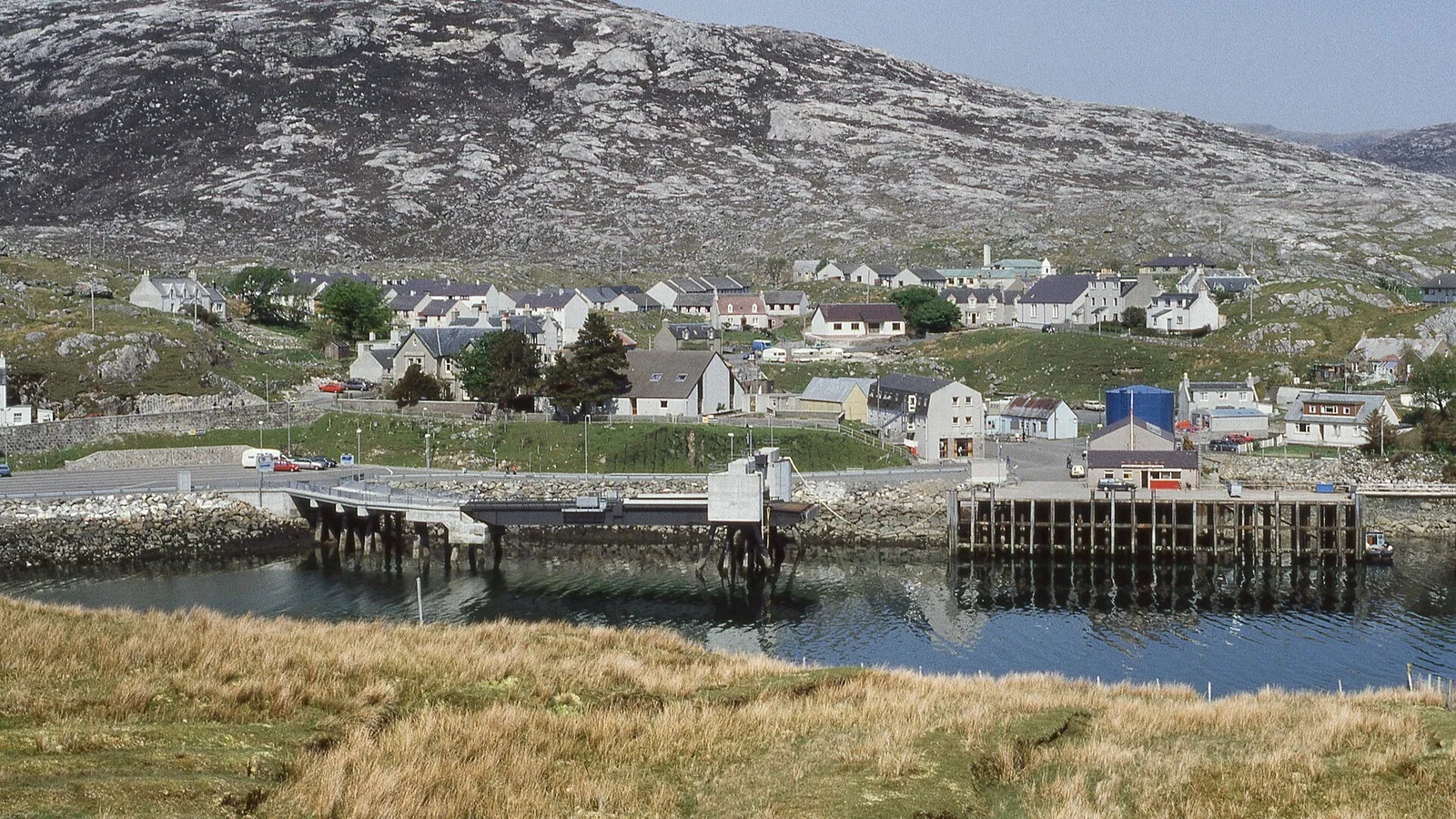

Outer Hebrides: Lewis & Harris
Contents
"One Island, Two Worlds" — A Note Before the Facts
Lewis and Harris are routinely described as "two islands." They are not. They form a single landmass — Scotland's largest island and the third-largest in the British Isles — divided only by a historic boundary between Loch Resort and Loch Seaforth, and by a striking change in geology and character. The popular shorthand ("the Isle of Harris," "the Isle of Lewis") is traditional usage, not geographic fact, and this article treats it accordingly.
TL;DR
- established Lewis and Harris is one island of roughly 2,178 km² (841 sq miles), not two separate islands — the "two islands" framing is popular shorthand, contradicted by the Ordnance Survey and every geological survey of the landmass.
- established The island's bedrock is Lewisian gneiss, among the oldest rock in Europe (dated to roughly 3 billion years), which is why this is stated as geological fact rather than folklore — it is confirmed by published isotopic dating.
- established Gaelic is still spoken by a majority in some parishes, such as Barvas (55 per cent in 2022), but across the Western Isles speakers fell to 44.7 per cent in 2022, from 52.3 per cent in 2011.
- disputed Lord Leverhulme's early-20th-century development schemes are sometimes remembered locally as visionary modernisation and sometimes as another chapter of outside interference following the Clearances; this article names both readings rather than adopting either, because islander testimony and historical scholarship genuinely diverge on his legacy.
- established The Highland Clearances of the 19th century forcibly displaced large numbers of Lewis and Harris tenants, many to Canada; this is stated plainly because it is corroborated by estate records, emigration registers, and contemporary accounts, not merely oral tradition.
Key Facts
- Category
- Detail
- Location/Region
- Outer Hebrides (Na h-Eileanan Siar), north-west Scotland, c. 24 miles across the Minch from the mainland
- Scale
- 2,178 km² (841 sq miles) total island; Lewis (north two-thirds) and Harris (south third)
- Highest point
- Clisham (An Cliseam), Harris, 799 m — highest peak in the Outer Hebrides
- Population
- c. 19,680 (2022 estimate), concentrated roughly 75% in Lewis, declining since 2011
- Type
- Inhabited island; crofting and fishing communities; one burgh (Stornoway)
- Protected/heritage status
- Lewis peatlands designated a Ramsar wetland site (2000); Calanais Standing Stones (separate card) are a Scheduled Monument and UNESCO World Heritage nomination candidate
- Managed/Owned by
- Comhairle nan Eilean Siar (Western Isles Council); land ownership mixed private estate, crofting tenure, and community buy-outs (e.g. North Harris Trust)
- Access notes
- Ferry (CalMac) from Ullapool to Stornoway and Uig (Skye) to Tarbert; air links to Stornoway and Benbecula; single-track roads common off main routes
Scottish Impact Index (SI Score)
- National Significance
- 10/10
- Historical Continuity
- 10/10
- Human & Economic Importance
- 8/10
- Landscape / Architectural Distinctiveness
- 10/10
- Cultural & Historical Legacy
- 10/10
- Recognition
- 9/10
57/60
Ranked =10th of 43 in Locations
A Note on Claims and Evidence
Lewis and Harris sits at the intersection of hard geology, documented administrative history, and a dense oral tradition — Gaelic song, clan genealogy, and land-raid memory — that is historically real as tradition even where individual details cannot be independently verified. This article follows the three-tier framework throughout: geological ages, census figures, and estate/emigration records are marked established; widely held local accounts whose precise details are not fully documented (such as some clan-origin stories or the exact framing of events in the Leverhulme years) are marked traditional; and claims that cross into romance or exaggeration — most often around the "lost" or "cursed" reputation of certain clearance sites — are marked [Legend] and explicitly flagged in the Caveats section.
Timeline
Earliest evidence of human settlement on Lewis.
Calanais Standing Stones erected (see separate Calanais card for full treatment).
Norse settlement and control; the islands pass between Norwegian and Scottish crowns, formally ceded to Scotland in 1266 (Treaty of Perth).
Nicolson/MacLeod lords build Stornoway's castle; Clan MacLeod (Harris and Lewis branches) and Clan Morrison establish long-standing territorial control.
Lewis granted to the Mackenzies of Kintail after a turbulent period of clan conflict ("the Fife Adventurers" having failed to settle it).
106 emigrants sail from Stornoway for Philadelphia, "destitute of Bread at home".
Highland Clearances: tenants removed from inland and coastal townships to make way for sheep farming and sporting estates; large-scale emigration to Canada (notably Quebec and Ontario) follows, and emigration continues into the 1920s.
The British American Land Company agrees to buy between five and six million acres in Quebec's Eastern Townships.
Sixteen Lewis families are sent to Bury and Lingwick in Quebec's Eastern Townships; Harris tenants at Borve are given notice to remove.
A party of more than 220 Lewis emigrants settles at Lingwick and Winslow, Quebec; the Land Act of 1841 offers free grants of 50 (later 100) acres in the Townships to British male settlers.
Sir James Matheson, a Jardine Matheson opium-trade magnate, purchases the Isle of Lewis.
1,180 summonses of removal are issued on Lewis; in 1851 Matheson pays for 986 tenants to travel all the way to the Eastern Townships.
Matheson's estate sends out 2,337 people, according to Marjory Harper.
Donald Morrison, later the "Megantic Outlaw", is born at Lingwick, Quebec, to Lewis parents.
The Bernera Riot, an early act of crofter resistance on Lewis.
Crofter families from Lewis, Harris and North Uist are settled at Killarney, Manitoba, and Saltcoats, North-West Territories, with a £10,000 government grant.
Canadian agent Hugh McKerracher lectures on emigration at Carloway in Gaelic and English.
Lews Castle built at Stornoway for Matheson.
Land raids and agitation across Lewis protest continued landlord control; part of the wider Highland Land League movement.
Donald Morrison shoots the bounty hunter Lucien Warren at Megantic, is captured in 1889 and dies hours after release from prison in 1894.
HMY Iolaire, bringing naval reservists home for New Year, is wrecked on the Beasts of Holm at the mouth of Stornoway harbour; 205 die by the 1919 count, 201 by later research.
Lord Leverhulme (soap magnate William Lever) buys Lewis and Harris and attempts large-scale industrial modernisation (fish processing, roads, Stornoway redevelopment); his Lewis schemes collapse amid continued land raids and his death in 1925; Harris schemes are abandoned earlier.
Leverhulme gifts Stornoway and much of Lewis to its inhabitants via the Stornoway Trust, one of Scotland's earliest major community land transfers.
The folklorist Margaret Bennett begins recording the last Gaelic speakers of Lewis descent in Quebec.
A cairn to the Bernera Riot is built with stones from every croft in Bernera and Tir Mòr.
Megantic, Quebec, holds its first festival honouring its Scottish settlers, on the centenary of Donald Morrison's death.
Lewis peatlands designated a Ramsar wetland site.
North Harris Trust community buy-out of the North Harris Estate.
Isle of Harris Distillery opens at Tarbert.
Resident population recorded at 19,680, continuing a long-term decline.
Details
One island, two landscapes
The division between Lewis and Harris is not political convenience; it is written into the rock. Lewis, the northern two-thirds, is low, flat, and dominated by deep blanket peat — vast, treeless moorland from which crofters have cut fuel for centuries, and which today is recognised internationally as a Ramsar wetland for its blanket-bog ecology. Harris, by contrast, rises abruptly into mountain: Clisham (An Cliseam) at 799 metres is the highest point in the Outer Hebrides, part of a compact range of more than thirty peaks over 1,000 feet. The contrast is so stark that visitors crossing the informal Lewis–Harris boundary near Loch Seaforth often remark that they seem to have entered a different island altogether — which is, geologically and visually, close to true, even though administratively and historically it has been one landmass since long before written record.
Underpinning both halves is Lewisian gneiss, among the oldest exposed rock in Europe, dated by isotopic methods to roughly three billion years. This is stated as settled geological fact, not island lore: the dating has been repeatedly confirmed in peer-reviewed geological literature, and the gneiss gives the island's beaches — most famously Luskentyre and Scarista on Harris's west coast — their distinctive white shell-sand against turquoise, Caribbean-toned water, an effect caused by the clarity of Atlantic water over light-coloured sand rather than any tropical climate.
Settlement, Norse rule, and clan power
Human settlement on Lewis is attested from around 6000 BC, but the island's recorded political history begins in earnest with Norse control from the 9th century, when Scandinavian settlers established the place-name layer (many Lewis village names are Norse in origin) and political dominance that lasted until the island was ceded to the Scottish crown under the Treaty of Perth in 1266. Clan power then passed through the MacLeods of Lewis, the MacLeods of Harris, and Clan Morrison, whose rivalries and alliances shaped island politics for centuries. An attempt by Lowland "Fife Adventurers" to colonise and exploit Lewis in the early 1600s failed outright against local resistance — a rarely mentioned precedent for the pattern of outside capital meeting island resilience that would recur, in very different form, three centuries later with Leverhulme.
Clearance, emigration, and landlordism
The 19th century brought the defining trauma of the islands' modern history: the Highland Clearances. Documented estate records and emigration registers show substantial numbers of Lewis and Harris tenants evicted from inland straths and coastal townships across the nineteenth century, their land converted to sheep farming and later to sporting (deer and grouse) estates for absentee or incoming landlords. Many displaced families emigrated to Canada, particularly Quebec and Ontario, forming documented Hebridean-Scottish communities whose descendants retain genealogical and cultural ties to specific Lewis townships today. This is treated here as established historical fact, not embellishment — it is one of the best-documented chapters of Highland social history, verified independently through landlord correspondence, parish records, and shipping manifests.
Ownership of Lewis itself changed hands in 1844, when Sir James Matheson — co-founder of the Jardine Matheson trading house, whose fortune derived substantially from the opium trade with China — purchased the island and built Lews Castle at Stornoway between 1847 and 1857. The source of Matheson's wealth is not a footnote to be politely omitted; it is a documented and uncomfortable fact of how island land purchases were financed in this period, directly comparable to the slave-trade-linked fortunes behind other Scottish estates and townhouses of the era.
Emigration from Lewis and Harris, 1774–1920
established The historian Marjory Harper, in Adventurers and Exiles (2003), traces Lewis emigration back to the eighteenth century. In May 1774, 106 passengers sailed from Stornoway to Philadelphia, telling customs officers they left "in order to procure a Living abroad, as they were quite destitute of Bread at home". In 1811 Lord Selkirk recruited at Stornoway for his Red River colony, against opposition from the North West Company and a military recruiter who tried to stop the ships sailing. Lewis men were also sought by the Hudson's Bay Company: its governor George Simpson complained in 1832 that they were strong and steady but "exceedingly stubborn" and clannish, yet by the early 1870s recruits from Lewis outnumbered Orcadians in the Company's Northern Department.
established The lasting link was with Quebec's Eastern Townships. In 1838 the proprietor, Stewart Mackenzie of Seaforth, arranged with the British American Land Company to send sixteen Lewis families to the townships of Bury and Lingwick. In 1841 a much larger party followed (Harper gives 223 in one place and 229 in another); saved from starvation by the St Andrew's Society of Montreal, they went on to found a prosperous community at Lingwick and Winslow. Settlers carried Lewis place names with them, including Stornoway, Tolsta, Galson and Balallan. Harper also records that the Lewis chamberlain Thomas Knox told the 1841 select committee that 70 emigrants whose passage Seaforth had paid in 1838 "did not wish to go, but farms were cleared to make sheep walks". In Harris, the factor Duncan Shaw told the same committee how the tenants of Borve had been told at Martinmas 1838 to remove by Whitsunday 1839, with arrears cancelled and free passage to Cape Breton or Canada; after news of unrest in Skye, they resisted the officers of the law, and troops were used in an unsuccessful attempt to enforce the removal.
shared The famine years brought the largest movement. Harper counts 2,337 people sent out from Lewis by Sir James Matheson in the decade 1846–56. Matheson's schemes were better provided than some: Canada's chief immigration agent, Alexander Buchanan, contrasted his payment of the full journey of 986 tenants to the Eastern Townships with John Gordon of Cluny's practice of landing destitute Barra and Uist people at Quebec. Coercion was nonetheless real. Harper notes that only 17 per cent of those Matheson selected for emigration in 1851 were willing to leave Lewis, that more than 2,000 were eventually shipped, and that 1,180 summonses of removal were issued between 1849 and 1851. The Reverend Angus Maciver told the Napier Commission in 1883 that people in arrears "had to go", adding, as quoted by Harper, "there was a great deal of forcing". Some Lewis settlers in Quebec, on the other hand, later wrote to thank Matheson for sending them to a country "wholly governed by Scotchmen".
established Later schemes took Lewis people to the prairies. In 1888 and 1889, after the Napier Commission had recommended state-aided emigration, the government granted £10,000 to settle crofter families from Lewis, Harris and North Uist at Killarney in Manitoba and Saltcoats in the North-West Territories. Harper gives the number as 100 families in one passage and 79 in another; the settlements struggled, and an emigration board tried without success to recover the settlers' loans over eight years from 1892. Recruitment for Canada continued into the twentieth century. In April 1911 the Canadian government agent Hugh McKerracher drove a wagon emblazoned "Canada" to Carloway school, lectured in Gaelic and English with magic-lantern slides, and filled the school. At the end of 1920 Canada appointed him its travelling agent for the Highlands. Meanwhile the Lewis communities in Quebec dwindled: the Hebridean share of the population there fell from over 20 per cent in the 1880s to 6 per cent by 1931, and Stornoway, Quebec, became entirely French-speaking.
shared Harper argues that Highland emigration should not be read as a single story of eviction; emigrants left for opportunity as well as under pressure. Historians of the Clearances such as James Hunter and T. M. Devine place more weight on landlord coercion, especially in the famine decade, and the Lewis evidence of 1851 supports their caution.
Lewis in Quebec: memory, language and the "Megantic Outlaw"
established The folklorist Margaret Bennett, herself a Hebridean, recorded the descendants of Lewis settlers in Quebec's Eastern Townships from 1976 onwards; her chapter in Celeste Ray (ed.), Transatlantic Scots (2005), draws on more than forty hours of recordings. She explains how the land became available. In 1834 the British American Land Company, a group of Montreal and London businessmen, agreed to buy between five and six million acres south of the St Lawrence. The fertile counties sold quickly to English and Lowland farmers, but the rest was wilderness. By 1839 the company was £72,000 in debt, and two years later half a million acres went back to the Crown. The Land Act of 1841 then offered free grants of fifty acres, later a hundred, to any British male subject willing to settle. Most of the Gaelic settlers who came were from Lewis, a few from Harris and fewer still from North Uist; nearly all were Presbyterian, and many spoke only Gaelic.
shared Bennett found family memory detailed but strangely silent. Descendants could name the township their ancestors left and the year they came: Christie MacKenzie, recorded at 93 in 1990, said her father was born in North Tolsta and left in 1852 aged four days. Yet in all her recordings only one woman, born in 1888, said the first settlers had been "kind of forced to leave". Bennett links this silence to the famine of 1846–51, remembered in Gaelic only as the year the potatoes were diseased, to the evictions recorded in the diary of Matheson's factor, John Munro Mackenzie, and to the shame then attached to being "Celtic". She cites a report in The Scotsman of 11 September 1851 in which the government official she describes as in charge of the emigration scheme called the Celtic race inferior and emigration its only remedy. Bennett names him "Sir John Trevelyan"; the official was Sir Charles Trevelyan.
established Gaelic held on for a century. The railway town of Milan had, by one resident's account, exactly four French-speaking families in 1915, and a 1970 newspaper article put the number of Gaels in Marsboro at about 2,500 around the First World War. But parents switched to English for their children's sake. Duncan McLeod (1917–2001), whose great-grandfather Alasdair came from Ness in 1841, was the first in his family to have English as his mother tongue: "The old folks figured we'd get on better in the world." Sons left for the West, the United States and the Ford plants of Detroit, and French-speaking families from the Beauce bought the farms. When Bennett arrived in 1976 there was no Gaelic speaker under thirty. Angus Morrison (1911–2002), the last speaker in Marsboro, visited the Hebrides in the 1970s and spoke Gaelic as well as his cousins in Harris, but his own children were educated in French. Standing at his family's overgrown farm at Cruvag in 1992, he told Bennett: "It breaks my heart to see this."
established French-speaking neighbours kept the memory alive. In Stornoway, Quebec, the miller Alphonse Legendre, who had bought the gristmill in 1862 and learned Gaelic, later served as mayor and refused a council proposal to rename the town, insisting it would stay Stornoway as long as a Legendre lived there. In the 1980s and 1990s Milan named streets after its settlers, including Rue Nicolson, Ruelle McLeod, Chemin Tolsta and Rue Dell.
established The most famous Quebec Lewisman was Donald Morrison, born in Lingwick in 1858, the youngest son of Lewis immigrants. Bennett's summary, drawn from the poet Oscar Dhu and later writers, runs as follows. His father had mortgaged the family farm to a moneylender, who denied receiving the money Donald sent home from seven years as a cowboy in the West and sold the farm. After a barn fire and a shot through the new owners' window, Morrison went on the run. On 22 June 1888 he shot dead an American bounty hunter, Lucien Warren, in the main street of Megantic. Gaelic and French neighbours hid him for nine months despite a $3,000 reward. He was shot and captured visiting his parents on Easter Sunday 1889 and sentenced to eighteen years; the St Andrew's Society of Montreal took up his case, and he was released, ill with tuberculosis, on 19 June 1894, dying in hospital in Sherbrooke a few hours later.
shared Bennett argues that a French novel, André Mathieu's Donald et Marion (1990), turned Morrison into "notre héros" for a new generation, and that heritage tourism in the area was built mainly by younger French Quebecers rather than by the Gaels' descendants. Megantic's festival honouring its first Scottish settlers, first held in 1994, drew more than 2,000 people and opened with a re-enactment of the Warren shooting performed in French. At Gould, two French Quebecers, Daniel Audet and Jacques Cloutier, restored the old James Ross store and a Lewis family's house of about 1913 as an inn and bed-and-breakfast, and visited Lewis to learn its recipes and history.
The Great War and the Iolaire
established Lewis gave a very large share of its men to the First World War, many of them as fishermen and seamen in the Royal Naval Reserve, which had its biggest station at Stornoway. John MacLeod, in When I Heard the Bell (2009), gives the commonly cited figure of 6,712 Lewis men who served, from a population of under 30,000. In the early hours of 1 January 1919 the Admiralty yacht HMY Iolaire, overloaded with reservists from the leave trains at Kyle of Lochalsh, struck the Beasts of Holm a few hundred yards from the harbour mouth. The 1919 count was 284 aboard, 79 saved and 205 dead; later research names 201 dead, most of them from Lewis and seven from Harris. About 40 men were saved by a rope that John Finlay Macleod of Port of Ness carried ashore. A public Fatal Accident Inquiry found that the officer in charge had not used sufficient prudence and that no orders were given to save life.
shared MacLeod and others see the disaster, coming on top of the war dead and the influenza of 1919, as part of what drove the land raids, the resistance to Leverhulme and the emigration of the 1920s. That is a reading of the period, not a measured effect.
Leverhulme's gamble, and the Stornoway Trust
The most contested chapter is the Leverhulme era. William Lever, 1st Viscount Leverhulme, bought Lewis and Harris after the First World War intending to modernise the islands' fishing industry, build processing plants, improve roads, and redevelop Stornoway as an industrial fishing port. The scheme is remembered in sharply different ways: some accounts frame it as genuine, well-funded vision thwarted by circumstance and island suspicion of outside control; others frame it as one more episode of a wealthy outsider imposing a plan on a population that had already suffered a century of landlord-driven displacement and had every reason to resist unilateral change. This article does not adjudicate between those readings — both are represented in credible historical scholarship — and marks the matter disputed rather than settling it. What is established is the outcome: continued land raids by islanders demanding crofting land rather than industrial wage labour, the effective collapse of the Harris scheme earlier and the Lewis scheme by the mid-1920s, Leverhulme's death in 1925, and — strikingly — his 1923 gift of Stornoway and much of Lewis to its residents, administered since as the Stornoway Trust, one of the earliest large-scale community land transfers in Scottish history and a direct ancestor of today's community land-ownership movement.
Language, faith, and present-day identity
Gaelic remains, for now, a living community language across much of Lewis and Harris, but it is in decline. In the 2022 census 44.7 per cent of people in the Western Isles could speak Gaelic and 57.2 per cent had some Gaelic skills, down from 52.3 and 61.2 per cent in 2011. Barvas had the highest share of speakers, 55 per cent; Stornoway the lowest, 37 per cent. Presbyterian Christianity, particularly the Free Church of Scotland, continues to shape public life strongly enough that Sabbath observance still affects ferry timetables, shop opening hours, and public leisure facilities in parts of Lewis, a genuinely distinctive feature of the islands among 21st-century Britain.
Economically, the islands balance tradition and renewal: Harris Tweed — the only commercially produced handwoven tweed in the world, legally protected by its own Act of Parliament (1993) requiring it to be woven by hand in islanders' own homes from pure wool dyed and spun in the Outer Hebrides — employs several hundred people and remains the most recognisable island export. Crofting (over 900 registered crofts) and fishing persist alongside newer ventures: the Isle of Harris Distillery (2019) and Abhainn Dearg (2008), and the UK's largest community-owned wind farm at Beinn Ghrideag near Stornoway. Tourism, drawn overwhelmingly to Harris's beaches and Lewis's archaeology, now generates tens of millions of pounds annually for the Outer Hebrides economy, even as the resident population continues a long, slow decline driven by the same forces — limited local employment, distance from the mainland — that drove the Clearances-era emigration a century and a half earlier.
For the Neolithic monuments on Lewis specifically, see the separate Calanais Standing Stones card; this article treats them only as one part of the island's much longer settlement history.
Crofting townships and clearances on Lewis and Harris
Much of today's crofting landscape on Lewis and Harris was laid out in the early nineteenth century. The geographer Robert Dodgshon notes that on Skye, Lewis, Harris and the Uists, many crofting townships were created between 1810 and 1815, often interleaved with sheep farms even along the coast. Some townships were laid out on the land of the touns they replaced; others involved moving people to poorer ground where they had to reclaim arable from scratch, as in the "bays" of east Harris.
The townships became steadily more crowded. At Upper Carloway on the north-west coast of Lewis, 19 original crofts became 45, many created out of the common grazings for people "who for the most part were from districts that were cleared in order to make way for sheep". The parish of Knock had 173 cottars across its 11 townships when the Napier Commission took evidence. Later in the century the spread of deer forests added further pressure, and townships in the Park district of Lewis were emptied to make way for one.
established Uig gives a close-up. The anthropologist Paul Basu, in his chapter of Transatlantic Scots (2005), travelled with two American sisters descended from Lewis emigrants of 1870. Local relatives showed them how one ancestor had been moved from the township of Carnish to marginal land at Aird in 1849; A relative told them Aird had recently had ten houses; at the time of Basu's visit, around 2000, six remained and only three were occupied. They also visited the ruins of Bostadh on Bernera, abandoned in the 1870s, and the cairn raised in 1992 to the Bernera Riot of 1874, which its inscription calls the first successful confrontation with authority on the road to the Crofters Act. Stones from every croft in Bernera and Tir Mòr are built into it.
The last Gaelic heartland
established Lewis and Harris have been among the most Gaelic places in Scotland for as long as there are records. The historical geographer Charles Withers, in Gaelic in Scotland 1698–1981 (1984), cites the naturalist John Walker, who found in 1764 that scarcely anyone on Lewis understood English except about 200 people in and around Stornoway, where the minister preached in English once a fortnight. In the 1790s the minister of Uig wrote that Gaelic was "the only language spoken, except by a few tacksmen", and in 1836 the minister of Barvas called it "the only language, and has been from time immemorial".
established The first schools of the Edinburgh Society for the Support of Gaelic Schools opened in 1811, one of them in Uig, and Lewis was one of their main fields of work for half a century. The religious revivals that followed made Lewis a stronghold of the Free Church: in 1877, 750 people attended its Gaelic services in Stornoway, against 44 at the Gaelic service of the established Church. Stornoway itself was always more English than the countryside. Its minister wrote in 1833 that "the principal inhabitants prefer the English", although everyone born in the town spoke Gaelic.
shared The figures for Stornoway disagree. The demographer Ernst Ravenstein reported in 1879 that two-thirds of the town's people had no Gaelic, yet the 1881 census recorded 73.6 per cent of them as Gaelic speakers. Withers explains the 1881 count's problems, but the gap is too large to resolve. By 1981 the Western Isles were 79.5 per cent Gaelic-speaking, the highest share anywhere in Scotland.
Did You Know?
- The crowded "bays" townships of east Harris were settled by people moved from better land to make way for sheep.
- Lewis and Harris is not two islands but one — the "boundary" between them is a historic parish line with no water crossing, running between Loch Resort and Loch Seaforth.
- The rock beneath the island, Lewisian gneiss, is among the oldest in Europe, dated to roughly three billion years — nearly two-thirds the age of the Earth itself.
- Lewis contains the deepest loch on any offshore island in the British Isles: Loch Suaineabhat, at 66.7 metres.
- Harris Tweed is the only fabric in the world protected by its own Act of Parliament (1993), legally requiring it to be handwoven in weavers' own homes in the Outer Hebrides.
- The 12th-century Lewis Chessmen, among the most famous medieval artefacts in the world, were carved from walrus ivory, almost certainly in Norway or Iceland, and found buried in a Lewis sand dune in 1831 — most are now in the British Museum and National Museum of Scotland, not on Lewis itself.
- There is a Stornoway in Quebec, founded by Lewis emigrants in the Eastern Townships; it is now entirely French-speaking.
- In 1851 only 17 per cent of the Lewis tenants selected for emigration were willing to go, according to Marjory Harper.
- Donald Morrison, the "Megantic Outlaw" whom Canadians compared to Rob Roy, was the son of Lewis emigrants to Quebec.
- Milan, Quebec, has a Chemin Tolsta and a Rue Dell, named for the Lewis villages its settlers came from.
- The Bernera Riot cairn of 1992 contains a stone from every croft in Bernera and Tir Mòr.
- Lord Leverhulme, the soap magnate who bought the islands after the First World War, gave Stornoway and much of Lewis away to its residents in 1923 after his industrial schemes collapsed — a gift still administered today as the Stornoway Trust.
- Luskentyre beach on Harris, routinely named among the best beaches in the world, owes its turquoise water to clear Atlantic seas over pale shell-sand, not to any tropical climate — average sea temperatures remain cold year-round.
- Despite its small population, Lewis and Harris has its own distillery (Isle of Harris Distillery, 2019) and a community-owned wind farm among the largest of its kind in the UK.
FAQ
1Are Lewis and Harris actually two separate islands?
No. They form a single landmass, Scotland's largest island. "Isle of Harris" and "Isle of Lewis" are long-standing popular usage, not geographic fact.
2What's the difference between Lewis and Harris?
Lewis (the northern two-thirds) is low-lying peat moorland; Harris (the southern third) is mountainous, rising to Clisham at 799 m, and has the island's most famous beaches.
3How do you get there?
By CalMac ferry (Ullapool–Stornoway, or Uig on Skye–Tarbert) or by air to Stornoway or Benbecula.
4Is Gaelic actually spoken day to day?
Yes, though by fewer people than before: 44.7 per cent of Western Isles residents could speak it in 2022, from 37 per cent in Stornoway to 55 per cent in Barvas.
5Why are the beaches on Harris so turquoise?
Clear Atlantic water over pale shell-sand, not warm temperatures — the sea remains cold year-round.
6What happened in the Highland Clearances here?
Documented 19th-century evictions removed many tenant families to make way for sheep and sporting estates; large numbers emigrated to Canada, a history still traceable through Hebridean-descended communities in Quebec and Ontario.
7Was Lewis emigration under Sir James Matheson voluntary?
Often not. Matheson paid emigrants' full fares to Quebec's Eastern Townships, which distinguished him from some other famine-era landlords, but only 17 per cent of those he selected in 1851 were willing to leave, and over a thousand summonses of removal were issued in 1849–51.
8Where in Canada did Lewis people settle?
Above all in Quebec's Eastern Townships, around Lingwick, Winslow, Bury and Stornoway, from 1838; later also on the prairies, at Killarney in Manitoba and Saltcoats in what became Saskatchewan.
9Is Gaelic still spoken by Lewis descendants in Quebec?
No. The folklorist Margaret Bennett recorded the last speakers from the 1970s onwards; most of their great-grandchildren speak French and English.
10Who was the Megantic Outlaw?
Donald Morrison (1858–1894), son of Lewis emigrants, who shot a bounty hunter at Megantic in 1888, was hidden by Gaelic and French neighbours for nine months, and died hours after his release from prison.
11Who was Lord Leverhulme and what did he do here?
A soap-industry magnate who bought the islands after WWI to industrialise fishing and infrastructure; his schemes largely collapsed by the mid-1920s, and he gifted Stornoway to its residents in 1923.
12Is the Calanais stone circle on Lewis or Harris?
On Lewis. It has its own dedicated card in this collection; this article covers it only briefly.
13Can visitors still see crofting in practice?
Yes — crofting remains active, with over 900 registered crofts, though it is now rarely a sole livelihood.
14Is Sunday really different on Lewis?
In parts of Lewis, yes — Sabbath observance linked to the Free Church of Scotland still affects some ferry and shop schedules, though this has relaxed over recent decades.
15What is Harris Tweed, legally speaking?
A protected product under the Harris Tweed Act 1993, requiring hand-weaving in islanders' homes from Outer Hebrides wool — the only fabric in the world with this statutory protection.
16Why is the population declining?
Long-term outmigration driven by limited local employment opportunities relative to mainland Scotland, a pattern with roots stretching back to the Clearances-era emigration.
Sources and Further Reading
Primary/Institutional
- Historic Environment Scotland — listings and designations for Lewis and Harris heritage sites
- Comhairle nan Eilean Siar (Western Isles Council) — local administration and land records
- National Records of Scotland — census and population data
- Harris Tweed Authority — statutory regulation under the Harris Tweed Act 1993
- Comhairle nan Eilean Siar, "Gaelic in Scotland's Census 2022", report to Comataidh na Gàidhlig, 18 June 2024 (cne-siar.gov.uk)
Scholarly/Critical
- Academic studies of the Highland Clearances and Hebridean emigration to Canada (Quebec/Ontario resettlement records)
- Historical scholarship on the Leverhulme Lewis and Harris development schemes, 1918–1925
- Robert Dodgshon, "The Clearances and the Transformation of the Scottish Countryside", in T. M. Devine and Jenny Wormald (eds), The Oxford Handbook of Modern Scottish History (Oxford University Press, 2012)
- Charles W. J. Withers, Gaelic in Scotland 1698–1981: The Geographical History of a Language (John Donald, 1984; ebook Birlinn, 2021)
- Marjory Harper, Adventurers and Exiles: The Great Scottish Exodus (Profile Books, 2003)
- Margaret Bennett, 'From the Quebec-Hebrideans to "les Écossais-Québécois": Tracing the Evolution of a Scottish Cultural Identity in Canada's Eastern Townships', in Celeste Ray (ed.), Transatlantic Scots (University of Alabama Press, 2005)
- Paul Basu, 'Pilgrims to the Far Country: North American "Roots-Tourists" in the Scottish Highlands and Islands', in Celeste Ray (ed.), Transatlantic Scots (University of Alabama Press, 2005)
Specialist
- John MacLeod, When I Heard the Bell: The Loss of the Iolaire (Birlinn, 2009)
- National Records of Scotland, "The sinking of H M Yacht Iolaire, 1 January 1919" (nrscotland.gov.uk)
General
- Lewis and Harris — Wikipedia
- Isle of Lewis — Wikipedia
- Harris, Outer Hebrides — Wikipedia
- VisitScotland — Outer Hebrides visitor information
- Quality press coverage of Harris Tweed, Leverhulme's legacy, and Hebridean depopulation
Caveats: Myths and Disputed Claims
- Do not state that Lewis and Harris are "two islands." They are one landmass divided by a historic, non-tidal boundary.
- Do not state Leverhulme's development schemes as straightforwardly heroic or straightforwardly exploitative — credible historical accounts differ, and this article presents both readings rather than adjudicating.
- Do not state the turquoise colour of Harris's beaches as evidence of a warm climate — it results from water clarity and pale sand, not temperature.
- Do not claim the Lewis Chessmen were carved on Lewis — the scholarly consensus places their manufacture in Norway or Iceland; they were merely found there.
- Do not present individual clan-origin legends (e.g. specific founding stories of Clan Morrison or Clan MacLeod) as verified history — treat them as traditional family and clan lore unless independently documented.
- Do not describe all Lewis emigration as eviction, or all of it as free choice. The 1851 removals were heavily coerced; earlier and later departures included people joining relatives in Quebec and young men taking Hudson's Bay Company contracts.
- Do not call the official quoted in The Scotsman in 1851 "Sir John Trevelyan", as one source does; he was Sir Charles Trevelyan.
- Do not extend "clearance" into the 1920s. Emigration from Lewis continued then, but the large removals of tenants belong to the nineteenth century.
- Do not imply Sir James Matheson's purchase of Lewis was financed by ordinary trade wealth without noting its documented origin partly in the opium trade — this is established financial history, not editorializing.
Card 032 · Locations