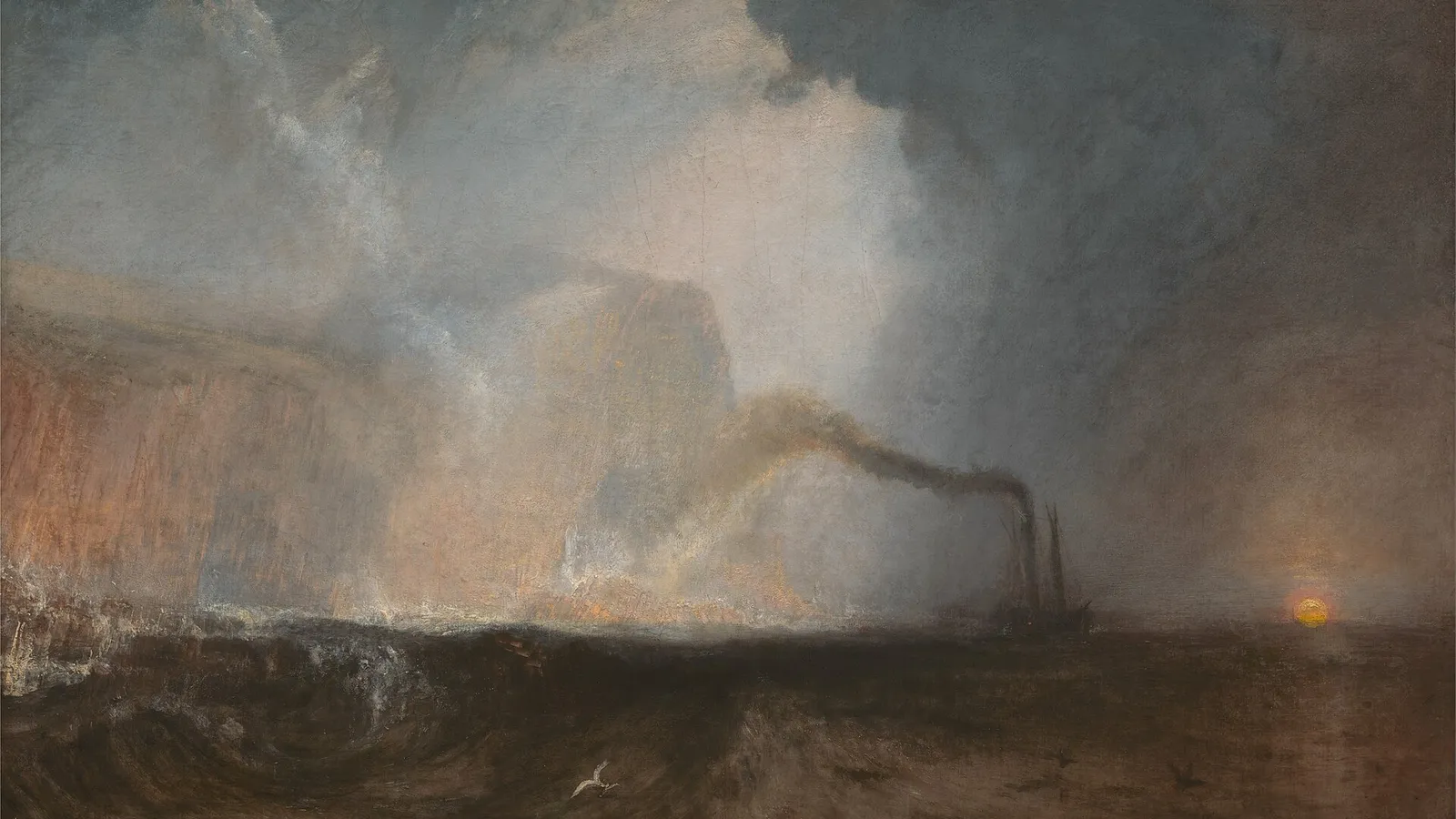

Staffa & Fingal's Cave
Contents
The myth worth correcting
Fingal's Cave is not named after a figure from verified ancient Scottish or Irish legend in any straightforward sense. Its name comes from the 18th-century poems of James Macpherson, who claimed to have translated the works of a genuine ancient Gaelic bard named Ossian describing the hero Fingal — a claim that became one of the most famous literary authenticity controversies in British history, with serious contemporary critics, Samuel Johnson prominent among them, arguing Macpherson had substantially invented the material himself. The cave's evocative name is a product of that controversy, not a straightforward link to pre-existing Gaelic or Irish mythology.
TL;DR
- established Staffa's basalt columns formed through columnar jointing as a lava flow cooled and contracted around 55–58 million years ago, producing predominantly hexagonal columns closely related geologically to the Giant's Causeway in Northern Ireland — this is settled, well-studied volcanic geology, not folklore.
- established The cave's original Gaelic name was An Uamh Bhin ("the melodious cave"); Sir Joseph Banks renamed it "Fingal's Cave" in 1772 after visiting, directly inspired by the then-wildly popular Ossian poems of James Macpherson — this naming history is documented and dated.
- disputed The name "Fingal" derives from Macpherson's own literary rendering of the Gaelic hero Fionn mac Cumhaill (Finn MacCool); whether Macpherson's "Ossian" poems were a genuine translation of ancient oral tradition or substantially his own 18th-century composition was fiercely disputed at the time and remains a landmark case of contested literary authenticity, so this article does not present Macpherson's poems as straightforward ancient literature.
- established Felix Mendelssohn visited Staffa in 1829 and the experience directly inspired his concert overture, commonly known as the Hebrides Overture, premiered in London in 1832 — this is a documented, dated composition history.
- established Staffa is a National Trust for Scotland property, gifted in 1986, and holds National Nature Reserve and Site of Special Scientific Interest status, protecting important seabird colonies including puffins — these are current, verifiable institutional and conservation facts.
Key Facts
- Location/Region
- Inner Hebrides, approximately 10 km west of the Isle of Mull, Argyll and Bute
- Scale
- Island: 33 hectares, 1 km long by c. 0.5 km wide, highest point 42 m. Fingal's Cave: roughly 20 m high, 75 m long
- Type
- Volcanic island with columnar basalt sea caves
- Protected/heritage status
- National Nature Reserve (2001); Site of Special Scientific Interest; National Trust for Scotland property
- Managed/owned by
- National Trust for Scotland (gifted by Jock Elliott Jr. in 1986 in honour of his wife Eleanor's 60th birthday)
- Access notes
- Uninhabited; reached only by boat tour (operating April–September) from Mull, Iona, or Oban; landing dependent on calm sea conditions; dogs discouraged to protect seabirds
Scottish Impact Index (SI Score)
- National Significance
- 8/10
- Historical Continuity
- 9/10
- Human & Economic Importance
- 5/10
- Landscape / Architectural Distinctiveness
- 10/10
- Cultural & Historical Legacy
- 9/10
- Recognition
- 10/10
51/60
Ranked =31st of 43 in Locations
A Note on Claims and Evidence
Staffa's geological formation and physical dimensions are documented, resting on established volcanological science and survey measurement. The 1772 naming of Fingal's Cave by Joseph Banks, and Mendelssohn's 1829 visit and subsequent overture, are likewise documented, dated historical events recorded by named individuals. The status of the name "Fingal" itself sits differently: it derives from James Macpherson's Ossian poems, works whose claimed basis in authentic ancient Gaelic oral tradition was disputed by serious contemporaries and remains a well-known case of disputed/legend-myth literary authenticity — this article treats "Fingal" as a name with a contested literary origin, not as a straightforward link to verified ancient legend, and keeps detailed discussion of the wider Ossian controversy brief, noting a dedicated card on that subject exists elsewhere in this collection (now retired/replaced per project notes).
Timeline
Lava flows associated with the opening of the North Atlantic cool and contract, forming Staffa's hexagonal basalt columns through columnar jointing — geologically related to the Giant's Causeway formation in Northern Ireland.
The cave is known locally in Gaelic as An Uamh Bhin, "the melodious cave," referencing the sound of waves resonating within it.
James Macpherson publishes his Ossian poems, claiming to have translated ancient Gaelic verse describing the hero Fingal (his rendering of Fionn mac Cumhaill); the poems become a sensation across Europe.
Sir Joseph Banks visits Staffa and renames the cave "Fingal's Cave," directly inspired by Macpherson's then-celebrated poems.
The authenticity of Macpherson's Ossian poems is seriously disputed by contemporaries, notably Samuel Johnson, who argued the material was substantially Macpherson's own composition rather than a faithful translation of genuine ancient sources.
A succession of major cultural figures, including John Keats, William Wordsworth, and Jules Verne, visit Staffa, cementing its status as a Romantic-era landmark.
American tourists sail to Staffa on the steamer Comet (often called Comet II), which sinks in the Firth of Clyde on her next voyage, on 21 October.
Felix Mendelssohn visits Staffa and Fingal's Cave, an experience that directly inspires his concert overture.
Mendelssohn's overture, commonly known as the Hebrides Overture, premieres in London. The American journalist Calvin Colton visits Fingal's Cave and Iona after sailing down the Caledonian Canal.
Queen Victoria and Prince Albert visit Staffa, adding royal endorsement to its already well-established tourist reputation.
American philanthropist Jock Elliott Jr. gifts Staffa to the National Trust for Scotland in honour of his wife Eleanor's 60th birthday.
Staffa is designated a National Nature Reserve.
Details
A small island built entirely from one lava flow's cooling pattern
Staffa is tiny — just 33 hectares, a kilometre long and half a kilometre wide, rising to a modest 42 metres at its highest point — yet it is one of the most visually striking islands in Scotland because of a single, repeated geological structure: hexagonal basalt columns, formed as a thick lava flow cooled and contracted toward evenly spaced centres around 55 to 58 million years ago, during the volcanic activity associated with the opening of the North Atlantic Ocean. The resulting columns, predominantly six-sided though ranging from three to eight, are part of what geologists call the Staffa Group of olivine tholeiite basalts, and the same basic process, acting on lava flows of similar age and composition, produced the famous columns of the Giant's Causeway in Northern Ireland and related formations on nearby Ulva and Ardmeanach on Mull. Staffa is, in effect, a smaller Scottish sibling of the Giant's Causeway rather than a geologically unique phenomenon, though its concentration of accessible sea caves is unusually dramatic.
The most celebrated of these caves, Fingal's Cave, is a genuinely impressive sea cavern roughly 20 metres high and 75 metres long, its walls formed by a colonnade of exposed hexagonal basalt columns and its interior famous for the resonant, almost musical sound produced by waves surging through it — the quality that gave the cave its older Gaelic name, An Uamh Bhin, "the melodious cave."
Renaming a cave after a literary controversy
The cave's modern English name has nothing to do with its original Gaelic identity. In 1772, the naturalist and explorer Sir Joseph Banks visited Staffa and renamed the cave "Fingal's Cave," drawing directly on the immense contemporary popularity of James Macpherson's Ossian poems, first published in the 1760s. Macpherson presented his poems as faithful translations of genuine ancient Gaelic oral poetry, attributed to a legendary blind bard named Ossian describing the deeds of the hero Fingal — Macpherson's own English rendering of the Gaelic hero Fionn mac Cumhaill (Finn MacCool), a figure drawn from genuine older Irish and Scottish Gaelic tradition.
The trouble is that Macpherson's claim to be translating, rather than substantially composing, these poems was fiercely disputed almost from the moment of publication. Samuel Johnson, among the most prominent critics, argued that Macpherson could not produce convincing original manuscripts and that the poems were, in large part, his own eighteenth-century literary creation dressed in the trappings of ancient Gaelic epic. This dispute over authenticity became one of the most famous literary controversies of the era, and it has never been fully resolved in Macpherson's favour: modern scholarship generally regards the Ossian poems as a complex blend of genuine older Gaelic ballad material, oral tradition, and substantial original composition and embellishment by Macpherson himself, rather than either a straightforward hoax or a faithful translation. Because this collection includes dedicated coverage of the wider Ossian controversy elsewhere (now retired/replaced per project planning notes), this article keeps the point brief: Fingal's Cave carries a name derived from a genuinely contested piece of 18th-century literature, not a settled link to verified ancient legend, and should never be described as though Fingal were simply a documented historical or mythological figure with an uncontested textual pedigree.
Mendelssohn, Romanticism, and a tourist landmark is made
Whatever the rights and wrongs of the Ossian controversy, its cultural effects were real and lasting, and nowhere more so than at Staffa. The island, already newly famous under its reinvented name, became a fixture of the broader Romantic fascination with sublime, wild, "authentically ancient" Celtic landscapes. A remarkable sequence of major cultural figures made the journey, including the poet John Keats in 1818, the poet William Wordsworth in 1833 (who grumbled, in verse, about the "motley crowd" of fellow tourists spoiling the solitude he had hoped for), and novelist Jules Verne in 1839.
The most musically significant visit came in 1829, when the young composer Felix Mendelssohn travelled to Staffa and was powerfully struck by Fingal's Cave's scale and acoustics. The visit directly inspired a concert overture, commonly known today as the Hebrides Overture (Mendelssohn's own working title referenced the cave itself), which premiered in London in 1832 and remains one of the most frequently performed orchestral evocations of the Scottish landscape in the classical repertoire. Royal endorsement followed in 1847 with a visit by Queen Victoria and Prince Albert, by which point Staffa's status as a must-see Scottish Romantic landmark was thoroughly established — a reputation built, it is worth remembering, on a chain of events beginning with a contested literary translation rather than any pre-existing ancient reputation for the cave itself.
American visitors and the Ossian connection
established Ossian's fame reached America early. In 1773 Thomas Jefferson wrote to Charles McPherson in Edinburgh that he thought "this rude bard of the North the greatest Poet that has ever existed", and asked for a Gaelic grammar so that he could read the originals (as quoted by the literary historian Andrew Hook in Scotland and America, 1975). By the 1820s Americans touring Scotland treated the west Highlands as Ossian's country. Hook shows that Staffa and Iona were an optional end to the longer American tour: from Inverness, travellers took the steamer down the Caledonian Canal and could either land at Ballachulish for Glencoe or sail on to the islands before reaching the Clyde. The New York journalist Calvin Colton went to Fingal's Cave and Iona in 1832.
shared The trip was not always safe. In 1825 a party of American tourists, companions of the New York editor Nathaniel Carter, stayed aboard the steamer Comet and sailed out to Staffa in stormy weather. On her next voyage the ship, a successor named after Henry Bell's pioneering Comet, sank after a collision off Gourock on 21 October 1825. Hook gives the loss as 70 lives and notes that the writer Anne Grant of Laggan had planned to be aboard. A modern wreck record puts about 73 people on board, of whom 13 reached shore, and says the final death toll was never established.
A protected island today
Staffa remains uninhabited and is managed today by the National Trust for Scotland, having been gifted to the Trust in 1986 by the American philanthropist Jock Elliott Jr. in honour of his wife Eleanor's sixtieth birthday; she was given the honorific title "Steward of Staffa." The island was designated a National Nature Reserve in 2001 and holds Site of Special Scientific Interest status, protecting nationally important breeding populations of puffins (present April to early August), fulmars, and common shags, alongside surrounding waters used by grey seals, dolphins, minke whales, and even occasional basking sharks. Access is strictly by boat tour, operating seasonally between April and September from Mull, Iona, or Oban, with landings dependent on calm sea conditions — a reminder that, for all its fame, Staffa remains a genuinely exposed, weather-dependent Atlantic island rather than an easily guaranteed day out.
Did You Know?
- Fingal's Cave's older Gaelic name, An Uamh Bhin, means "the melodious cave," a reference to the sound of waves resonating through it.
- The name "Fingal" comes from James Macpherson's 18th-century Ossian poems, whose claimed basis in genuine ancient Gaelic translation was disputed by Samuel Johnson and others and remains a famous literary controversy.
- Staffa's basalt columns are geologically closely related to Northern Ireland's Giant's Causeway, formed by the same broad volcanic episode roughly 55–58 million years ago.
- Felix Mendelssohn's famous Hebrides Overture was directly inspired by his 1829 visit to Fingal's Cave.
- Queen Victoria and Prince Albert visited Staffa in 1847, by which point it was already a well-established Romantic-era tourist destination.
- The poet William Wordsworth visited Staffa in 1833 and complained in verse about the crowds of fellow tourists.
- Staffa is tiny — just 33 hectares — yet its name and image are recognised internationally, largely thanks to Mendelssohn's music rather than its physical scale.
- Staffa was gifted to the National Trust for Scotland in 1986 as a sixtieth-birthday tribute from an American philanthropist to his wife.
- Thomas Jefferson called Ossian "the greatest Poet that has ever existed" in a letter of 1773.
FAQ
1What are the columns at Fingal's Cave made of?
Basalt, formed through a process called columnar jointing as a cooling lava flow contracted into predominantly hexagonal shapes around 55–58 million years ago.
2Is Fingal a real historical or mythological figure?
"Fingal" is James Macpherson's 18th-century literary rendering of Fionn mac Cumhaill (Finn MacCool), a figure from genuine older Gaelic and Irish tradition — but Macpherson's specific "Ossian" poems describing Fingal were themselves disputed as only partly authentic translations, making the name's pedigree genuinely contested rather than a simple ancient legend.
3Why is it called Fingal's Cave if that's not the original name?
Sir Joseph Banks renamed it in 1772 after visiting, inspired by the then-hugely popular Ossian poems; its earlier Gaelic name was An Uamh Bhin, "the melodious cave."
4What is the connection between Staffa and the Giant's Causeway?
Both formed from basalt lava flows of similar age cooling into hexagonal columns through the same geological process, making them closely related formations on either side of the North Channel.
5Did Mendelssohn write music about Staffa?
Yes — his 1829 visit to Fingal's Cave directly inspired the concert overture known as the Hebrides Overture, premiered in 1832.
6Can you go inside Fingal's Cave?
Yes, when sea conditions allow, visitors can walk partway into the cave along a natural basalt causeway at its entrance.
7How do you get to Staffa?
Only by boat; seasonal tours run April to September from Mull, Iona, or Oban, with landing dependent on calm weather.
8Who owns Staffa?
The National Trust for Scotland, which received the island as a gift in 1986.
9Does anyone live on Staffa?
No, the island is uninhabited.
10What wildlife can you see on Staffa?
Puffins (seasonally), fulmars, common shags, and in surrounding waters grey seals, dolphins, minke whales, and occasionally basking sharks.
11Did early American tourists visit Staffa?
Some did. Andrew Hook (1975) shows that Staffa and Iona were an optional extension of the American Highland tour by steamer from the Caledonian Canal; the journalist Calvin Colton visited Fingal's Cave in 1832.
12Is the Ossian controversy fully resolved?
No — modern scholarship generally sees the poems as a mix of genuine older Gaelic tradition and substantial original composition by Macpherson, rather than either a pure hoax or a faithful translation, and the question remains a landmark case study in literary authenticity.
13Is there a separate article about Ossian or James Macpherson in this collection?
A dedicated card on the Ossian controversy exists elsewhere in this series' planning but is noted as retired or replaced; this article keeps that angle brief by design.
Sources and Further Reading
Primary/Institutional
- National Trust for Scotland — Staffa National Nature Reserve
- NatureScot — Staffa Site of Special Scientific Interest documentation
Scholarly/Critical
- Geological Digressions — "Overture to a Cave: the spectacle of jointing in ancient basalt lava flows"
- Hoaxes.org / academic literature on the Ossianic authenticity controversy (Macpherson, Samuel Johnson's critique)
- Britannica — "Ossian"
- Andrew Hook, Scotland and America: A Study of Cultural Relations, 1750–1835 (Blackie, 1975), chapters V and VI, on Ossian in America and the American Highland tour
Specialist
- Scottish Shipwrecks — Comet II — consulted for the 1825 sinking and the uncertain death toll
General
- Wikipedia — "Staffa," "Fingal's Cave"
- History Hit — "Fingal's Cave: History and Facts"
- Linda Hall Library — biographical material on Felix Mendelssohn's 1829 visit
Caveats: Myths and Disputed Claims
- Do not present "Fingal" as a verified, uncontested ancient mythological or historical figure — the name derives from James Macpherson's disputed 18th-century Ossian poems. Correct phrasing: "named after Fingal, the hero of James Macpherson's contested Ossian poems."
- Do not describe Macpherson's Ossian poems as either a straightforward authentic ancient translation or a pure invented hoax — modern scholarship sees them as a disputed mixture of genuine tradition and original composition. Correct phrasing: "a work whose claimed basis in ancient Gaelic tradition was seriously disputed and remains debated."
- Do not state that Staffa's geology is unique to the island — it is closely related to, and formed by the same broad volcanic process as, the Giant's Causeway and other Scottish basalt formations. Correct phrasing: "part of a wider family of related basalt formations, including the Giant's Causeway."
- Do not give an exact death toll for the 1825 Comet sinking. Andrew Hook gives 70; a modern wreck record implies about 60 and says the true figure was never established. Nor should this ship be confused with Henry Bell's original Comet of 1812, wrecked in 1820.
- Do not imply the cave's original Gaelic name was ever "Fingal's Cave" — its earlier name was An Uamh Bhin, and the English name dates only to 1772.
Card 028 · Locations