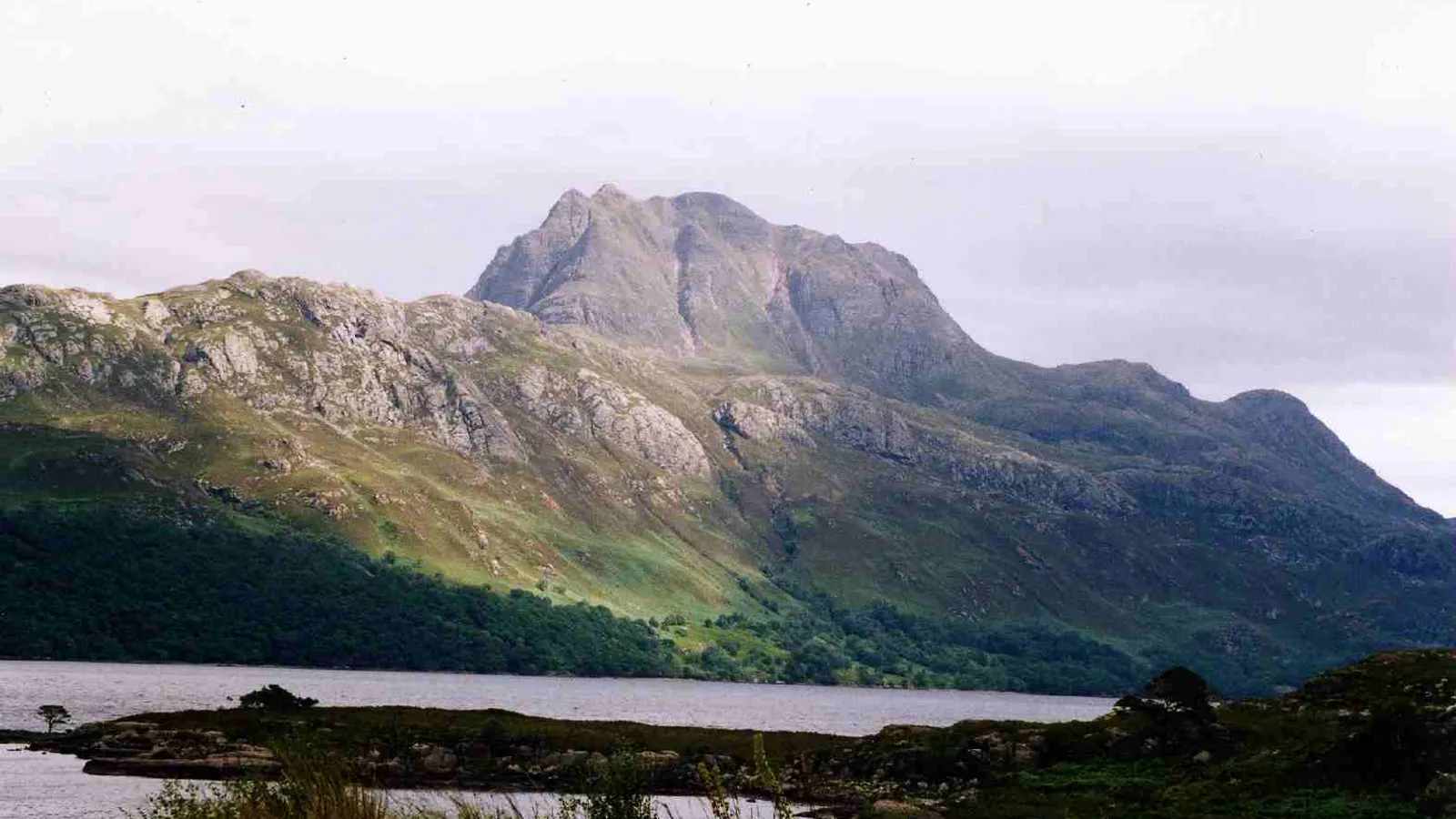

Torridon & Loch Maree
Contents
TL;DR
- established The mountains of Torridon are built from Torridonian sandstone laid down roughly 750–1,000 million years ago, among the oldest sedimentary rock in Europe, confirmed by radiometric and palaeomagnetic dating rather than estimate.
- established Beinn Eighe, part of the Torridon massif, became Britain's first National Nature Reserve in 1951 — a documented statutory designation, not a marketing claim.
- traditional Isle Maree, on Loch Maree, is widely held by local tradition to have been a pre-Christian pagan worship site later taken over by the 7th–8th-century missionary Saint Máel Ruba; this is stated as tradition because the archaeological evidence is suggestive, not conclusive.
- [Legend/Disputed] Stories of a "cursed" or "wishing" tree on Isle Maree into which coins are hammered for luck, and tales of Viking princes buried there, circulate widely but rest on folklore and later embellishment rather than verified record, so they are flagged rather than stated as history.
- established Queen Victoria's 1877 visit to Loch Maree, and the resulting naming of Victoria Falls nearby, are documented historical events that shaped the area's Victorian tourism boom.
Key Facts
- Category
- Detail
- Location/Region
- Wester Ross, North-West Highlands, Scotland
- Scale
- Torridon massif peaks: Liathach (1,055 m), Beinn Eighe (1,010 m), Beinn Alligin (986 m); Loch Maree: 21.7 km long, up to 112 m deep, 28.7 km² surface area
- Type
- Mountain range (Torridonian sandstone on Lewisian gneiss basement) and freshwater loch with Caledonian pinewood islands
- Protected/heritage status
- Beinn Eighe and Loch Maree Islands National Nature Reserve (Beinn Eighe designated 1951 — Britain's first NNR); Ramsar wetland site (1994); part of Wester Ross UNESCO Biosphere Reserve
- Managed/Owned by
- NatureScot (NNR); National Trust for Scotland (Torridon Estate, acquired 1967)
- Access notes
- A896 road through Glen Torridon; main walking routes from Torridon village and Kinlochewe; Loch Maree accessible via A832; remote terrain, weather-dependent
A Note on Claims and Evidence
Torridon and Loch Maree combine two very different kinds of knowledge: hard, dateable geology and a long oral tradition of saints, pilgrimage, and folklore attached to Isle Maree. The geological ages of the sandstone and gneiss, and the statutory conservation designations, rest on published scientific and governmental record and are marked established. The connection between Saint Máel Ruba and a possible earlier pagan shrine is supported by circumstantial archaeological and documentary evidence but not proven beyond doubt, and is marked traditional. Popular additions — cursed trees, buried Norse royalty, and similar embellishments that have accreted around Isle Maree in guidebooks and folklore collections — are marked [Legend] and are explicitly flagged in the Caveats section rather than repeated as fact.
Timeline
Torridonian sandstone deposited in river and lake basins over an already ancient, eroded landscape of Lewisian gneiss.
Saint Máel Ruba (Maelrubha), an Irish missionary associated with Applecross, is traditionally linked to Isle Maree; the loch's name derives from his.
Isle Maree used as a Christian pilgrimage site and burial ground; earlier pagan ritual use suspected but not proven.
Annual well/tree rituals (coin-offerings, circumambulation) recorded continuing on Isle Maree.
Queen Victoria visits Loch Maree and stays at the Loch Maree Hotel, Talladale; a nearby waterfall is named Victoria Falls in commemoration, cementing Victorian-era sporting-tourism interest in the area.
Beinn Eighe designated Britain's first National Nature Reserve.
The Torridon Estate (much of the Torridon massif) passes to the National Trust for Scotland.
Loch Maree Islands designated a Ramsar wetland site for their internationally important Caledonian pinewood and bird populations.
Beinn Eighe and the Loch Maree Islands National Nature Reserves formally unified under joint management.
Area forms part of the Wester Ross UNESCO Biosphere Reserve; major hillwalking and wildlife-tourism destination.
Details
Ancient rock, dramatic form
The mountains of Torridon — Liathach, Beinn Eighe, and Beinn Alligin chief among them — are built from Torridonian sandstone, terrestrial river- and lake-bed sediment laid down in rift basins roughly 750 million to 1 billion years ago, during the late Precambrian. This is stated as established fact because the dating rests on radiometric and palaeomagnetic analysis published in peer-reviewed geological literature, not estimation from appearance. Beneath the sandstone lies an even older foundation: Lewisian gneiss, exposed in valley floors and lower slopes, which had already been eroded into a landscape of ridges and valleys hundreds of metres deep before the Torridonian sediments were deposited on top of it — meaning the "hills within hills" relationship visible today in places like Glen Torridon reflects two separate mountain-building episodes separated by hundreds of millions of years, not one single uplift event. Beinn Eighe adds a further distinctive note: its upper slopes are capped with pale quartzite, a metamorphosed sandstone that gives the mountain's summit ridge (the Eighe, "file," is said to describe its serrated profile) a bright, almost snow-like appearance even in summer, frequently mistaken by visitors for permanent snow cover.
The resulting landscape — isolated, steep-sided peaks with distinct terraced "stepped" profiles rising abruptly from relatively flat glens — is recognised internationally as one of the finest examples of ancient mountain architecture in Europe, and underpins the area's status as a geological reference site studied well beyond Scotland.
Loch Maree: scale, islands, and ecology
Loch Maree is the fourth-largest freshwater loch in Scotland by area and the largest north of Loch Ness, stretching nearly 22 km through Wester Ross with a maximum depth of 112 metres in its Grudie basin. It is studded with more than sixty islands, several of them substantial and wooded, supporting some of the finest surviving native Caledonian pinewood in Scotland — stands that are, in genetic studies, measurably distinct from pinewoods elsewhere in the country, underlining how isolated and long-undisturbed these island forests have been. The loch and its islands support internationally significant wildlife, including one of Britain's largest concentrations of breeding black-throated divers, otters, pine martens, and a dozen species of dragonfly, reflected in the site's Ramsar wetland designation and its role within the Beinn Eighe and Loch Maree Islands National Nature Reserve.
Isle Maree: saint, shrine, and later legend
Among Loch Maree's islands, Isle Maree carries the heaviest weight of tradition. It takes its name — and gives the loch its name, the water body having earlier been known as Loch Ewe — from Saint Máel Ruba (often anglicised Maelrubha), an Irish missionary associated chiefly with the monastery at Applecross, active in the late 7th and early 8th centuries. Tradition holds that Máel Ruba established a hermitage or chapel on the island, and that the site had served earlier pagan ritual purposes before his arrival; archaeological traces of a pre-Reformation chapel and burial ground support the idea of long continuous sacred use, but do not themselves prove a pre-Christian origin, which is why this article marks that connection traditional rather than confirmed fact. What is independently documented is that annual rituals — including the circling of a holy well and the hammering of coins into a tree for luck or cure, a custom with clear parallels elsewhere in the Gaelic world — persisted on the island into the 18th century, at which point such practices were increasingly recorded (and condemned) by Church authorities, giving historians a documentary trail even where the practices' deeper origins remain obscure.
Later folklore embroidered the site further, with stories of murdered Norse royalty buried on the island and a "cursed" quality attached to disturbing its tree or well. These additions belong to the 19th- and 20th-century folklore-collecting tradition that reshaped much Highland lore for a Victorian and later tourist audience, and are treated here as [Legend] rather than history.
Victorian discovery and the birth of modern tourism
Loch Maree's transformation into a tourist destination dates precisely to 1877, when Queen Victoria visited and stayed at the Loch Maree Hotel at Talladale — a documented royal visit, not folklore, that is directly credited with popularising the loch among wealthy sporting tourists drawn to its trout fishing and dramatic scenery. A nearby waterfall was named Victoria Falls in her honour. This single visit helped establish the pattern, common across the Highlands in this period, by which royal and aristocratic tourism (sport fishing, stalking, and scenic appreciation) reshaped remote Highland economies that had, within living memory for many residents, been emptied by Clearance-era evictions — a juxtaposition this article notes rather than glosses over: the same decades that saw sporting estates displace crofting communities elsewhere in the Highlands also saw those same estates marketed as romantic wilderness to the very social class that benefited from the displacement.
Conservation pioneer and modern status
Torridon and Loch Maree's modern identity rests heavily on nature conservation rather than industry or settlement. Beinn Eighe's designation in 1951 as Britain's first National Nature Reserve was a landmark moment in UK conservation history, establishing a precedent for statutory habitat protection that shaped the entire National Nature Reserve system that followed. The surrounding Torridon Estate passed into the care of the National Trust for Scotland in 1967, and in 1994 the Loch Maree Islands gained Ramsar wetland status for their pinewood and bird populations; the two reserves were formally unified in 2014. Today the area sits within the wider Wester Ross UNESCO Biosphere Reserve, and functions principally as a destination for hillwalking, wildlife tourism, and geological study — a working landscape of crofting and estate management overlaid, since the mid-20th century, with an increasingly central identity as protected wilderness.
Did You Know?
- The sandstone that makes up Liathach and Beinn Eighe is older than complex multicellular life itself — it predates the Cambrian explosion by hundreds of millions of years.
- Beinn Eighe's pale, almost snow-white summit ridge is capped with quartzite, not snow, and is visible year-round.
- Loch Maree's Grudie basin, at 112 metres, is deep enough to fully submerge most of Scotland's tallest buildings.
- The Caledonian pinewood on Loch Maree's islands is genetically distinct from mainland Scottish pinewoods, having developed in relative isolation for centuries.
- Beinn Eighe became Britain's very first National Nature Reserve in 1951, a full generation before most of the UK's current reserve network existed.
- Queen Victoria's single visit to Loch Maree in 1877 is directly credited with launching the area's tourism industry, which continues to shape the local economy today.
- Isle Maree's holy well and "wishing tree" ritual — hammering coins into bark for luck — was still practised annually as late as the 18th century.
- The relationship between the Torridonian sandstone peaks and the Lewisian gneiss beneath them represents two entirely separate, ancient mountain-building episodes, separated by hundreds of millions of years, fossilised one on top of the other.
FAQ
1How old is the rock in the Torridon mountains?
The Torridonian sandstone was deposited roughly 750 million to 1 billion years ago, among the oldest sedimentary rock in Europe.
2Is the white on Beinn Eighe's summit snow?
No — it is pale quartzite rock, visible in all seasons, though it is often mistaken for snow from a distance.
3What is the highest peak in the area?
Liathach, at 1,055 metres, is the highest of the main Torridon peaks.
4Why is Loch Maree significant beyond its size?
It holds some of Scotland's finest surviving native Caledonian pinewood, internationally important bird populations, and the country's first National Nature Reserve on its shores.
5Who was Saint Máel Ruba?
A 7th–8th-century Irish missionary associated with Applecross, traditionally linked to a hermitage on Isle Maree, after whom the loch is named.
6Was Isle Maree really a pagan site before Christianity arrived?
This is tradition, supported by circumstantial evidence, but not proven — it should not be stated as settled fact.
7Is it true that a cursed tree or buried Viking prince is on Isle Maree?
These are later folklore additions with no solid historical basis and should be treated as legend, not history.
8When did Loch Maree become a tourist destination?
Specifically from 1877, following Queen Victoria's visit and stay at the Loch Maree Hotel.
9Who manages the land today?
NatureScot manages the National Nature Reserve; the National Trust for Scotland owns and manages the Torridon Estate (since 1967).
10Can you visit Isle Maree?
Access is possible but restricted and sensitive given its heritage status; visitors should check with NatureScot or local operators rather than landing independently.
11Is this the same area as the Torridon Estate?
Largely yes — the Torridon Estate, under National Trust for Scotland ownership, covers much of the mountain massif discussed here.
12What wildlife is the area known for?
Black-throated divers, otters, pine martens, golden eagles, and (on Loch Maree's islands) distinctive native pinewood ecosystems.
Sources and Further Reading
Primary/Institutional
- NatureScot — Beinn Eighe and Loch Maree Islands National Nature Reserve
- National Trust for Scotland — Torridon Estate
- British Geological Survey — Torridonian, Northern Highlands of Scotland
- Ramsar Sites Information Service — Loch Maree designation
Scholarly/Critical
- Geological literature on Torridonian Group dating and depositional environment
- Historical and folklore scholarship on Isle Maree and Saint Máel Ruba's cult
General
- Loch Maree — Wikipedia
- Torridonian, Northern Highlands of Scotland — BGS Earthwise
- VisitScotland and Wester Ross Biosphere visitor information
- Quality press coverage of Torridon hillwalking and conservation history
Caveats: Myths and Disputed Claims
- Do not state as fact that Isle Maree was definitely a pre-Christian pagan shrine before Saint Máel Ruba — this is tradition supported by circumstantial evidence, not proof.
- Do not repeat stories of cursed trees or buried Norse royalty on Isle Maree as history; these are folkloric embellishments.
- Do not describe Beinn Eighe's pale summit as snow-covered year-round — it is quartzite rock, though it can carry genuine snow in winter.
- Do not imply the Torridonian sandstone and the underlying Lewisian gneiss formed in a single event — they represent two distinct, widely separated geological episodes.
- Do not romanticise Victorian sporting tourism at Loch Maree without noting its coexistence with, and dependence on, the same estate system that drove Highland Clearance-era displacement elsewhere in the region.
Card 008 · Locations