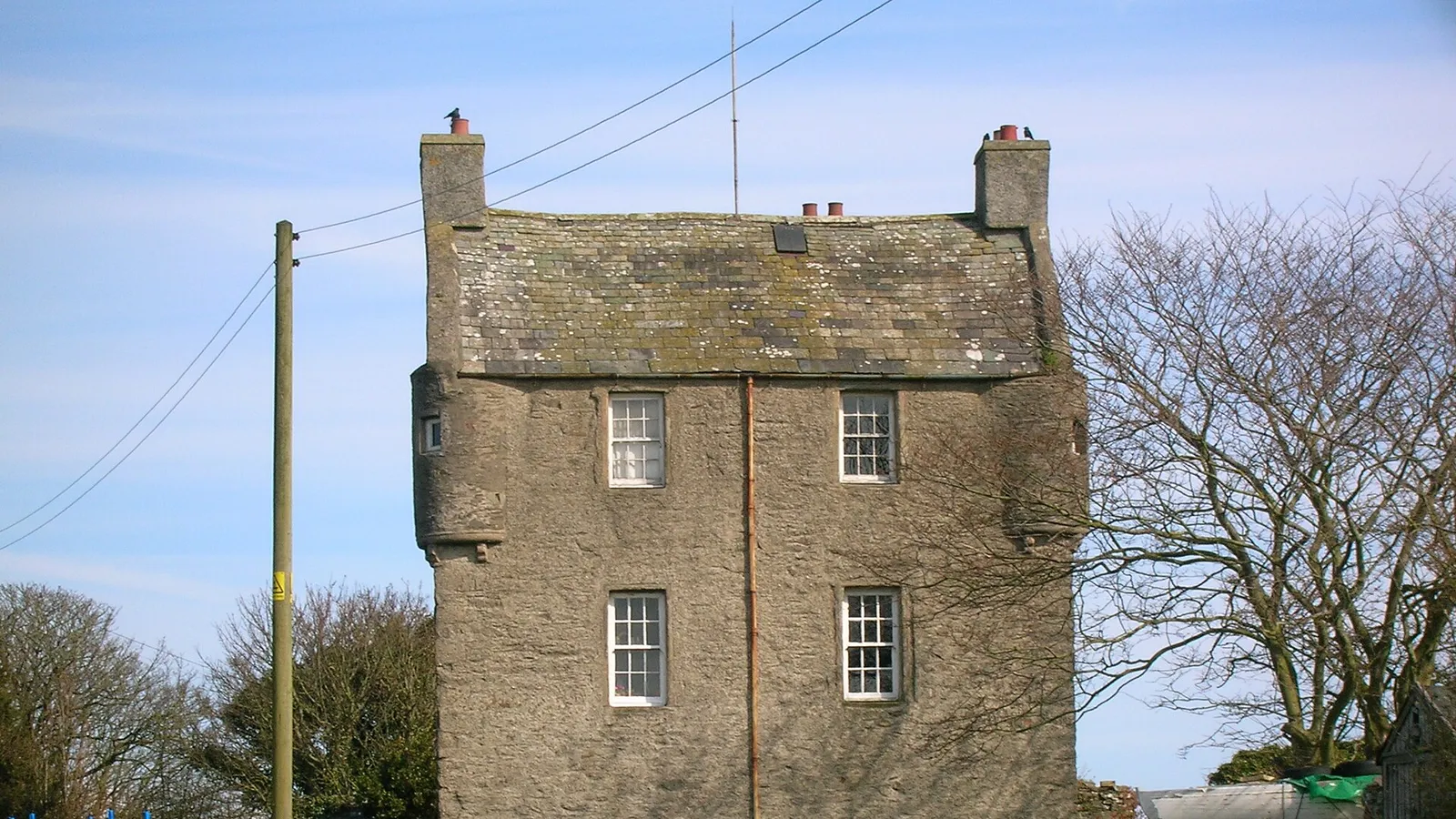

Whithorn & the Isle of Whithorn
Contents
Isn't Whithorn simply "the place where St Ninian brought Christianity to Scotland in 397 AD"? That tidy founding story is exactly the kind of claim this card has to handle carefully — the two main historical sources for Ninian's life are themselves, by scholarly consensus, of doubtful reliability, and modern archaeology suggests the site's earliest significance may have been as much secular and royal as religious.
TL;DR
- established The Latinus Stone, discovered in 1880s excavations and dated to the 5th century, is the earliest documented evidence of Christianity in Scotland, naming "Latinus" as the earliest Christian whose name is known in the country — this rests on direct archaeological and epigraphic evidence, not later tradition.
- disputed St Ninian's historicity, exact dates, and specific missionary activities are genuinely disputed by scholars, because the two principal sources for his life — Bede's 8th-century account and Aelred of Rievaulx's 12th-century biography — are both written centuries after Ninian's supposed lifetime and are considered of dubious reliability by modern historians.
- traditional The traditional founding date of Ninian's church, Candida Casa ("shining white house"), around 397 AD, is a commonly cited figure but should be understood as a reconstructed estimate rather than a documented fact, since no contemporary 4th/5th-century record fixes it.
- disputed Recent archaeological research suggests Whithorn may initially have functioned as an important secular or even royal settlement rather than purely a religious foundation, complicating the traditional narrative that casts Ninian's mission as the site's founding purpose — this comes from modern excavation-based reassessment, not an overturning of all religious significance at the site.
- established Whithorn became a major medieval pilgrimage destination, with royal patrons including James IV, reaching a "golden age" in the late 1400s to early 1500s before the 1560 Reformation destroyed the shrine and left the priory in ruins — this sequence is well documented through royal and ecclesiastical records.
Key Facts
- Location
- Whithorn and the Isle of Whithorn, Machars peninsula, Dumfries and Galloway, Scotland
- Era/Period
- Earliest Christian evidence 5th century; medieval pilgrimage peak 15th–16th century
- Type
- Early Christian settlement, medieval priory and pilgrimage site, coastal village
- Managed/Owned by
- Historic Environment Scotland (Whithorn Priory and Museum)
- Visitor status
- Priory ruins and museum open to the public, seasonal/managed access
- Key artefact
- The Latinus Stone, earliest dated Christian inscription in Scotland
A Note on Claims and Evidence
Whithorn is one of the clearest cases in this collection for applying the three-tier evidence framework carefully, because its most famous associated figure — St Ninian — sits at the centre of a genuine, long-running scholarly dispute rather than a simple myth that can be debunked outright. The documented tier covers hard archaeological evidence: the Latinus Stone and its 5th-century dating, and the well-recorded medieval pilgrimage activity, royal patronage, and 1560 Reformation destruction. The disputed tier covers Ninian himself — his existence is not seriously doubted by most historians, but his precise dates, the extent of his missionary activity among the Picts versus other groups, and even the nature of Whithorn's earliest function (religious versus secular/royal) remain actively debated based on the unreliability of the two main biographical sources and ongoing archaeological reassessment. The traditional tier covers specific dates and details — such as the "397 AD" founding of Candida Casa — repeated so often in popular accounts that they read as fact, but which are reconstructions rather than documented certainties.
Timeline
The Latinus Stone is carved, representing the earliest documented evidence of Christianity in Scotland.
Approximate traditional lifespan attributed to St Ninian, though these dates rest on later, unreliable sources rather than contemporary record.
Traditional date given for Ninian's founding of Candida Casa ("shining white house") at Whithorn; treated as a reconstructed estimate, not a documented fact.
Bede's Ecclesiastical History provides the earliest substantial written account associating Ninian with the conversion of the Picts, itself based on earlier sources Bede regarded as not entirely trustworthy.
Aelred of Rievaulx writes a fuller biography of Ninian, describing a pilgrimage to Rome, consecration as bishop, and travels through Gaul — a source modern historians treat with considerable caution.
Whithorn develops as a significant ecclesiastical centre, later identified as an important early settlement whose earliest function may have been secular or royal as much as religious.
Whithorn's "golden age" as a pilgrimage destination; King James IV and other royal patrons visit and support the shrine.
Whithorn gains royal burgh status.
The Protestant Reformation leads to the destruction of Ninian's shrine and the stripping of priory estates.
The priory complex lies in ruins following the Reformation.
Excavations uncover the Latinus Stone, providing the earliest firm archaeological evidence of Christianity at the site.
Ongoing archaeological investigation, including research reassessing Whithorn's earliest function, continues to refine understanding of the site.
Managed by Historic Environment Scotland as Whithorn Priory and Museum, open to the public as a heritage and pilgrimage-history site.
Details
A genuinely disputed founding figure
Few figures in early Scottish Christian history are as persistently cited yet as genuinely uncertain as St Ninian. The two principal historical sources for his life are both written long after his supposed lifetime: Bede's early 8th-century Ecclesiastical History offers the earliest substantial account, crediting Ninian with beginning the conversion of the southern Picts, but Bede himself drew on earlier material he regarded as not entirely trustworthy. A fuller, more detailed biography was not produced until the 12th century, when Aelred of Rievaulx wrote an account describing a pilgrimage to Rome, consecration as bishop, and extensive travels through Gaul — a text modern historians treat with real caution given the centuries-long gap and Aelred's evident use of hagiographic convention rather than documentary record. Taken together, scholars broadly accept that a historical mission in southwest Scotland in this general period is likely, and the name Ninian attached to numerous Scottish churches lends some weight to a genuine, lasting cult of veneration — but the specific dates, the precise extent of his activity among the Picts versus other groups, and even some details of his biography should be treated as disputed rather than settled.
What the Latinus Stone actually proves
Where Ninian's biography is murky, the archaeological record at Whithorn offers something firmer. The Latinus Stone, uncovered during excavations in the 1880s and dated to the 5th century, carries an inscription identifying a man named Latinus as a Christian — making it the earliest documented evidence of Christianity in Scotland and giving historians the earliest Christian in the country whose actual name survives. This is a genuinely documented fact, resting on direct epigraphic and archaeological evidence rather than later chronicle tradition, and it is worth distinguishing clearly from the far less certain claims surrounding Ninian: the stone proves Christian presence at Whithorn in the 5th century; it does not, by itself, prove anything specific about Ninian's own role, dates, or activities.
Secular settlement or religious foundation?
Perhaps the most significant recent challenge to the traditional Whithorn narrative comes not from debates over Ninian specifically but from broader archaeological reassessment of the site's earliest function. Research, including work highlighted by university archaeological teams investigating the priory's origins, suggests Whithorn may initially have operated as an important secular, and possibly even royal, settlement, rather than a site whose significance was purely or primarily religious from the outset. This does not overturn the site's deep and genuine Christian history — the Latinus Stone's evidence stands regardless — but it complicates the tidy, popular version of the story in which Ninian's mission is treated as the singular founding event explaining everything that followed. A more accurate account holds the religious and secular/political dimensions of early Whithorn in tension, rather than resolving them into a single clean narrative.
From shrine to golden age of pilgrimage
Whatever the uncertainties of its earliest centuries, Whithorn's medieval importance as a pilgrimage centre is extremely well documented. By the late medieval period, the shrine associated with St Ninian had made Whithorn one of the most significant pilgrimage destinations in Scotland, drawing visitors seeking healing and spiritual benefit, and attracting sustained royal patronage — James IV, among other monarchs, is recorded making pilgrimage visits and supporting the site. The period from the late 1400s into the early 1500s is generally regarded as Whithorn's "golden age," reflected also in its elevation to royal burgh status in 1511, a mark of its civic as well as religious significance by this point.
Reformation destruction and modern rediscovery
This golden age ended abruptly with the Protestant Reformation. In 1560, Ninian's shrine was destroyed and the priory's estates stripped as part of the broader Reformation assault on Catholic shrines and monastic institutions across Scotland, leaving the complex in ruins by the close of the sixteenth century — a fate shared by many of Scotland's great medieval religious sites. Whithorn's modern significance owes much to subsequent archaeological investigation, beginning with the 1880s excavation that uncovered the Latinus Stone and continuing through later twentieth and twenty-first century research that has progressively complicated and enriched the traditional Ninian-centred founding story. Today the site is managed by Historic Environment Scotland as Whithorn Priory and Museum, presenting both the well-documented archaeological record and the more genuinely contested questions around Ninian's historicity as part of its public interpretation, rather than collapsing them into a single uncomplicated legend.
Did You Know?
- The Latinus Stone, Scotland's earliest documented Christian artefact, names the earliest known Christian in the country by name — and he was not Ninian.
- The two main historical sources for St Ninian's life were written roughly 300 and 700 years after his supposed lifetime, respectively, and both are considered unreliable by modern historians.
- Recent archaeological research suggests Whithorn's earliest significance may have been as much secular or royal as religious, complicating the traditional Ninian-founding narrative.
- King James IV was among several Scottish monarchs recorded making pilgrimage visits to Whithorn during its medieval "golden age."
- Whithorn achieved royal burgh status in 1511, reflecting its civic as well as religious importance by the late medieval period.
- The 1560 Reformation destruction of Ninian's shrine and the stripping of priory estates ended centuries of pilgrimage activity almost overnight.
- "Candida Casa," meaning "shining white house," is the traditional name given to Ninian's original church, though its precise founding date (commonly cited as 397 AD) is a reconstructed estimate rather than a documented fact.
- Despite the genuine uncertainty around Ninian's biography, numerous churches across Scotland bear his name, suggesting a real and lasting medieval cult of veneration even if his detailed life story cannot be fully verified.
FAQ
1Did St Ninian really bring Christianity to Scotland?
This is disputed. Most historians accept a historical mission in the region in roughly this period, but the precise dates, extent, and details of Ninian's activity are uncertain given the unreliable nature of the surviving sources.
2What is the Latinus Stone?
A 5th-century inscribed stone discovered in the 1880s, providing the earliest documented evidence of Christianity in Scotland and naming the earliest known Scottish Christian, Latinus.
3Why is Ninian's historicity disputed?
Because the two main sources for his life — Bede (8th century) and Aelred of Rievaulx (12th century) — were written long after his supposed lifetime and are considered unreliable by modern scholars.
4Was Whithorn always a religious site?
Not necessarily exclusively — recent archaeological research suggests it may initially have functioned as an important secular or royal settlement as well as a religious one.
5What does "Candida Casa" mean?
"Shining white house," the traditional name for Ninian's original church at Whithorn.
6When was Whithorn's pilgrimage "golden age"?
Roughly the late 1400s to early 1500s, when royal patrons including James IV visited the shrine.
7What happened to Whithorn during the Reformation?
In 1560, Ninian's shrine was destroyed and the priory's estates stripped, leaving the complex in ruins by the late 16th century.
8Who manages Whithorn Priory today?
Historic Environment Scotland, as Whithorn Priory and Museum.
9Is there archaeological proof Ninian himself existed?
There is no direct archaeological proof naming Ninian specifically; his historicity rests on later written tradition and the widespread dedication of churches in his name, not contemporary documentation.
10What is the relationship between Whithorn and the Isle of Whithorn?
The Isle of Whithorn is a small coastal village near Whithorn itself, historically connected to the wider early Christian and pilgrimage landscape of the area.
11Can visitors see the Latinus Stone today?
Yes, it is held and displayed as part of the Whithorn Priory and Museum collection.
12Why does this card treat Ninian's story so cautiously?
Because responsible historical writing distinguishes between a plausible, likely historical missionary tradition and overconfident claims about specific dates and deeds that the surviving sources cannot actually support.
Sources and Further Reading
Primary/Institutional
- Historic Environment Scotland, "Whithorn Priory and Museum: History and Stories" — historicenvironment.scot
- Historic Environment Scotland, Scheduled Monument record (SM12992)
Scholarly/Critical
- University of Bradford, research on Whithorn Priory's origins and reassessment of its early secular/royal function
- Encyclopaedia Britannica, "Saint Ninian," on the dubious reliability of Bede and Aelred of Rievaulx as sources
- Canmore (RCAHMS) records relating to Whithorn Priory excavation history
General
- British Pilgrimage Trust, "St Ninian's Priory, Whithorn"
- Wikipedia, "Whithorn"
- Road to Emmaus journal, "On the High Road with Scotland's Saints"
Caveats: Myths and Disputed Claims
- Do not state that St Ninian founded Candida Casa at Whithorn in 397 AD as a documented fact. This is a traditional, reconstructed date; no contemporary source fixes it, and Ninian's historicity itself is genuinely disputed by scholars.
- Do not present Bede's or Aelred of Rievaulx's accounts of Ninian's life as reliable primary-source biography. Both are written centuries after Ninian's supposed lifetime and are considered of dubious reliability by modern historians.
- Do not claim Whithorn's earliest significance was purely or straightforwardly religious. Recent archaeological research suggests a more complex picture involving possible secular or royal settlement function.
- Do not conflate the Latinus Stone's firm evidence of 5th-century Christianity at Whithorn with proof of any specific claim about Ninian himself; the stone names Latinus, not Ninian.
Card 049 · Locations