
The Miners' Strike in Scotland
Contents
Legend vs Myth: The 1984–85 miners' strike is sometimes remembered in Scotland as a single national event experienced identically everywhere. In fact, Scottish coalfields had their own distinct experience — near-total strike solidarity in some areas, significant working-miner numbers in parts of Fife and elsewhere, and a defeat whose aftermath hit Scottish mining communities especially hard given how few pits remained to lose. This card covers the strike itself as an event; the longer economic decline of Scottish coal before and after it is covered in the separate "End of the Scottish Coalfields" card.
TL;DR
- established The strike ran from March 1984 to March 1985, called in response to a National Coal Board programme announcing pit closures, and involved Scottish collieries in Fife, Lanarkshire, Ayrshire and the Lothians — this is documented strike history.
- established The strike ended in defeat for the National Union of Mineworkers (NUM) without a national ballot-sanctioned return-to-work agreement, after the NUM executive voted to end it in March 1985 — this is recorded union and NCB history.
- established Scotland lost the great majority of its remaining deep mines within roughly a decade of the strike's end, compounding an already long-running decline documented in the industry's post-war contraction — this is Established as part of the broader coalfields' decline.
- disputed The extent and significance of strike-breaking ("working miners") in specific Scottish coalfields, and whether Scottish solidarity was meaningfully stronger than in England — the historical record and oral-history testimony vary by pit and community, and this remains contested terrain, including within academic labour history.
- traditional The belief, strongly held in many former mining communities, that the strike's defeat was the direct and sole cause of subsequent pit closures is a reasonable inference from the sequence of events but simplifies a decline that, as the companion card shows, was already well underway before 1984.
Key Facts
- Strike dates
- March 1984 – March 1985
- National union
- National Union of Mineworkers (NUM), president Arthur Scargill
- Scottish union leadership
- Scottish NUM, prominent figures including Mick McGahey
- Trigger
- National Coal Board closure programme announced March 1984
- Scottish coalfields involved
- Fife, Lanarkshire, Ayrshire, Lothians
- National ballot
- No national strike ballot was held, a point of lasting internal union controversy
- Strike duration
- Approximately 12 months
- End of strike
- NUM executive voted to end the strike, March 1985, without a negotiated settlement protecting jobs
- Policing
- Large-scale police deployment, including mutual aid between forces, controversial in retrospect
- Aftermath
- Accelerated closures across remaining Scottish collieries through the later 1980s and into the 1990s
Scottish Impact Index (SI Score)
- National Consequence
- 9/10
- Enduring Effects
- 9/10
- Human & Material Cost
- 9/10
- Historical Significance
- 9/10
- Consequential Legacy
- 9/10
- Recognition
- 9/10
54/60
Ranked =17th of 45 in Shadow
A Note on Claims and Evidence
The strike's core chronology — dates, the NCB closure trigger, the lack of a national ballot, the strike's ending without a negotiated settlement — is well documented through contemporary press archives, union records, and subsequent academic labour history, including dedicated studies of the Scottish experience such as "Collieries, Communities and the Miners' Strike in Scotland, 1984–85." What is genuinely contested, and probably always will be, is the lived texture of the strike at community level: how unified individual pits and villages were, how working miners were treated, and how policing was experienced and judged — these are matters where oral history, local memory and documentary record do not always align, and where different accounts carry different political weight to this day.
Timeline
National Coal Board announces a programme of pit closures; NUM leadership calls a national strike without a national ballot, instead relying on area-level ballots and mandates, including in Scotland.
Strike spreads across Scottish coalfields in Fife, Lanarkshire, Ayrshire and the Lothians; mass picketing, including flying pickets, becomes a defining feature.
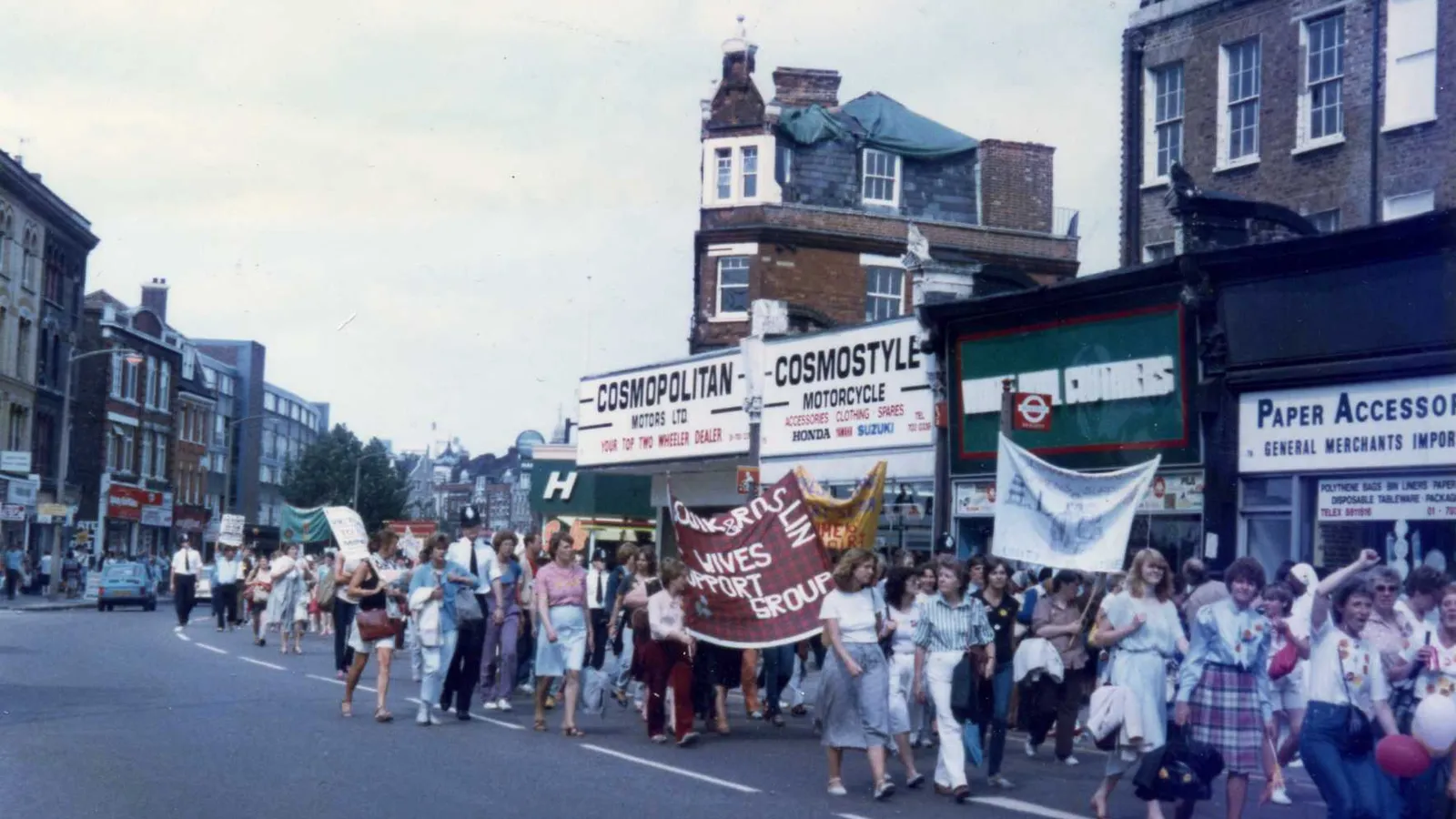
Hardship deepens for striking families; strike support networks, including women's support groups, become a major feature of community life in mining areas.
Some miners, particularly in parts of the English coalfields and in smaller numbers in Scotland, return to work; divisions between striking and working miners cause lasting community rifts in some areas.
Strike funds and morale come under severe pressure; national negotiations fail to produce an agreed settlement.
NUM national executive votes to end the strike without a negotiated agreement protecting jobs; miners return to work without securing the closure programme's reversal.
Closures accelerate across remaining Scottish collieries; most deep mines close within roughly a decade of the strike's end (see "End of the Scottish Coalfields" card for the longer arc).
Details
The trigger and the decision to strike
The strike was called in March 1984 after the National Coal Board, under chairman Ian MacGregor, announced a new programme of pit closures framed around "uneconomic" collieries, widely seen by the NUM as the opening move in a far larger closure plan than publicly stated. NUM president Arthur Scargill mobilised the union to resist through strike action, but controversially the national union did not hold a single UK-wide ballot before calling the strike, instead relying on a combination of area ballots, mandates from earlier conference votes, and flying pickets to extend the action from area to area — including into Scotland, where Scottish NUM leaders, including the prominent and strongly committed Mick McGahey, backed the action strongly. This decision not to ballot nationally became a lasting point of legal and political controversy, cited by critics as undermining the strike's legitimacy and by supporters as a pragmatic response to a leadership they believed was determined to close pits regardless of the ballot outcome.
How the strike played out in Scotland
Scottish coalfields in Fife, Lanarkshire, Ayrshire and the Lothians were deeply involved in the strike for its full duration, with Scottish miners and their communities widely regarded, including in academic accounts such as the detailed study "Collieries, Communities and the Miners' Strike in Scotland, 1984–85," as among the most solid in their commitment to the action across the UK. Mass and flying picketing, mutual support between communities, and extensive involvement of miners' wives and women's support groups in sustaining strike funds and morale were defining features of the Scottish experience, as they were elsewhere in Britain. At the same time, the strike was not experienced identically everywhere: a minority of miners in various coalfields, including some in Scotland, returned to work before the strike's end, creating divisions within individual pit villages that in some cases persisted for years afterward — a genuinely contested area where the scale and significance of "working miners" in specific Scottish collieries is still debated by historians and by those who lived through it.
Policing and confrontation
The strike was marked by large-scale and, in places, highly confrontational policing, including the controversial use of mutual aid arrangements that allowed police forces from outside an affected area to be deployed into Scottish and English mining communities during mass picketing. Confrontations between police and picketing miners, most famously at the "Battle of Orgreave" in South Yorkshire (outside Scotland but a defining national moment of the strike), became emblematic of the dispute's intensity, and policing conduct during the strike more broadly has remained a matter of ongoing political controversy and later calls for inquiry, echoing in Scottish political debate around the strike's fortieth anniversary in the mid-2020s, including Scottish Government discussion of pardons for miners convicted during the dispute.
Defeat and its aftermath
After roughly a year without achieving its central aim of reversing or softening the closure programme, and with strike funds and household finances exhausted, the NUM's national executive voted in March 1985 to end the strike without a negotiated settlement protecting jobs. Miners returned to work having secured no formal guarantee against the closures the strike had been called to resist. In the following decade, the National Coal Board and its successor British Coal closed the great majority of Scotland's remaining collieries, a far steeper and faster contraction than the slower pre-1984 decline, culminating in the handful of mines that survived into the 1990s and, ultimately, the 2002 closure of Longannet, the last significant deep mine (covered in the companion "End of the Scottish Coalfields" card). Whether this rapid post-strike closure programme would have happened at a similar pace regardless of the strike's outcome, or whether the strike's defeat specifically removed the main obstacle to faster closures, is a reasonable question historians continue to debate, though the correlation in timing is itself Established and striking.
Legacy for Scottish mining communities
Beyond job losses, the strike left a deep and lasting social and political legacy in Scottish mining communities: a strong continuing identification with trade unionism and Labour (and later, in some areas, with the SNP and wider left-of-centre politics) traceable in part to the strike's memory; long-running local commemoration through galas, memorials and oral-history projects; and, in some communities, enduring divisions between families who struck and families who worked, still occasionally discussed decades later. The strike's fortieth anniversary in 2024–25 prompted renewed political attention in Scotland, including discussion of a formal pardon scheme for miners convicted of strike-related offences, reflecting continuing debate over how the policing and prosecution of the dispute should be judged in retrospect.
How the strike is remembered today
The strike occupies an unusually prominent place in Scottish cultural and political memory relative to its single-year duration, functioning as a reference point in debates well beyond coal policy itself — in discussions of deindustrialisation generally, of policing and civil liberties, and of the long-run political realignment of former industrial Scotland. Annual galas, museum exhibitions (including displays at the National Mining Museum Scotland), and academic oral-history projects continue to record first-hand testimony from participants, both those who struck and those who worked, as the generation who lived through 1984–85 ages. This sustained attention distinguishes the strike from many other single-year industrial disputes, and reflects both its scale and its position as a hinge point between the earlier, slower coalfield decline and the much faster contraction that followed its defeat.
Did You Know?
- The strike ran for almost exactly a year, from March 1984 to March 1985, without a single UK-wide ballot ever being held.
- Mick McGahey, the prominent Scottish NUM leader, was a long-standing and committed figure in the strike's leadership nationally as well as in Scotland.
- Women's support groups in mining communities, including in Scotland, became a defining and historically significant feature of how strike households survived the year without wages.
- The "Battle of Orgreave," the strike's most infamous policing confrontation, took place in South Yorkshire, not Scotland, but shaped how policing of the whole dispute, including in Scotland, was later judged.
- Mutual aid policing arrangements meant police officers from outside Scotland were, in some cases, deployed to Scottish picket lines.
- Academic studies of the Scottish strike experience, including dedicated monographs, treat it as distinct enough from the English experience to warrant separate historical study.
- Discussion of pardons for miners convicted during the strike remained a live Scottish political issue around the dispute's fortieth anniversary.
FAQ
1When did the miners' strike happen?
March 1984 to March 1985.
2What triggered it?
A National Coal Board programme of pit closures announced in March 1984.
3Was there a national ballot before the strike?
No — this remains one of the strike's most controversial and debated aspects.
4Which Scottish coalfields were involved?
Fife, Lanarkshire, Ayrshire and the Lothians.
5Who led the Scottish miners during the strike?
Prominent figures including Mick McGahey of the Scottish NUM.
6Did all Scottish miners support the strike equally?
No — while Scottish coalfields are widely regarded as having had strong solidarity, some miners in various coalfields, including Scotland, did return to work before the strike ended, and the scale of this is debated.
7How did the strike end?
The NUM national executive voted to end it in March 1985 without a negotiated settlement protecting jobs.
8Did the strike directly cause the closure of Scottish pits afterward?
Closures accelerated sharply in the following decade; whether this was a direct consequence of the strike's defeat or a continuation of an existing trend is debated by historians.
9Is this the same as the end of Scottish coal mining?
No — the industry's longer decline, and its actual end with Longannet's 2002 closure, is covered in a separate card.
10Was policing during the strike controversial?
Yes, including large-scale mutual aid deployments and confrontations that remain a matter of ongoing political debate.
11Has there been any formal reconsideration of strike-related convictions?
Yes — pardons for miners convicted during the strike have been discussed in Scottish political debate, particularly around the strike's fortieth anniversary.
12Where can I read a detailed Scottish-specific account?
Academic studies such as "Collieries, Communities and the Miners' Strike in Scotland, 1984–85" (Manchester University Press) focus specifically on the Scottish experience.
Sources and Further Reading
Primary/Institutional
- National Union of Mineworkers (Scottish Area) historical records
- Contemporary National Coal Board statements and closure programme documents, 1984
Scholarly/Critical
- Collieries, Communities and the Miners' Strike in Scotland, 1984–85 (Critical Labour Movement Studies series, Manchester University Press)
- Canmore/Historic Environment Scotland, "The Miners' Strike in Scotland 1984–1985" discovery resource
- G. C. Peden, "A New Scotland? The Economy", in T. M. Devine and Jenny Wormald (eds), The Oxford Handbook of Modern Scottish History (Oxford University Press, 2012) — further reading on the coal industry and the 1984–5 strike
General
- The Courier, Evening Times and other Scottish regional press, contemporaneous and retrospective (30th/40th anniversary) coverage
- Libcom.org, "Notes on the miners strike, 1984–1985" (activist perspective; read alongside academic sources)
Caveats: Myths and Disputed Claims
- Myth: the strike was a single, uniform national event. Scottish, English and Welsh coalfield experiences differed in important respects, and even within Scotland, experience varied by pit and community.
- Disputed: the scale of "working miners" in Scotland. Figures and significance vary depending on the source and area examined, and remain a sensitive and contested topic within former mining communities themselves.
- Myth: the strike alone ended Scottish deep mining. It accelerated closures sharply, but the industry was already contracting for decades beforehand, as the companion coalfields card details.
- Disputed: the legitimacy of calling the strike without a national ballot. This remains argued over on both legal and political grounds, including within the labour movement itself at the time and since.
- Minimised in some retrospective accounts: divisions within mining communities between striking and working miners, which could be as significant locally as the strike-versus-management conflict itself.
Card 025 · Shadow