
Rugby Sevens and the Melrose Sevens
Contents
Legend/Myth Opener
Few sporting inventions are as precisely documented, right down to the inventor's own quoted explanation, as rugby sevens — yet the format is still sometimes vaguely attributed to "the Scottish Borders" in general, or wrongly dated, rather than credited to the specific club, the specific man, and the specific financial problem that produced it in 1883. This is a case where the accurate story is not only well-evidenced but genuinely more interesting than the vague version.
TL;DR
- established Rugby sevens was devised in 1883 by Ned Haig, a local butcher and Melrose RFC player, as a fundraising idea to save the club from financial trouble — this rests on Haig's own recorded words explaining his motivation, not later legend.
- established David Sanderson, a former Melrose captain and Haig's employer, contributed the specific idea of reducing team numbers, having seen a reduced-player rugby format played in England — a detail corroborated by club and World Rugby Hall of Fame records.
- established The first Melrose Sevens tournament, with teams of seven playing two seven-minute halves, was staged in 1883 specifically as a Sports Day fundraiser, not as an experiment in rule design for its own sake — the financial motive is directly documented, not inferred.
- established The Melrose Sevens tournament has continued at Melrose, Scotland, essentially ever since, and is recognised by World Rugby as the birthplace of the sevens format — an institutional fact confirmed by both Melrose RFC and World Rugby's own Hall of Fame.
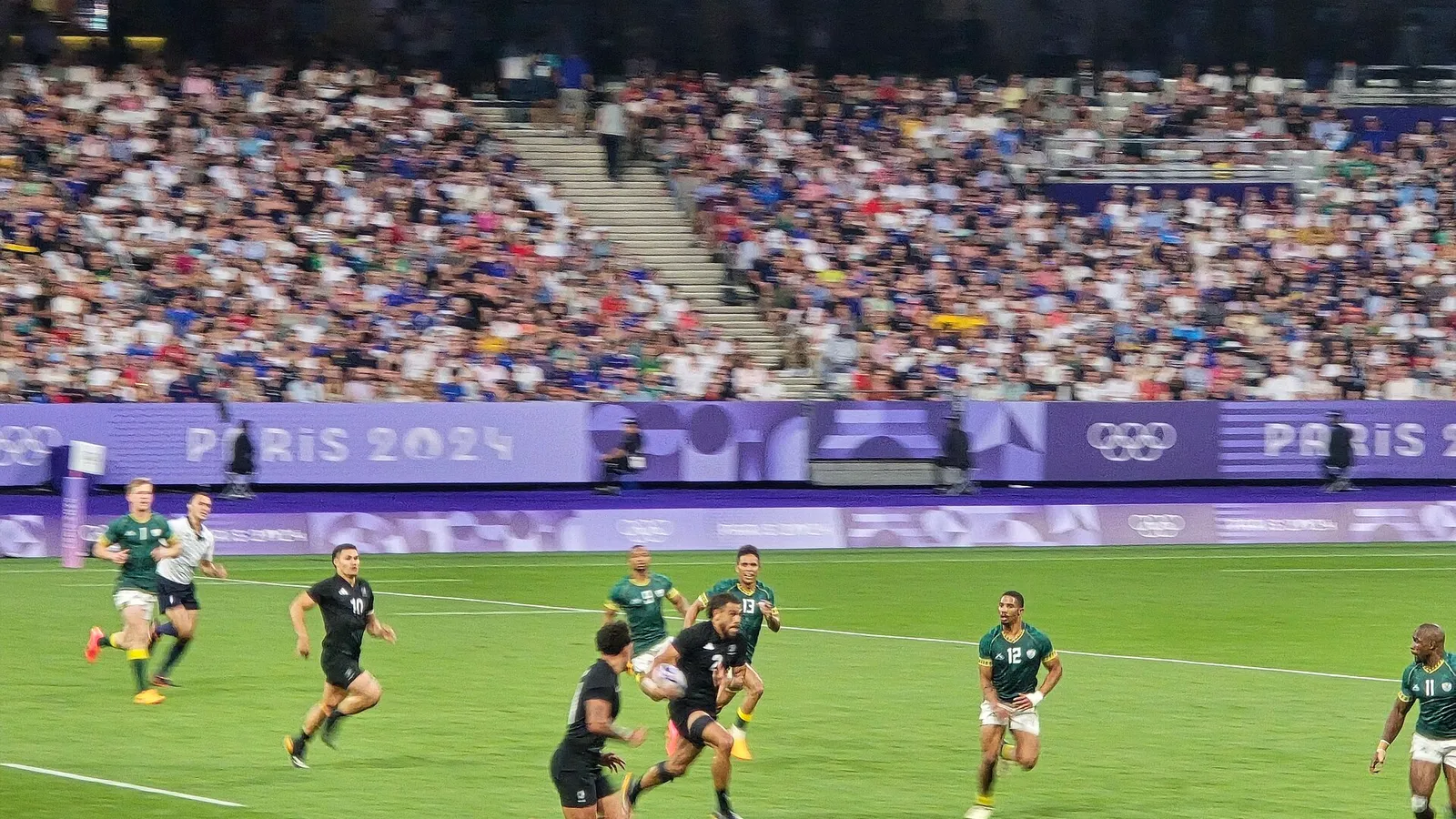
- established Rugby sevens grew from this single Borders fundraiser into a full Olympic discipline, debuting at the 2016 Rio Olympics — a documented, traceable line from a 19th-century local fixture to a 21st-century global sport.
Key Facts
- Category
- Detail
- Origin/Date
- Melrose, Scottish Borders, 1883
- Key Figures/Bodies
- Ned Haig (originator, Melrose RFC player and local butcher); David Sanderson (former Melrose captain, Haig's employer, contributed the reduced-numbers idea)
- Governing Body
- World Rugby (global sport); Melrose RFC (home and custodian of the founding tournament)
- Status Today
- Core international rugby discipline; permanent Olympic sport since Rio 2016; contested worldwide via the World Rugby Sevens Series
- Founding Motive
- Fundraising — Melrose RFC needed money and could not afford a conventional 15-a-side sports day
- Format Established in 1883
- Teams of seven, two halves of seven minutes each
- Flagship Trophy
- The Melrose Cup, awarded at the Melrose Sevens, the tournament widely regarded as sevens' spiritual home
A Note on Claims and Evidence
Rugby sevens is unusual among the games covered in this series in that its origin is not contested, mythologised, or thinly sourced — it is one of the best-documented invention stories in world sport. Ned Haig's own explanation of why he proposed the format ("Want of money made us rack our brains...") survives as a direct primary quotation, and the specific roles of Haig and David Sanderson are corroborated independently by Melrose RFC's own institutional history and by World Rugby's Hall of Fame records. This article therefore states the Melrose origin as established fact throughout, rather than hedging it as traditional or disputed. The only places requiring care are secondary details sometimes exaggerated in popular retellings — for instance, the precise prior reduced-numbers game Sanderson had seen in England is referenced more vaguely in sources than the Melrose invention itself, and is treated here as a contributing influence rather than a fully documented separate "pre-history" of sevens.
Timeline
Melrose RFC faces financial difficulty; Ned Haig proposes a rugby tournament as a fundraising Sports Day. The club committee initially rejects a conventional 15-a-side format as impractical for the purpose.
David Sanderson, a former Melrose captain and Haig's employer at his butcher's shop, recalls a reduced-player rugby format he had seen played in England, suggesting teams be cut to seven players with shortened halves.
The first Melrose Sevens tournament is staged: teams of seven, two halves of seven minutes each. The format proves immediately popular with players and spectators alike.
Melrose RFC wins its own sevens tournament, establishing an early competitive pedigree for the format at its home ground.
The sevens format spreads to other Scottish Border towns, giving rise to the Border Sevens circuit, a cluster of linked tournaments that remains a distinctive feature of Scottish rugby.
The BBC is granted permission to broadcast the Melrose Sevens on the radio, a significant early media recognition of the tournament's standing.
The Hong Kong Sevens is established, becoming the format's first major international showcase outside Scotland and a pivotal step toward sevens' global growth.
Melrose RFC celebrates 100 years of sevens rugby with an extended tournament including guest sides from the home nations and a winning Barbarians seven from France.
The first Rugby World Cup Sevens is staged, giving the format its own global championship structure.
The International Olympic Committee votes to include rugby sevens in the Olympic programme.
Rugby sevens makes its Olympic debut at the Rio de Janeiro Summer Games, both men's and women's tournaments, completing the format's journey from a single Borders fundraiser to a permanent Olympic discipline.
The Melrose Sevens continues annually, awarding the Melrose Cup, and is widely recognised by World Rugby as the spiritual home of the sevens format; the World Rugby Sevens Series runs as the sport's global professional circuit.
Details
A financial problem, not a design exercise
Unlike many sporting codifications, which emerged from committees trying to standardise existing variation, rugby sevens began as the solution to a specific, mundane problem: Melrose RFC, a small Scottish Borders club, needed to raise money and lacked the resources or grounds capacity to stage a conventional full-scale rugby tournament as its fundraising Sports Day. Ned Haig, a club player who worked locally as a butcher, proposed a rugby tournament as the centrepiece attraction. The Melrose committee's initial reaction was scepticism — a full 15-a-side tournament with enough teams to fill a day's entertainment was simply impractical to organise and expensive to stage. The breakthrough came from a second figure whose contribution is just as central to the story as Haig's: David Sanderson, a former Melrose captain and, by coincidence, Haig's employer at the butcher's shop. Sanderson recalled having seen a reduced-player version of rugby played during time spent in England, and suggested cutting team numbers down sharply — to seven players a side, with correspondingly shortened halves of seven minutes each — making a full day's tournament of multiple matches logistically and financially feasible for the first time.
A Borders town game
shared Sevens could only have started in a place where rugby belonged to the whole town. In the cities, Scottish rugby was a game of former-pupil and university clubs. The Borders were different. The historian Christopher Harvie, in "Sport and the Scottish state", a chapter of Grant Jarvie and Graham Walker (eds), Scottish Sport in the Making of the Nation (1994), notes that rugby, though organisationally biased towards the anglicised middle class, won working-class support among the textile workers of the Border burghs in the 1870s. In the same book Alan Bairner observes that across much of southern Scotland rugby, not football, became the most popular team game in towns and villages. That social base, a club run by a local butcher and his employer and dependent on gate money from townsfolk, is the setting in which a fundraising sports day made sense. Harvie also notes that Border antiquarians of the 1880s were busy giving rugby a local pedigree by linking it to the old hand-ba' games of the burghs.
Haig's own account
The strength of this origin story lies in its direct sourcing: Ned Haig himself left a first-hand explanation of the thinking behind the invention, recorded in his own words: "Want of money made us rack our brains as to what was to be done to keep the club from going to the wall, and the idea struck me that a football tournament might prove attractive." This is about as close to a primary-source "smoking gun" as sporting history gets — an explicit, first-person statement of motive from the originator himself, which is precisely why World Rugby's own Hall of Fame and Melrose RFC's institutional history both credit Haig unambiguously, with Sanderson's contribution to the specific seven-a-side, seven-minute format properly acknowledged alongside him.
The first tournament and its immediate success
The inaugural Melrose Sevens, staged in 1883 under this new format, succeeded on its own terms as a fundraiser and, almost immediately, as sporting entertainment in its own right — fast-paced, high-scoring, and far more spectator-friendly within a single afternoon than a conventional 15-a-side match. Melrose itself went on to win its own tournament multiple times in the format's early decades, including recorded victories in 1885 and 1889, giving the host club an early and lasting association with sevens excellence that persists in the game's culture to this day. The format quickly spread beyond Melrose to neighbouring Border towns, producing the Border Sevens circuit — a sequence of linked spring and summer sevens tournaments across the Scottish Borders that remains a distinctive regional institution, and one of the clearest living links between the modern professional game and its specific 1883 origin point.
From local fixture to international institution
The Melrose Sevens' standing grew steadily through the 20th century: BBC radio broadcast permission in 1938 marked an early recognition of the tournament's significance beyond the Borders, and by its 1983 centenary the tournament had become significant enough to attract guest international sides from the home nations, with a Barbarians seven (fielding players largely drawn from France) taking that year's title. Internationally, the format's real breakout moment came with the establishment of the Hong Kong Sevens in 1973, which turned sevens rugby into a major spectator and broadcast event on a different continent entirely, proving the format's appeal well beyond its Scottish origins and setting the template for the modern international sevens circuit. A dedicated Rugby World Cup Sevens followed in 1999, and the format's status was permanently cemented in 2009 when the IOC voted to add rugby sevens to the Olympic programme, with the format making its Olympic debut at Rio de Janeiro in 2016 — both men's and women's tournaments — exactly 133 years after a cash-strapped Borders rugby club improvised a shorter game to save itself from going under.
A living connection to the origin
What distinguishes rugby sevens from many "invented tradition" sports stories is that the connection between the modern elite global game and its specific historical origin point has never been severed or retrofitted: the Melrose Sevens tournament still takes place at Melrose, still awards the Melrose Cup, and is still widely and explicitly acknowledged by World Rugby itself — including through Ned Haig's formal induction into the World Rugby Hall of Fame in 2008 — as the literal birthplace of a format that now fills Olympic stadiums. Few sports anywhere can point to as direct and well-documented a line from a single afternoon's improvisation to a permanent place in the Olympic programme.
Did You Know?
- Rugby sevens exists because Melrose RFC was short of money, not because anyone set out to design a faster version of rugby — the shortened format was a cost-saving fundraising measure first and a sporting innovation second.
- The two men most responsible for the invention, Ned Haig and David Sanderson, worked together — Haig was employed by Sanderson at his butcher's shop in Melrose.
- Ned Haig's own written explanation of his motive survives: "Want of money made us rack our brains as to what was to be done to keep the club from going to the wall."
- The very first sevens match format — seven players, two seven-minute halves — is essentially unchanged in its core structure from the one played at Melrose in 1883.
- Melrose RFC didn't just invent the tournament; it also won it early and often, with recorded victories in 1885 and 1889.
- The BBC broadcast the Melrose Sevens on the radio as early as 1938, decades before sevens rugby had any international circuit at all.
- Rugby sevens took 133 years to travel from a single Scottish Borders fundraiser (1883) to the Olympic Games (Rio 2016).
- Ned Haig was formally inducted into the World Rugby Hall of Fame in 2008, officially recognising him as the inventor of one of the most widely played rugby formats on earth.
FAQ
1Who invented rugby sevens?
Ned Haig, a Melrose RFC player and local butcher, proposed the format in 1883 as a fundraising idea for his financially struggling club.
2What was David Sanderson's role?
Sanderson, a former Melrose captain and Haig's employer, suggested the specific idea of reducing teams to seven players with shortened halves, having seen a similar reduced-numbers rugby format played in England.
3Why was rugby sevens invented?
Purely as a practical fundraising solution — Melrose RFC needed money and could not afford or organise a conventional full 15-a-side tournament for its planned Sports Day.
4Where and when was the first sevens tournament played?
At Melrose, in the Scottish Borders, in 1883.
5What was the original sevens format?
Teams of seven players, playing two halves of seven minutes each — essentially the same basic structure used in the modern game.
6Is the Melrose Sevens tournament still played today?
Yes, it continues annually and awards the Melrose Cup; it is widely recognised by World Rugby as the birthplace of sevens rugby.
7When did rugby sevens become an Olympic sport?
The IOC voted to add it to the Olympic programme in 2009, and it made its Olympic debut at the Rio de Janeiro Games in 2016.
8What is the Hong Kong Sevens, and how does it relate to Melrose?
Established in 1973, it was the format's first major international showcase outside Scotland and a key step in turning a Scottish Borders fundraiser into a global sport.
9Why did sevens start in the Borders rather than Edinburgh or Glasgow?
In the Borders rugby was a town game with working-class support, especially among textile workers, so clubs drew on local crowds and needed gate money. City rugby was dominated by former-pupil and university clubs. shared
10Is the Border Sevens circuit the same as the Melrose Sevens?
No — the Melrose Sevens is one specific tournament (the original one); the Border Sevens circuit refers to the broader network of related sevens tournaments across other Scottish Border towns that grew up following Melrose's example.
11Has the basic sevens format changed much since 1883?
Remarkably little — seven players per side and short halves remain the defining features, though professionalisation, officiating, and competition structures have of course modernised considerably.
12Is Ned Haig officially recognised as the inventor by rugby's governing body?
Yes — he was inducted into the World Rugby Hall of Fame in 2008 specifically for devising the sevens format.
13Did Melrose RFC benefit competitively as well as financially from inventing sevens?
Yes — beyond solving its funding problem, the club went on to win its own tournament multiple times in the format's early years, including in 1885 and 1889.
Sources and Further Reading
Primary/Institutional
- World Rugby Hall of Fame, "Ned Haig" — world.rugby/halloffame/inductees/704782
- World Rugby Hall of Fame, "Melrose RFC" — world.rugby/halloffame/inductees/704787
- Melrose RFC official history — melroserugby.org/history
Scholarly/Critical
- Christopher Harvie, "Sport and the Scottish state", and Alan Bairner, "Football and the idea of Scotland", in Grant Jarvie and Graham Walker (eds), Scottish Sport in the Making of the Nation: Ninety Minute Patriots? (Leicester University Press, 1994)
- World Rugby Museum, "From the Vaults: Melrose Sevens Medal, 1883" — worldrugbymuseum.com
General
- Rugby sevens — Wikipedia
- Melrose Cup — Wikipedia
- CityAM, "From Melrose to Hong Kong and now Rio"
Caveats: Myths and Disputed Claims
- Do not state that rugby sevens was invented by "the Scottish Borders" generically, or attribute it vaguely to "a Scottish rugby club" without naming Melrose RFC, Ned Haig, and David Sanderson specifically. Correct phrasing: Rugby sevens was devised in 1883 at Melrose RFC by Ned Haig, with the reduced-numbers format suggested by David Sanderson.
- Do not frame the invention as a deliberate sporting innovation or rule-design exercise. Correct phrasing: It was devised specifically as a fundraising measure to save a financially struggling club, with the sporting appeal of the format recognised only after the fact.
- Do not claim a precise, fully documented origin for the "reduced-player rugby format" David Sanderson recalled seeing in England. Correct phrasing: Sanderson is credited with suggesting the idea based on a reduced-numbers game he had seen played in England, though the specifics of that earlier game are less precisely documented than the Melrose invention itself.
- Do not imply that sevens rugby achieved Olympic or major international status quickly after 1883. Correct phrasing: The format took over a century to reach full international prominence, with the Hong Kong Sevens (1973) and Olympic inclusion (voted 2009, debuted Rio 2016) as the major later milestones.
Card 010 · Sport