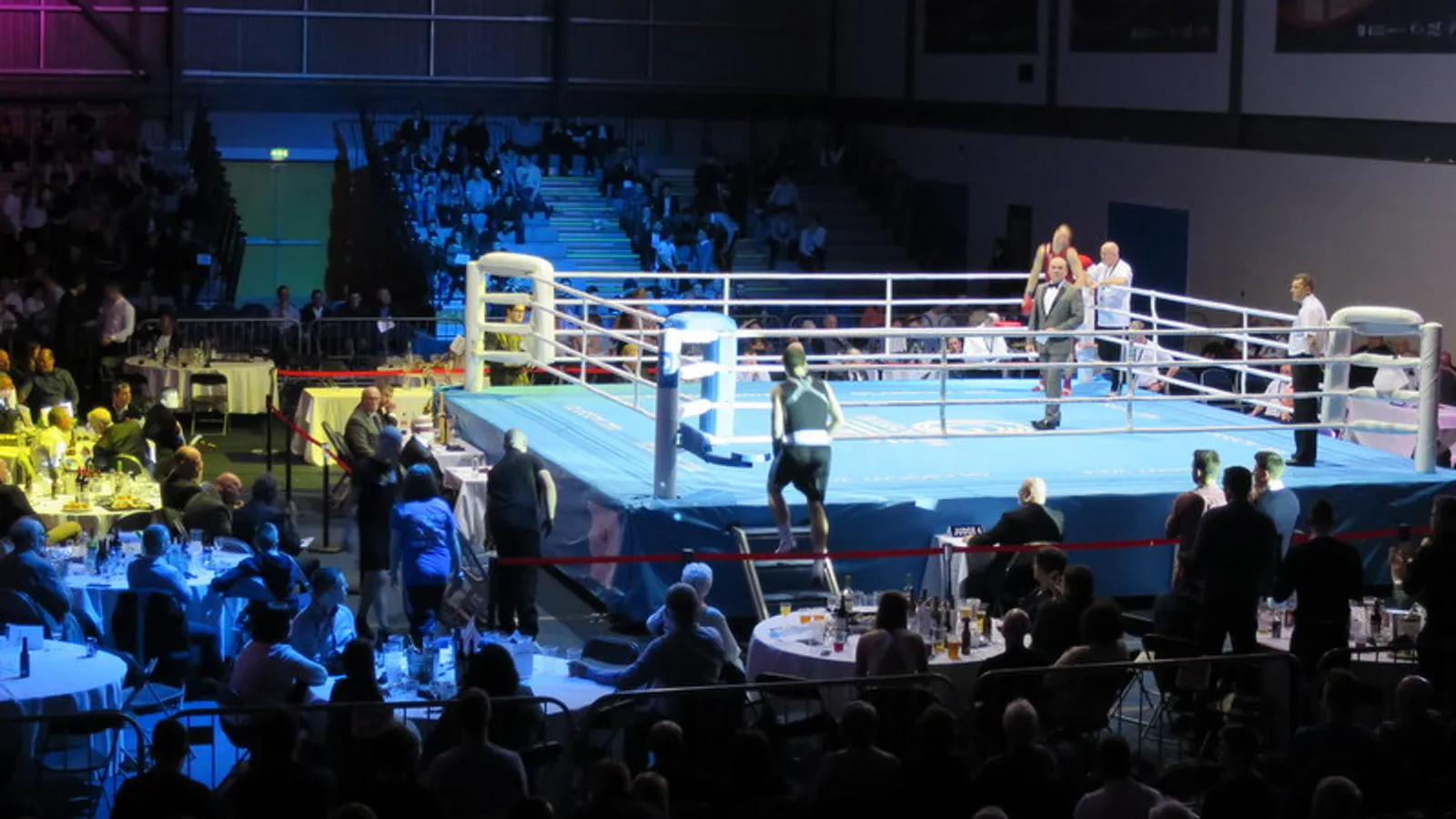

Scottish Boxing — From the Fight Halls to World Champions
Contents
Legend/Myth Opener
Benny Lynch is remembered in Scottish boxing lore almost as a cautionary folk tale — the Gorbals genius undone by drink. That framing is not wrong, but it can flatten a more complicated reality: Lynch's decline was bound up with the poverty, exploitation, and lack of support structures that defined professional boxing for working-class fighters in interwar Glasgow, not simply personal weakness. This card tries to hold both truths — his brilliance and his exploitation — without turning either into spectacle.
TL;DR
- established Benny Lynch won the World Flyweight Championship in 1935, becoming Scotland's first world boxing champion — this is a documented title win recognised by the sport's governing bodies of the time.
- established Boxing in industrial Scotland, especially Glasgow, developed through a dense network of fight halls, boxing booths, and working-men's clubs rooted in the city's poorest districts — this is well documented social and sporting history, not romanticised folklore.
- disputed Popular accounts sometimes frame Benny Lynch's decline purely as a personal failing ("he drank himself out of the sport"); the more accurate framing acknowledges alcoholism as the proximate cause of his decline and death while also noting the absence of any medical, financial, or managerial support structures for fighters at the time — a structural as well as personal story.
- established Scotland has produced multiple male world champions across different boxing eras and weight divisions, including Ken Buchanan (lightweight, 1970s), Jim Watt (lightweight, late 1970s–80s), Ricky Burns (three-weight world champion, 2000s–2010s), and Josh Taylor (undisputed light-welterweight champion, 2021) — each a documented, governing-body-recognised title.
- traditional The "fight hall" and boxing-booth culture is often described as the authentic training ground of Scottish boxing talent; this is broadly accurate as a description of how many fighters developed, though it should not be romanticised as uniformly fair or safe — booth boxing in particular involved real physical risk with minimal regulation or reward for the fighters involved.
Key Facts
- Category
- Detail
- Earliest notable era
- Late 19th–early 20th century Glasgow fight-hall and boxing-booth culture
- First Scottish world champion
- Benny Lynch, World Flyweight Champion, 1935
- Governing Body
- British Boxing Board of Control (UK regulation); WBA, WBC, IBF, WBO (modern world title sanctioning bodies)
- Key named champions
- Benny Lynch, Ken Buchanan, Jim Watt, Ricky Burns, Josh Taylor
- Social context
- Rooted in industrial, working-class communities, especially Glasgow's Gorbals and similar districts
- Status Today
- Active professional and amateur boxing scene; Scottish Boxing governs the amateur game
- Notable modern achievement
- Josh Taylor became undisputed light-welterweight world champion in 2021, the first British male boxer to hold all four major world title belts simultaneously
A Note on Claims and Evidence
The title wins of Scotland's named world champions — Benny Lynch (1935), Ken Buchanan, Jim Watt, Ricky Burns, and Josh Taylor — are documented facts, verifiable against boxing's sanctioning body records and contemporary press coverage. The broader culture of fight halls and boxing booths in industrial Scotland is also well documented as a historical phenomenon, though specific claims about individual booths or promoters sometimes rely on local and oral history that is harder to verify in full. Where this card is most careful is around Benny Lynch's personal decline: the fact of his alcoholism and early death is documented, but the interpretation of why it happened — purely personal failing versus a product of an exploitative, unsupported fight business — is a matter of historical and biographical judgment, and this card states the structural context plainly rather than treating his story as simple morality tale.
Timeline
Boxing booths and fight halls become fixtures of working-class entertainment in industrial Scottish cities, especially Glasgow, offering informal bouts, prize money, and a route into the professional ranks for young fighters.
Benny Lynch is born in the Gorbals, Glasgow, into poverty typical of the district.
Lynch rises through Scottish and British flyweight rankings.
Benny Lynch defeats Jackie Brown to win the World Flyweight Championship, becoming Scotland's first world boxing champion.
Lynch's career declines sharply amid struggles with alcoholism; he loses his title on the scales (failing to make weight) in 1938.
Benny Lynch dies in Glasgow, aged 33, a death widely attributed to the effects of alcoholism and malnutrition.
Jackie Paterson of Glasgow wins the world flyweight title, beating Peter Kane at Hampden Park.
Walter McGowan of Hamilton wins the world flyweight title.
Ken Buchanan becomes WBA and (briefly, disputed by the WBC) world lightweight champion, one of the most skilled British boxers of his generation, though he receives relatively limited recognition at home during his active career.
Jim Watt holds the WBC World Lightweight Championship, becoming one of Scotland's most prominent champions and later a respected television boxing commentator.
Pat Clinton of Croy wins the WBO flyweight title at Glasgow's Kelvin Hall; by the early 1990s Glasgow is promoting itself as a "fight city".
Ricky Burns wins world titles across three different weight divisions (WBO super-featherweight, WBO lightweight, WBA super-lightweight), becoming one of Scotland's most decorated modern champions.
Josh Taylor defeats José Ramírez to become the undisputed light-welterweight world champion, holding the WBA, WBC, IBF, and WBO belts simultaneously — the first British male boxer to achieve undisputed status in the four-belt era.
Scottish Boxing continues to govern the amateur sport, and professional Scottish fighters continue to compete at world level, carrying forward a tradition rooted in the fight-hall culture of over a century earlier.
Details
The fight halls: where Scottish boxing was built
Scottish boxing's modern champions did not emerge from purpose-built elite academies; they emerged from a culture of fight halls, boxing booths, and working-men's clubs embedded in the poorest districts of Scotland's industrial cities, above all Glasgow. Boxing booths — travelling or semi-permanent tents and halls where local challengers could step in against a resident professional for a modest purse — were a genuine route into the sport for young men with few other options for advancement. This was not a romantic meritocracy in any simple sense: booth boxing involved real physical risk, minimal medical oversight, and payment structures that heavily favoured promoters over fighters. But it was also where raw talent was tested, refined, and, for a small number of fighters, spotted and developed into professional careers.
Glasgow's Gorbals district in particular became closely associated with this culture — dense, poor, and overcrowded, but also a community that produced an outsized share of Scotland's early boxing talent, including Benny Lynch himself. The class dimension of this history should be stated plainly rather than softened: boxing offered a path to status and income that was otherwise largely closed off to young working-class men in these communities, and the sport's administrative and commercial structures around it did little to protect fighters once their usefulness to promoters declined.
Benny Lynch: brilliance and exploitation
Benny Lynch's rise and fall is the defining story of early Scottish boxing, and it deserves to be told without either erasing his talent or glossing over the circumstances of his decline. Born in the Gorbals in 1913, Lynch developed into one of the most technically gifted flyweights of his era, and in 1935 he defeated Jackie Brown to become World Flyweight Champion — Scotland's first world boxing champion in the modern sense, and a source of enormous civic pride in Glasgow.
His decline, beginning in the late 1930s, is usually remembered through the single lens of alcoholism, and it is true that alcohol dependency drove his loss of form, his failure to make weight (he lost his title on the scales rather than in the ring, in 1938), and ultimately his death in 1946 at just 33. But this card follows the editorial standard of naming the structural context alongside the personal one: professional boxing in this period offered its fighters no pension, no medical safety net, no structured support for managing fame, money, or the physical and psychological toll of the sport, and promoters and hangers-on around successful fighters frequently extracted far more value from a champion's career than the fighter himself retained. Lynch's story is a personal tragedy, but it is also a case study in how an unregulated, exploitative fight business failed one of its most talented products. Both things are true, and the second should not be omitted to make the first a tidier morality tale.
Ken Buchanan and Jim Watt: the postwar generation
Scottish boxing's world-champion lineage did not end with Lynch, and the gap was shorter than legend suggests. Two more Scottish flyweights held world titles: Jackie Paterson, who beat Peter Kane at Hampden Park in 1943, and Walter McGowan of Hamilton, champion in 1966. Ken Buchanan, from Edinburgh, became one of the most technically accomplished lightweights in the world during the early 1970s, winning the WBA world lightweight title and establishing a reputation — still cited by boxing historians — as one of the finest British boxers never to receive proportionate domestic recognition during his own career, a gap often attributed to the relatively low profile of boxing coverage in Scotland and the UK at the time compared to his achievements abroad.
Jim Watt, also active through the 1970s into the early 1980s, won the WBC World Lightweight Championship and became one of the most visible Scottish boxing figures of his generation, both during his career and afterward as a long-serving television commentator who helped shape how the sport was discussed in Britain for decades after his own retirement.
Boxing and the image of Scotland
shared Boxing has an uneasy place in Scotland's sporting self-image. The media scholars Neil Blain and Raymond Boyle, in "Battling along the boundaries: the marking of Scottish identity in sports journalism", a chapter of Grant Jarvie and Graham Walker (eds), Scottish Sport in the Making of the Nation (1994), argue that boxing "has never been as central to accounts of Scottishness" as football or rugby. Their explanation is that Scotland never produced a great heavyweight, though it did produce world champions such as Jim Watt and Pat Clinton and a rich fight mythology. Writing in the early 1990s, they noted a shift: Glasgow was marketing itself as a "fight city", turning the hard, industrial side of its reputation, which the city's publicists usually played down, into a selling point for the post-industrial city. The book's editors also list Jim Watt among the sporting figures who carried a sense of Scotland while being divided by class, place and period.
Modern champions: Burns and Taylor
The twenty-first century has produced two of Scotland's most statistically decorated champions. Ricky Burns became a three-weight world champion, holding titles at super-featherweight, lightweight, and super-lightweight across a career that demonstrated unusual longevity and adaptability at world level, a rarer achievement than a single title reign.
Josh Taylor's achievement stands apart even within this list: in 2021, by defeating José Ramírez, Taylor became the undisputed light-welterweight world champion, simultaneously holding the WBA, WBC, IBF, and WBO belts — the first British male boxer to unify all four major world titles in a single division in the sport's modern four-belt era. It is a level of domination that places Taylor's achievement, on paper, above any previous Scottish world title win, even as debates continue among fans and historians about how to compare champions across different boxing eras and sanctioning landscapes.
From booth to arena: continuity and change
What connects Lynch's Gorbals origins to Taylor's undisputed unification nearly ninety years later is not a straight line of improving conditions — professional boxing remains a financially precarious sport for all but its most successful competitors — but a continuous culture of serious amateur and professional boxing development in Scotland, still anchored today by Scottish Boxing as the amateur governing body and by a network of clubs that, while far more regulated and safety-conscious than the booth culture of a century ago, still draw heavily on the same communities and the same appeal: boxing as a demanding, disciplined route to achievement that does not require the institutional gatekeeping of many other sports.
Did You Know?
- Benny Lynch lost his World Flyweight title not in the ring but on the scales, in 1938, after failing to make weight — a detail that is often cited as the first visible sign of his decline.
- Ken Buchanan is regarded by many boxing historians as one of the most technically skilled British fighters of the twentieth century, yet he received comparatively little domestic recognition in Scotland during his active career.
- Jim Watt's career after boxing was almost as influential as his career in the ring — he became one of British television's most recognisable boxing commentators for decades.
- Ricky Burns is one of a small number of British boxers to have won world titles in three different weight divisions.
- Josh Taylor's 2021 unification victory made him the first British male boxer to hold all four major world title belts (WBA, WBC, IBF, WBO) in the same division at the same time.
- Boxing booths — travelling tent shows where local challengers fought resident professionals for small purses — were a genuine, if exploitative, entry point into professional boxing for many working-class Scottish fighters in the early twentieth century.
- Glasgow's Gorbals district, one of the poorest areas in Scotland during the early twentieth century, produced an outsized share of the country's early boxing talent, including Benny Lynch.
- Benny Lynch died in 1946 at age 33, a death attributed to the long-term effects of alcoholism and malnutrition — just eight years after losing his world title.
FAQ
1Who was Scotland's first world boxing champion?
Benny Lynch, who won the World Flyweight Championship in 1935.
2What caused Benny Lynch's decline?
Alcoholism was the proximate and well-documented cause, but it developed in a professional boxing environment that offered fighters almost no financial, medical, or psychological support once their earning power declined — a structural failure that compounded his personal struggles.
3Did Benny Lynch lose his title in a fight?
No — he lost it in 1938 by failing to make weight, a sign of his declining condition rather than a boxing defeat.
4Who is Ken Buchanan?
An Edinburgh-born lightweight who won the WBA world lightweight title in the early 1970s and is widely regarded by historians as one of the most technically accomplished British boxers of his era.
5What title did Jim Watt win?
The WBC World Lightweight Championship, held in the late 1970s into the early 1980s.
6How many weight divisions did Ricky Burns win world titles in?
Three — super-featherweight, lightweight, and super-lightweight.
7What makes Josh Taylor's 2021 title win especially significant?
He became the undisputed light-welterweight champion, holding all four major sanctioning body belts (WBA, WBC, IBF, WBO) simultaneously — the first British male boxer to do so in boxing's modern four-belt era.
8What were "fight halls" or boxing booths?
Travelling or semi-permanent venues, common in industrial Scottish cities in the late 19th and early 20th centuries, where local challengers could fight a resident professional for a small purse — a rough but genuine entry point into the sport for working-class fighters.
9Was Scottish boxing historically tied to particular communities?
Yes — it developed strongly in poor, industrial, working-class districts, especially Glasgow's Gorbals, where boxing offered a path to income and status otherwise largely unavailable.
10Were there Scottish world champions between Lynch and Buchanan?
Yes. Jackie Paterson won the world flyweight title in 1943 and Walter McGowan in 1966.
11Why is boxing less central to Scottish sporting identity than football?
The media scholars Neil Blain and Raymond Boyle suggest it is partly because Scotland never produced a great heavyweight, despite a run of champions at lighter weights. By the 1990s Glasgow was nonetheless marketing itself as a "fight city".
12Who governs amateur boxing in Scotland today?
Scottish Boxing is the national governing body for the amateur sport.
13Is boxing booth culture still part of Scottish boxing today?
No — unregulated boxing booths of the kind common in the early 20th century have largely disappeared, replaced by regulated amateur clubs and professional structures overseen by bodies such as Scottish Boxing and the British Boxing Board of Control.
14Why is Benny Lynch's story told carefully rather than just as a cautionary tale?
Because reducing it to personal failing alone ignores the real absence of support structures for fighters at the time; an honest account holds both his talent and the exploitative conditions of the sport together, without sensationalising his death.
Sources and Further Reading
Primary/Institutional
- Scottish Boxing (national governing body for amateur boxing in Scotland)
- British Boxing Board of Control (UK professional boxing regulation)
Scholarly/Critical
- Scottish Sports Hall of Fame, inductee profile of Benny Lynch — sshf.sportscotland.org.uk
- National Records of Scotland, "Hall of Fame: Benny Lynch (1913–1946)" — nrscotland.gov.uk
- Neil Blain and Raymond Boyle, "Battling along the boundaries: the marking of Scottish identity in sports journalism", in Grant Jarvie and Graham Walker (eds), Scottish Sport in the Making of the Nation: Ninety Minute Patriots? (Leicester University Press, 1994)
General
- Wikipedia, "Benny Lynch"
- Wikipedia, "Jim Watt (boxer)"
- Wikipedia, "Pat Clinton" — https://en.wikipedia.org/wiki/Pat_Clinton
- Wikipedia, "Josh Taylor (boxer)"
- Boxing News, "Yesterday's Heroes: The Great Tradition of Scottish Stadium Fights"
Caveats: Myths and Disputed Claims
- Do not present Benny Lynch's decline and death as a simple story of personal weakness — alcoholism was the documented proximate cause, but it unfolded in a professional environment with no financial, medical, or psychological support for fighters, and both dimensions should be acknowledged.
- Do not romanticise boxing-booth culture as a purely noble meritocracy — it was a genuine route into the sport for working-class fighters, but one with real physical risk and payment structures that heavily favoured promoters over boxers.
- Do not describe Ken Buchanan's world title without noting the organisational complexity of the era — he held WBA recognition as champion, and lightweight title claims in this period were sometimes contested between sanctioning bodies, so avoid implying undisputed status unless specifically describing Josh Taylor's later unification.
- Do not imply there were no Scottish world champions between Lynch and Buchanan; Jackie Paterson (1943) and Walter McGowan (1966) both held the flyweight title.
- Do not state that any Scottish champion other than Josh Taylor held "undisputed" status across all four modern sanctioning bodies simultaneously — this is specific to Taylor's 2021 achievement.
Card 018 · Sport