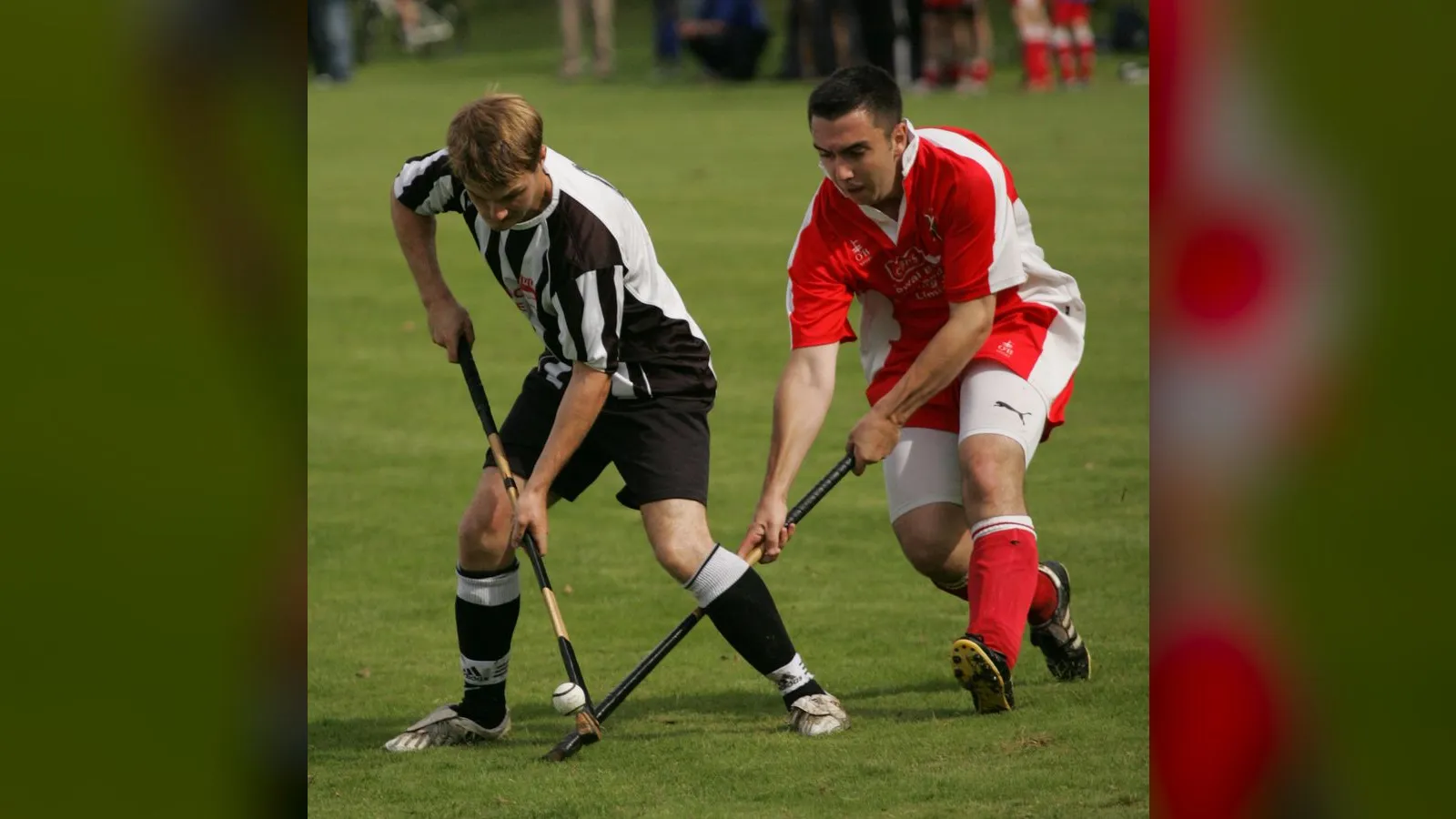

Shinty and the Camanachd Cup
Contents
Legend/Myth Opener
Shinty is sometimes presented as a purely, uniquely Highland invention, entirely separate from Ireland's hurling. The deeper truth is more interesting: both games descend from a shared Gaelic root, carried across the North Channel by the same Gaelic-speaking culture that linked the Scottish Highlands and Ireland for over a millennium — which is precisely why Scotland and Ireland still play each other today, under special compromise rules, rather than treating the games as unrelated.
TL;DR
- established Shinty (camanachd) and Irish hurling share a common Gaelic-Celtic root rather than one having been derived from the other — this is the consistent position of sporting historians, reflecting the shared Gaelic culture that spanned Scotland and Ireland.
- traditional Shinty's mythic origin is often traced to the legend of the Irish hero Cú Chulainn, said to have played a stick-and-ball game as a boy — stated as traditional/legendary because it is a cultural origin story, not a verifiable historical event.
- established The Camanachd Association, shinty's governing body, was formed at a meeting in Kingussie in 1893 specifically to create common, standardised rules across previously varying local and parish versions of the game — a documented institutional founding.
- established The Camanachd Cup, shinty's premier knockout trophy, was first contested in 1896, with Kingussie Camanachd beating Glasgow Cowal 2–0 in the inaugural final — a specific, recorded result.
- established Scotland and Ireland play annual shinty-hurling international matches under a composite rules code, a living continuation of the two sports' shared ancestry rather than a modern novelty — an ongoing, documented fixture.
Key Facts
- Category
- Detail
- Origin/Date
- Ancient Gaelic stick-and-ball tradition, shared root with Irish hurling; codified rules from 1893
- Key Figures/Bodies
- Camanachd Association (founded Kingussie, 1893); Kingussie Camanachd and Glasgow Cowal (1896 inaugural Cup final)
- Governing Body
- Camanachd Association
- Status Today
- ~48 clubs, around 3,449 registered players, concentrated in the Scottish Highlands; annual Scotland–Ireland shinty-hurling internationals under composite rules
- Related Sport
- Irish hurling/camogie (shared Gaelic root); Welsh bando (related stick-and-ball tradition)
- Premier Trophy
- The Camanachd Cup (est. 1896), part of shinty's "Grand Slam" of major honours
- Most Successful Club (Camanachd Cup)
- Newtonmore Camanachd, 35 titles
A Note on Claims and Evidence
The institutional history of modern shinty is well documented: the Camanachd Association's 1893 founding meeting in Kingussie, and the Camanachd Cup's first final in 1896 with its recorded scoreline, rest on club and association records that are not seriously disputed. The deep prehistoric origin of the game is a different matter. That shinty and hurling share a common Gaelic-Celtic ancestry is the settled scholarly consensus and is treated as established, but the specific story that the game traces to the legendary feats of the hero Cú Chulainn is a traditional/legend attribution — a cultural origin myth passed down through Gaelic storytelling, not a historically verifiable founding event, and it is presented here as legend rather than fact. Similarly, claims that any particular clan or parish "invented" shinty in its current form should be read as local tradition, since pre-19th-century shinty existed as a loose family of regional folk games with varying local rules, not a single codified sport, until the Camanachd Association's standardisation work in the 1890s.
Timeline
Gaelic stick-and-ball games played across Scotland and Ireland, sharing a common Celtic root with what becomes Irish hurling; the Cú Chulainn legend is associated with this period as myth, not history.
Shinty (camanachd) played widely as a regional folk game across the Scottish Highlands and beyond, with rules varying significantly by parish and clan tradition; historically also recorded in parts of Northern England.
Emigrants from Ulster, the Scottish Lowlands and northern England take a related game, "shinny", to the American backcountry, where it survives as a Christmas-time game into the 20th century.
Highland emigration carries shinty to new communities, including into parts of North America, though it largely fades outside Scotland in the longer term.
A Kintyre procurator fiscal records a man badly injured with a "shinney" at an Old Style New Year's Day match on the Largie estate.
The minister of Duirinish on Skye reports that public gatherings for shinty and stone-putting have been discontinued.
Organised shinty grows; clubs in Glasgow, Edinburgh and Greenock play, and several early Vale of Leven football sides are also shinty teams.
John Murdoch launches The Highlander in Inverness, which reports regularly on shinty.
A "kilt versus knickerbocker" dispute over playing dress runs in The Highlander.
Strathglass and Glenurquhart play at Inverness, a milestone towards common rules.
New Year's Day match at Inveraray between the two sides of Upper Loch Fyne, about 50 men a side on a pitch some 500 yards long.
Edinburgh University Shinty Club formed, with John Stuart Blackie as its first president.
The Camanachd Association formed at a meeting in Kingussie, created specifically to establish common rules out of the previously varied local versions of the game.
First Camanachd Cup final played at Needlefield Park, Inverness: Kingussie Camanachd beat Glasgow Cowal 2–0 to become the inaugural champions.
The Albert Smith Medal introduced, awarded to the man of the match in the Camanachd Cup final.
The Camanachd Cup moves to an open-draw knockout format, replacing the older traditional North-versus-South divisional structure.
Regular Scotland–Ireland shinty-hurling international matches established under composite rules, a modern continuation of the two sports' shared ancestry.
Around 48 clubs and roughly 3,449 registered players, with the game concentrated in the Highlands and broadcast coverage of major finals on BBC Scotland and BBC Alba.
Details
A shared Gaelic root, not a one-way derivation
The relationship between shinty and Irish hurling is one of the clearest examples in Scottish sport of a claim that is genuinely strong but easy to overstate. Historians do not generally describe shinty as "derived from" hurling, or vice versa; rather, both games are understood to descend from a common stick-and-ball tradition carried through the shared Gaelic culture that linked Ireland and the Scottish Highlands for well over a thousand years, reinforced by continuous contact, migration, and a common Gaelic language across the North Channel. The same deep root is also credited with producing the Welsh game of bando, underlining that stick-and-ball ball games of this general family were widespread across the Celtic-speaking parts of the British Isles rather than confined to one place. This matters editorially: it would be inaccurate to claim Scotland "invented" a sport that Ireland later copied, or the reverse — the honest claim is common ancestry, not priority.
The Cú Chulainn legend
Gaelic storytelling attaches the origins of this stick-and-ball tradition to the legendary Ulster hero Cú Chulainn, said in Irish mythology to have displayed extraordinary skill with a camán (stick) and sliotar (ball) as a boy — a story shared, with local variation, across both Irish and Scottish Gaelic tradition. This is a cultural and literary origin story, not a historical record, and should be treated as legend: it tells us how Gaelic culture understood and valorised the game, not when or how it was actually first played. Attempts to treat the Cú Chulainn tale as literal sporting history conflate myth with documented practice, which is precisely the kind of conflation this site's evidence framework exists to flag.
From parish pastime to codified sport
For most of its long history, shinty existed not as a single standardised sport but as a loose family of related local games, with rules, stick shapes, and match conventions varying considerably from parish to parish and clan to clan across the Highlands. This variability made inter-community matches difficult to organise fairly and is the direct reason the Camanachd Association was formed: at a meeting in Kingussie in 1893, representatives came together specifically "as a means of formulating common rules," bringing the patchwork of local traditions under a single governing code for the first time. This 1893 meeting is the clearest hinge point in shinty's documented history, though not the first attempt at rules. Club and district codes existed in the 1870s and 1880s, and the 1887 match between Strathglass and Glenurquhart at Inverness is often described as a milestone towards common rules. The historian Christopher Harvie goes further, arguing that Scotland was "actually in advance of Ireland in codifying its rules" (the Gaelic Athletic Association was founded in 1884). The Kingussie meeting turned these competing codes into a single national one, and it closely parallels how Victorian-era institutions across Britain were simultaneously codifying other traditional games (association football, rugby, and curling among them) into standardised national sports.
Shinty as a community custom
established Before and alongside the clubs, shinty was a community custom, especially at New Year. The sports historian Hamish Telfer, in "Play, customs and popular culture of west coast communities 1840–1900", a chapter of Grant Jarvie and Graham Walker (eds), Scottish Sport in the Making of the Nation (1994), draws on the Oban Times, school logs and court papers to show how it was played in Argyll and the islands. Village matches were regular: two townships clashed at Strontian in 1876, Ockle and Kilmory at Branault Farm in 1883, Onich at North Ballachulish in 1890. On the Ross of Mull in 1876, 300 to 400 people watched a beach match involving 70 players. On New Year's Day 1888 the two sides of Upper Loch Fyne played at Inveraray with about 50 men a side on a pitch some 500 yards long; Lord Walter Campbell, playing alongside the estate workers, was struck in the mouth by the ball. Tobermory school closed early on 1 January 1864 "to allow the boys a game at shinty".
established Telfer records customs that never made the rulebook. On Eigg around 1900, two young men chose sides by gripping a caman hand over hand, and camans thrown on the beach decided the direction of play; the goals were stones and the ball was carved hazel root. Matches were often played on the Old Style New Year's Day, 12 January, and could be violent: in 1818 a Kintyre farmer's son was arrested after breaking a man's jaw with a "shinney" at a match on the Largie estate. Whisky was a common prize.
shared Telfer and others link shinty's 19th-century fortunes to land and church. In 1841 the minister of Duirinish on Skye reported that public gatherings for shinty, stone-putting, drinking and dancing had all been discontinued, and the Skye poet Mairi Mhor nan Oran wrote, in Telfer's translation, "Since we lost our land / We lost shinty as well". Free Church disapproval after 1843 pushed games into stolen moments. Telfer argues that such customs were marginalised but not destroyed, and that the clubs and the Camanachd Association grew partly out of landowner patronage and reformers' efforts to make the game respectable. He also notes that few west coast clubs were represented when the Association was formed in 1893.
Shinty, land reform and the missing "Gaelic Athletic Association"
shared In the 1870s and 1880s shinty was bound up with Highland politics. John Murdoch's newspaper The Highlander, launched in Inverness in 1873, campaigned for land reform and reported regularly on shinty. Land reformers and nationalists, among them John Stuart Blackie, Murdoch and Captain Chisholm of Strathglass, helped organise the game, and Blackie became the first president of Edinburgh University Shinty Club in 1891. The editors of Scottish Sport in the Making of the Nation, Grant Jarvie and Graham Walker, and the historian Christopher Harvie both ask why no Scottish equivalent of Ireland's Gaelic Athletic Association emerged. Jarvie and Walker note that the Camanachd Association failed to build strong links with the Highland Land League or the Scottish Home Rule Association, and argue that there was no Highland nationalist movement for a sporting body to attach itself to. Harvie's answer is political too: the GAA's early organisation came largely from the Irish Republican Brotherhood, and Scotland had no comparable conspiratorial tradition. He contrasts the GAA's claimed 600 branches by 1887 with Scotland's 26 shinty clubs a decade later, and argues that after its late-Victorian growth shinty retreated to the eastern Highlands, a contraction deepened by the losses of the First World War. That needs qualifying: Argyll clubs, notably Kyles Athletic with 21 Camanachd Cups, have remained among the strongest in the game.
The Camanachd Cup
Three years after the Camanachd Association's founding, the Camanachd Cup was inaugurated as shinty's premier knockout competition. The first final, played at Needlefield Park in Inverness in 1896, saw Kingussie Camanachd defeat Glasgow Cowal 2–0 — a result recorded in official shinty records and still cited as the competition's founding match. The Cup has since become the sport's most prestigious trophy, one of several honours that together make up shinty's informal "Grand Slam." Format has evolved over time: for much of the 20th century the competition ran on a traditional North-versus-South divisional structure reflecting the Highlands' internal geography, before switching to an open knockout draw in 1983, with Premiership clubs typically entering at the second round. Newtonmore Camanachd has been the competition's dominant force by a clear margin, with 35 Cup titles, followed by Kingussie on 27 and Kyles Athletic on 21 — a level of sustained success by a small number of Highland clubs that reflects shinty's continuing concentration in specific strongholds rather than wide geographic spread. Since 1972, the Albert Smith Medal has recognised the man of the match in each Cup final, and the modern final receives national broadcast coverage on BBC Scotland and BBC Alba.
The living connection to hurling
The historical kinship between shinty and hurling is not merely academic — it is actively maintained through annual international matches between Scotland and Ireland, played under a composite rules code specifically designed to let the two related-but-distinct sports compete fairly against each other. These fixtures are a modern institution, not an ancient one, but they are a deliberate, explicit acknowledgment of the games' shared Gaelic ancestry, and they give present-day players and spectators a tangible, living link to the deep historical and cultural relationship the Cú Chulainn legend expresses mythically.
"Shinny" in the American backcountry
shared A Lowland and northern relative of the game also crossed the Atlantic. The historian David Hackett Fischer, in Albion's Seed (1989), records that eighteenth-century emigrants from Ulster, the Scottish Lowlands and northern England played a stick-and-ball game they called "shinny", and that in the Appalachian backcountry it became a ritual Christmas-time game that survived into the twentieth century. He cites a Pennsylvania record that among the Scots-Irish "great numbers of men and boys resorted to the fields" to play it, and the folklorist Alice Gomme's records of shinny in Lancashire, Cumberland, Cheshire, Derbyshire, the Scottish Lowlands and northern Ireland. This fits this card's note that the game was once played in northern England, and it suggests that the "shinty" reaching North America was not only carried by Highland emigrants.
shared Some of Fischer's details are his own claims and should be treated with caution. He describes shinny as an "ancestor of hockey" originally played with the long bones of a sheep, and says the same game was called "not" in the west of England, "hockey" in London and "shinny" on the Borders. He gives no source for these points, and the relationship between shinny, shinty, hurling and the various English "hockey" games is not as simple as a single game under regional names. Fischer also treats shinny as part of a Border culture rather than a Gaelic one, which sits awkwardly with the Gaelic camanachd tradition described above.
Modern status
Today shinty remains a largely Highland sport, concentrated in its historic heartlands, with around 48 clubs and roughly 3,449 registered players according to recent counts — a modest scale compared to Scotland's mainstream team sports, but one that reflects deep, continuous local roots rather than a sport in genuine decline. The game was historically played more widely, including recorded instances in parts of Northern England into the 20th century, and was carried by Highland emigrants to various overseas communities, though it has not sustained a significant presence outside Scotland and Ireland in the long term. Within the Highlands, however, shinty retains a strength of local identity and club rivalry — exemplified by the Newtonmore–Kingussie rivalry in particular — that few small-scale sports anywhere in Britain can match.
Did You Know?
- Shinty and Irish hurling are not "the same game under different names" and neither was copied from the other — both descend from a shared ancient Gaelic stick-and-ball tradition.
- The legendary origin story linking the game to the Irish hero Cú Chulainn is shared, with local variation, across both Scottish Gaelic and Irish storytelling traditions — a rare case of a myth that itself illustrates the sports' real shared ancestry.
- Before 1893, there was no single national code of shinty rules — club and district codes competed, and the game varied from parish to parish, which is why a governing body was formed.
- On Eigg around 1900, players chose sides by gripping a caman hand over hand, and threw camans onto the beach to decide which way each team would play.
- In 1888 a New Year's Day match at Inveraray was played about 50-a-side on a pitch some 500 yards long.
- The Camanachd Association was founded at a specific meeting in Kingussie in 1893, making shinty's modern codification almost exactly contemporary with the standardisation of several other British sports in the same Victorian decades.
- Newtonmore Camanachd has won the Camanachd Cup 35 times — a level of single-club dominance almost unheard of in most national sporting competitions.
- Scotland and Ireland still play each other annually in shinty-hurling internationals, using a specially designed composite rules code that blends elements of both sports.
- Shinty was once recorded being played in parts of Northern England, not just Scotland, though it did not sustain a presence there into the modern era.
- The Camanachd Cup final's man-of-the-match award, the Albert Smith Medal, has been presented every year since 1972.
- A related game called "shinny" was played at Christmas in Appalachia into the 20th century, brought by eighteenth-century emigrants from Ulster, the Lowlands and northern England.
FAQ
1Is shinty the same sport as Irish hurling?
No. They are closely related but distinct sports that share a common ancient Gaelic root, rather than one being derived from the other.
2Did the Irish hero Cú Chulainn really invent shinty?
This is a traditional legend shared across Gaelic storytelling, not a verified historical event. It illustrates the games' shared cultural ancestry rather than recording an actual founding.
3When was shinty's governing body founded?
The Camanachd Association was formed at a meeting in Kingussie in 1893, created specifically to establish common rules across the previously varied local versions of the game.
4What is the Camanachd Cup?
Shinty's premier knockout trophy, first contested in 1896, when Kingussie Camanachd beat Glasgow Cowal 2–0 in the inaugural final at Needlefield Park, Inverness.
5Which club has won the Camanachd Cup the most times?
Newtonmore Camanachd, with 35 titles, ahead of Kingussie (27) and Kyles Athletic (21).
6Is shinty still played today?
Yes — around 48 clubs and roughly 3,449 registered players, concentrated mainly in the Scottish Highlands.
7Do Scotland and Ireland still play shinty-hurling matches against each other?
Yes, in annual international fixtures played under a composite rules code designed to accommodate both sports.
8Was shinty always played under the same rules everywhere?
No — before the Camanachd Association's 1893 standardisation, rules, stick shapes, and local conventions varied considerably from parish to parish across the Highlands.
9What was "shinny"?
A stick-and-ball game related to shinty, recorded in the Scottish Lowlands, northern England and Ulster, and carried by eighteenth-century emigrants to the American backcountry, where it was played at Christmas into the twentieth century.
10Was shinty ever played outside Scotland and Ireland?
It was historically recorded in parts of Northern England and carried abroad by Highland emigrants, but it did not establish a lasting presence outside Scotland and Ireland.
11Why was shinty played at New Year?
New Year, often the Old Style New Year's Day of 12 January, was the main winter holiday in the Highlands, and big shinty matches between townships or estates were part of the celebrations. Christmas was little observed there in the 19th century.
12Why did Scotland never develop a body like Ireland's Gaelic Athletic Association?
Historians including Grant Jarvie, Graham Walker and Christopher Harvie argue the reasons were political: the Camanachd Association never tied itself to Highland land reform or home rule, and Scotland lacked the nationalist organisation that drove the GAA. shared
13What does "camanachd" mean?
It is the Gaelic name for the game, related to "caman," the Gaelic word for the curved stick used to play it — the same root word that names the Camanachd Association and Camanachd Cup.
14How is the modern Camanachd Cup format organised?
Since 1983 it has used an open knockout draw, replacing the older North-versus-South divisional structure, with Premiership clubs typically entering at the second round stage.
15Is shinty considered part of the same sporting family as rugby or football codification?
Its modern codification (1893) happened in roughly the same Victorian era that saw association football, rugby, and curling formally standardised in Britain, reflecting a broader period trend of turning folk games into organised national sports.
Sources and Further Reading
Primary/Institutional
- Camanachd Association (shinty's governing body)
- Camanachd Cup — Wikipedia
Scholarly/Critical
- High Life Highland, "The Camanachd Cup" — highlifehighland.com
- EBSCO Research Starters, "Shinty"
- David Hackett Fischer, Albion's Seed: Four British Folkways in America (Oxford University Press, 1989)
- Hamish Telfer, "Play, customs and popular culture of west coast communities 1840–1900"; Christopher Harvie, "Sport and the Scottish state"; and Grant Jarvie and Graham Walker, "Ninety minute patriots? Scottish sport in the making of the nation", in Grant Jarvie and Graham Walker (eds), Scottish Sport in the Making of the Nation: Ninety Minute Patriots? (Leicester University Press, 1994)
- Grant Jarvie, "Royal games, sport and the politics of the environment", in the same volume (on The Highlander and the kilt-versus-knickerbocker debate)
General
- Shinty — Wikipedia
- Strathglass Shinty Club — Wikipedia
- Scottish Banner, "Shinty — Scotland's Ancient Sport"
- Discover Highlands and Islands, "Shinty: the bright future of Scotland's community sport"
Caveats: Myths and Disputed Claims
- Do not state that shinty was invented by, or derived from, Irish hurling (or vice versa). Correct phrasing: Shinty and hurling share a common ancient Gaelic-Celtic root; neither sport was copied from the other.
- Do not present the Cú Chulainn origin story as a literal historical founding event. Correct phrasing: Shinty's association with the legendary hero Cú Chulainn is a Gaelic cultural tradition/legend, not a verifiable historical record.
- Do not imply that shinty had a single, unified rule set before the 1890s. Correct phrasing: Pre-1893 shinty was a loose family of regional folk games with rules varying by parish and clan; club and district codes from the 1870s and 1880s competed until the Camanachd Association created a national code. Do not say there were no written rules at all before 1893.
- Do not present shinty's 19th-century decline in places such as Skye as simple disappearance; it was squeezed by land loss, emigration and church disapproval, and revived later.
- Do not repeat Fischer's claims that shinny was the "ancestor of hockey", was first played with sheep bones, or was simply the Border name for a game called "hockey" in London; he gives no source for them.
- Do not describe shinty as a declining or marginal sport without context. Correct phrasing: Shinty remains a modest-scale but deeply rooted sport with around 48 clubs and roughly 3,449 registered players, concentrated in its historic Highland strongholds.
Card 008 · Sport