
The New Year Sprint (Powderhall)
Contents
The New Year Sprint, long known as the Powderhall Sprint, is a professional handicap foot race first run in Edinburgh in 1870. Runners start from staggered marks according to their past form, so that in theory everyone reaches the line together. For more than 150 years it has been a fixture of the Scottish New Year, surviving two world wars, a long series of venue changes and a pandemic. This card tests its history, its handicap system and the stories of skulduggery that surround it.
TL;DR
- established The race was first run in 1870 at Powderhall in Edinburgh, over 160 yards. The first winner was Dan Wight of Jedburgh.
- established It is a handicap: the best runners start from "scratch" and run the full distance, while others start ahead according to their form. Since 1971 the distance has been 110 metres.
- established The race left Powderhall for Meadowbank in 1971, moved to Musselburgh Racecourse in 2000, and has been held at Grangemouth since 2024.
- established Willie McFarlane won in 1933 and 1934, the second time from scratch; Tony Bowman won in 2007 aged 71; and Jazmine Tomlinson became the first woman to win, in 2016.
- shared The race is usually said to have been run every year since 1870, through both world wars. Sources differ on whether there was a break in 1953, and in 2021 it was postponed for the pandemic.
Key Facts
- First run
- 1870, Powderhall Grounds, Edinburgh
- First winner
- Dan Wight, Jedburgh
- Original distance
- 160 yards
- Distance since 1971
- 110 metres
- Format
- Professional handicap sprint
- Powderhall years
- 1870–1970, with some breaks
- Meadowbank
- 1971–1999
- Musselburgh Racecourse
- 2000–2020, and 2023
- Grangemouth Stadium
- 2024–2026
- Back-to-back winner
- Willie McFarlane, 1933 and 1934
- Oldest winner
- Tony Bowman, 71, in 2007
- First woman winner
- Jazmine Tomlinson, 2016
- Prize money
- £6,000 (2025 and 2026)
A Note on Claims and Evidence
Each major claim carries one of three labels. established means supported by primary records, official bodies or several independent reliable sources. shared means the core fact is sound but sources disagree on details, dates or interpretation. traditional means widely repeated but not traceable to a primary or independent source.
Results, distances and venues are recorded by the Scottish Highland Games Association and compiled in public lists, though some early records are inconsistent. The race's reputation for fixed results and disguised form is part of its folklore; individual cases are hard to prove. Claims that it is the oldest professional race of its kind vary between sources.
Timeline
Handsel Monday games at Arnprior and Kippen, near Stirling, include New Year foot races, some for women.
The first Powderhall Sprint is run over 160 yards; Dan Wight wins.
The distance is 150 yards.
The race moves to the New Powderhall Grounds.
The race continues through the First World War; Australian sprinters compete.
Willie McFarlane wins twice, the second time from scratch.
The race continues through the Second World War, over 100 yards.
The race is held at Hawick, Tranent and Newtongrange.
George McNeil wins the last race at Powderhall.
The race moves to Meadowbank Stadium and changes to 110 metres.
The race moves to Musselburgh Racecourse.
Tony Bowman wins aged 71.
Jazmine Tomlinson becomes the first woman to win.
The race is postponed by the pandemic and run in July at Meadowmill.
The race moves to Grangemouth Stadium.
Details
Pedestrianism
established In the 19th century, professional foot racing, known as pedestrianism, was a popular spectator sport in Scotland and England, with races run for stakes and heavy betting. The Powderhall Grounds in north Edinburgh became a leading venue, and the New Year handicap sprint first run there in 1870 became its showpiece. The first winner was Dan Wight of Jedburgh.
A New Year sport
established A sprint at New Year fitted an older Scottish calendar. Before the Victorian period, the New Year, not Christmas, was the main midwinter holiday in much of Scotland, and it was a traditional time for games. The sports historian Hamish Telfer, in "Play, customs and popular culture of west coast communities 1840–1900", a chapter of Grant Jarvie and Graham Walker (eds), Scottish Sport in the Making of the Nation (1994), shows New Year shinty matches being played across Argyll, often on the "Old Style" New Year's Day of 12 January, and notes that Christmas was still lightly observed by Highlanders in the 1870s. Neil Tranter, in another chapter of the same book, records foot races at Handsel Monday games, the first Monday of the New Year, at Arnprior in 1853 and 1854 and at Kippen in 1856, including races for women with a pound of tea as the prize.
shared Telfer argues that many of these local customary sports faded in the 19th century, squeezed by church disapproval and the tidying-up of the holiday calendar. Powderhall can be read as one way the New Year sporting tradition survived: moved into an enclosed, ticketed, commercial ground with formal handicapping and heavy betting. That reading is an interpretation rather than something the sources state directly.
How the handicap works
established Each runner is given a mark based on past results. The best-rated runners start from scratch and run the full distance; others start ahead by a set number of yards or metres. The aim is a race in which every runner has a chance. The distance has changed many times, from 160 yards in 1870 to between 100 and 130 yards for most of the 20th century, and 110 metres since 1971.
traditional Runners and their trainers have long been suspected of hiding their true ability in earlier races to earn a generous mark, then going all out at New Year when the betting was heavy. Such stories are a large part of the race's legend, but individual cases are rarely provable.
A wandering race
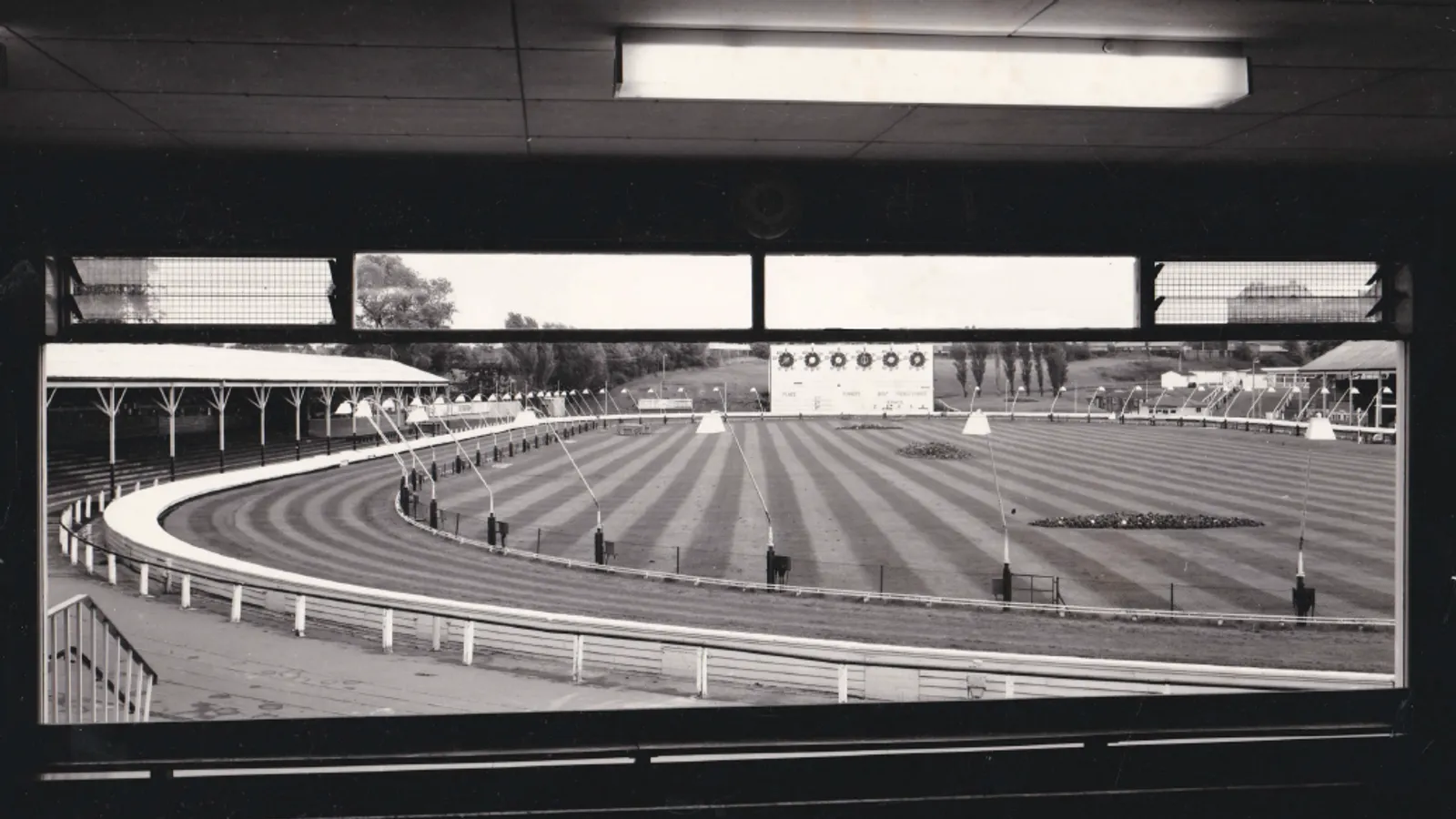
established The race was run at Powderhall, later a greyhound and speedway stadium, for most of its first century, with brief moves elsewhere, including Hawick, Tranent and Newtongrange between 1958 and 1964. George McNeil of Tranent, described by the Scottish Highland Games Association as Scotland's greatest professional sprinter, won the last race at Powderhall in 1970. The race then moved to Meadowbank Stadium, built for the 1970 Commonwealth Games, where it ran until 1999, and then to Musselburgh Racecourse. Since 2024 it has been held at Grangemouth Stadium. Both Powderhall and the old Meadowbank stadium have since been demolished.
War and pandemic
established The sprint was run through both world wars, over a shortened 100 yards in 1918–1919 and 1941–1945. During the First World War the Australian sprinters Arthur Postle and Jack Donaldson competed, with Donaldson starting from scratch from 1913 to 1916. In 2021 the pandemic forced the race to be postponed; it was run in July at Meadowmill, Prestonpans.
shared The race is usually said to have been run every year since 1870. One compilation notes a break in 1953, while also listing a race at Meadowbank that year.
Winners
established Willie McFarlane is the only runner to have won in consecutive years, in 1933 and 1934, the second time from scratch, which has not been repeated. In 1951 Geoff Harrington set a semi-final time that stood as a record for 50 years. Americans won in the 1980s, Tony Bowman won in 2007 at the age of 71, and in 2016 Jazmine Tomlinson became the first woman to win. The prize has grown from £100 in 1915 to £6,000 in 2025 and 2026.
Did You Know?
- The first winner, in 1870, was Dan Wight of Jedburgh.
- The original race was run over 160 yards.
- The race has been held at more than ten different venues.
- It kept running through both world wars.
- Willie McFarlane's win from scratch in 1934 has never been repeated.
- Tony Bowman won the race at the age of 71.
- Jazmine Tomlinson became the first woman to win, in 2016.
- The 2021 race was run in July because of the pandemic.
FAQ
1What is the New Year Sprint?
A professional handicap sprint, first run at Powderhall in Edinburgh in 1870.
2Why is it called the Powderhall?
Because it was run for most of its first century at the Powderhall Grounds in Edinburgh.
3How does the handicap work?
Runners start from different marks according to their form; the best start from scratch.
4How long is the race?
110 metres since 1971; it was originally 160 yards.
5Where is it held now?
At Grangemouth Stadium, since 2024.
6Did it stop during the world wars?
No. It was run through both wars, over a shorter distance.
7Who is the oldest winner?
Tony Bowman, who won in 2007 aged 71.
8Has a woman ever won?
Yes. Jazmine Tomlinson won in 2016.
9Who was George McNeil?
A Tranent sprinter, called Scotland's greatest professional sprinter, who won the last race at Powderhall in 1970.
10Why is it run at New Year?
New Year was the main Scottish winter holiday and a traditional time for games, from shinty matches in the Highlands to foot races at Handsel Monday sports in the Lowlands.
11Did women run in 19th-century Scottish foot races?
Occasionally. Novelty women's races, with prizes such as a pound of tea, were held at New Year games near Stirling in the 1850s.
12Was the race fixed?
Allegations of disguised form and betting coups are part of its folklore, but individual cases are hard to prove.
Sources and Further Reading
Primary/Institutional
- Scottish Highland Games Association, "War, weather... or pandemic can't halt historic New Year Sprint", by Shane Fenton (shga.co.uk)
Scholarly/Critical
- Hamish Telfer, "Play, customs and popular culture of west coast communities 1840–1900", in Grant Jarvie and Graham Walker (eds), Scottish Sport in the Making of the Nation: Ninety Minute Patriots? (Leicester University Press, 1994)
- Neil Tranter, "Women and sport in nineteenth-century Scotland", in the same volume
General
- Wikipedia, "New Year Sprint" (en.wikipedia.org)
Caveats: Myths and Disputed Claims
- Do not state as fact that individual races were fixed.
- Do not call it the oldest professional race in the world.
- Do not say it has never missed a year without noting the uncertainty over 1953.
- Do not give early distances or results as fully consistent; the records vary.
Card 009 · Sport