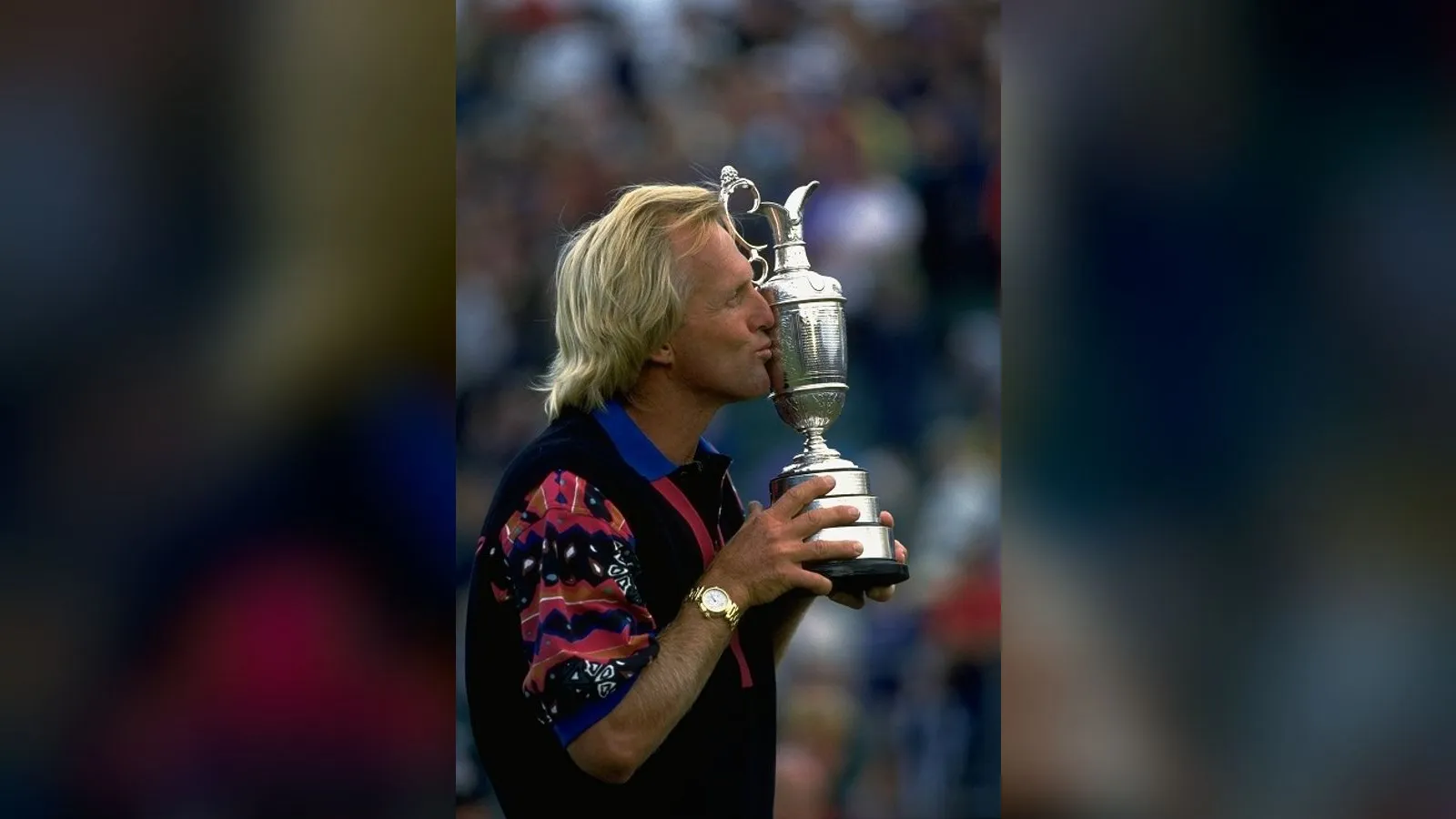

The Open Championship
Contents
TL;DR
- The Open Championship, first played in 1860 at Prestwick, is the oldest of golf's four modern majors. established — it predates the US Open (1895), PGA Championship (1916) and Masters (1934) by decades.
- The first Open was not open to amateurs and was a much smaller, more local affair than the modern tournament. established — the inaugural 1860 event was a professionals-only competition among a handful of invited Scottish players; wider amateur entry came only from 1861.
- The original prize was a leather belt, not the Claret Jug. established — the Challenge Belt was retired in 1870 after Young Tom Morris won it outright with three consecutive victories, and the Claret Jug was introduced in 1872 after a year without a trophy.
- "The Open" rotates among a fixed group of links courses — the Open Rota — rather than being played at one permanent home. established — this distinguishes it structurally from the Masters, which is always played at Augusta National.
- Some historic Open venues have been removed from the rota over issues including all-male membership policies, not merely golf-course quality. established — Muirfield's temporary exclusion until it admitted women members in 2017 is a documented, relatively recent example.
Key Facts
- Category
- Detail
- First played
- 17 October 1860
- First venue
- Prestwick Golf Club, Ayrshire
- Founding body
- Prestwick Golf Club, with subsequent administration passing to a combined committee
- Current organiser
- The R&A
- First winner
- Willie Park Sr. (defeated Old Tom Morris by two strokes)
- Original format
- Three rounds of a 12-hole course at Prestwick (36 holes total)
- Original prize
- The Challenge Belt (red Moroccan leather)
- Current prize
- The Claret Jug (officially the "Golf Champion Trophy"), introduced 1872
- Status today
- One of golf's four men's major championships; oldest of the four
- Venue structure
- Rotates among an approved group of links courses (the "Open Rota") in Scotland and England
- Notable rota courses
- St Andrews (Old Course), Muirfield, Carnoustie, Royal Troon, Turnberry (Scotland); Royal Birkdale, Royal Liverpool, Royal St George's, Royal Portrush (England/Northern Ireland). Prestwick, the first host, last staged the Open in 1925
- Economic weight (1990s view)
- The 1978 Open at St Andrews drew about 56,000 spectators; an impact study found it brought the district the equivalent of a week's household income, unevenly spread
A Note on Claims and Evidence
This card applies the collection's standard three-tier framework: documented facts are drawn from Prestwick Golf Club's own records, R&A archives, and contemporaneous press coverage; traditional claims describe matters of general historical consensus with less precise sourcing (such as exact early entry numbers in some years); and legend/myth claims are popular stories not supported by the documentary record. The Open's early history is unusually well recorded for a mid-19th-century sporting event, in large part because Prestwick and the R&A have maintained continuous institutional records — but the tournament's format, prize, venue list, and governance have all changed substantially since 1860, and an accurate account should not project the modern four-round, multi-course, globally televised major backward onto its much smaller 19th-century origins.
Timeline
The first Open Championship is played at Prestwick Golf Club on 17 October, over three rounds of the club's 12-hole course (36 holes total). It is a professionals-only competition among a small number of invited Scottish players; Willie Park Sr. wins, beating Old Tom Morris by two strokes, for the Challenge Belt.
The competition is opened to amateurs as well as professionals, broadening entry beyond the original invited professional field.
Young Tom Morris wins his third consecutive Open title, entitling him under the competition's rules to keep the Challenge Belt outright; with no trophy in reserve, no Open is held in 1871.
The Open resumes with a new prize, the Claret Jug (the "Golf Champion Trophy"), funded jointly by Prestwick, the Honourable Company of Edinburgh Golfers, and the Royal and Ancient Golf Club of St Andrews — reflecting a shift toward shared, multi-club administration rather than Prestwick running the event alone.
St Andrews hosts the Open for the first time, beginning the practice of rotating the championship among different courses rather than fixing it permanently at Prestwick.
The rota of host venues expands gradually to include additional prestigious Scottish and, eventually, English links courses, as the tournament grows in prestige and participation.
Willie Auchterlonie, a St Andrews clubmaker, wins; the historian John Lowerson, writing in 1994, called him the last home-based Scot to take the title.
James Braid, a Fife-born joiner turned professional at Walton Heath in Surrey, wins five Opens as part of the "Great Triumvirate" with Harry Vardon and J.H. Taylor.
The Royal and Ancient Golf Club agrees in 1919 to take over the Open and the Amateur Championship; the 1920 Open is the first it runs.
The Open at St Andrews draws about 56,000 spectators and is the subject of an early economic impact study.
Paul Lawrie of Aberdeen wins at Carnoustie, ending the run Lowerson had described: a Scottish winner based in Scotland.
The Open becomes established as one of golf's four modern majors, alongside the US Open, PGA Championship and Masters, with growing international fields, prize money, and media coverage.
Administration of the Open passes to the newly separated R&A, the sport's governing body for most of the world outside the USA and Mexico.
Muirfield, a historic Open Rota course, admits women as members for the first time, having faced exclusion from hosting future Opens over its previous all-male membership policy.
Royal Portrush in Northern Ireland hosts the Open, the first time the championship is played outside Scotland or England since 1951.
Details
1860: a small, professionals-only competition at Prestwick
The Open Championship's origins are considerably more modest than its modern status as a global major suggests. The first competition was held at Prestwick Golf Club in Ayrshire on 17 October 1860, organised in part to find a successor to Allan Robertson, a leading professional golfer of the era who had died the previous year without ever being officially recognised as a "champion golfer" in formal competition. The inaugural event was contested by a small field of professional golfers, playing three rounds of Prestwick's 12-hole links course — 36 holes in total, a far shorter format than the modern 72-hole, four-round Open. Willie Park Sr. won, finishing two strokes ahead of Old Tom Morris, who would go on to become one of the sport's most important early figures as both player and course designer.
It is worth stating precisely what the 1860 event was not: it was not open to amateur golfers, it did not involve anything resembling the international field of the modern Open, and it was administered entirely by Prestwick Golf Club itself rather than any wider governing body, since no such body yet existed for golf as a whole. The shift to allow amateur entrants came the following year, in 1861, broadening the competition beyond its initial small professional field.
From the Challenge Belt to the Claret Jug: an interrupted trophy history
The original prize for winning the Open was the Challenge Belt, a trophy made of red Moroccan leather with a silver buckle. Under the competition's rules, a golfer who won the Belt three years in a row would keep it permanently. This happened in 1870, when Young Tom Morris — son of Old Tom Morris and already a formidable champion in his own right — won his third consecutive title and took the Belt outright. This left the organisers without a trophy and, remarkably, no Open Championship was held at all in 1871 while a replacement was arranged — a gap in the tournament's history that is easy to overlook given its modern status as an annual fixture.
When the Open resumed in 1872, it did so with a new prize and, significantly, a new and broader administrative structure: the Claret Jug (officially the Golf Champion Trophy) was funded jointly by three clubs — Prestwick, the Honourable Company of Edinburgh Golfers, and the Royal and Ancient Golf Club of St Andrews — rather than by Prestwick alone. This financial and organisational sharing reflected, and helped cause, the tournament's gradual shift away from being a single club's private competition toward something more like a national championship administered collectively.
The Open Rota: why there is no single permanent home
Unlike the Masters, which has been played at Augusta National every year since its creation, the Open Championship has, from early in its history, rotated among a defined group of courses rather than remaining fixed at one venue. St Andrews first hosted the Open in 1873, just a year after the three-club funding arrangement for the Claret Jug was established, beginning a pattern that continues today. Over time the rota expanded to include further prestigious Scottish links courses — Muirfield, Carnoustie, Royal Troon, Turnberry — and, in the 20th century, leading English links courses as well, including Royal Birkdale, Royal Liverpool (Hoylake) and Royal St George's. In 2019, Royal Portrush in Northern Ireland became the first course outside Scotland and England to host the Open since 1951, reflecting the rota's gradual, and still occasional, expansion.
Inclusion on the Open Rota is not purely a matter of a course's golfing quality or historical pedigree; it also depends on practical factors (capacity for modern crowds, infrastructure, accessibility) and, significantly, on matters of institutional policy. Muirfield, one of the most historically important courses on the rota and a repeated Open venue since the 19th century, was excluded from hosting future Opens after a 2016 member vote initially failed to approve admitting women; the club reversed this position in 2017, voting to admit women, after which it was restored to the rota. This episode is a documented, relatively recent illustration that an Open venue's status depends on more than its links terrain or championship history — a point an accurate history of the tournament should not omit.
Administration: from one club to a national, then global, body
Administration of the Open changed hands significantly over its history. For its first decades, Prestwick Golf Club organised the event essentially on its own. The 1872 funding arrangement for the Claret Jug introduced shared responsibility among three clubs, and this multi-club arrangement eventually gave way to full administration passing to the Royal and Ancient Golf Club of St Andrews (agreed in 1919, with 1920 the first Open it ran; sources give either date), consolidating the Open under a single governing authority that also held increasing influence over the Rules of Golf more broadly (the subject of a separate card in this collection). When the R&A was formally separated from the Royal and Ancient Golf Club of St Andrews as a standalone governing body in 2004, administration of the Open passed to the new R&A organisation, which continues to run the championship today, including its qualifying structure, prize fund, and broadcast arrangements.
Scottish champions and the "homeland" myth
shared The early Opens were dominated by Scots, and that record became part of the national story of golf. The sports historian John Lowerson, in "Golf and the making of myths" in Scottish Sport in the Making of the Nation (1994), notes that Old and Young Tom Morris of St Andrews were credited with creating championship golf before the 1880s, a tale retold in print and even commemorated in Staffordshire pottery figures. He also points out how quickly the Scottish base thinned. Willie Auchterlonie, the St Andrews clubmaker who won in 1893, was in Lowerson's words the last "home-based" Scot to win the Open. James Braid, the most celebrated Scottish professional after the Morrises, won five times between 1901 and 1910 but spent almost his whole working life in England, at Walton Heath. Lowerson's 1994 judgement held until 1999, when Paul Lawrie of Aberdeen won at Carnoustie.
established Lowerson ties the decline of Scottish tournament play to the way most Scots played the game: seasonal, sociable and not very competitive. He also notes the drain of talent abroad. Carnoustie claimed to have sent some 250 to 300 professionals to the United States and Canada, and many Scottish professionals worked in England.
established By the late 20th century the Open had become an economic event for Scotland. An impact study of the 1978 Open at St Andrews, which drew about 56,000 spectators and 233 outside firms, found it brought the district the equivalent of a week's income for every household, though very unevenly divided. (Lowerson's chapter dates this Open to 1979, but the study's own title and the championship record place it in 1978.) Lowerson notes that the whisky firm Bell's made a major sponsorship move into the Open in 1986, and that the 1991 championship drew 109,000 spectators. Lowerson also notes that, unlike most sporting "meccas", the Old Course at St Andrews remains open to ordinary visitors, which supports an image of accessibility that he argues does not hold for Scottish golf as a whole.
The Open today: status, scale, and what has — and hasn't — changed
The modern Open Championship bears only a structural family resemblance to its 1860 original. It is now contested over four rounds (72 holes) rather than three, draws a large international field of professionals and qualified amateurs rather than a small invited group of Scottish professionals, offers substantial modern prize money, and is broadcast globally. It remains, however, recognisably linked to its 19th-century origins in several respects that an accurate account should highlight rather than gloss over: it is still played exclusively on genuine links courses, drawn from the historic rota; the trophy (the Claret Jug) dates to 1872 and its design has remained essentially unchanged; and the championship retains its original, simple name, "The Open," reflecting its founding principle — unlike its 1860 predecessor — of being open to professionals and amateurs alike, a distinction that marked it out from many contemporary sporting competitions of its era. The tournament's claim to being the oldest of golf's four majors is well documented and essentially undisputed; it is the specific details of scale, format, prize, and venue governance across more than 160 years that require the precision this card has tried to provide, rather than reading the modern Open backward into 1860.
Did You Know?
- No Open Championship was held in 1871 — the year after Young Tom Morris won the Challenge Belt outright, leaving the tournament without a trophy until the Claret Jug was introduced in 1872.
- The first Open, in 1860, was played over just 12 holes at Prestwick (three rounds of 12 holes, not 18), reflecting Prestwick's course layout at the time rather than the modern 18-hole, 72-hole format.
- The Claret Jug's full official name is the Golf Champion Trophy — "Claret Jug" is simply its popular nickname, based on its shape.
- The Open's first prize was a leather belt, not a trophy cup — the Challenge Belt, made of red Moroccan leather with a silver buckle.
- Muirfield was temporarily dropped from the Open Rota after a 2016 vote against admitting women members; it was restored only after reversing that decision in 2017.
- Royal Portrush's 2019 Open was the first played outside Scotland or England since 1951 — a reminder that the Open Rota, though historic, has expanded only occasionally and cautiously.
- The 1860 Open was not open to amateurs at all — amateur entry was only introduced the following year, in 1861.
- Full administrative control of the Open did not pass to a single national golf body until 1920, sixty years after the first championship was played.
FAQ
1When and where was the first Open Championship played?
17 October 1860, at Prestwick Golf Club in Ayrshire, Scotland. established
2Who won the first Open?
Willie Park Sr., who beat Old Tom Morris by two strokes. established
3Was the first Open open to amateur golfers?
No — the 1860 competition was limited to invited professional golfers; amateur entry began in 1861. established
4What was the original prize for winning the Open?
The Challenge Belt, a red Moroccan leather belt with a silver buckle. established
5Why was there no Open Championship in 1871?
Young Tom Morris had won the Challenge Belt outright in 1870 by winning three consecutive titles, leaving no trophy for the competition until the Claret Jug was introduced in 1872. established
6Is the Open always played at the same course?
No — it rotates among a defined group of links courses known as the Open Rota, unlike the Masters, which is always held at Augusta National. established
7Which courses are on the Open Rota?
Current and historic rota courses include St Andrews, Prestwick, Muirfield, Carnoustie, Royal Troon and Turnberry in Scotland, and Royal Birkdale, Royal Liverpool, Royal St George's and Royal Portrush in England and Northern Ireland. established
8Why was Muirfield temporarily removed from the Open Rota?
Its members initially voted in 2016 against admitting women, leading to its exclusion from hosting future Opens; it was reinstated after reversing the decision and admitting women in 2017. established
9Who administers the Open Championship today?
The R&A, golf's governing body for most of the world outside the United States and Mexico, which took over administration in 2004 after separating from the Royal and Ancient Golf Club of St Andrews. established
10Is the Open the oldest of golf's major championships?
Yes — it predates the US Open (1895), PGA Championship (1916), and Masters (1934). established
11How long is the modern Open Championship?
Four rounds of 18 holes (72 holes total), a significant expansion from the original three rounds of 12 holes (36 holes) in 1860. established
12Who was the greatest early Scottish Open champion?
Young Tom Morris won four times in a row (1868–70 and 1872), and James Braid won five times between 1901 and 1910. Braid, though Fife-born, spent most of his career in England. established
13Why did Scottish winners become rare after the 1890s?
Many leading Scottish professionals moved to England or North America for work, and the sports historian John Lowerson argues that most Scots played golf for pleasure rather than hard competition. shared
14Has the Open always been played exclusively in Scotland?
No — while it began and remains strongly associated with Scottish links courses, it has also been played in England since the late 19th/early 20th century, and in Northern Ireland (Royal Portrush) since 2019. established
Sources and Further Reading
Primary/Institutional
- The R&A — official history and archives of The Open, theopen.com
- Prestwick Golf Club — club history and founding records
Scholarly/Critical
- John Lowerson, "Golf and the making of myths", in Grant Jarvie and Graham Walker (eds), Scottish Sport in the Making of the Nation: Ninety Minute Patriots? (Leicester University Press, 1994)
- The Sports Historian — essays on the early history of the British Open
- National Library of Scotland and golf heritage archives on the Challenge Belt and Claret Jug
General
- Wikipedia — "The Open Championship," "Challenge Belt"
- Golf heritage and history publications on Prestwick and the Open Rota
Caveats: Myths and Disputed Claims
- The 1860 Open should not be described using modern tournament terms without qualification — it was a small, invitation-only professional competition over 36 holes (three rounds of 12), not the 72-hole, internationally open event the modern Open is.
- Do not state that the Open has always rotated among the same courses used today — the rota expanded gradually over more than a century, and specific venues have entered, left, and re-entered it (Muirfield's 2016–2017 exclusion is a documented example).
- Avoid implying continuous annual play since 1860 — no Open was held in 1871, a specific and well-documented gap caused by the Challenge Belt being won outright with no replacement trophy ready.
- The Claret Jug should not be described as the original Open trophy — the Challenge Belt came first (1860–1870); the Claret Jug was introduced in 1872.
- Do not name Ted Ray as a member of the "Great Triumvirate" with Braid and Vardon, as one 1994 account does; the third member was J.H. Taylor.
- Do not place the 1978 St Andrews Open in 1979; the 1979 Open was at Royal Lytham.
- This card should not be read as a full administrative history of the R&A — the R&A's own founding and institutional history are covered in a separate dedicated card in this collection.
Card 004 · Sport