
Fair Isle Knitting
Contents
Fair Isle knitting is a style of patterned knitting from Fair Isle, a tiny island between Shetland and Orkney. Bands of crosses, diamonds and stars are knitted in two colours at a time, and the style became world-famous after the Prince of Wales wore a Fair Isle jumper to play golf in the 1920s. It is often said to be centuries old and to have been taught to the islanders by shipwrecked Spanish sailors in 1588. This card tests both claims.
TL;DR
- established Fair Isle knitting uses two colours in each row, in horizontal bands of motifs such as crosses, diamonds and eight-pointed stars, with the unused colour carried across the back.
- established The Spanish Armada supply ship El Gran Grifón was wrecked on Fair Isle in September 1588. Its survivors were later sent home to Spain.
- traditional The story that the Spanish survivors taught the islanders to knit colourful patterns has no textile evidence. The historian Deborah Pulliam treats it as folklore and argues the style came from northern and eastern Europe.
- shared The patterned style as we know it is a 19th-century development; the islanders' knitting trade is older, but early records do not show whether it was patterned.
- established Fair Isle became fashionable in the 1920s, partly because the Prince of Wales wore a Fair Isle sweater for golf.
Key Facts
- Fair Isle
- Remote island between Shetland and Orkney, part of Shetland
- Technique
- Stranded colourwork: two colours per row
- Typical motifs
- Crosses, diamonds, eight-pointed stars, in horizontal bands
- Traditional colours
- Natural Shetland wool, with madder (red) and indigo (blue); lichen dyes
- Armada wreck
- El Gran Grifón, 27–28 September 1588, at Stroms Hellier
- Wreck found
- 9 June 1970, by Colin Martin's team
- Fair Isle sweaters
- Not made until the First World War
- Fashion breakthrough
- 1920s, worn by the Prince of Wales for golf
Scottish Impact Index (SI Score)
- Cultural Reach
- 6/10
- Continuity of Tradition
- 9/10
- Social & Economic Importance
- 6/10
- Scottish Distinctiveness
- 9/10
- Cultural Legacy
- 8/10
- Recognition
- 7/10
45/60
Ranked =17th of 19 in Traditions
A Note on Claims and Evidence
Each major claim carries one of three labels. established means supported by primary records, official bodies or several independent reliable sources. shared means the core fact is sound but sources disagree on details, dates or interpretation. traditional means widely repeated but not traceable to a primary or independent source.
The shipwreck is thoroughly documented by archaeology. The knitting connection is not. The weak point in the history is the early period: records of knitting on Fair Isle before the 19th century do not say whether the garments were patterned. Surviving patterned pieces are much later than the wreck.
Timeline
El Gran Grifón, flagship of the Armada's supply squadron, is wrecked at Stroms Hellier on Fair Isle. Most of the crew escape.
Garments found in the Gunnister grave in Shetland become the earliest complete examples of Shetland knitting (not Fair Isle patterning).
Fair Isle knitters produce patterned stockings, caps and scarves using natural and dyed wool.
Synthetic dyes are invented; Fair Isle knitters use them only sparingly.
Fair Isle-style sweaters are first produced.
The Prince of Wales wears a Fair Isle sweater for golf, and the style becomes fashionable; Shetland knitters return to patterned work.
The wreck of El Gran Grifón is found by Colin Martin and a team.
The wreck is excavated; finds go to the Shetland Museum.
Details
The island and the technique
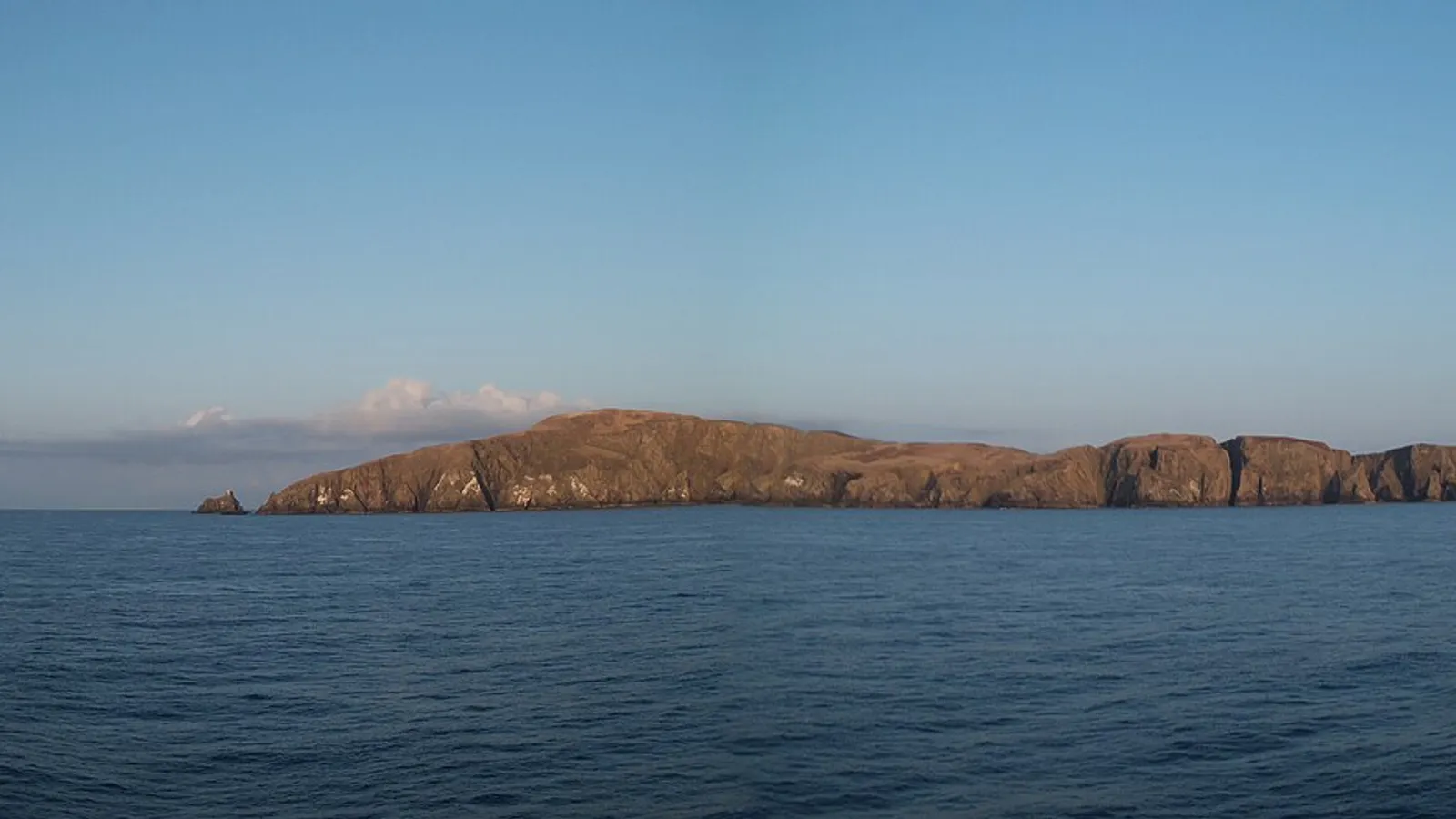
established Fair Isle lies between Shetland and Orkney and is administered as part of Shetland. Its knitting is a form of stranded colourwork. Each row uses only two colours; the colour not in use is carried loosely across the back of the work. Patterns run in horizontal bands of motifs, including crosses, diamonds and eight-pointed stars.
established The colours came partly from Shetland's sheep, whose wool naturally ranges from white through greys and browns, and partly from dyes: madder for red, indigo for blue, and lichens for reds, browns, oranges and purples. Synthetic dyes appeared in the 1850s but were used only in small quantities.
The Armada wreck
established In 1588, after its defeat in the English Channel, the Spanish Armada was driven around the north of Scotland by storms. El Gran Grifón, a 650-ton supply ship built at Rostock and flagship of the supply squadron under Juan Gómez de Medina, anchored off Fair Isle and was driven ashore at Stroms Hellier on 27–28 September. It struck the cliffs and broke up, but most of the crew escaped. They were later sent home to Spain. Divers led by Colin Martin found the wreck on 9 June 1970, and excavations recovered guns, shot and a silver coin of Philip II, now in the Shetland Museum.
Did the Spanish teach the islanders to knit?
traditional The famous story says the shipwrecked Spaniards, in gratitude, taught the islanders their colourful patterns. There is no evidence for it. In a 2004 paper for the Textile Society of America, the historian Deborah Pulliam treated the story as a mix of folklore and history. She argued that the colour patterning developed in northern and eastern Europe, comparing Fair Isle work with the knitting of the Baltic states and eastern Europe, and suggested that some motifs may derive from Italian embroidery. The Victoria and Albert Museum also notes evidence of design influence from nearby Scandinavia. No patterned Fair Isle garment survives from anywhere near 1588.
How old is Fair Isle patterning?
shared Islanders knitted for trade long before the 19th century, and early records mention knitwear of "variegated colours". But those records do not say whether the colours were patterned or simply striped or natural. Surviving patterned pieces date from the 19th century, when knitters made stockings, caps and scarves. According to the V&A, Fair Isle-style sweaters were not made until the First World War. The style is therefore a genuine island tradition, but it is not the ancient art it is often said to be.
The 1920s and fame
established Fair Isle sweaters became fashionable in the 1920s, partly because the Prince of Wales, later Edward VIII, wore one for golf. Natural shades of brown, grey and white were especially popular. Shetland knitters responded by returning to patterned work. Fair Isle has stayed in fashion ever since, and the name is now used worldwide, loosely, for almost any multicoloured stranded knitting.
Did You Know?
- Fair Isle knitting never uses more than two colours in a single row.
- Red came from madder and blue from indigo; lichens gave browns, oranges and purples.
- El Gran Grifón was built at Rostock on the Baltic, not in Spain.
- Most of the wrecked Spaniards survived and were sent home.
- The wreck was not found until 9 June 1970.
- Fair Isle-style sweaters were first made during the First World War.
- The Prince of Wales made Fair Isle fashionable by wearing it for golf.
- "Fair Isle" is now used loosely for many kinds of stranded knitting.
FAQ
1What is Fair Isle knitting?
A style of stranded colourwork from Fair Isle, using two colours per row in bands of motifs.
2Where is Fair Isle?
Between Shetland and Orkney; it is part of Shetland.
3Did Spanish sailors teach the islanders Fair Isle knitting?
There is no evidence for it. Historians treat the story as folklore.
4Was a Spanish Armada ship really wrecked on Fair Isle?
Yes. El Gran Grifón was wrecked there in September 1588.
5Where did Fair Isle patterns come from?
Historians point to influences from northern and eastern Europe, including Scandinavia and the Baltic.
6How old is Fair Isle knitting?
Knitting for trade on the island is old, but the patterned style developed in the 19th century.
7When were Fair Isle sweaters first made?
During the First World War, according to the V&A.
8Why did Fair Isle become famous?
The Prince of Wales wore a Fair Isle sweater for golf in the 1920s.
9What colours were traditionally used?
Natural Shetland wool shades, plus red from madder, blue from indigo and colours from lichens.
10Is all colourful knitting "Fair Isle"?
No. The name is often used loosely for any stranded colourwork.
11Where can I see the Armada finds?
At the Shetland Museum in Lerwick.
Sources and Further Reading
Primary/Institutional
- Canmore (Historic Environment Scotland), "El Gran Grifon: Stroms Heelor, Fair Isle" (canmore.org.uk)
- Victoria and Albert Museum, "British knitting traditions" (vam.ac.uk)
Scholarly/Critical
- Deborah Pulliam, "Traveling Stitches: Origins of Fair Isle Knitting", Textile Society of America Symposium Proceedings, 2004 (digitalcommons.unl.edu)
Caveats: Myths and Disputed Claims
- Do not say Spanish Armada survivors taught the islanders Fair Isle knitting.
- Do not call Fair Isle patterning an ancient art; surviving patterned pieces are 19th-century.
- Do not call every stranded colourwork garment "Fair Isle".
- Do not say most of the Armada crew died on Fair Isle; most escaped the wreck.
Card 004 · Traditions