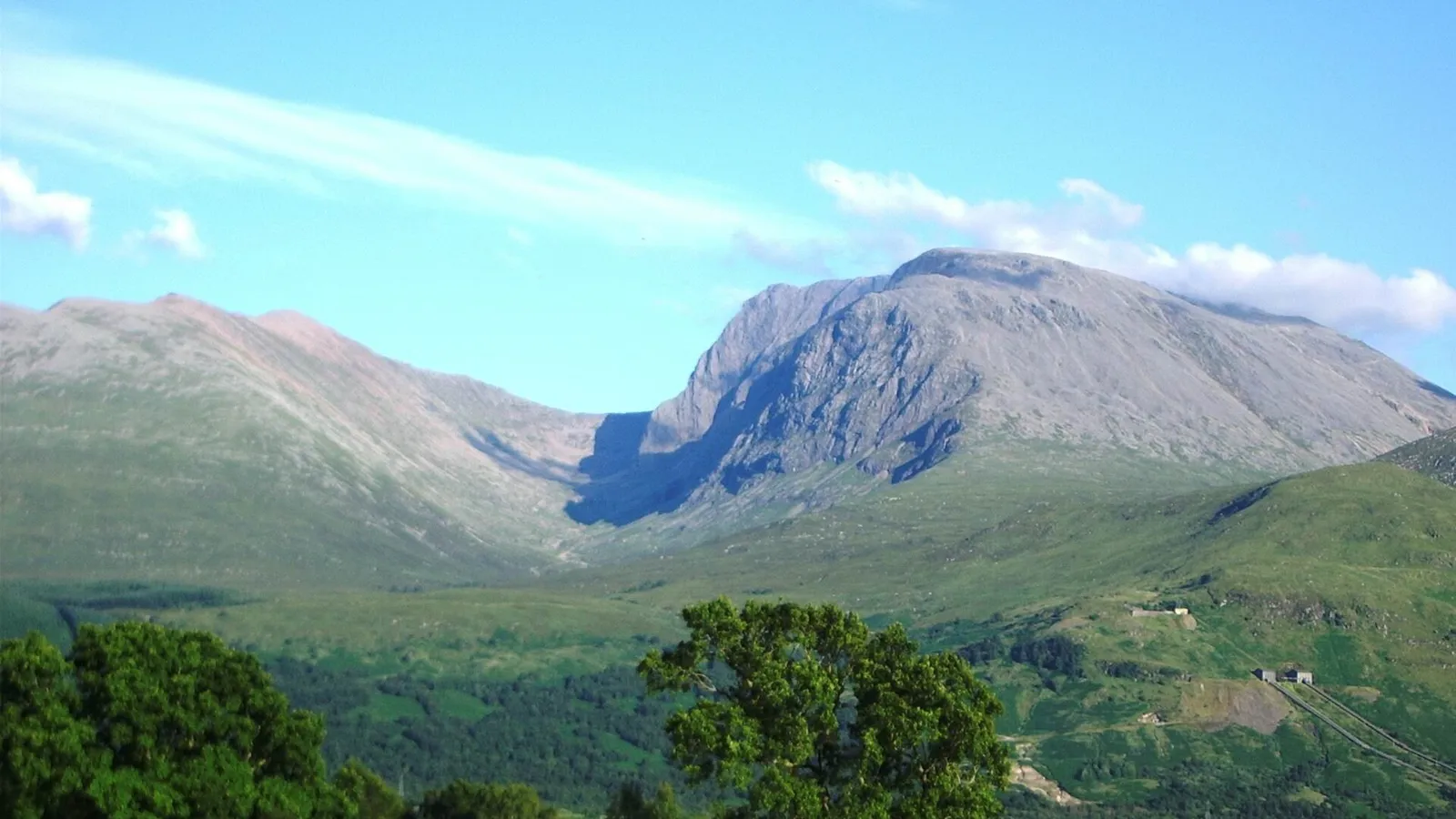

Munro Bagging
Contents
A Munro is a Scottish mountain over 3,000 feet on the official list kept by the Scottish Mountaineering Club. "Bagging" them, climbing every one, is Scotland's great hillwalking obsession, and thousands of people have now completed the round. The tradition began with a list published in 1891 by Sir Hugh Munro, who never finished it himself. This card tests the history, the shifting number of Munros, and the stories told about the first people to climb them all.
TL;DR
- established Sir Hugh Munro, a founder member of the Scottish Mountaineering Club in 1889, published his tables of Scottish mountains over 3,000 feet in the club's journal in 1891.
- shared The 1891 tables listed 538 summits over 3,000 feet, about 283 of them counted as separate mountains and the rest as subsidiary "Tops". Sources give 282 or 283 for the original number.
- established The list has changed repeatedly as heights were resurveyed and judgements revised. Since Beinn a' Chlaidheimh was demoted in 2012, there have been 282 Munros.
- established Sir Hugh Munro died in 1919 without climbing all his own list: he never climbed Carn Cloich-mhuilinn, and there is no record that he climbed the Inaccessible Pinnacle on Skye.
- shared The Rev. A. E. Robertson is regarded as the first person to complete the Munros, in 1901, but there is doubt over whether he reached the summit of Ben Wyvis.
Key Facts
- Definition
- A Scottish mountain over 3,000 ft (914.4 m) on the SMC's list
- Sir Hugh Munro
- 16 October 1856 – 19 March 1919
- Tables published
- SMC Journal, September 1891
- 1891 summits
- 538 over 3,000 ft (about 283 Munros)
- Current Munros
- 282 (since 2012)
- Munro Tops
- 226 (since 2020)
- First completion
- Rev. A. E. Robertson, 1901, on Meall Dearg, Aonach Eagach
- Registered completers
- 7,654 by the end of 2023
- First continuous round
- Hamish Brown, 1974
- Related lists
- Corbetts (2,500–3,000 ft), Grahams (2,000–2,500 ft)
Scottish Impact Index (SI Score)
- Cultural Reach
- 7/10
- Continuity of Tradition
- 7/10
- Social & Economic Importance
- 6/10
- Scottish Distinctiveness
- 9/10
- Cultural Legacy
- 8/10
- Recognition
- 8/10
45/60
Ranked =17th of 19 in Traditions
A Note on Claims and Evidence
Each major claim carries one of three labels. established means supported by primary records, official bodies or several independent reliable sources. shared means the core fact is sound but sources disagree on details, dates or interpretation. traditional means widely repeated but not traceable to a primary or independent source.
The list itself is a matter of record, kept by the Scottish Mountaineering Club. Its weakness is that Munro never set fixed rules for what counts as a separate mountain rather than a Top, so the number has always involved judgement. Stories about the first completers, and about Munro's own unfinished round, are partly anecdote.
Timeline
Hugh Munro is born in London.
The Scottish Mountaineering Club is founded, with Munro among its founders.
Munro's Tables are published in the SMC Journal.
The Rev. A. E. Robertson completes the Munros on Meall Dearg, Aonach Eagach.
Sir Hugh Munro dies at Tarascon, France, during the influenza pandemic, without completing his list.
Hamish Brown completes the first continuous round of the Munros.
A major revision of the tables is published.
Sgùrr nan Ceannaichean is found to be just under 3,000 ft and loses its Munro status.
Beinn a' Chlaidheimh is measured at 913.96 m and demoted; the total falls to 282.
Jamie Aarons sets the fastest continuous round, 31 days, 10 hours and 27 minutes.
Details
Sir Hugh Munro and his tables
established Sir Hugh Munro, born in London in 1856, was a founder member of the Scottish Mountaineering Club in 1889. In September 1891 the club's journal published his tables of all the Scottish mountains over 3,000 feet. His tables covered 538 summits, which he divided into separate mountains, now called Munros, and subsidiary Tops.
shared Sources disagree slightly on how many separate mountains the 1891 tables contained, giving 282 or 283.
What counts as a Munro?
established Munro never set fixed rules for distinguishing a separate mountain from a Top, and the Scottish Mountaineering Club still applies no strict prominence requirement. That has made the list a matter of judgement and debate. It has been revised many times, most heavily in 1997. Modern surveying has also removed hills that fell just short: Sgùrr nan Ceannaichean in 2009, and in 2012 Beinn a' Chlaidheimh in the Fisherfield Forest, which a 2011 Munro Society survey measured at 913.96 metres, just under 3,000 feet. It became a Corbett, and the list fell to 282 Munros. By contrast, the Corbett and Graham lists do have a fixed requirement of 500 feet of prominence.
Munro's unfinished round
established Sir Hugh Munro never completed his own list. He never climbed Carn Cloich-mhuilinn in the Cairngorms, which he is said to have been saving for his last, and there is no record that he climbed the Inaccessible Pinnacle on Skye, which was not on either version of the list published in his lifetime. He died at Tarascon in southern France in March 1919, during the post-war influenza pandemic, aged 62.
The first Munroist
shared The Rev. Archibald Eneas Robertson, a Church of Scotland minister, is generally regarded as the first person to climb all the Munros, finishing on Meall Dearg on the Aonach Eagach ridge in Glen Coe in 1901. He is said to have kissed the cairn and then his wife, and to have celebrated with champagne. There is doubt, though, over Ben Wyvis: it is not certain that he reached its summit.
Bagging today
established By the end of 2023, 7,654 people were registered with the Scottish Mountaineering Club as having completed the Munros. Hamish Brown made the first continuous round in 1974. In June 2023 Jamie Aarons set the record for the fastest continuous round, in 31 days, 10 hours and 27 minutes.
Did You Know?
- Munro's 1891 tables listed 538 summits over 3,000 feet.
- Sir Hugh Munro never completed his own list.
- Beinn a' Chlaidheimh lost its Munro status by about 17 inches (43 cm).
- The first Munroist is said to have kissed the cairn and then his wife.
- It is not certain that the first Munroist reached the top of Ben Wyvis.
- The fastest continuous round of the Munros took 31 days.
- More than 7,600 people have completed the Munros.
- Corbetts and Grahams have fixed prominence rules; Munros do not.
FAQ
1What is a Munro?
A Scottish mountain over 3,000 feet that appears on the Scottish Mountaineering Club's official list.
2How many Munros are there?
282, since 2012.
3Who was Hugh Munro?
A founder member of the Scottish Mountaineering Club who published the first list in 1891.
4Did Munro climb all the Munros?
No. He died in 1919 without climbing Carn Cloich-mhuilinn, and there is no record of him climbing the Inaccessible Pinnacle.
5Who first climbed all the Munros?
The Rev. A. E. Robertson in 1901, though there is doubt about his ascent of Ben Wyvis.
6Why does the number change?
Because there are no fixed rules for what counts as a separate mountain, and because resurveys have found some hills just under 3,000 feet.
7Which hill was demoted in 2012?
Beinn a' Chlaidheimh, measured at 913.96 metres.
8What is a Munro Top?
A summit over 3,000 feet that is not counted as a separate mountain.
9How many people have completed the Munros?
7,654 were registered by the end of 2023.
10What are Corbetts and Grahams?
Lists of Scottish hills of 2,500–3,000 feet and 2,000–2,500 feet, with a fixed prominence rule.
Sources and Further Reading
Primary/Institutional
- UKHillwalking, "Munro list drops to 282", September 2012, reporting the Scottish Mountaineering Club (ukhillwalking.com)
General
- Wikipedia, "Munro" (en.wikipedia.org)
- Wikipedia, "Sir Hugh Munro, 4th Baronet" (en.wikipedia.org)
- Wikipedia, "A. E. Robertson" (en.wikipedia.org)
Caveats: Myths and Disputed Claims
- Do not say Sir Hugh Munro completed his own list.
- Do not say Munro climbed the Inaccessible Pinnacle; there is no record that he did.
- Do not present Robertson's first completion as beyond doubt; Ben Wyvis is uncertain.
- Do not give the number of Munros as fixed for all time; it has changed repeatedly.
- Do not say Munros must have a set prominence; they do not.
Card 033 · Traditions