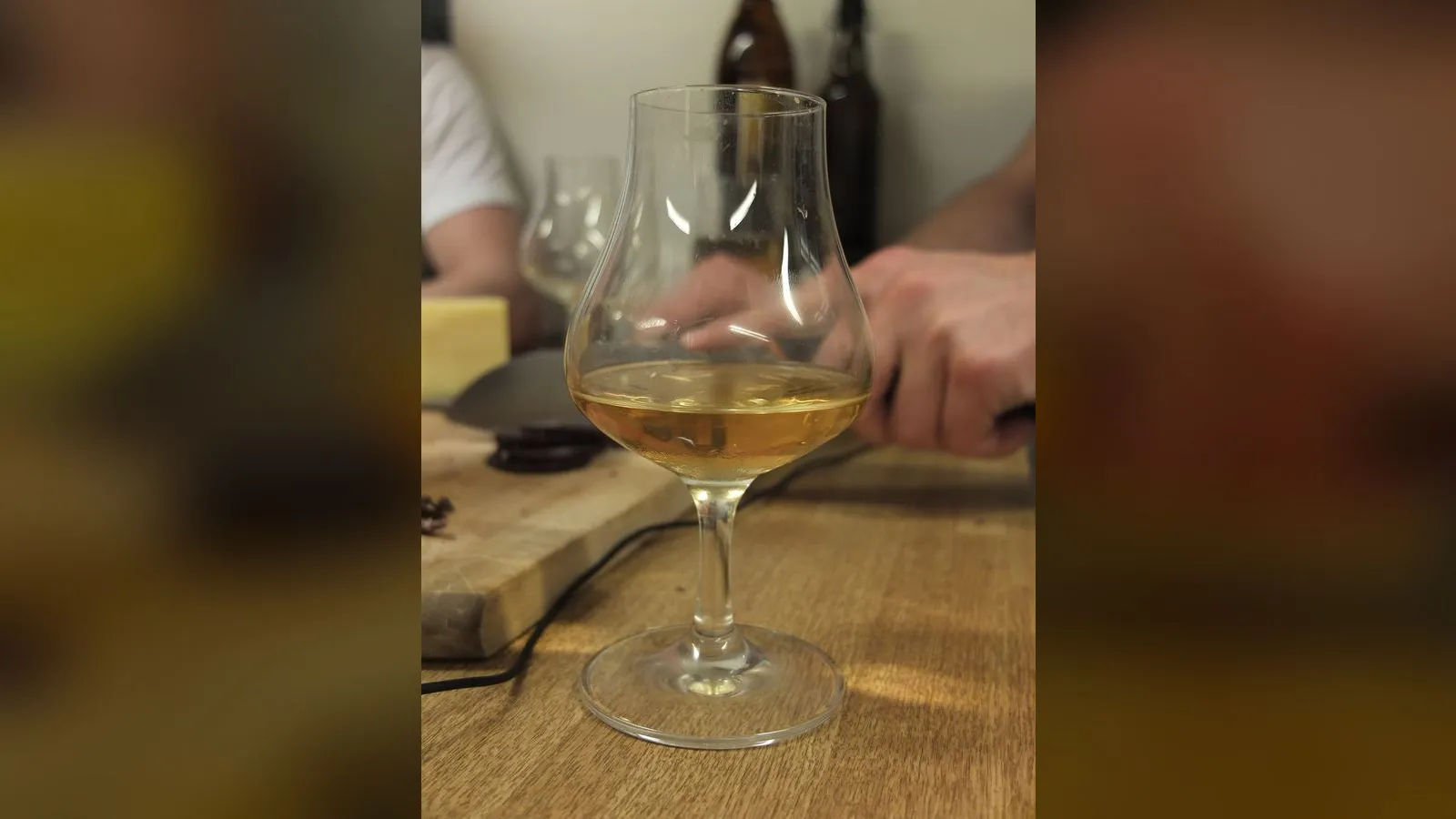

Scotch Whisky: The Water of Life
Contents
Whisky is Scotland's best-known product and its largest food and drink export. The word comes from the Gaelic uisge beatha, "water of life", a translation of the Latin aqua vitae. But Scotland did not invent distillation, and Ireland has older written references to aqua vitae. This card tests what is genuinely Scottish about whisky: a documented history from 1494, a legal industry built from smuggling after 1823, and a legal definition that now protects the name worldwide.
TL;DR
- established Scotland did not invent distillation or whisky. The techniques reached Europe through medieval medicine, and Ireland's written references to aqua vitae are older than Scotland's.
- established The earliest known Scottish record is an Exchequer Roll of 1494, in which Friar John Cor of Lindores Abbey receives eight bolls of malt "to make aqua vitae". It shows whisky-making already existed; it is not its starting point.
- established The Excise Act of 1823 made legal distilling affordable and turned an industry of smugglers into a licensed one.
- established Under the Scotch Whisky Regulations 2009, Scotch must be distilled and matured in Scotland, in oak casks, for at least three years, and bottled at no less than 40% alcohol.
- established In 2024 Scotch exports were worth £5.4 billion, equal to 1.4 billion bottles, according to the Scotch Whisky Association.
Key Facts
- Name
- From Gaelic uisge beatha, "water of life" (Latin aqua vitae)
- Earliest Scottish record
- 1494 Exchequer Roll: eight bolls of malt to Friar John Cor
- First tax on Scottish spirits
- 1644, by the Parliament of Scotland
- Legal turning point
- Excise Act 1823 (£10 annual licence)
- Column still
- Patented by Aeneas Coffey, an Irishman, around 1830–31
- Legal definition
- Scotch Whisky Regulations 2009
- Minimum age
- 3 years, in oak casks of no more than 700 litres, in Scotland
- Minimum strength
- 40% alcohol by volume
- Exports, 2024
- £5.4 billion; 1.4 billion 70cl bottles
- Largest market by value, 2024
- United States (£971 million)
- Largest market by volume, 2024
- India (192 million bottles)
A Note on Claims and Evidence
Each major claim carries one of three labels. established means supported by primary records, official bodies or several independent reliable sources. shared means the core fact is sound but sources disagree on details, dates or interpretation. traditional means widely repeated but not traceable to a primary or independent source.
Two areas are weak. The early Irish records survive imperfectly and do not clearly describe whisky made from grain. And distilleries' foundation dates often come from their own marketing; research in the excise records has shown several to be later than claimed. Export and employment figures come from the Scotch Whisky Association, an industry body.
Timeline
Bishop Richard de Ledrede's Red Book of Ossory, Kilkenny, records a Latin recipe for distilling aqua vitae.
Scotland's Exchequer Rolls record eight bolls of malt to Friar John Cor "to make aqua vitae".
The Parliament of Scotland first taxes spirits, at 2 shillings and 8 pence per Scots pint.
The Statutes of Iona restrict the import of wine and spirits into the Western Isles.
The Union of Scotland and England brings Scotland under British excise law.
Officials seize as many as 14,000 illicit stills a year; in 1822 there are 6,278 prosecutions for illicit distilling.
The Excise Act cuts duty, sets a minimum still size and introduces a £10 annual licence.
George Smith licenses his distillery at Glenlivet, the first in the area after the new Act.
Aeneas Coffey patents his column still, which makes cheap grain spirit possible and leads to blended Scotch.
The Scotch Whisky Act sets production standards in law.
The Scotch Whisky Regulations replace it with a full legal definition.
Exports reach £5.4 billion, down 3.7% by value but up 3.9% by volume.
Details
Distillation came from elsewhere
established Distillation is far older than Scotland's whisky. It was developed for medicine and perfume in the ancient and medieval worlds, and Latin texts carried it into European monasteries and medical schools in the Middle Ages. "Aqua vitae", the water of life, was first a medicine. The Gaelic uisge beatha is a direct translation, and "whisky" is an English rendering of uisge.
Scotland and Ireland: who wrote it down first?
shared Ireland has the older references. The Red Book of Ossory, compiled in Kilkenny by Bishop Richard de Ledrede in the 14th century, contains a Latin recipe for distilling aqua vitae, which Irish sources hail as the earliest recorded. Historians caution that the recipe was a medicinal one, and some argue it describes distilling wine rather than grain, so it is not clear evidence of whiskey as we know it. Irish annals also record a chieftain's death from aqua vitae in 1405, though that text survives only in a translation made in 1627.
established Scotland's earliest record is later but more specific. The Exchequer Roll for 1494, held by the National Records of Scotland, records eight bolls of malt given to Friar John Cor "to make aqua vitae" on the king's order. Eight bolls is a large quantity, which shows that distilling was already established. Neither country invented whisky; both inherited aqua vitae from a shared European tradition.
traditional Lindores Abbey in Fife is often called the birthplace of Scotch because Friar John Cor is linked to it. The National Records of Scotland's own description names him as a monk at Lindores, but the claim that whisky was "born" there treats the first surviving record as if it were the first distilling.
From tax to smuggling
established The Parliament of Scotland first taxed spirits in 1644, at 2 shillings and 8 pence per Scots pint. After the Union of 1707, Scotland came under British excise law and taxes on malt. Over the next century, taxes and restrictions drove much of the trade underground. By the early 1820s officials were seizing as many as 14,000 illicit stills a year, more than half the whisky drunk in Scotland was thought to be illegal, and in 1822 there were 6,278 prosecutions for illicit distilling.
1823: the industry goes legal
established The Excise Act of 1823 changed the business. It cut duty by more than half, set a minimum still size of 40 gallons and introduced a £10 annual licence. Distilling legally became worth doing. George Smith, whose family had distilled without a licence at Upper Drumin in Glenlivet since 1774, took out a licence. His was the first distillery in the area licensed after the Act. His neighbours, still smuggling, threatened to burn it down, and the laird of Aberlour gave him a pair of hair-trigger pistols, which Smith said he carried in his belt for ten years.
shared Smith is sometimes called the first licensed distiller in Scotland. That overstates it: licensed distilleries already existed. He was the first in Glenlivet under the new Act.
Ale, claret and whisky
shared Whisky was not always Scotland's everyday drink. The folklorist F. Marian McNeill, in The Scots Kitchen (1929; revised 1963), stresses that ale was the common drink of the Lowlands and that French claret was cheap and plentiful among the better-off until heavy duties after the Union drove it from the table. She records John Home's epigram on the claret tax, in which the Caledonian is forced to drink port: "He drank the poison and his spirit died." She suggests that distilling in the Highlands got "its chief impetus" from early seventeenth-century Privy Council measures restricting wine imports into the Isles, an allusion to the Statutes of Iona (1609) and later acts. The measures are real, but they restricted imported spirits as well as wine, so the link is her interpretation rather than an established cause. Her picture of the Highlander drinking whisky only sparingly on festive occasions is likewise a romantic generalisation.
Whisky at the table
established McNeill's recipes show how whisky entered everyday Scottish life. Toddy is whisky, loaf sugar and boiling water in a warmed tumbler, stirred with a silver spoon; she notes Allan Ramsay's 1721 joke about "Todian spring", the water of Tod's Well that supplied Edinburgh, as a possible source of the name. The Het Pint, hot spiced ale with eggs and whisky, was carried through the streets of Edinburgh and Glasgow in copper kettles on New Year's morning and drunk before weddings and at births. Highland bitters, whisky steeped with gentian, orange peel and spices, stood on the sideboard of Highland houses as a morning dram; Osgood Mackenzie remembered a smuggled bottle with camomile, orange peel and juniper berries taken "as a fine stomachic" before breakfast. Whisky also went into Atholl brose, sowans at Yule and the meal-and-ale of harvest home, and Smollett's Humphry Clinker (1771) describes a Highland breakfast with "a stone bottle full of whisky" drunk from a quaich.
The column still and blended Scotch
established Around 1830–31 Aeneas Coffey, an Irishman, patented a refined continuous column still. It made light grain spirit quickly and cheaply. Irish distillers largely rejected it; Scottish firms took it up. Mixing grain spirit with malt whisky produced blended Scotch, milder and cheaper than malt alone. Blends made Scotch a global drink, and today they account for about 90% of the Scotch sold.
What counts as Scotch
established Scotch is defined in law by the Scotch Whisky Regulations 2009, which replaced the Scotch Whisky Act 1988. To be Scotch, a whisky must be distilled at a distillery in Scotland from water and malted barley, to which only whole grains of other cereals may be added. It must be distilled to less than 94.8% alcohol, matured only in Scotland in oak casks of no more than 700 litres for at least three years, and bottled at no less than 40%. Nothing may be added except water and plain caramel colouring.
Which distillery is oldest?
shared Glenturret has claimed a founding date of 1775 and Bowmore 1779. Research by Iain Russell at the University of Glasgow's Scottish Brewing Archive, published in 2007, found that excise records suggest Bowmore was licensed only in 1816 and Glenturret about two years later, after Ardbeg, Oban and Blair Athol. Of the current claimants, Strathisla appeared to have the strongest case. The researchers also found a 1785 newspaper report of spirit sales at Meldrum, probably the later Glen Garioch, but said it was too early to be sure.
Whisky crosses the Atlantic
shared The historian David Hackett Fischer, in Albion's Seed (1989), argues that a taste for grain spirit, uncommon in southern England, was carried to the American backcountry by 18th-century emigrants from Scotland, Ulster and northern England. There, he writes, whisky distilled from barley "yielded to Bourbon whiskey", made mainly from corn and rye, and became an everyday table drink. The broad point is reasonable, but the emigrants he describes came mostly from Ulster and northern England rather than Scotland, early American whiskey was largely rye, and bourbon took shape later and owed much to distillers of many backgrounds. It is better to say Scots were among the peoples who brought distilling habits to America than to call bourbon a Scottish offshoot.
Whisky today
established Scotch is the UK's largest food and drink export. According to the Scotch Whisky Association, exports in 2024 were worth £5.4 billion, down 3.7% on 2023, while volume rose 3.9% to the equivalent of 1.4 billion 70cl bottles. The United States was the largest market by value, at £971 million, and India the largest by volume, at 192 million bottles.
Did You Know?
- "Whisky" comes from the Gaelic uisge beatha, "water of life".
- The first Scottish record of whisky-making is a line in a royal account book from 1494.
- Friar John Cor's eight bolls of malt would have made a large quantity of spirit.
- In 1822 there were 6,278 prosecutions for illicit distilling in Scotland.
- George Smith of Glenlivet carried a pair of pistols for ten years after going legal.
- The column still that made blended Scotch possible was patented by an Irishman.
- By law, Scotch must mature in Scotland for at least three years.
- India buys more bottles of Scotch than any other country.
- On New Year's morning, Edinburgh and Glasgow folk once carried the "Het Pint", hot ale with eggs and whisky, round in copper kettles.
FAQ
1Did Scotland invent whisky?
No. Distillation came to Scotland from Europe, and Ireland has older written references to aqua vitae.
2What is the earliest record of whisky in Scotland?
An Exchequer Roll of 1494 records eight bolls of malt given to Friar John Cor to make aqua vitae.
3Is Ireland's whiskey older?
Ireland's written references are older, but the earliest is a medicinal recipe that may describe distilling wine. Neither country invented whisky.
4What does "whisky" mean?
It comes from the Gaelic uisge beatha, "water of life".
5Why was there so much smuggling?
High taxes and restrictions made illegal distilling more profitable than legal distilling until 1823.
6What did the 1823 Excise Act do?
It cut duty by more than half and introduced a £10 licence, making legal distilling worthwhile.
7Was George Smith the first licensed distiller in Scotland?
No. He was the first in Glenlivet licensed after the 1823 Act.
8What is blended Scotch?
A mix of malt whisky and grain whisky. It makes up about 90% of Scotch sold.
9How old must Scotch be?
At least three years, matured in oak casks in Scotland.
10Which is Scotland's oldest distillery?
It is disputed. Excise records suggest several famous claims are later than their marketing dates.
11How much Scotch is exported?
£5.4 billion worth in 2024, the equivalent of 1.4 billion bottles.
12Is Lindores Abbey the birthplace of Scotch?
It is linked to the first surviving record, not to the first distilling.
13Was whisky always Scotland's national drink?
No. Ale was the everyday drink of the Lowlands and claret was common among the better-off until duties made it expensive in the eighteenth century.
14What is toddy?
Whisky, sugar and hot water mixed in a warmed tumbler; a traditional nightcap and cold remedy.
15Is bourbon descended from Scotch?
Not directly. David Hackett Fischer's Albion's Seed (1989) argues that emigrants from Scotland, Ulster and northern England brought whisky-drinking to the American backcountry, where corn and rye replaced barley. But bourbon developed later, from many influences.
Sources and Further Reading
Primary/Institutional
- National Records of Scotland / ScotlandsPeople, "First reference to whisky, 1494", Exchequer Roll E38/306 (scotlandspeople.gov.uk)
- The Scotch Whisky Regulations 2009, regulation 3 (legislation.gov.uk)
- Scotch Whisky Association, "2024 export figures", 13 February 2025 (scotch-whisky.org.uk)
- University of Glasgow, "Distilling the truth", December 2007 (gla.ac.uk)
Scholarly/Critical
- History Ireland, "The Red Book of Ossory" (historyireland.com)
- David Hackett Fischer, Albion's Seed: Four British Folkways in America (Oxford University Press, 1989)
Specialist
- F. Marian McNeill, The Scots Kitchen: Its Traditions and Lore with Old-Time Recipes (Blackie, 1929; 2nd edn 1963)
General
- The Irish Times, "Red Book of Ossory goes on public display for first time in Kilkenny", 28 July 2024 (irishtimes.com)
- Whisky Magazine, "The genuine article: The Glenlivet in its 200th year" (whiskymag.com)
- Wikipedia, "Scotch whisky" (en.wikipedia.org)
Caveats: Myths and Disputed Claims
- Do not say Scotland invented whisky or distillation.
- Do not say the Red Book of Ossory proves Irish whiskey in the 14th century. It is a medicinal recipe and may describe distilling wine.
- Do not call 1494 the "birth" of Scotch. The record shows production already existed.
- Do not call Lindores Abbey the proven birthplace of whisky.
- Do not call George Smith the first licensed distiller in Scotland.
- Do not repeat distilleries' foundation dates as proven without checking excise records.
- Do not present Scotch Whisky Association figures as independently audited.
- Do not repeat McNeill's claim that the subject of Burns's "Scotch Drink" is ale rather than whisky; the poem praises both, and addresses whisky directly.
- Do not present the Statutes of Iona as the proven cause of Highland distilling.
- Do not call bourbon a Scottish invention or say Scotch simply "became" bourbon; Fischer's borderland argument is contested and most of the emigrants he describes were from Ulster and northern England.
Card 023 · Traditions