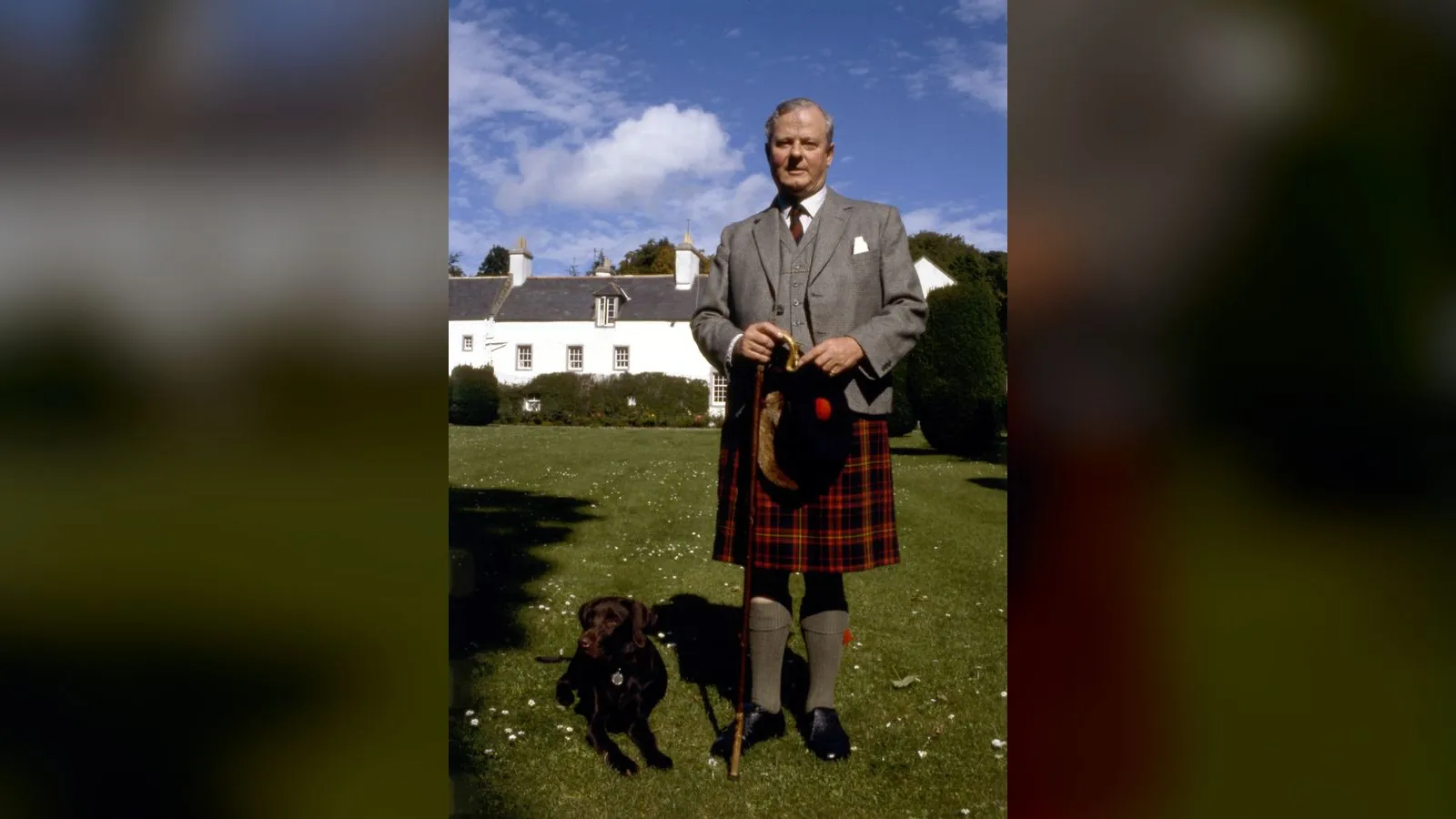

The Kilt and Highland Dress
Contents
The kilt is the best-known garment in Scotland and one of the most recognised in the world. It began as the belted plaid, a single length of wool wrapped and belted around a Highlander's body, and became the tailored, pleated kilt worn at weddings and by pipe bands today. Two popular stories pull in opposite directions: that the kilt is ancient, and that an Englishman invented it. This card tests what the records show.
TL;DR
- established The great kilt, or belted plaid (fèileadh mòr), is first clearly described in 1594. It was a long piece of wool, pleated, belted at the waist, with the upper half worn over the shoulder.
- established Highlanders in the time of William Wallace and Robert the Bruce did not wear kilts. The idea that medieval Scots fought in kilts is a modern myth.
- shared The small kilt (fèileadh beag), the lower half worn on its own, is often said to have been invented around 1727 by Thomas Rawlinson, an English Quaker ironmaster. That story rests on a single letter published in 1785; historians point to earlier evidence and treat it as unproven.
- established The Dress Act of 1746 banned Highland dress for civilians after the Jacobite rising but exempted the army. The ban was lifted in 1782, and the Highland regiments kept the kilt alive.
- established The kilt became national dress for all Scots in the 19th century, helped by George IV's visit to Edinburgh in 1822. It was last worn in battle in May 1940.
Key Facts
- Great kilt
- Fèileadh mòr, the belted plaid
- First clear description
- 1594
- Belted plaid size
- Up to about 7 yards long, 54–60 inches wide, from two loom-widths sewn together
- Small kilt
- Fèileadh beag, "philabeg"
- Rawlinson's Invergarry ironworks
- Leased 1727; furnace worked 1729–1736
- Source for the Rawlinson story
- Ivan Baillie's letter, Edinburgh Magazine, March 1785
- Dress Act
- 1746, banning Highland dress for civilians; army exempt
- Ban lifted
- 1782
- George IV's visit
- 1822, organised by Sir Walter Scott
- Oldest surviving tailored kilt
- c.1796, Scottish Tartans Authority
- Last kilted battle
- La Bassée, 27 May 1940, 1st Cameron Highlanders
A Note on Claims and Evidence
Each major claim carries one of three labels. established means supported by primary records, official bodies or several independent reliable sources. shared means the core fact is sound but sources disagree on details, dates or interpretation. traditional means widely repeated but not traceable to a primary or independent source.
The weakest evidence is about the small kilt's beginnings. The story that Rawlinson invented it comes from one letter, published long after his death by a writer hostile to Highland dress; the claimed earlier pictures and descriptions of a small kilt are also of mixed quality. Much of what is now thought traditional about the kilt, from clan tartans to the sporran, took its modern form in the 19th century.
Timeline
Gaelic Highlanders wear the léine, a long linen tunic, and the brat, a woollen cloak, as Gaelic Irish do.
The earliest clear description of the belted plaid appears in an Irish account of Hebridean soldiers.
The belted plaid becomes the usual dress of Highland men.
Thomas Rawlinson leases woodland at Invergarry for an iron furnace.
The Invergarry furnace operates.
After the Jacobite defeat, the Dress Act bans Highland dress for civilian men, with an exemption for the army.
The ban is lifted.
Ivan Baillie's letter crediting Rawlinson with the small kilt is published in the Edinburgh Magazine.
The oldest surviving tailored kilt, with sewn-in pleats, is made.
George IV visits Edinburgh in Highland dress; Sir Walter Scott stages the visit.
The 1st Battalion, Queen's Own Cameron Highlanders fight at La Bassée in kilts, the last time a Highland battalion goes into battle kilted.
Details
Before the kilt
established Medieval Highland men did not wear kilts. They wore the léine, a long, full-sleeved linen tunic, and the brat, a woollen cloak, much like their Gaelic neighbours in Ireland. The image of Wallace or the soldiers of Bannockburn in kilts, made famous by the film Braveheart, has no historical basis.
The great kilt
established The belted plaid, or great kilt, appears in written sources from the late 16th century. The earliest description that clearly shows a plaid gathered and belted at the waist dates from 1594, in an Irish account of soldiers from the Hebrides. The garment was a single length of thick wool, up to about 7 yards long and 54 to 60 inches wide. Highland looms could only weave a narrow cloth, so two widths were sewn together. The wearer pleated it, belted it at the waist and fastened the upper part over the shoulder. It doubled as a blanket at night.
traditional Writers in 1578 and 1581 describe Highland mantles gathered into folds. They are sometimes cited as earlier evidence of the belted plaid, but they do not mention a belt, so historians treat them as descriptions of the cloak.
Did an Englishman invent the small kilt?
shared The small kilt, the fèileadh beag or "philabeg", is in effect the lower half of the belted plaid worn on its own. The popular story says it was invented around 1727 by Thomas Rawlinson, an English Quaker who ran an iron furnace at Invergarry. Finding the belted plaid impractical for his Highland workers, he supposedly had them wear only the pleated lower half.
shared The story comes from a single source: a letter by Ivan Baillie of Aberiachan, published in the Edinburgh Magazine in March 1785, nearly 50 years after Rawlinson's death. Some sources say the letter was written in 1768. Baillie was a supporter of union with England and is described as hostile to the Highlands. Later writers repeated the story, and the historian John Telfer Dunbar found no published proof of a small kilt before about 1725. But Matthew Newsome, director emeritus of the Scottish Tartans Museum, points to illustrations of Highlanders wearing only the lower part of the plaid from well before Rawlinson came to Scotland.
shared The fairest verdict is that the small kilt grew naturally out of the belted plaid, and that Rawlinson's works may have helped spread a form that already existed. Neither "an Englishman invented the kilt" nor "the kilt is ancient" is supported.
The Dress Act and the army
established After the Jacobite defeat at Culloden, the Dress Act of 1746 banned Highland clothing, including the plaid and kilt, for civilian men and boys. Soldiers were exempt. While civilians were forbidden the kilt, the Highland regiments raised for the British Army wore it in Europe and the colonies, and kept its reputation alive. The ban was lifted in 1782.
The kilt becomes national dress
established In 1822 George IV made the first visit to Scotland by a reigning monarch in over 170 years. The visit was staged by Sir Walter Scott, who used it to present Highland dress as the dress of all Scotland. The King appeared in Highland dress. Through the 19th century, encouraged by Queen Victoria's love of Balmoral, the kilt passed from a Highland and military garment to national dress worn across Scotland. Many details now thought of as ancient, including clan tartans and the formal sporran, took their modern shape in this period.
established The oldest surviving tailored kilt with sewn-in pleats, held by the Scottish Tartans Authority, dates from about 1796.
The last kilted battle
established Highland regiments wore the kilt into battle in the First World War. Early in the Second World War, the War Office ordered battledress trousers for active service. The 1st Battalion, Queen's Own Cameron Highlanders, whose commanding officer kept his men in kilts after the trousers arrived in February 1940, fought a rearguard action at La Bassée on 27 May 1940. It was the last time a Highland battalion went into battle as a unit in the kilt.
Did You Know?
- The great kilt was a single piece of cloth, up to about 7 yards long, that also served as a blanket.
- Highland looms wove narrow cloth, so a plaid was made from two widths sewn together.
- The story that an Englishman invented the kilt comes from a single letter, published nearly 50 years after his death.
- The Dress Act banned the kilt for civilians for 36 years, but soldiers kept wearing it.
- The oldest surviving tailored kilt dates from about 1796.
- George IV wore Highland dress during his 1822 visit to Edinburgh, staged by Sir Walter Scott.
- The Cameron Highlanders fought their last kilted battle on 27 May 1940.
- Medieval Scots did not wear kilts.
FAQ
1How old is the kilt?
The belted plaid is first clearly described in 1594. The small kilt developed in the late 17th or early 18th century.
2Did William Wallace wear a kilt?
No. The kilt did not exist in his time.
3What is the difference between the great kilt and the small kilt?
The great kilt was a long plaid belted at the waist with the upper half over the shoulder. The small kilt is the pleated lower half worn on its own.
4Did an Englishman invent the kilt?
The story that Thomas Rawlinson invented the small kilt rests on a single 1785 letter. Historians point to earlier evidence, and the claim is unproven.
5Was the kilt banned?
Yes. The Dress Act of 1746 banned Highland dress for civilians. Soldiers were exempt, and the ban was lifted in 1782.
6Why did the kilt survive the ban?
Because the Highland regiments of the British Army continued to wear it.
7When did the kilt become Scotland's national dress?
In the 19th century, helped by George IV's visit in 1822 and Queen Victoria's love of the Highlands.
8How long was a belted plaid?
Up to about 7 yards, made from two narrow widths sewn together.
9When was the kilt last worn in battle?
On 27 May 1940, by the 1st Cameron Highlanders at La Bassée.
10Are clan tartans ancient?
Most clan tartans, as fixed patterns linked to surnames, date from the 19th century.
11What is the oldest surviving kilt?
A tailored kilt from about 1796, held by the Scottish Tartans Authority.
Sources and Further Reading
Primary/Institutional
- The Highlanders' Museum, "The Last Highland Fling" (thehighlandersmuseum.com)
Scholarly/Critical
- JSTOR Daily, "How Scottish Highlanders came to wear kilts" (daily.jstor.org)
- Murray Pittock, From Tartan to Tartanry (Edinburgh University Press, 2010), further reading
General
- Wikipedia, "History of the kilt" (en.wikipedia.org)
- Wikipedia, "Thomas Rawlinson (industrialist)" (en.wikipedia.org)
Caveats: Myths and Disputed Claims
- Do not say medieval Scots, Wallace or the Bannockburn armies wore kilts.
- Do not say flatly that an Englishman invented the kilt. The story rests on one late, partisan letter.
- Do not say the kilt is ancient. The belted plaid is first clearly described in 1594.
- Do not say a belted plaid took nine yards or more of finished cloth.
- Do not say the Dress Act banned the kilt for everyone. Soldiers were exempt.
- Do not present clan tartans as ancient fixed patterns.
Card 002 · Traditions